BankingMay 17, 2026
SoFi vs Discover: Banking, HYSA, and Personal Loan Comparison
Side-by-side comparison of SoFi and Discover for checking, savings, and personal loans: APYs, fees, rates, and who each bank is best for.
Continue Reading


Checking and savings accounts are the two everyday bank account types. The right one depends on what you're using the money for: spending or storing.
This guide compares the two side by side: how each works, what fees and limits to expect, and when it makes sense to hold both.
Checking accounts handle everyday cash flow. You can write checks, withdraw cash, swipe a debit card, and receive direct deposits. Many people use your checking account to pay a credit card bill and cover routine expenses like groceries and gas.
Your funds are accessible in a checking account, and you generally have unlimited withdrawals.
However, your checking account may be subject to fees such as:
The main drawback of checking accounts is that they don’t typically pay interest.
Savings accounts pay interest on your balance. The trade-off: no debit card, and most institutions cap how often you can withdraw. They're meant for money you want to leave alone, not for daily spending.
Savings accounts often have more fees and restrictions than checking accounts. There may be a limit on how often you can withdraw funds to help encourage saving, such as six withdrawals per month. You may also need to pay a monthly maintenance fee, transaction fees, and minimum balance fees.
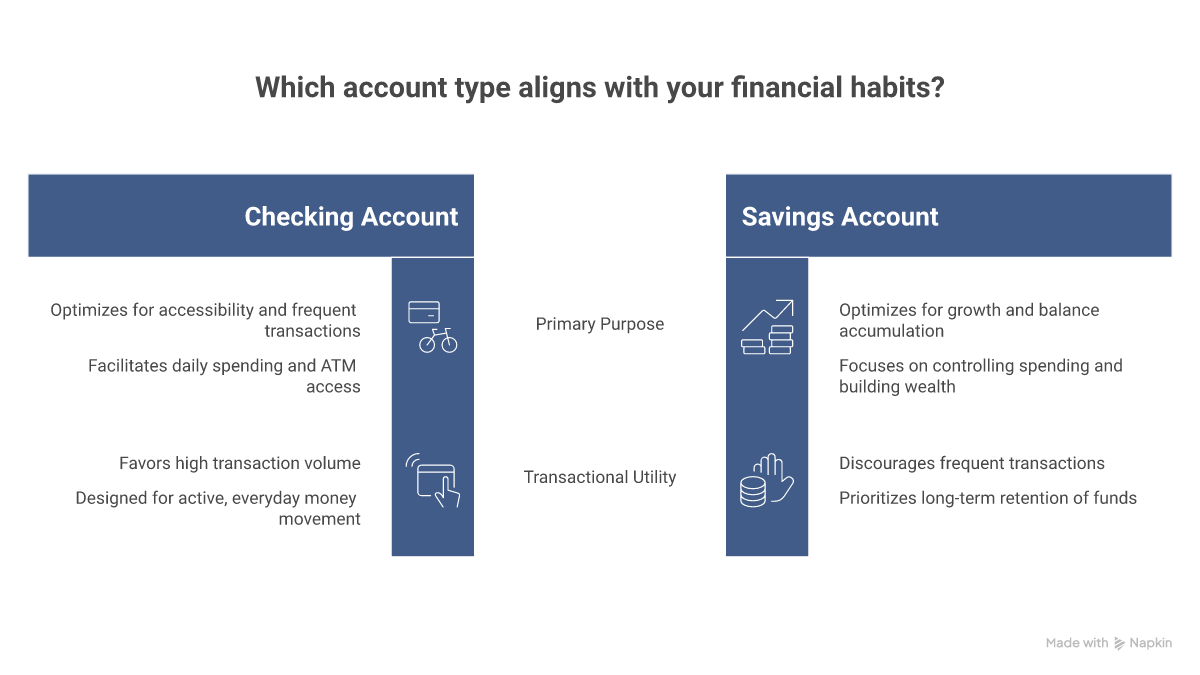
The right account depends on how you'll actually use the money. The same logic applies when comparing a business checking vs. a savings account.
For example, how frequently will you need to withdraw money and make other transactions? If it’s often, choose a checking account.
On the other hand, if you’re trying to control your spending habits and set some money aside to grow, regular savings accounts are great options.
Also, consider whether it’s important to you to have online and mobile banking options. The best savings accounts and checking accounts generally offer these features, but it’s important to check.
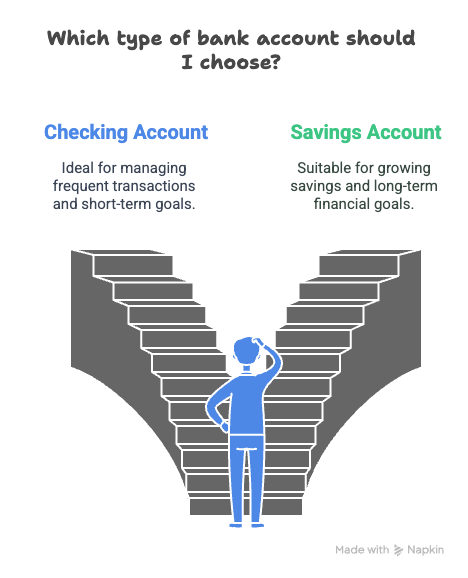
The best way to decide on a savings account vs. a checking account is to think about your financial goals.
If you want to manage your frequent transactions, such as buying everyday essentials, a checking account is the right call. If the goal is setting money aside for it to grow, choose a savings account. Note that savings accounts aren't the same as investment accounts — investments earn more on average but carry market risk.
Put another way: checking covers short-term cash flow; savings covers longer-term targets like emergency funds or a down payment.
As long as you choose a financial institution that’s federally insured by the FDIC (for banks) or NCUA (for credit unions), your money will be secure in a checking or savings account. The FDIC and NCUA insure your money up to $250,000 per account owner per insured institution.
Confirm that your chosen bank or credit union is a member of the FDIC or NCUA. Also compare interest rates before selecting an account. While most checking accounts do not pay interest, some checking accounts earn interest. If you want to maximize your interest, though, you’re probably better off with a high-yield savings account, which generally provides the highest rates. Shop around to see what rates are available through different banks and high-yield savings accounts.
You don't have to pick one. Most households keep a checking account for daily spending and a savings account for the rest.
With a checking and savings account, you can dedicate your checking account to the money that moves frequently. For example, you might set up direct deposits for your paycheck, enable automatic bill payments, and withdraw cash from your checking account.
Money you want to set aside — emergency fund, savings goal — sits in the savings account, earning interest while remaining accessible if you need it.
Checking and savings accounts are suitable for different objectives. If you need to access your money frequently and conduct many transactions, a checking account is the better option. If you want to grow your money and don’t need to access it as often, a savings account is a better choice since it typically earns interest.
You can figure out whether your bank account is a checking or savings account by looking at your most recent bank statement. Also, if your account came with a debit card, checks, or both, it’s likely a checking account.
Debit cards are typically for checking accounts. They allow you to easily withdraw cash from your account at ATMs and make purchases, similar to a credit card.
You can put your savings in a checking account, but in most cases, that’s not the best option. If you’re trying to grow your money by earning interest, look for a savings account instead of a checking account. Pacific Western Bank’s high-yield savings account is a great example of an account that might work well for your savings goals.
There's no single right answer. The best account is whichever one matches how you actually use your money. MoneyAtlas helps with that comparison.
MoneyAtlas makes it easy to compare different types of bank accounts so you can make an informed decision about whether to open a checking vs. savings account. Compare the best checking accounts to start the search.
See which high-yield savings accounts are paying the most today.
Compare savings accountsSide-by-side comparison of SoFi and Discover for checking, savings, and personal loans: APYs, fees, rates, and who each bank is best for.
Looking for a high-yield savings account with no minimum balance? Explore top options offering great interest with no deposit requirements.
Wondering what do you need to open a business bank account? Here's a complete checklist, including IDs, licenses, and business formation documents.