
BankingMay 17, 2026
SoFi vs Discover: Banking, HYSA, and Personal Loan Comparison
Side-by-side comparison of SoFi and Discover for checking, savings, and personal loans: APYs, fees, rates, and who each bank is best for.
Continue Reading


A checking account is a great way to keep your money safe while maintaining easy access to your funds. You can set up direct deposits to get payments into your account and make quick payments with online bill pay or checks. But do checking accounts earn interest to help you grow your money?
Traditionally, checking accounts didn’t offer interest, but these days you have more options. Interest-bearing checking accounts are available at many major financial institutions. Opening one of these accounts lets you take advantage of the benefits of a checking account while also earning some money on your balance.
Learn how interest-bearing checking accounts work so you can decide if they’re the right option for you.
Traditional checking accounts are the most common, but they’re not the only option. Here’s how different types of checking accounts compare.
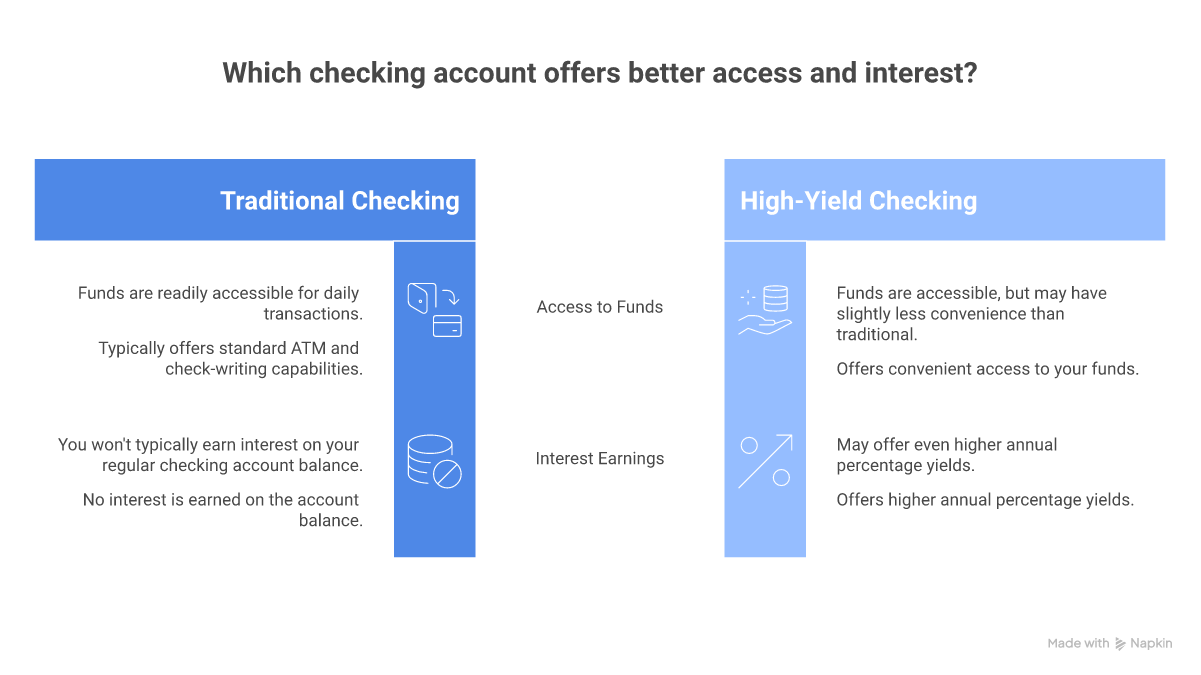
Regular checking accounts generally let you write checks from your account, access your funds with an ATM card, and receive direct deposits. You may need to pay a monthly fee to maintain the account, and you also won’t typically earn interest on your regular checking account balance.
Traditional checking accounts are available through banks, credit unions, and even primarily online financial institutions. If you prefer digital banking, compare SoFi vs. Discover checking accounts.
Do checking accounts always earn interest? No, but some do. If you want the convenience of traditional checking accounts paired with the ability to earn interest on your deposits, consider opening an interest-bearing account.
You can use these checking accounts to earn extra money on the funds you keep in your account. The financial institution where you hold your account pays a competitive interest rate on your deposits, helping you grow your money.
Some of the best checking accounts in 2025 are interest-bearing accounts. Just be aware that interest-bearing accounts may have higher minimum balance requirements to qualify for better interest rates.
While all checking accounts don't earn interest, a high-yield checking account allows you to earn a high annual percentage yield (APY) on the money you keep in the account. The more money you deposit, the more you’ll earn in interest. You can save $10,000 in 3 months by having a checking account like this.
While high-yield savings accounts may offer even higher annual percentage yields, a high-yield checking account can leave you with more convenient access to your funds.
The amount you earn in interest on your checking account balance depends on your account’s interest rate. A higher interest rate means higher interest payments. As a result, your money grows faster.
For example, say you have a 2% interest rate on your checking account. If you deposit $5,000 in the account and leave it for 10 years, compounding daily, you’d have $6,106.98. That’s over $1,000 in interest payments alone. If your interest rate was 5%, you’d have $8,243.32 in your account — more than $3,000 in interest.
One important detail about interest calculations that’s easy to overlook is the compounding frequency. This is how often your financial institution calculates and applies your interest payments to your balances. After compounding, the next interest calculation will include the previous interest payment. You earn interest on interest!
More frequent compounding helps your money grow faster. Interest-bearing checking accounts may compound daily, monthly, quarterly, or annually. When you’re comparing accounts, make sure to look for more frequent compounding.
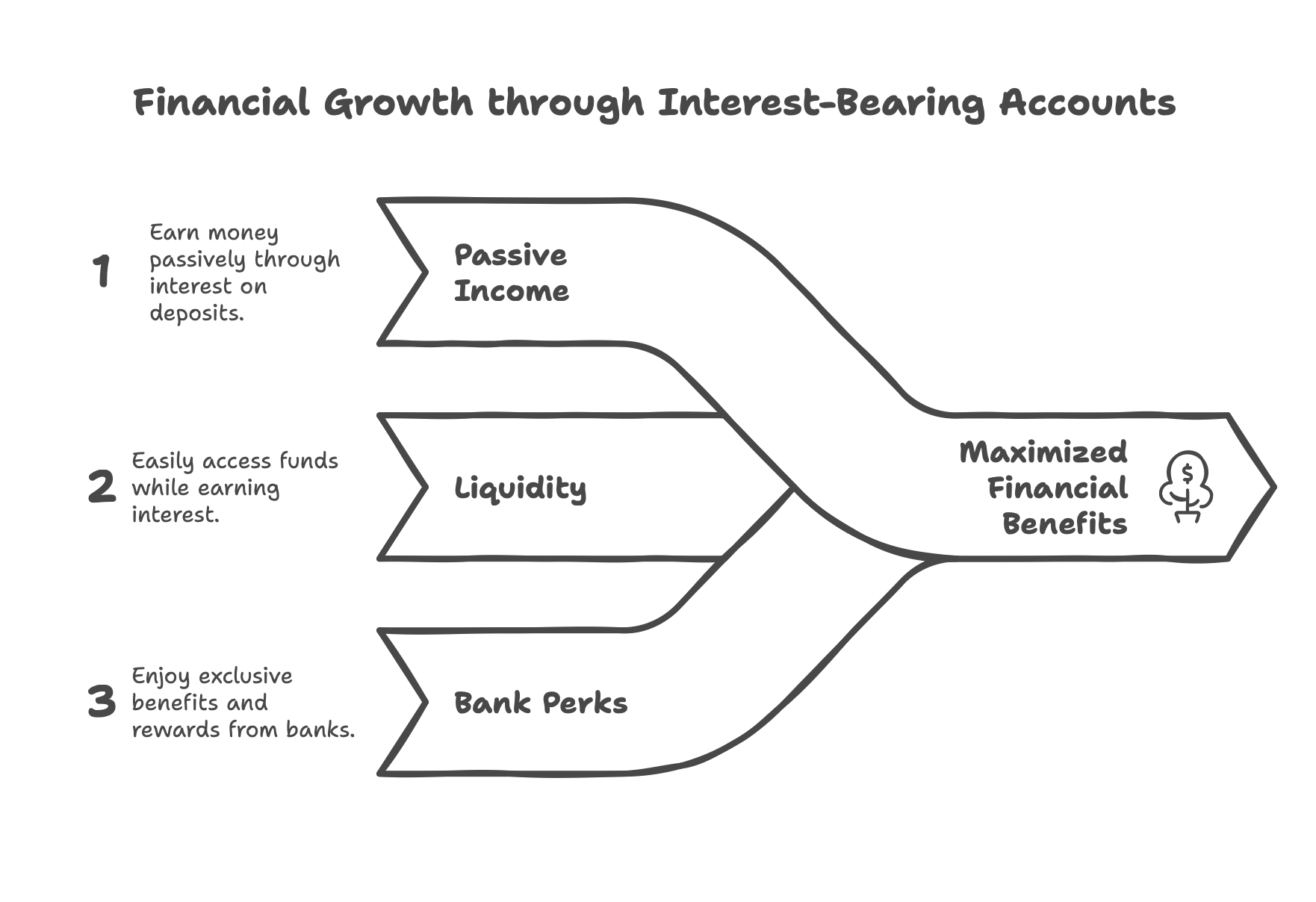
Should you open an interest-bearing checking account? If you’re trying to decide where to put your money, consider these key benefits of checking accounts that pay interest.
Passive income has been a hot topic in personal finance lately and for a good reason. Who doesn’t want to earn money in a way that doesn’t require constant effort?
An interest-bearing checking account makes your money work for you. The money that sits in your account will earn you extra income even while you sleep.
Though the interest rate may not be very high and interest payments may not be very large, they add up. Over time, your money can grow — even if you don’t add more.
You may wonder, do business checking accounts earn interest? Yes, some business checking accounts earn interest, too.
Of course, interest-bearing checking account accounts aren’t the only way to earn interest on your money. What sets these accounts apart from investment vehicles like stocks or even certificates of deposit is how accessible your money is.
In a checking account, you can withdraw or add money to your account at any time. Your money is very liquid. That way, you don’t have to worry whether you’ll be able to access your funds in an emergency or even if your financial situation just changed.
When you develop a relationship with a specific bank, such as by opening a checking and savings account at the same place, you can get relationship perks. You might gain access to additional fraud protection, higher interest rates, or cashback. Ask the financial institution for more details.
The requirements of an interest-bearing checking account may be different from the usual checking account requirements, so be sure to read all the details before choosing an account.
Some accounts may require you to always keep a certain amount deposited, also known as a minimum balance requirement. If you want to maintain access to as much of your money as possible, look for an account with a low minimum balance requirement or none at all.
Your checking account may also limit how much you can withdraw in a day, though this isn’t very common. Check account details for any limits on how much or how often you can withdraw money.
The right account for you depends on your personal situation and financial goals. Luckily, MoneyAtlas is here to help you find the best options. To get started, browse our comprehensive comparisons of different bank accounts and other financial products today.
See which high-yield savings accounts are paying the most today.
Compare savings accountsSide-by-side comparison of SoFi and Discover for checking, savings, and personal loans: APYs, fees, rates, and who each bank is best for.

Looking for a high-yield savings account with no minimum balance? Explore top options offering great interest with no deposit requirements.
Wondering what do you need to open a business bank account? Here's a complete checklist, including IDs, licenses, and business formation documents.