BankingMay 17, 2026
SoFi vs Discover: Banking, HYSA, and Personal Loan Comparison
Side-by-side comparison of SoFi and Discover for checking, savings, and personal loans: APYs, fees, rates, and who each bank is best for.
Continue Reading


Every day, you conduct financial transactions. You pay bills, get your paycheck, or buy products. While you can do all these things without a bank account, these transactions are much more convenient with a checking account.
What is a checking account, and do you actually need one? Checking accounts are bank accounts designed to help you conduct everyday transactions. You can make deposits and withdrawals, and even monitor your account with online banking.
Anyone who makes or receives payments can benefit from having a checking account. It’s the perfect tool for easily managing your everyday finances.
A checking account is a safe place to put your money while maintaining convenient access to it. You can easily use the funds in your account to pay bills and make purchases.
Common checking account applications include:
A direct deposit is when you receive payments directly to your bank account through electronic transfer. It’s faster and more secure than many other payment options and a popular way to receive paychecks. You can also use direct deposit for government benefits and tax refunds so you don’t have to worry about dealing with checks.
What about when you want to send payments instead of receiving them? You can set up automatic payments from your checking account to cover recurring bills.
With automatic payments, you don’t have to worry about making your payments on time every month or getting hit with late fees. You just authorize the vendor, such as your credit card company, to withdraw the bill total from your checking account on a set date each month. The money comes straight out of your account to make your payment automatically.
Checking accounts now allow you to do lots of your banking online or even on mobile devices. You can often deposit checks, monitor your balance, and make transfers — all from your online banking portal.
If you prefer completely online banking, compare SoFi vs. Discover checking accounts.
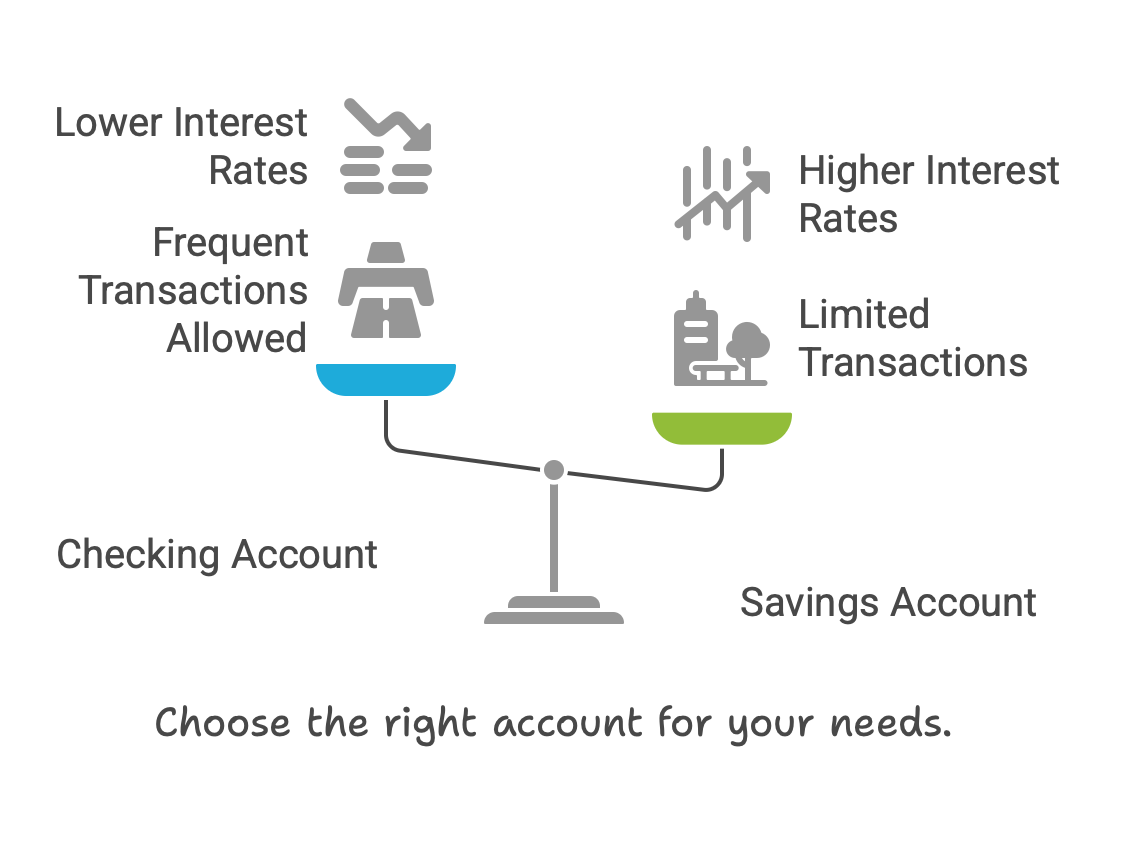
Checking and savings accounts are two common types of bank accounts with overlap, but they’re not the same. The major difference is that checking accounts are designed for more frequent transactions than savings accounts.
Before 2020, the Federal Reserve required banks to limit convenient withdrawals and transfers from savings accounts to six per month. Though this requirement is no longer in effect, many banks still limit how often you can withdraw or transfer money from your savings account. You may not be able to access your savings account funds without incurring fees if you have already reached your monthly transaction limit.
By contrast, checking accounts generally do not restrict how many monthly transactions you can make. If you want to transfer money from your checking account six different times on the same day, you generally would be able to do so.
The trade-off is that savings accounts generally offer higher interest on your deposits than checking accounts. Many checking accounts don’t offer any interest at all. Even an interest-bearing checking account typically offers lower interest rates than savings accounts.
If you put your money in a savings account, it will start to earn interest, so your money grows over time without you needing to do anything. This makes savings accounts better for storing your long-term savings, while checking accounts are better for funds you need to access frequently. You may want to open a checking account to save money if you still want to be able to regularly withdraw the funds.
There’s a type of checking account that fits your needs, no matter who you are.
Consider common types:
The best checking accounts in 2025 depend on who you are and how you want to use your account.
As the name suggests, you can write and receive checks to move money with your checking account. Paper checks are less popular now, but you can also make electronic transfers to pay bills. Or use your debit card to make purchases and withdraw cash at ATMs.
Deposit money into your account in cash at a bank branch or with transfers from other accounts or direct deposits. No matter which method you prefer, you have many ways to deposit and withdraw money from your checking account.
Having a checking account is useful for pretty much anyone. Your funds are safe and insured up to $250,000 by the Federal Deposit Insurance Corporation (FDIC), as long as your bank is a member of the FDIC.
You can easily send and receive payments with checks and transfers, or access cash at a bank branch or ATM.
Your checking account will also help you manage your finances. On each statement, you can see all the deposits and withdrawals you made, giving you insights into how you use your money.
Once you have set up your checking account, get the most out of it with these tips:
Once you decide to open a checking account, you still need to pick the right one for your needs. MoneyAtlas makes the selection process much simpler with easy-to-understand comparisons of all the top options. Use MoneyAtlas to compare checking account fees, minimum balance requirements, and benefits at a glance. You’ll find your ideal checking account in no time.
See which high-yield savings accounts are paying the most today.
Compare savings accountsSide-by-side comparison of SoFi and Discover for checking, savings, and personal loans: APYs, fees, rates, and who each bank is best for.
Looking for a high-yield savings account with no minimum balance? Explore top options offering great interest with no deposit requirements.
Wondering what do you need to open a business bank account? Here's a complete checklist, including IDs, licenses, and business formation documents.