If you have credit card debt you want to eliminate, you’re not alone. Americans collectively owe around $1.2 trillion on credit card balances, and that figure just keeps increasing.
Part of what makes credit card balances so tricky to pay off is that they often have high interest rates. The money you owe can keep going up even as you continue making payments, so what can you do?
One option people may try is paying off the balance on one card with another card. Can you pay a credit card with a credit card? Learn how this method works.
Understanding Credit Card Payments
Every month, if you use your credit card or still owe money from previous purchases, you will get a credit card bill.
Your monthly credit card bills are based on the billing cycle — the time between the last and most recent billing statements. Any purchases you made during the current billing cycle will appear on your bill, but that’s not all. Your balance (the total amount you owe) also includes any applicable fees or penalties, plus your remaining balance from the previous month and any interest you owe on that amount.
When you get your bill, the credit card issuer will tell you how much you owe in total, when your payment is due, and the minimum credit card payment you need to make on that due date. You must make at least the minimum payments to avoid late fees and other penalties.
Typically, you pay your credit card bill with a checking account. Even with the best credit cards, you generally won’t be allowed to pay your bill directly with another credit card.
Common Methods of Paying One Credit Card With Another
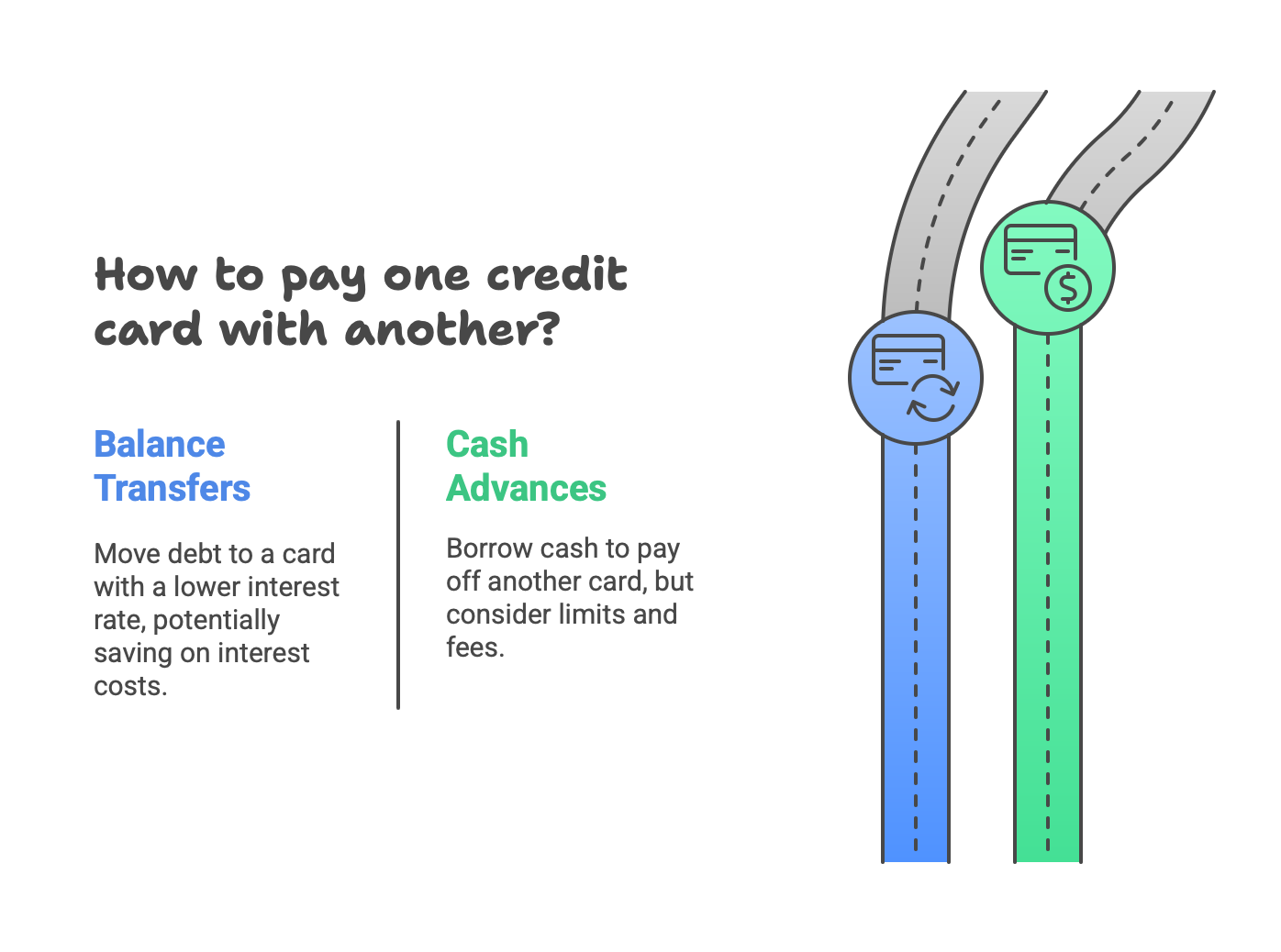
A graphic showing the two most common ways to pay off one credit card with another.
Though credit card companies don’t typically let you pay off one card directly with another, you have some options for getting around that. The two most common ways are using balance transfer credit cards and taking out cash advances.
Balance Transfers
Balance transfer cards let you move your credit card balance from one card to another. The point of these transfers is moving your debt to a new card with a lower interest rate.
For example, if you’re currently paying 28% interest on your credit card balance, a balance transfer card with a 0% interest rate promotional period could help you save on your interest payments.
Keep in mind that many credit card balance transfers are subject to a balance transfer fee. You have to factor in the cost of this fee to make sure you’re actually saving money by making the transfer. Read credit card reviews to find cards with low balance transfer fees.
Cash Advances
How else can you pay a credit card with another credit card? Your other option is to use a cash advance. This is when you borrow cash directly from your credit card issuer rather than using the card to pay for something.
There are typically three ways to take a cash advance on a credit card:
Visiting a bank branch or credit union
Using an ATM
Writing a convenience check to yourself
To pay off a card, take out a cash advance on one credit card equal to your total balance on another card. Then use that cash to pay off the second card. With these two transactions, you’ll have effectively moved your credit card balance from the second card to the first.
One important note about cash advances is that you may have a separate credit limit for cash advances that’s smaller than your regular credit limit. In addition, if you have already reached your general credit limit, you probably won’t be able to take out a cash advance on that card.
Check your credit card terms for more details about your cash advance limit.
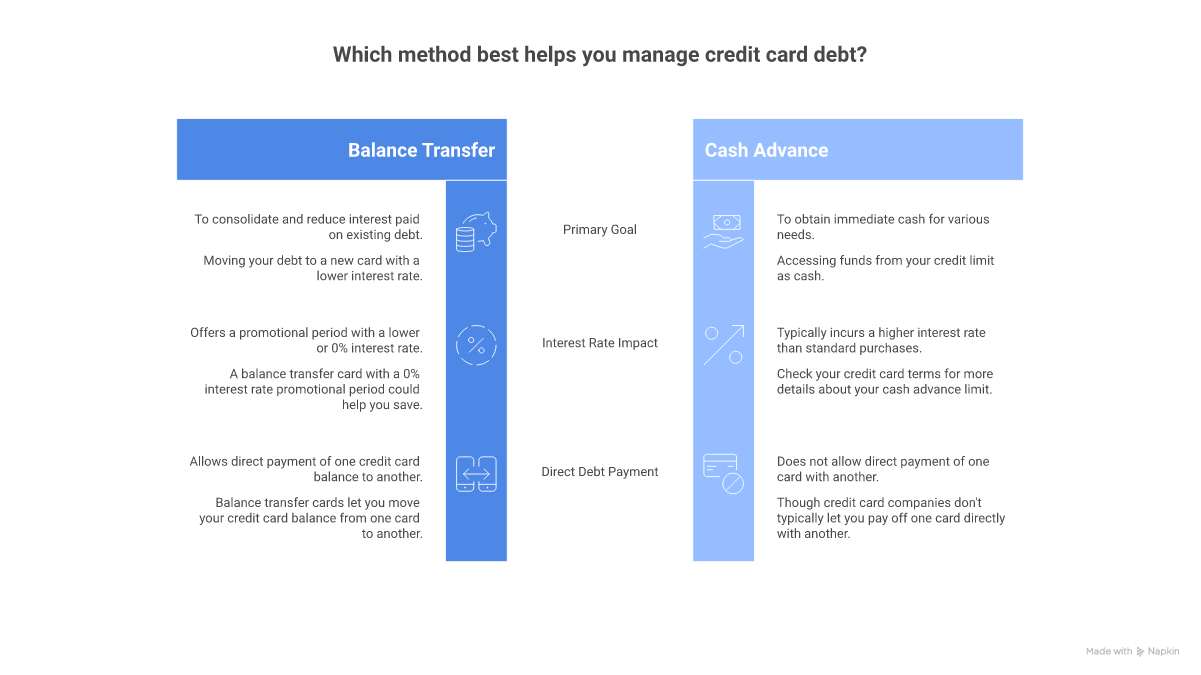
Balance transfer vs. cash advance
Potential Impacts on Credit Card Interest
The goal of paying a credit card off with another is to reduce your interest rate, helping you save money. You have to be careful, though.
A balance transfer card may offer a 0% introductory APR to draw you in, but that rate won’t last forever. At the end of the introductory period, your interest rate will go up, possibly even higher than the rate on your original card.
For example, American Express offers up to 15 months of 0% introductory APR on balance transfer cards before the interest rate increases.
With cash advances, the amount you withdraw immediately starts accruing interest, typically at a high APR. There’s no grace period like with a regular credit card balance. As a result, taking out a cash advance can cost you more in interest than just leaving your credit card balance where it is.
Benefits of Using One Credit Card To Pay Another
The upside of using one credit card to pay another is that your monthly payments may go down. If the credit card account you transfer your balance to has a lower interest rate, you’ll owe less every month. The smaller payments make it easier to tackle your debt.
Some people also use balance transfers as a way to get all their debt together. When all your credit card debt is consolidated into one account, repaying it may be more manageable.
Drawbacks of This Approach
This approach has some significant disadvantages, however.
Balance transfers and cash advances both come with high fees. Depending on how much the fees are, they can reduce or eliminate the financial benefits of making the transfer in the first place.
You also risk creating a debt cycle rather than solving the financial issues that led you to accumulate credit card debt.
Alternatives to Paying One Credit Card With Another
If you want to get rid of your high-interest credit card debt without paying off one card with another, try these alternatives:
Taking out a personal loan to pay off your credit card debt
Implementing a personal debt payoff strategy
Working with credit counselors
Making Smart Credit Decisions: The Best Way To Manage Debt
Even when your credit card debt feels impossible to pay off, you still have options. Using a credit card to pay off another is only one method.
MoneyAtlas is here to help you make smart credit decisions so you can get on top of your debt. Explore credit cards to find the best ones for your needs.
Ready to pick a card?
Compare the cards our editors rate highest right now, side by side, with the fees and rewards that matter.
Should I get an American Express Gold card? Explore the 4X rewards on dining and groceries vs. the $325 fee to see if this premium card fits your budget.
Learn how to get the American Express Gold Card with our guide on credit score requirements, income, and the 'Apply with Confidence' tool. Apply today!