Should I Get an American Express Gold Card? Breaking Down the Value


Introduction
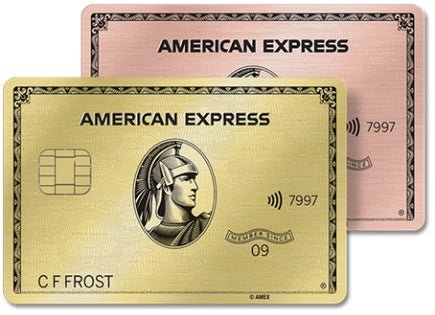
Deciding whether the American Express Gold Card belongs in your wallet usually comes down to two specific areas: your grocery budget and your dining habits. This card is frequently cited as a top choice for those who spend heavily on food, but with a $325 annual fee, the math must work in your favor to justify the cost. MoneyAtlas compares hundreds of premium cards to help you see how these fees stack up against real world rewards. This article explores the specific spending patterns that justify the cost, the mechanics of the card's monthly credits, and the trade-offs you face when choosing between points and cash back. Ultimately, the decision depends on whether your existing lifestyle naturally aligns with the card's heavy emphasis on dining, supermarkets, and specific delivery services.
The Core Value Proposition: Earning on Food
The primary reason most people look at this card is its earning structure on food related purchases. It offers 4X Membership Rewards points per dollar spent at restaurants worldwide, which now includes a cap of $50,000 in purchases per calendar year. After hitting that limit, the rate drops to 1X. This 4X rate also applies to takeout and delivery services in the U.S.
For those who cook at home, the card provides 4X points at U.S. supermarkets on up to $25,000 in purchases per calendar year. Once you exceed that $25,000 limit, you earn 1X points for the remainder of the year. If you maximize just the supermarket category, you would earn 100,000 Membership Rewards points annually before even accounting for restaurant spending.
To put this in perspective, a 4X earn rate is effectively a 4% return if you value points at 1 cent each. However, many enthusiasts find the value of these points can be higher when transferred to airline or hotel partners. For a household spending $800 a month on groceries and $400 a month on dining, the card would generate roughly 57,600 points per year.
Navigating the $325 Annual Fee
The $325 annual fee is a significant upfront cost. To determine if the card makes sense, you have to look at the "effective" annual fee. This is the amount you are actually paying after subtracting the value of the credits you use. The card offers a suite of credits that, if fully utilized, total $424 in annual value. For more ways to evaluate this trade-off, read our guide to evaluating credit card annual fees, interest rates, and rewards.
Uber Cash
Cardholders receive up to $120 in Uber Cash annually, distributed as $10 monthly credits. This can be used for Uber rides or Uber Eats orders in the U.S. To receive this, you must add the card to your Uber app. The credit does not roll over, so if you do not use your $10 in January, it disappears in February.
Dining Credit
There is a separate $120 annual dining credit, also distributed as $10 monthly statement credits. This is limited to specific partners, including Grubhub, The Cheesecake Factory, Five Guys, Buffalo Wild Wings, and Wonder. Enrollment is required through the provider's website or app to activate this benefit.
Resy Credit
A newer addition to the card is the up to $100 Resy credit. This is split into two $50 statement credits: one for the first half of the year, January through June, and one for the second half, July through December. You can use this at any U.S. restaurant that is enrolled in Resy when you pay with your card.
Dunkin' Credit
The card also includes up to $84 in annual Dunkin' credits, delivered as $7 per month in statement credits. This is specifically for purchases made at U.S. Dunkin' locations. For someone who already stops for coffee or breakfast at Dunkin' several times a month, this is a straightforward way to reduce the effective cost of the card.
Travel Benefits for the Occasional Flyer
While often marketed as a "lifestyle" or "foodie" card, the American Express Gold Card has several travel features. It earns 3X points on flights booked directly with airlines or through the provider's travel website. It also earns 2X points on prepaid car rentals and other eligible travel booked through the travel portal.
One notable benefit is access to The Hotel Collection. When you book a stay of at least two consecutive nights through the travel portal, you receive a $100 experience credit to use on property for things like dining or spa treatments. You may also receive a room upgrade upon arrival if one is available.
For international travelers, the card has no foreign transaction fees. Many other cards charge a fee of roughly 3% on every purchase made outside the U.S., which can make international trips significantly more expensive. However, you should keep in mind that American Express is not as widely accepted as Visa or Mastercard in some countries, so having a backup card is usually a good idea. Travelers can compare broader options through MoneyAtlas's credit card comparison.
Membership Rewards vs. Cash Back
A critical factor in deciding "should I get an American Express Gold card" is understanding the difference between points and cash back. Membership Rewards are "flexible" points. You can redeem them for gift cards, use them to pay for Amazon purchases, or book travel through the provider's portal. Generally, these methods give you about 0.6 to 1 cent per point in value.
The real power of these points lies in transfer partners. American Express allows you to move your points to various airline and hotel loyalty programs, often at a 1:1 ratio. If you find a high value flight redemption, your points could be worth 2 cents each or more.
If you prefer simplicity and want to see a direct reduction in your monthly bill, a cash back credit card comparison might be a better fit. Cash back is straightforward: 3% back is 3 cents in your pocket. Points require more effort to maximize. If you do not have the time or interest to research transfer partners, the complexity of Membership Rewards might feel like a burden rather than a benefit.
The Welcome Offer Factor
Welcome offers are a major incentive for new applicants. These offers typically require you to spend a certain amount of money within the first few months of opening the account. For example, you might see an offer for 60,000 or even 100,000 points after spending $6,000 to $8,000 in the first six months.
These points can have a significant cash value. If you value points at a conservative 1 cent each, a 60,000 point bonus is worth $600. This alone can cover the annual fee for nearly two years. However, you should never spend more than you normally would just to hit a bonus. If the spending requirement is higher than your typical monthly budget, the interest you might pay on a carried balance would likely wipe out the value of the points.
Who Should Consider This Card?
This card is built for a specific type of spender. You are likely a good candidate if you:
- Spend heavily on food: If your combined monthly spending on groceries and dining is $1,000 or more, the 4X earn rate will generate points rapidly.
- Already use Uber and Grubhub: If you already pay for these services, the $240 in combined credits is essentially free money that offsets the fee.
- Plan to travel: To get the most out of Membership Rewards, you need to be interested in using them for flights or hotels.
- Have good to excellent credit: This is a premium card that generally requires a solid credit history for approval.
For someone who fits this profile, the "effective" annual fee can actually be negative. If you use all $424 in credits, you are essentially being paid $99 a year to hold the card, before you even count the points earned from spending.
Who Should Look Elsewhere?
The card is likely not the right fit if you:
- Live in a rural area: If you do not have access to Uber, Resy restaurants, or Dunkin' locations, the credits will be difficult to use.
- Prefer cash back: If you want a simple statement credit and do not want to deal with travel partners, compare no-annual-fee credit cards.
- Are a low spender: If you spend less than $300 a month on groceries and dining, you may struggle to earn enough points to justify a $325 fee.
- Are over the Chase 5/24 limit: If you are trying to stay under Chase's application limits to get a Sapphire card, remember that opening this Amex will count toward that total.
How to Compare Your Options
Before applying for any high fee card, it is useful to look at alternatives side by side. MoneyAtlas offers comparison tools that let you filter cards by annual fee, reward type, and bonus categories. You can also review MoneyAtlas's guide to comparing annual fees and rewards.
You might compare the Gold Card to the American Express Platinum Card, which has a much higher fee but more travel perks like lounge access. Alternatively, you might look at the Chase Sapphire Preferred, which has a lower annual fee of $95 and also offers strong dining rewards and transfer partners.
By looking at the total annual cost versus the realistic rewards you will earn based on your actual spending history, you can make a choice based on math rather than marketing. Use MoneyAtlas's best credit card comparison to see how the Gold Card's 4X food rewards stack up against cards that offer broader travel or gas station rewards.
Conclusion
The American Express Gold Card is a powerful tool for those whose lives revolve around the kitchen and the restaurant scene. Its ability to turn everyday grocery runs into travel points is nearly unmatched in the premium card market. However, the $325 annual fee is a hurdle that requires active management of monthly credits to clear.
If you are comfortable tracking monthly statement credits and prefer earning travel points over cash back, this card can provide immense value. If you find the "coupon book" style of monthly credits annoying or if you rarely use delivery services, the high fee might not be worth the trouble.
FAQ
MoneyAtlas Staff
Articles and reviews from the MoneyAtlas editorial team — independent research on credit cards, banking, loans, insurance, and investing.
Related Articles

Which Card Is Better: American Express Gold or Platinum?
Deciding which card is better: American Express Gold or Platinum? Compare fees, 4X dining rewards, and luxury travel perks to find your perfect match.

How to Get the American Express Gold Card: A Practical Guide
Learn how to get the American Express Gold Card with our guide on credit score requirements, income, and the 'Apply with Confidence' tool. Apply today!

What Do You Need for a Gold American Express Card?
Wondering what do you need for a gold american express card? Learn about credit score requirements, income benchmarks, and how to apply without impacting your credit.