Most American Express cards require a FICO credit score of 670 or higher for approval, though premium cards like the Amex Platinum and Gold typically require scores of 700 or above. There is no official published minimum, and Amex also considers your income, existing debt, and credit history length when evaluating applications. Below, we break down the specific requirements for each Amex card tier, income thresholds, and the application rules you need to know.
American Express is known for premium credit cards, but great perks often come with stricter qualification standards. If you’re wondering whether you will meet American Express approval requirements, this guide will help you better understand approval odds and credit card applications for the world-class American Express card.
How Amex Pre-Approval Actually Works in 2026
Amex retired its standalone pre-approval site, which is why so many searches for it dead-end. The check itself still exists, in two places: the pre-qualification tool on Amex's own card pages, and CardMatch. Both read your file with a soft pull, and neither one is an approval. They return the cards you are likely to qualify for, and the hard inquiry only happens when you submit a real application. What the soft pull reads is your credit file, so it helps to know how credit scores are calculated before you start. If Gold is the card you are aiming at, check Amex Gold approval odds first.
How to Check Amex Pre-Approval
1
Run the soft-pull check
Open the pre-qualification tool on Amex's card pages, or CardMatch, and enter your name, address, and the last four digits of your SSN. This is a soft inquiry. It does not move your score, and you can run it as often as you want.
2
Read what actually came back
The tool returns the cards Amex believes it would approve you for. That is a prediction, not a guarantee. Targeted offers sometimes carry a better welcome bonus than the public page, so compare the terms side by side before you commit.
3
Submit one application, not three
The soft check will happily screen several cards at once. Your actual application should not. Amex approves one card every five days and two every 90 days, so a second submission inside that window burns a hard inquiry for nothing.
4
Apply, and expect the hard pull here
Submitting triggers a hard inquiry, usually at Experian for personal cards. Most decisions come back in under a minute. A pending status means manual review, which normally resolves within seven to ten days.
If the check returns nothing, that is information rather than a verdict. It usually means your score sits under the entry bar or your file is too thin, and the fix is a few months of clean payment history, not another application. Amex's entry-level cash-back card is the more realistic target while you wait. And if you apply anyway and are declined, you are owed the specific reason in writing, which is part of your rights after a credit denial.
Key Factors Influencing Approval
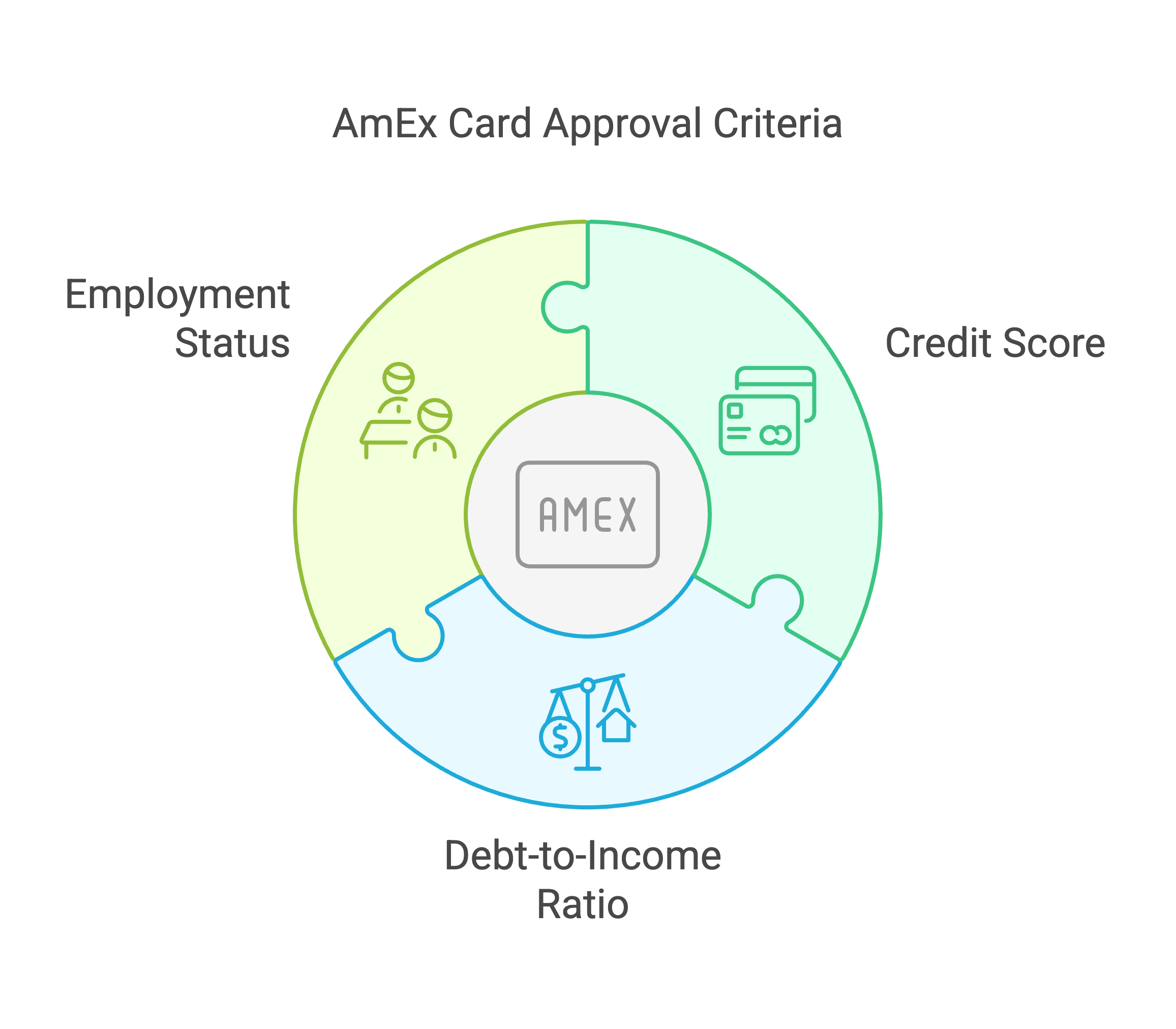
American Express credit card approval requirements vary based on the card. The key factors influencing approval, however, mirror many other major credit cards, starting with your credit score. These three factors are critical to becoming an authorized user:
Credit Score Requirements: Unlike some other credit cards, AmEx does not offer a subprime card, which means you need good credit to get approved. Typically, applicants are required to have a credit score of 670 or higher.
Debt-to-Income Ratio: Your debt-to-income ratio measures the percentage of your monthly income that goes towards paying debts, such as rent or mortgage, car payments, credit cards, child support, and more. To determine your ratio, divide your total monthly debts by your total monthly income. AmEx prefers a debt-to-income ratio in the low 30s or below.
Employment Status and History: Like many financial institutions, American Express considers your employment status and history as part of your credit card application. Naturally, if you have a stable employment industry with a solid salary, that is an indication that you will be able to make monthly credit card payments.
American Express Approval Criteria
Understanding Credit Scoring Systems
In a nutshell, a credit scoring system reviews your credit history — including history of repayment, debt, total accounts, and more — to calculate a credit score that predicts the likelihood that you will miss a payment by at least 90 days in the next two years.
FICO Score Explained
FICO scores range from 300 to 850, and most lenders use them to determine your creditworthiness. FICO, which stands for Fair Isaac Corporation, creates ratings based on the following scale:
Excellent: 800–850
Very Good: 740–799
Good: 670–739
Fair: 580–669
Poor: 300–579
VantageScore Overview
The three major credit rating agencies developed an alternative to FICO scores: the VantageScore. It also ranges from 300 to 850 and uses machine learning for its analytics, but its ranges are slightly different from FICO’s:
Excellent: 750–850
Good: 700–749
Poor: 550–649
Very Poor: 300–549
While FICO scores are still the most common form of credit scoring, VantageScore is growing rapidly. Both can provide a picture of your current credit status and future ability to make payments.
Tips for Improving Your Credit Score
If your credit score isn't already in the "excellent" range, you can take several steps to improve it.
Strategies to Boost Your Score
One of the best things you can do to boost your credit score is to make on-time payments for your other credit cards, rent or mortgage, and other monthly bills. Late and missed payments are reported to the national credit bureaus and can drag your score down, but timely payments will always work in your favor. If you struggle with remembering to make monthly payments, consider autopay options through your bank.
Other smart strategies include paying down balances, avoiding new credit applications, maintaining your oldest accounts for the sake of your credit history, and having a family member add you as an authorized user on their card, as long as they have a good payment history.
Monitoring Your Credit Report
Equifax, Experian, and TransUnion — the three national credit reporting bureaus — are required by law to provide a free annual credit report. If you haven't checked yours out lately, go for it! You might be surprised at errors or inaccuracies, which, when fixed, can help to boost your credit score.
How the American Express Approval Process Works
You can apply for an American Express online in about 10 minutes after reading the Terms and Conditions, although requirements can vary per card. American Express Platinum approval requirements may vary slightly from card approval requirements, for instance.
Application Process Overview
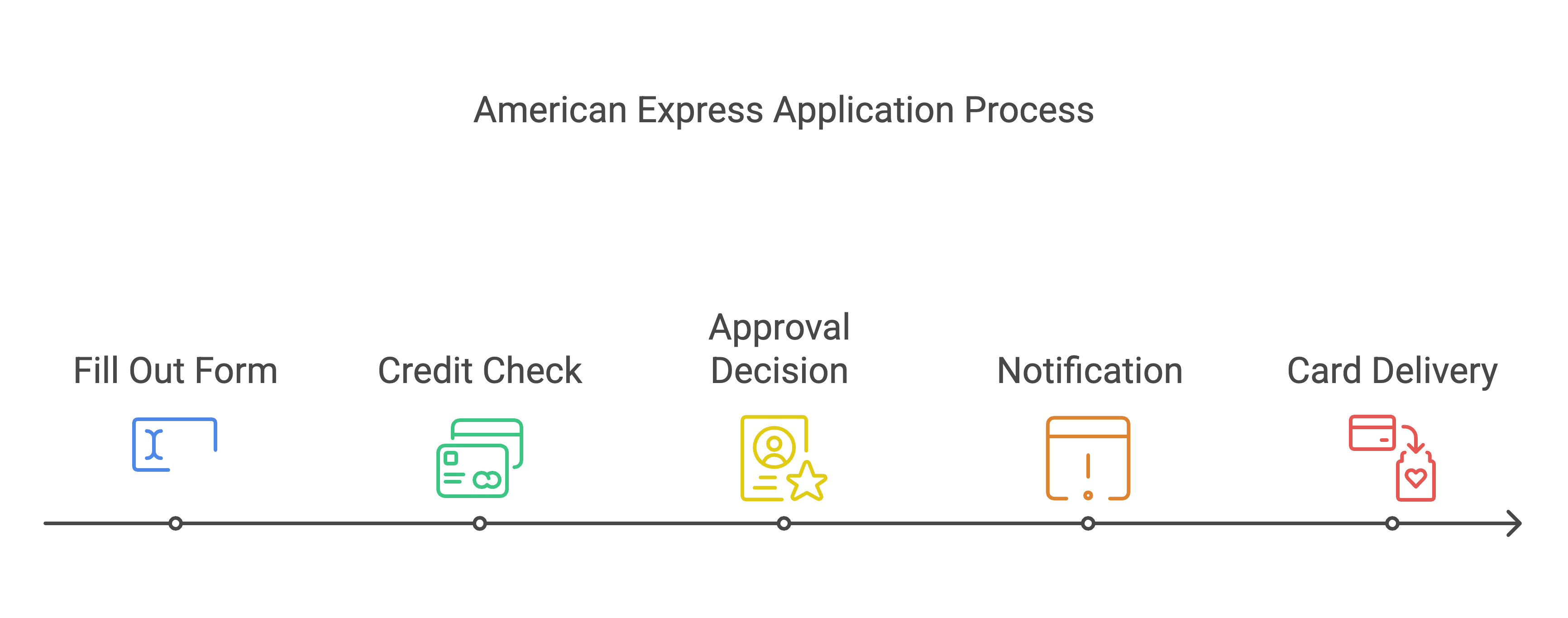
The typical process is as follows.
You fill out a form with your personal and financial information.
American Express checks your credit history and credit score.
You may receive an automatic approval, or American Express may use a manual review to check tax and employment information.
You are notified of AmEx's decision.
American Express Application Process
If your application is approved, you should receive your new card within three to five business days.
Pre-qualification: What It Is and How It Works
Much like it sounds, pre-qualification is a pre-screening that will give you a better idea of your likelihood of approval. American Express can perform a "soft" credit check that doesn't affect your credit score as a pre-qualification.
You can "apply with confidence" online for three different cards to determine your pre-qualification status.
American Express Application Rules
Not surprisingly, AmEx has several rules when it comes to applying for its coveted credit cards.
Number of Applications and Impact on Approval
You can only be approved for an AmEx card once every five days, and for two cards within 90 days. You will max out at five personal and business cards total.
Multiple Applications
If you do the math, that means you must wait at least six days between card applications if you are applying for multiple American Express cards. After that, you must wait another 90 days for any additional applications. Note that charge cards do not count toward the five-card limit, only personal credit cards do. Amex also enforces a once-per-lifetime welcome bonus rule, meaning you cannot earn the sign-up bonus on a card you have held before, even if the account was closed years ago. Some applicants also encounter "Pop-Up Jail," an informal term for a message shown during application indicating you may not be eligible for the welcome bonus based on your prior history with American Express.
Essential Qualifications for AmEx Card Applications
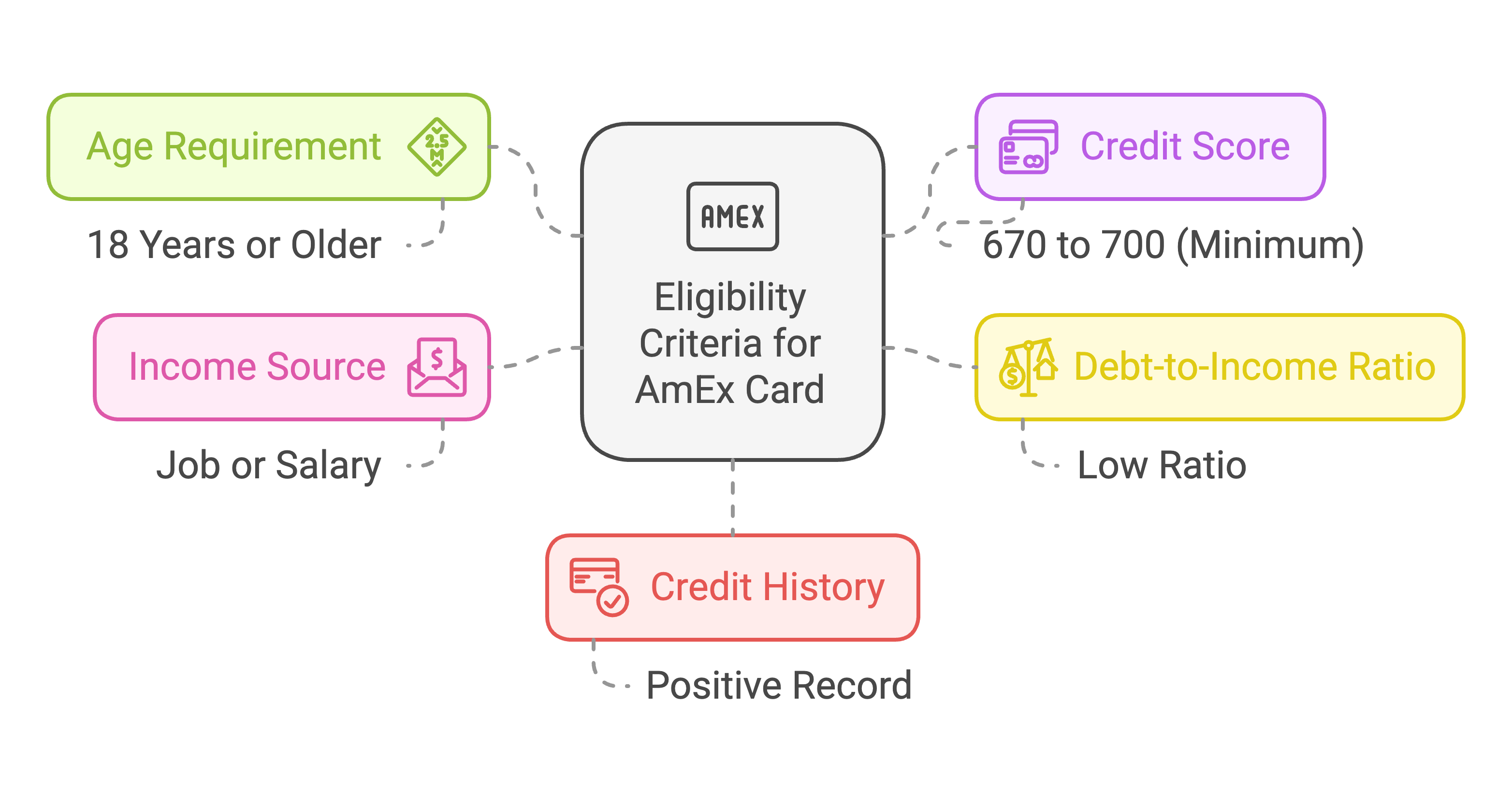
In general, to be eligible for an AmEx card, you will need to meet these requirements:
Be at least 18 years old
Have a minimum credit score of 670 to 700
Have a low debt-to-income ratio
Have a reliable source of income
Have a solid credit history
General Eligibility Criteria For American Express
Specific Requirements for Select Cards
Every AmEx card requires a good to excellent credit score. Beyond that, here are some specific requirements for select cards:
American Express Centurion (Black) Card: You must receive an invitation to apply for this exclusive card.
The American Express Gold Card requires a good credit score while the Platinum Business American Express Card, which is harder to earn and has a higher annual fee as well as better rewards, requires an excellent score. The Platinum is great for luxury travel benefits, while the Gold is a great option for earning everyday spending.
AmEx also offers a guide to "leveling up" when it comes to cards, their colors, and their associated perks.
Card-by-Card Requirements
Each American Express card has different approval thresholds. Entry-level cards like the Blue Cash Everyday and Amex EveryDay are accessible with good credit scores starting around 670, modest income, and limited credit history. Mid-tier cards like the Amex Gold and Blue Cash Preferred typically require scores of 690 or higher with a demonstrated history of on-time payments and moderate income. Premium cards like the Amex Platinum, Delta SkyMiles Reserve, and the Centurion (Black) Card demand excellent credit scores of 720 or above, higher income levels, and a strong relationship with American Express. Business cards like the Blue Business Plus and Business Gold generally require a personal score of 670 or higher plus demonstrated business income or revenue.
Income Requirements for American Express
American Express does not publish a specific minimum income for most cards, but your reported income is a significant factor in approval decisions and directly affects your credit limit. When filling out an application, you can include your personal salary, household income (if you are 21 or older), regular contributions from others, and investment income. Amex may request income verification through tax returns or pay stubs, especially for premium cards or high credit limit requests. For entry-level cards, applicants reporting annual income as low as $25,000 to $35,000 are commonly approved, while premium cards like the Platinum generally favor applicants reporting $75,000 or more.
What to Do If You're Denied an American Express Card
Roughly one in five Amex applicants is declined on the first review, but a denial is not the end of the road. The reason on your adverse-action letter — sent within 30 days under the Fair Credit Reporting Act — tells you exactly what tripped the algorithm and gives you a starting point to fix it.
Common denial reasons
Credit score below the card's threshold (most common — pulls from Experian for personal cards, Equifax or TransUnion for business).
Too many recent inquiries (six or more hard pulls in 12 months is a red flag).
High revolving credit utilization (above 30% across all cards).
Limited or thin credit file (under two years of history).
Income reported is too low for the card requested, or doesn't match what's on file with credit bureaus.
Recent late payments, charge-offs, bankruptcies, or other derogatory marks within the last 7 years.
You've previously had an Amex account closed by the issuer (a near-permanent disqualifier).
Calling the Amex reconsideration line
American Express runs a reconsideration line at 1-800-567-1083 (personal cards) and 1-866-314-0237 (business cards). A live underwriter can re-evaluate your application without pulling a second hard inquiry. Call within seven days of the denial decision while the file is still active, have the application reference number from your letter ready, and be prepared to explain (a) why you applied, (b) how you plan to use the card, and (c) any one-time event that suppressed your score (medical bill, divorce, recent move). About a third of denials are overturned on the recon call when the applicant is calm, prepared, and has the cleanest possible explanation.
When to reapply
If the recon call doesn't work, wait at least 90 days before reapplying for the same card. During that window, focus on the specific issue from the adverse-action letter: pay down balances to under 10% utilization, dispute any inaccurate items on your credit report with Equifax, Experian, and TransUnion, and avoid any new hard inquiries. Reapplying inside 90 days with the same underlying credit profile almost always produces the same denial.
How to Improve Your Approval Odds Before Applying
Amex's underwriting model rewards applicants who look low-risk on the day of application. Five concrete steps in the 30 to 60 days before you apply move the needle the most:
Pre-application checklist
Pay revolving balances down to 10% or less of your credit limits before your statement closes — this is the credit-utilization ratio that posts to the bureaus and is one of the heaviest weighted FICO inputs.
Pull your credit reports from each of the three bureaus and dispute any inaccurate negative items (incorrect late payments, accounts that aren't yours, debts past the 7-year reporting window).
Avoid any new hard inquiries for at least 90 days before applying — that includes auto loans, mortgage pre-approvals, and other credit card applications.
Use Amex's CardMatch tool, which performs a soft pull and tells you which cards you are pre-qualified for without affecting your credit score. Pre-qualified offers convert to approval at roughly 80%.
Make sure your address, employer, and reported income on the application match what's already on file with the bureaus and prior creditors. Mismatches can trigger a manual review and slow down or sink the approval.
Consider freezing your reports at Experian (the bureau Amex pulls personal cards from) only on the day of application — not before. A frozen report at the time of pull will cause an automatic decline.
Compare
Best Amex Cards by Credit Tier
The right Amex card depends on where your credit score actually sits today. The list below maps each major Amex personal card to the typical credit-tier range of approved applicants, drawn from publicly aggregated apply outcomes and the Federal Reserve's Survey of Consumer Finances income data. Use it as a starting point — Amex's underwriting also weighs income, utilization, and existing relationship.
Fair credit (580–669): Limited Amex options at this range. Strong applicants with low utilization can sometimes qualify for the no-annual-fee Delta SkyMiles Blue or for Amex's secured Optima card (invitation-only after a closed account). Most personal Amex cards target 670+, so it's usually worth spending 3 to 6 months building score first.
Excellent credit (740+): Premium Amex products are squarely in reach. The flagship Platinum Card from American Express carries the heaviest fee-and-credits package in the lineup. The Delta SkyMiles Reserve is the top pick for frequent Delta flyers. Approval at this tier is largely about income reported and existing Amex relationship rather than the score itself.
For a broader cross-issuer comparison covering Amex alongside Chase, Capital One, and Citi cards, see our guide to the best credit cards updated for 2026.
FAQ
Frequently Asked Questions
Ready to pick a card?
Compare the cards our editors rate highest right now, side by side, with the fees and rewards that matter.
Do any credit cards have truly fixed APR not variable? Learn why fixed rates are rare, where to find them at credit unions, and how to lock in stability.
Can you change your APR on a credit card? Learn how to negotiate a lower rate, use balance transfers, and leverage legal rights to reduce your interest costs.