How Much Does a Gold American Express Card Cost?


Introduction
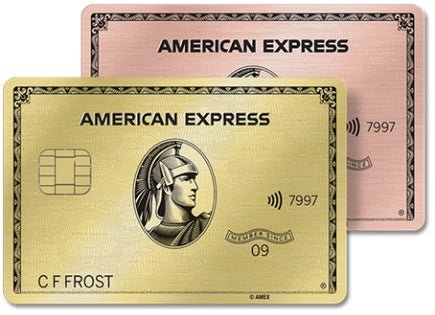
The American Express Gold Card currently carries a $325 annual fee. While this is the headline cost, the total expense of the card depends on how a cardholder manages their balance and utilizes the provided statement credits. For some, the card effectively pays for itself through rewards and credits, while for others, the interest rates and fees may outweigh the benefits.
MoneyAtlas tracks these costs and compares them against other premium cards to help you determine which financial products fit your spending habits. This article breaks down the annual fee, additional cardholder costs, interest rates, and the potential for offsetting these expenses through the card's built-in perks. Understanding the full cost is the first step in deciding if this card belongs in your wallet.
The Standard Annual Fee
The primary cost of the American Express Gold Card is the $325 annual fee. This fee is not waived for the first year and is typically charged on the first billing statement after you open the account. After the initial charge, the fee appears annually on your account anniversary date.
If a cardholder decides the fee no longer fits their budget, American Express generally offers a 30-day grace period from the date the fee is billed. Closing the account or downgrading to a different card within this window usually results in a refund of the annual fee. Beyond that 30-day window, the fee is typically non-refundable.
While $325 may seem high compared to entry-level cards, it sits in the middle of the American Express hierarchy. It is significantly more expensive than the Blue Cash Everyday card review, which has a $0 annual fee, but much less than the American Express Platinum Card review, which carries an annual fee of $695 or more depending on current terms.
Costs for Additional Card Members
Adding family members or employees to an account is a common way to accumulate rewards points faster. For the Gold Card, the cost of adding these additional cardholders is structured to favor smaller groups.
- First 5 Additional Cards: There is a $0 annual fee for the first five additional Gold Cards added to the primary account.
- 6th Card and Beyond: Starting with the sixth additional cardholder, the cost is $35 per card annually.
It is important to remember that the primary cardholder is legally responsible for all charges made by additional users. While these users help earn points, their spending impacts the primary cardholder's credit utilization and payment obligations. MoneyAtlas recommends setting individual spending limits for additional users, which American Express allows for amounts as low as $200.
Interest Rates and Pay Over Time
The American Express Gold Card is unique because it is not a traditional credit card with a set revolving limit for all purchases. It historically functioned as a charge card, meaning the balance was due in full every month. Today, most Gold Cards come with a "Pay Over Time" feature.
Pay Over Time APR
The Pay Over Time feature allows cardholders to carry a balance on eligible purchases of $100 or more, similar to a traditional credit card. This feature carries a variable Annual Percentage Rate, or APR.
The APR for Pay Over Time typically ranges from 21% to 29% based on creditworthiness and the current prime rate. Because these rates are variable, they can change as the Federal Reserve adjusts interest rates. If you carry a balance, the interest charges can quickly exceed the value of any rewards points earned. For additional context, read MoneyAtlas's guide to how APR works on credit cards.
Cash Advance APR
If a cardholder uses the card to access cash at an ATM, a separate Cash Advance APR applies. This rate is usually higher than the standard Pay Over Time APR, often exceeding 29%. Additionally, cash advances do not have a grace period, meaning interest begins to accrue the moment the cash is withdrawn.
Penalty Fees and Fine Print
Beyond the annual fee and interest, there are several incidental costs that can arise from how the account is managed.
Late Payment Fee
Missing a payment deadline results in a late fee of up to $40. Furthermore, repeated late payments can trigger a "Penalty APR." This is a significantly higher interest rate, often around 29.99%, that can be applied to your account indefinitely.
Returned Payment Fee
If a payment is made from a bank account with insufficient funds, American Express charges a returned payment fee of up to $40. This is in addition to any fees the personal bank may charge for the bounced transaction.
Foreign Transaction Fees
One area where the Gold Card saves users money is international spending. The card has a 0% foreign transaction fee. Many other cards charge a 3% fee on every purchase made outside the US. For a traveler spending $5,000 abroad, the Gold Card saves $150 compared to a card that charges these fees.
Offsetting the Cost with Credits
Most people who carry the Gold Card do so because the "effective cost" is much lower than $325. This is achieved by using the statement credits American Express provides. If you already spend money at the participating merchants, these credits act like cash.
Uber Cash
Cardholders receive $10 in Uber Cash each month, totaling $120 per year. This can be used for Uber rides or Uber Eats orders in the US. To receive this benefit, the Gold Card must be added to the Uber app, and the credit expires at the end of each month if unused.
Dining Credit
The $120 annual dining credit is distributed in $10 monthly increments. This credit is only valid at specific partners, including Grubhub, The Cheesecake Factory, Five Guys, Buffalo Wild Wings, and Wonder. Enrollment is required through the American Express benefits dashboard.
Resy Credit
The Resy credit provides up to $100 back per year for purchases at US restaurants that use the Resy platform. This is split into two $50 credits: one for the first half of the year and one for the second half. This credit is particularly useful for frequent diners in major cities where Resy is common.
Dunkin' Credit
The newest addition to the card is a $7 monthly credit for use at US Dunkin' locations. This totals $84 annually. Like the other credits, it does not roll over to the following month.
The Math of Rewards Points
The Gold Card earns Membership Rewards points, which can be used to book travel or transferred to airline and hotel partners. The "cost" of the card can be further mitigated by the value of the points earned on everyday spending.
- 4X Points at Restaurants: This applies to restaurants worldwide, including takeout and delivery in the US, on up to $50,000 in purchases per year.
- 4X Points at US Supermarkets: This applies on up to $25,000 in purchases per year.
- 3X Points on Flights: This applies to flights booked directly with airlines or through the American Express travel portal.
For a household that spends $1,000 per month on groceries and $500 per month on dining, the card would earn 72,000 points per year. Many travel experts value Membership Rewards points at roughly 1 cent to 2 cents each when transferred to partners. This means the rewards alone could be worth $720 to $1,440 annually, far exceeding the $325 fee.
Comparing Costs with Other Cards
When deciding if the Gold Card cost is justified, it helps to compare it against other popular options. MoneyAtlas provides detailed comparison tools to see these side-by-side through its travel credit card comparison.
Amex Gold vs. Amex Platinum
The Platinum Card has a much higher annual fee, often $695 or more. While it offers more luxury travel perks like airport lounge access and higher hotel status, its rewards for grocery spending are much lower than the Gold Card. The Gold Card is generally better for "foodies," while the Platinum is built for frequent travelers.
Amex Gold vs. Blue Cash Preferred
For those who want to avoid high annual fees, the Blue Cash Preferred Card review has a lower fee, often around $95, sometimes waived the first year. It offers 6% cash back at US supermarkets on up to $6,000 per year. While the "cost" is lower, the rewards potential for high spenders is also capped more strictly than the Gold Card.
Amex Gold vs. Chase Sapphire Preferred
The Chase Sapphire Preferred Card review is a direct competitor with a lower $95 annual fee. It offers 3X points on dining and travel rewards. While the upfront cost is lower, it lacks the heavy-hitting $424 in statement credits that the Gold Card provides.
Step-by-Step: Evaluating the Cost for Your Budget
Before applying, follow these steps to see if the Gold Card fits your finances.
Evaluating the Cost for Your Budget
- 1
Calculate your food spending
Look at your bank statements for the last three months. Total your spending at supermarkets and restaurants. If you spend less than $500 a month in these categories combined, the 4X points may not generate enough value to justify the fee.
- 2
Audit your app usage
Do you already use Uber or dining services? If you use these services at least once a month, you can count that $240 in credits as "found money" that reduces the $325 fee to an effective $85.
- 3
Check your credit score
The Gold Card generally requires good to excellent credit, typically a score of 670 or higher. Applying for a card and being denied results in a hard inquiry on your credit report, which can temporarily lower your score without providing any benefit.
- 4
Review the current welcome offer
American Express often offers a "welcome bonus" of 60,000 to 90,000 points after you spend a certain amount in the first few months. This bonus alone can cover the cost of the annual fee for several years. Verify the current offer before applying, as these change frequently.
Managing the Pay Over Time Limit
While the Gold Card does not have a traditional "credit limit" in the sense that you can spend up to a certain amount and carry it all month to month, it does have a "Pay Over Time Limit." This is the maximum amount you are allowed to carry as a balance with interest.
Any spending beyond this limit must be paid in full by the statement due date. If you spend $10,000 and your Pay Over Time limit is $5,000, you must pay at least $5,000 that month plus the minimum payment on the revolving portion. Failing to understand this can lead to unexpected cash flow issues. For a deeper explanation, see MoneyAtlas's guide to when credit card APR is applied.
How to Apply and Compare
If the $325 annual fee aligns with your spending, the application process is handled through the provider's website. However, because the market for rewards cards is highly competitive, comparing the Gold Card against similar offerings is a smart financial move.
MoneyAtlas allows you to view these cards side-by-side, comparing the "real cost" after credits and the expected reward yield based on your specific monthly budget. You can start with the best credit card comparison to compare broader options. Choosing a card is a long-term financial commitment. Ensuring that the annual fee provides a positive return on investment is the key to successful credit card management.
MoneyAtlas Staff
Articles and reviews from the MoneyAtlas editorial team — independent research on credit cards, banking, loans, insurance, and investing.
Related Articles

How to Cancel Your American Express Gold Card
Learn how to cancel American Express Gold card accounts without losing points. Step-by-step guide on chat cancellation, fee refunds, and credit score impact.

Which Is Better American Express Gold or Platinum?
Which is better American Express Gold or Platinum? Compare rewards, fees, and travel perks to find the right card for your lifestyle and spending.

What Is the Limit for American Express Gold Card?
Wondering what is the limit for American Express Gold card? Learn how the No Preset Spending Limit works and how to check your dynamic spending power.