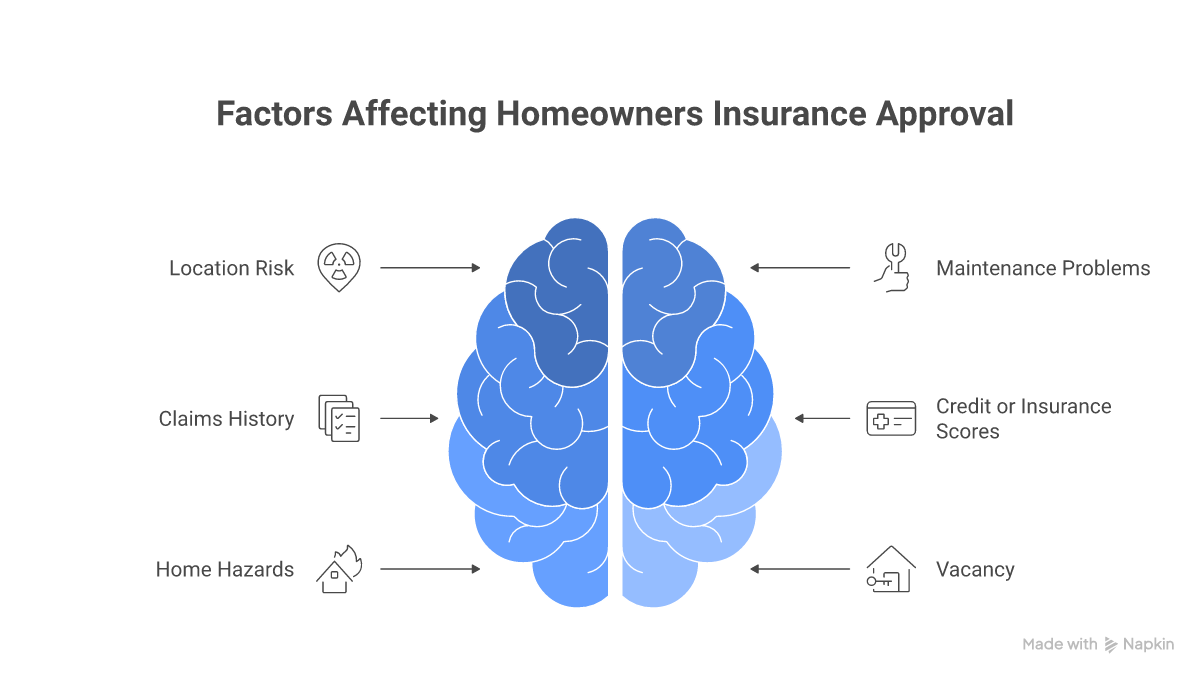
Getting home insurance isn’t always easy. You could be denied because you live in a wildfire-prone area, have a low credit score, or have filed claims in the past.
Fortunately, you’re not out of luck even if you aren't able to get traditional insurance. There are specialized policies for high-risk properties and their owners. You might be able to get a government-backed insurance plan. You can also work on improving your home’s safety and security features, which can lower the perceived risk of insuring you.
To help, we’re diving into the possible reasons why you've gotten a denial and what to do if you can't get homeowners insurance.
Understanding Homeowners Insurance
Your home insurance policy works like a safety net, protecting you financially if your property ever gets damaged. No state law says you have to have homeowners insurance, but your lender will likely require it if you finance your home.
Most homeowner's policies cover your home's physical structure, detached buildings like sheds and garages, and the belongings inside your home. They also typically cover legal costs if someone gets injured at your house or their personal property gets damaged.
When a homeowner's insurance company determines coverage, they do a risk-benefit analysis. They’ll look at your home’s characteristics, including its location, age, general condition, occupancy history, and safety features. They’ll also review your credit and insurance scores to decide how risky it is to insure your property.
Reasons You May Be Denied Homeowners Insurance
Location
If you live in an area that’s prone to natural disasters or has a high property crime rate, it might be significantly harder to get homeowners insurance coverage. Even if you’re able to find a policy, the company may charge you higher insurance rates.
Maintenance Problems
Insurance companies prefer to cover homes that are in good condition. If your house has structural damage, foundation issues, or old plumbing and electrical systems, it’s harder to get insurance.
Claims History
If you’ve filed multiple claims in the past, insurers might assume you’re likely to file additional claims. Past claims filed on your home by previous owners can also increase the chances of a denial.
Low Credit or Insurance Scores
Insurers review your credit score and credit-based insurance score to determine how risky you are to insure. A low score might mean you can’t get traditional insurance.
Home Hazards
If your house has a wood-burning stove that hasn’t been inspected recently or an old septic or HVAC system, insurance companies may see these as potential hazards and deny coverage.
Vacancy
Houses that are vacant for part of the year are sometimes harder to insure. In some cases, you can get around this issue by explaining the situation to your insurance agent and by adding security features.
Six categories of homeowners insurance denial reasons
Steps To Take When You Can't Obtain Insurance
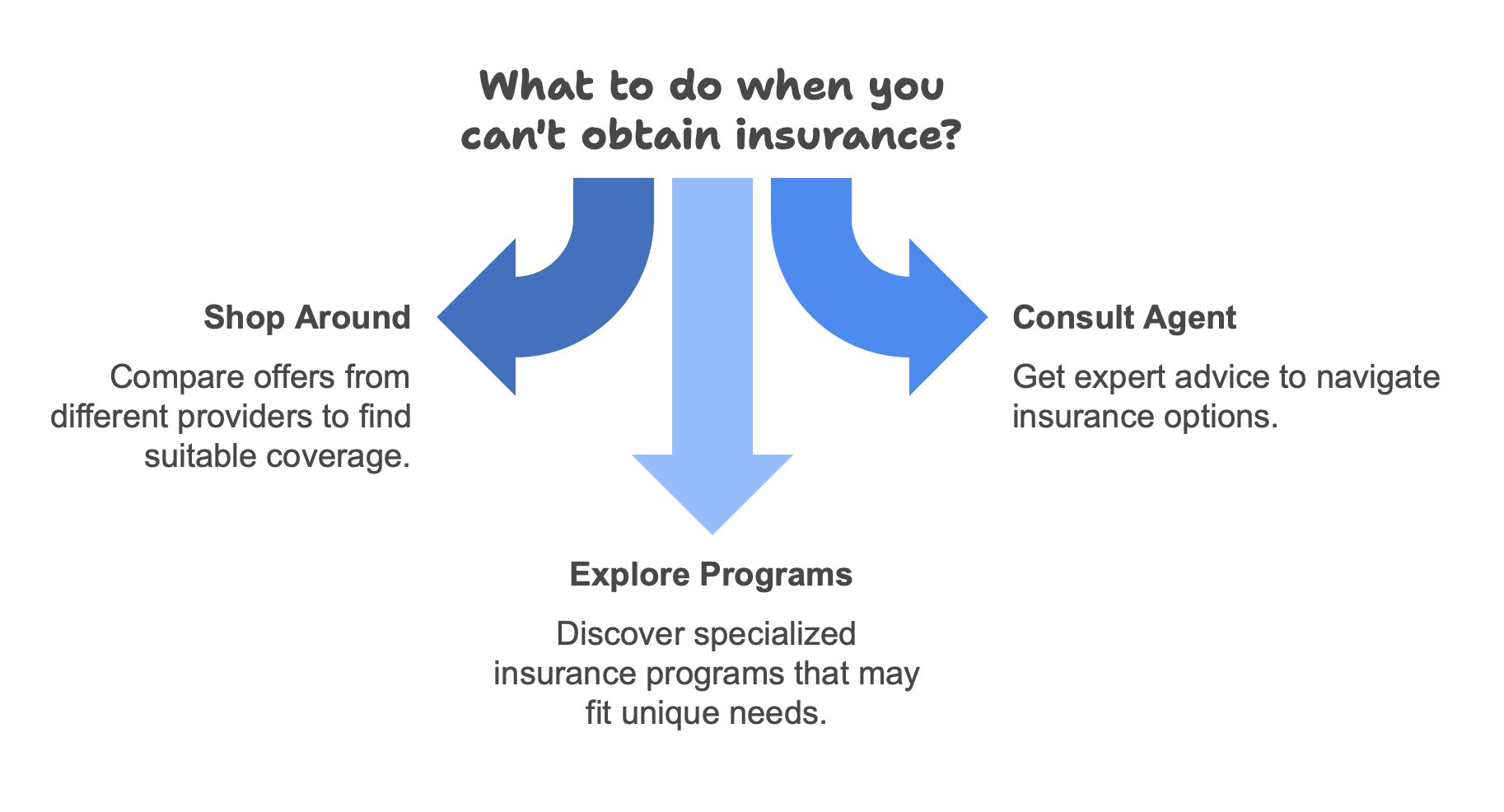
A graphic showing the simple steps to take when you can't get homeowner's insurance.
Shop Around for Different Insurance Providers
Insurance companies aren’t all created equal. If you’ve been denied, don’t give up. Even if most standard homeowners insurance policies won’t cover your home, you may still find a provider that approves coverage. Always contact multiple insurance providers to compare policies and see if you meet their eligibility requirements.
Consult With an Experienced Insurance Agent
You shouldn’t have to be an expert in insurance to get the coverage you need. Try reaching out to an insurance agent or advisor to get advice and find an insurance policy that works for you. Be sure to bring a list of questions to ask your home insurance agent.
Explore Specialized Insurance Programs
If your home is difficult to insure, you still have options. You may be eligible for a government-run insurance program such as a Fair Access to Insurance Requirements (FAIR) plan.
These programs are a last resort for homeowners living in high-risk locations. They offer standard insurance coverage against basic hazards like fires and windstorms. But keep in mind that FAIR coverage is more expensive than traditional insurance and typically doesn’t provide theft or liability coverage.
Understanding Your Rights as a Homeowner
You have the right to fair treatment and transparency when you’re dealing with insurance providers. Legal regulations differ by state, but you’re entitled to the following in nearly all states:
Fair consideration without discrimination based on race, gender, disability, or religion
A written description of your coverage options
A written explanation if you’re denied
Personal privacy and data protection
The option to compare different policies from multiple providers
The opportunity to dispute a denial or unfair quote
What To Do If Your Application Is Denied
If you’re denied coverage, carefully review the denial letter. If you don’t understand the specific reasons for denial, contact the insurer to get clarification.
If you think the denial was unjustified, you can file an appeal and provide evidence to try to alter their decision. You also have the right to file a complaint with the insurance department in your state or even take legal action.
Steps To Take During a Policy Cancellation or Nonrenewal
It’s frustrating and stressful when your insurer cancels your coverage or doesn’t renew your policy. If this happens, take the following steps:
Contact your provider: Reach out to your insurance company to figure out why your policy has been canceled.
Review laws and regulations: Familiarize yourself with the insurance requirements and rules in your state.
Try to mitigate problems: Depending on the cancellation reason, you should complete any outstanding payments and/or make changes to your property to reduce risk.
Appeal the decision: If the cancellation was unfair, file an appeal with the insurance department or commissioner in your area.
If you can’t reinstate your insurance, look for alternative options. Consider investing in a short-term insurance solution to get limited coverage during this transitional period. If you’re a high-risk homeowner, explore state-run FAIR plans and private surplus lines insurance, which operate outside state regulations.
Improve Your Insurability Score With MoneyAtlas
Worried about what to do if you can't get homeowners insurance? You don’t have to figure it out alone. MoneyAtlas is your one-stop shop for comprehensive financial information.
From understanding home insurance policies to choosing the right type of loan, we can help you gain the knowledge you need to create a solid financial future.
See what you could be paying
Get auto insurance quotes from top carriers in a couple of minutes.
Compare pet insurance plans that cover dental cleanings, extractions, and periodontal disease. See which top insurers include dental — and which exclude it.
Home warranties cover appliance and system breakdowns; home insurance covers disasters and liability. Here's what each covers, what they cost, and whether you need both.
Young drivers pay 2-3x more for car insurance. We compared the best and cheapest options for 18-25-year-olds — including discounts that can cut your rate by 30%.