If you’re like most American homeowners, your house is your most valuable asset. Home insurance protects your investment by covering financial losses when an unexpected event such as a fire, burglary, natural disaster, or liability claim occurs.
Knowledge is power if you want to make informed financial decisions, whether you’re buying a homeowner's insurance policy, applying for a credit card, or financing a car. You need to make sure you understand the coverage limits, deductibles, exclusions, and renewal terms. So read on for a few key questions to ask a home insurance agent before committing to a policy.
Understand What the Standard Policy Covers
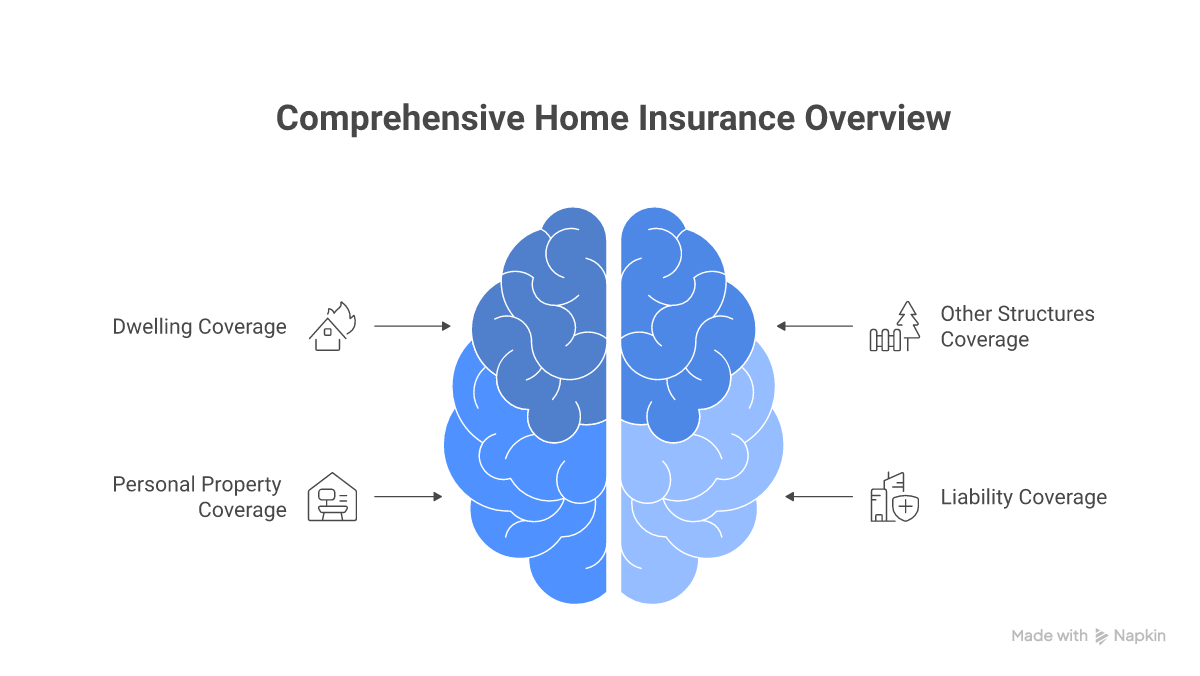
Coverage varies between insurance providers, so always ask your agent what their standard policy covers. With most insurance providers, this includes:
Dwelling coverage: Protects the structure of your home if it’s damaged due to events like fires, hail, and vandalism.
Other structures coverage: Covers detached structures like sheds, garages, fences, and guest houses.
Personal property coverage: Covers your personal belongings, such as furniture, electronics, and clothing.
Liability coverage: Covers medical and legal expenses if someone gets injured on your property or you accidentally damage someone else's personal property.
Additional living expenses coverage: Covers the cost of housing, meals, and other necessities if your home becomes uninhabitable due to a covered event.
What standard home insurance covers
Inquire About Personal Property Protection
Personal property protection covers loss or damage of personal belongings in the event of a fire, theft, or other covered peril. Standard policies typically have coverage limits of 50-70% of your total dwelling coverage.
You may be able to extend your coverage to items outside of your home as well, but this depends on specific inclusions within a policy.
Ask About Liability Coverage Options
Liability coverage protects you if you’re legally responsible for another person’s bodily injuries or property damage. This type of coverage can include financial reimbursement for medical bills and legal payouts to injured parties.
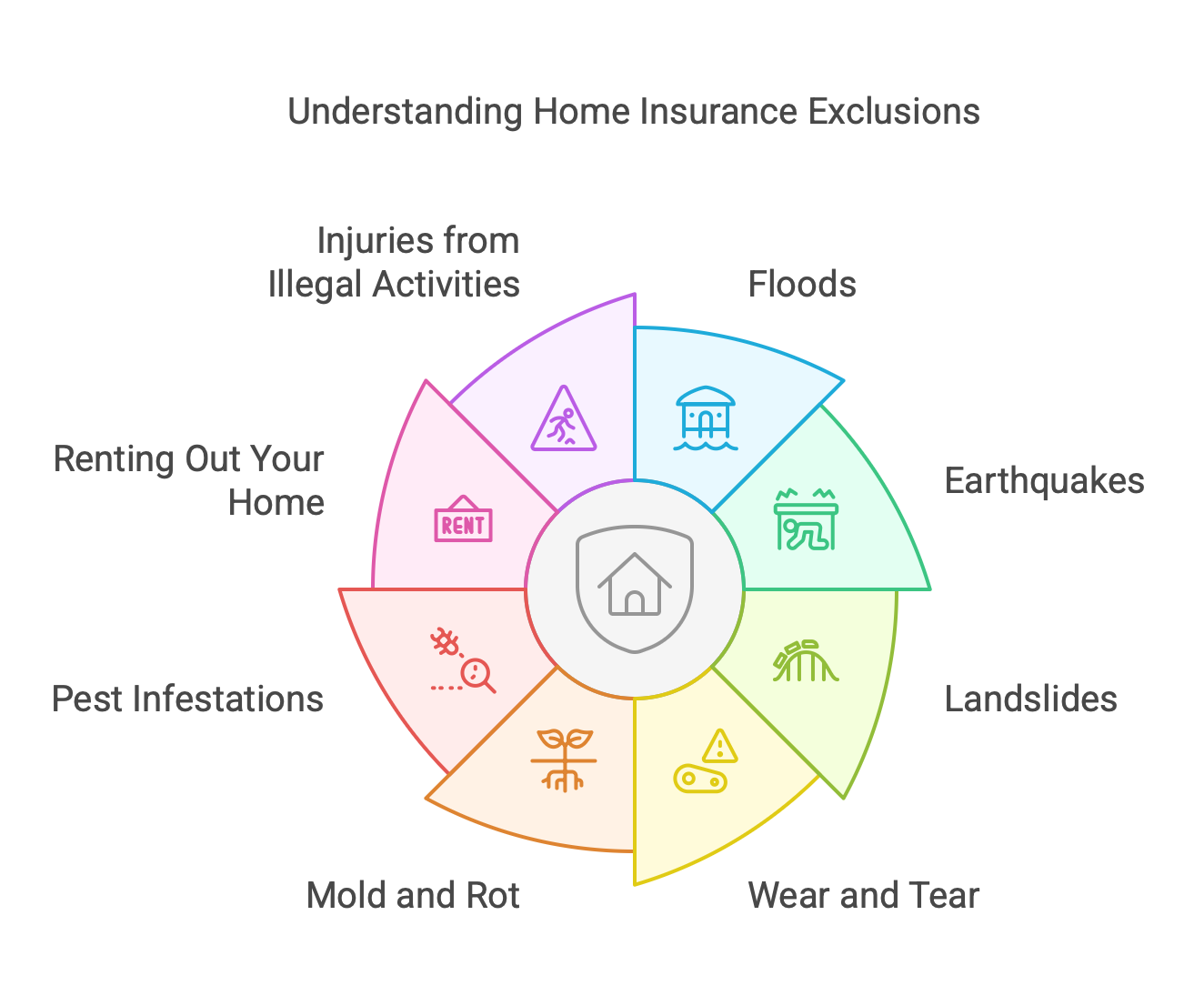
Clarify Exclusions in the Policy
A graphic about different home insurance exclusions.
Ask your agent about exclusions (what isn’t covered in a policy) so you can look into buying extra coverage if needed.
Renting out your home (may require landlord insurance)
Injuries from illegal activities
Discuss Replacement Cost vs. Actual Cash Value
Most providers offer one of two types of coverage: replacement cost or actual cash value (ACV). It’s crucial to understand the difference because it affects how much you’ll get paid for insurance claims.
If your policy covers replacement costs, you’ll receive the full amount to replace or repair damaged property, with nothing deducted for depreciation like wear and tear. ACV covers the current market value of the damaged items, factoring in depreciation.
While ACV can be cheaper, replacement cost is often a better choice if you’re looking for full reimbursement of valuable items.
Assess Coverage Limits for Liability
Most standard liability coverage offerings have limits between $100,000 and $500,000. However, the extent of your coverage should reflect your specific needs, situation, and risk tolerance.
For example, you may require a higher liability limit if you:
Have a high net worth
Have a large square footage home
Have potential risks in your home (pool, trampoline, aggressive dog, etc.)
Live in a dangerous area
Understand Coverage for Additional Living Expenses
Additional living expenses coverage helps you pay for necessities like housing and food if your home becomes uninhabitable due to a covered event. Insurance will cover these costs up to your policy limits (usually 20-30% of your dwelling coverage), often within a specified time frame. Ask your agent about these details before buying a policy.
Inquire About Discounts and Savings Opportunities
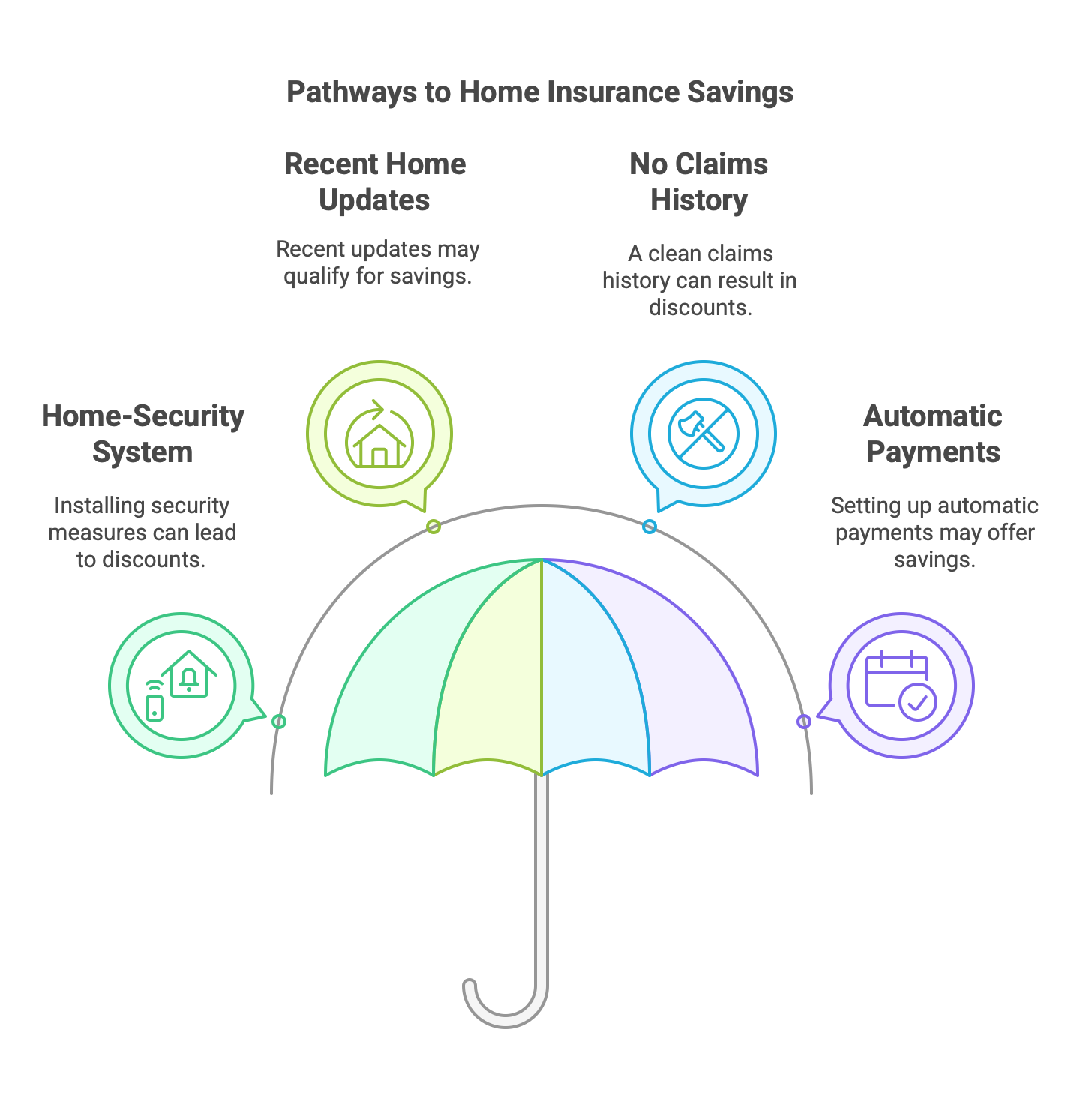
A graphic showing an umbrella and potential ways to access home insurance savings.
It’s always recommended that you discuss potential discounts with your insurance company to maximize savings. Many policies offer opportunities to save money on your premiums under certain circumstances. For example, you may be eligible for discounts if:
You have a home-security system
Your home has recently been updated
You have no claims history
You set up automatic payments
Clarify the Role of Deductibles
Your deductible is the amount you have to pay out-of-pocket before your insurance starts covering a claim. Deductibles may be fixed amounts (usually between $100 and $5,000) or a certain percentage of your home’s insured value (typically 2-5%). Generally speaking, the higher your deductible, the lower your premium. Depending on your risk tolerance and the frequency of claims, you may have the option to pay a higher deductible in order to save money on monthly payments.
Ask About the Claims Filing Process
One of the most important questions to ask your home insurance agent is: “How does the claims filing process work?” It’s vital that you have a clear understanding of the step-by-step process of filing a claim. Be sure to inquire about:
Deadlines for filing
Required documentation
Timelines for filing and receiving a payout
What happens in the event of a denied claim
Future impact on premiums
Understand Policy Renewal Terms
Make sure you ask your agent about the renewal process in order to avoid any surprises or gaps in coverage.
Homeowner's insurance terms typically last for a year. Most providers will send you a renewal notice annually with your updated premium and policy terms. Typically, you’ll have a specified period (often 30 days) to review your policy and decide if you want to make any changes before your policy renews automatically with the new terms.
Ask About Policy Bundling Options
Lowering your monthly insurance premiums is one of the simplest and most effective strategies to save money.
You can often reduce your monthly payments by purchasing multiple types of insurance through the same provider. Ask your agent if they offer discounts or savings when you bundle your home insurance policy with car insurance, life insurance, renters insurance, or other offerings.
Get the Right Home Insurance Coverage: Be an Informed Policyholder
Knowing what questions to ask your home insurance agent is just the first step in making an informed decision when buying home insurance. Once you have their answers, be sure to do your own research and compare policies from multiple providers.
If you’re looking for reliable information about home insurance and other financial topics from a trustworthy source, check out MoneyAtlas, a free tool for expert comparisons right at your fingertips.
See what you could be paying
Get auto insurance quotes from top carriers in a couple of minutes.
Does American Express Gold Card cover car rental insurance? Yes, it offers secondary coverage for theft and damage. Learn how to activate it and stay protected.
Compare pet insurance plans that cover dental cleanings, extractions, and periodontal disease. See which top insurers include dental — and which exclude it.
Home warranties cover appliance and system breakdowns; home insurance covers disasters and liability. Here's what each covers, what they cost, and whether you need both.