Pet dental care is expensive — a single cleaning can run $300–$800, and an extraction can move into four figures. Whether your pet insurance helps or leaves you on the hook depends on the type of dental work and the policy fine print.
Even when a policy covers dental care, caps, waiting periods, and pre-existing exclusions can leave you owing more than expected. The sections below break down what each major insurer covers, what they don't, and how to compare.
Quick Answer: Does Pet Insurance Cover Dental?
Most accident and illness pet insurance plans cover dental illness — including periodontal disease, tooth extractions, gingivitis, and abscesses — but exclude routine cleanings. To get cleaning coverage, you typically need a wellness add-on. Top plans with the broadest dental inclusion in 2026: ASPCA, Embrace, Pumpkin, MetLife, and Spot. Lemonade, Healthy Paws, and Trupanion cover dental from accidents and some illnesses but often exclude extractions tied to periodontal disease.
Dental Illness vs. Dental Accident: The Split That Decides Your Claim
Almost every denied dental claim traces back to one distinction, and most policy pages bury it. A dental accident is sudden trauma: a fractured canine from a bone, a tooth knocked out in a scuffle, a jaw injury from a fall. A dental illness is disease that builds over time, which covers periodontal disease, gingivitis, abscesses, and resorptive lesions. Accident-only policies pay for the first category and nothing else. Accident-and-illness policies, which is what most people actually buy, pay for both.
The practical test is what your vet writes on the invoice. An extraction billed as trauma repair after a fracture clears on nearly any plan. The same extraction billed as advanced periodontal disease needs illness coverage, a satisfied waiting period, and no earlier mention of dental disease in the medical record. That last condition is where owners get caught. If a vet noted mild tartar at a wellness visit two years ago, some insurers treat everything downstream as pre-existing.
Types of Dental Coverage in Pet Insurance
Plans split dental coverage into two buckets: routine cleanings (preventive) and treatment (extractions, surgery, periodontal work). Most accident-and-illness plans cover the second bucket; the first usually requires a wellness add-on.
Preventative Dental Care
Routine oral care matters, but most accident-and-illness plans don't cover it. Some insurers offer an add-on to your plan that pays a portion of preventive dental costs, including:
Checkups
Cleanings
Polishing
X-rays
Insurers that don't cover routine cleanings often require them anyway as a condition of coverage. Cleanings include scaling under anesthesia. Skip them and the insurer can deny later claims tied to periodontal disease.
Treatment-Oriented Dental Care
Treatment-side coverage matters most when costs spike unexpectedly. Insurance offsets the bill for procedures including:
Tooth extractions
Root canals
Crowns
Periodontal surgeries
Coverage depends on plan type. Accident-and-illness plans typically include periodontal disease and emergency dental work. Accident-only plans cover injuries like tooth fractures but exclude disease-driven extractions.
Common Dental Conditions Covered by Pet Insurance
Most plans focus dental coverage on illness and accident-driven care. Tooth extraction is the most common procedure: a vet removes the tooth due to damage or decay.
Most plans cover diagnosis and treatment of periodontal disease (also called gingivitis or gum disease), which develops when plaque accumulates on un-cleaned teeth.
Which Dental Procedures Are Covered, Procedure by Procedure
Coverage rarely hinges on the name of the procedure. It hinges on what caused the problem. The AVMA on pet dental care calls dental disease the most common clinical condition in adult dogs and cats, so none of this is an edge case. Here is how the common procedures actually get adjudicated.
Dental cleaning (prophylaxis). Excluded on every base accident-and-illness plan. A routine prophylaxis, meaning scaling and polishing under general anesthesia, is preventive care, and preventive care needs a wellness rider. Expect a rider to reimburse $100 to $300 a year against a $300 to $800 cleaning bill.
Tooth extraction. Covered when the cause is covered. Trauma-driven extractions clear on accident-only and accident-and-illness plans alike. Disease-driven extractions need illness coverage. Insurers pay the extraction, the anesthesia, and the recovery medication, but not the cleaning performed in the same visit.
Root canals and crowns. A root canal on a fractured tooth is usually paid as accident treatment. Crowns are where plans diverge: some pay when the crown restores function after trauma, others classify every crown as cosmetic and decline it. Read the cosmetic-exclusion clause, not the dental section.
Periodontal disease. The most-claimed and most-denied dental condition. Covered under illness plans if it develops after the waiting period and the pet had no documented dental disease at enrollment. Board-certified veterinary dentists stage the disease from grade 1 through grade 4, and adjusters read those grades straight off the chart.
Gingivitis. Early-stage gum inflammation, handled the same way as periodontal disease because it is the first stage of it. It is also the single most common trigger for a pre-existing dental exclusion, since it lands on routine exam notes long before an owner notices anything is wrong.
Stomatitis. Severe oral inflammation, most common in cats, and often resolved only by full-mouth extraction. Covered as an illness, and expensive enough that the plan's annual limit matters more than any dental rider. This is the scenario that argues for buying a higher cap rather than a cleaning benefit.
Feline tooth resorption. Lesions that erode the tooth from the outside in, affecting a large share of adult cats. Feline tooth resorption is covered as an illness. Treatment is extraction, priced per affected tooth, and cats frequently present with several at once.
Dental radiographs and anesthesia. Both are covered when they support a covered procedure and excluded when they support a routine cleaning. Same imaging, same drugs, different line on the claim form. The AAHA dental care guidelines treat radiographs and anesthesia as standard parts of any real dental assessment, which is why the cleaning-versus-treatment line is blurrier in the exam room than it is in the policy.
Which Pet Insurers Cover Dental — 2026 Comparison
The chart below shows which major pet insurers cover dental illness, dental accidents, and routine cleanings (via wellness add-on) as of April 2026. Coverage rules change, so always verify with the provider before purchase.
Major Pet Insurance Providers and Their Dental Policies
Major insurers handle dental coverage differently. None offer standalone dental policies; instead, dental is built into accident-and-illness plans, with optional wellness riders for cleanings.
Embrace
Embrace's pet insurance policy covers dental illnesses and injuries, including periodontal disease, gingivitis, tooth loss, and abscessed teeth. The company will pay up to $1,000 for treatment per policy term. You can also purchase their wellness rewards add-on, which reimburses you for preventative dental cleaning costs.
Healthy Paws
The Healthy Paws pet insurance plan covers unexpected accidents and illnesses, including tooth extraction and reconstruction. Their policy also covers conditions such as dental malocclusion, stomatitis, and dentigerous cysts. They don't offer any coverage for routine care or extractions and reconstructions necessary due to dental disease.
Lemonade
If you purchase a Lemonade pet insurance plan, you automatically receive coverage for dental care related to accidents. You can customize your plan with a dental illness add-on, covering the diagnosis and treatment of dental conditions related to illness. Lemonade also offers preventative care packages for routine dental care.
Spot
Spot's dental illness coverage includes periodontal disease and disease-driven extractions on its accident-and-illness plans, with no upper age limit at enrollment. Cleanings need the Gold or Platinum wellness add-on.
MetLife Pet
MetLife Pet dental coverage is the broadest in this group and carries no upper age cutoff, which makes it the default answer for anyone insuring an older dog with a dental history already forming. Routine cleanings still require the wellness rider.
Fetch
Fetch pet insurance dental benefits cover dental illness and injury up to $1,000 a year. Fetch sells no wellness rider, so cleanings come entirely out of pocket. Good treatment coverage, no preventive path.
ASPCA
ASPCA pet insurance dental coverage runs to the plan's annual limit with no dental sub-cap and no age cutoff. Its Preventive add-on reimburses toward one cleaning a year, which is the cheapest way onto the preventive side in this set.
Pumpkin
Pumpkin dental coverage includes dental illness on both adult and puppy or kitten plans. Its Preventive Essentials package is a separate non-insurance benefit rather than a rider, so cleaning reimbursements do not draw down the deductible.
Nationwide
Nationwide covers dental illness on its Whole Pet plan and not on the cheaper Major Medical tier. That is the trap on this brand: two products, one name, very different dental answers. Confirm which one you are being quoted before you compare the premium.
Trupanion
Trupanion pays for dental illness only if you have kept up annual dental exams and cleanings, and it declines new pets at 14. It also runs the longest effective dental wait of any insurer here, so it is a plan you buy early or not at all.
Figo
Figo covers dental illness after a dental-specific waiting period that is longer than its standard illness wait. Buying Figo in reaction to a diagnosis will not work. Accident-driven dental care follows the normal schedule and starts far sooner.
Pets Best
Pets Best covers dental illness on its accident-and-illness plans and folds dental into a $1,000 routine care add-on. It is one of the few riders that names dental explicitly instead of burying it inside a generic wellness allowance.
PetPlan (now ManyPets)
PetPlan is still the name people search, but the US brand became ManyPets and stopped writing new policies there. Existing policyholders should read their own schedule of benefits for dental extraction language. Anyone shopping today should treat it as unavailable and compare the plans above instead.
Exclusions and Limitations of Pet Dental Insurance
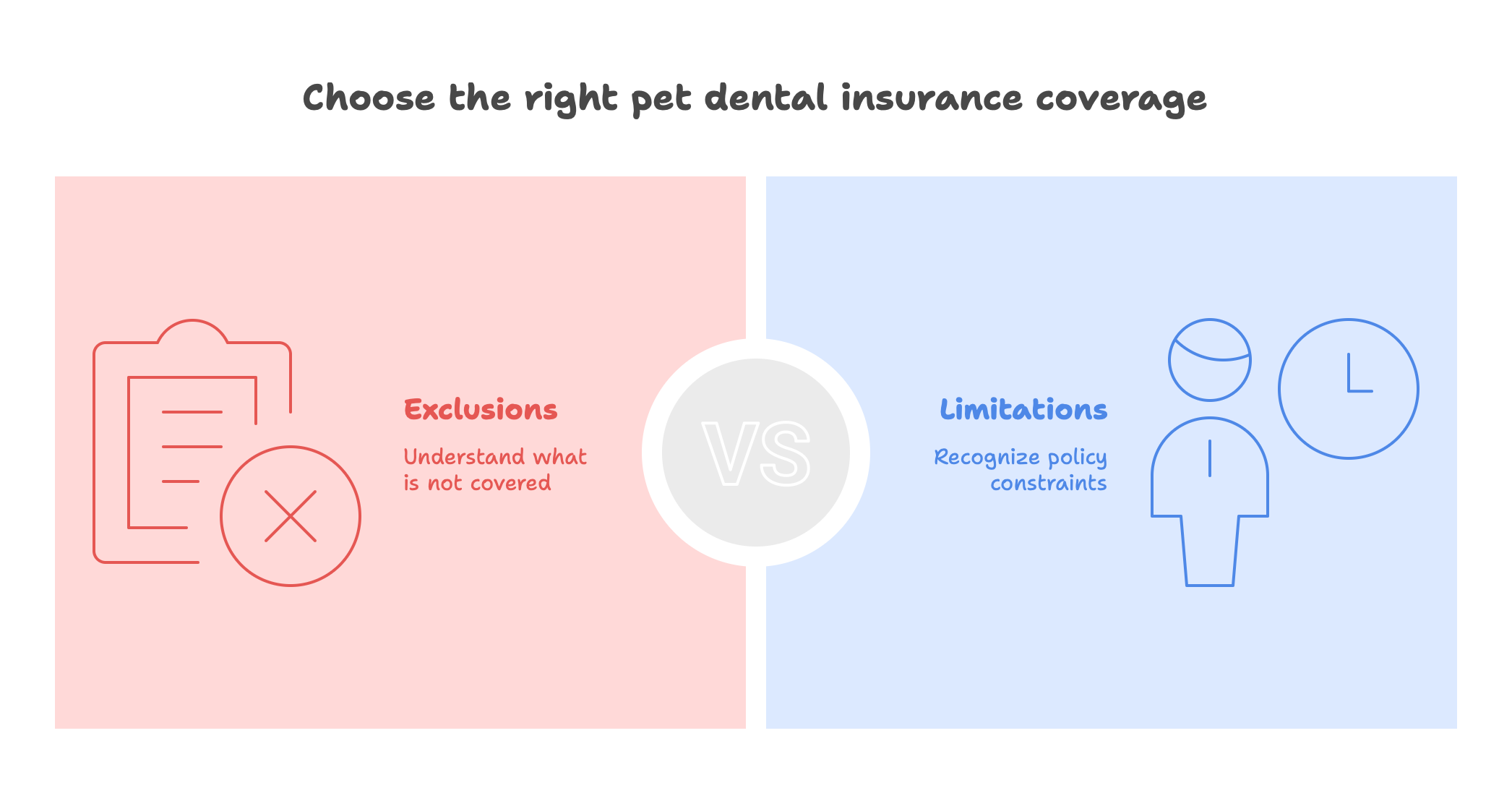
A graphic reminding readers to consider exclusions and limitations before choosing the right pet insurance coverage.
Dental coverage isn't comprehensive on any plan. Insurers spell out exactly what's eligible and what's excluded.
Typical Exclusions
Read each plan's exclusion list before enrolling. Exclusions list the conditions and procedures the policy won't cover.
Common exclusions: cosmetic and orthodontic work — caps, fillings, braces, implants. Routine cleaning is also excluded on most base plans; it requires a wellness rider.
Pre-existing conditions are excluded almost universally. An extraction caused by a recent accident is usually covered; the same extraction caused by gingivitis already documented in your pet's records is not.
Waiting Periods
Waiting periods kick in at enrollment. Treatment during the waiting period is not covered, even if the policy is otherwise active.
These timeframes often differ by the type of coverage, your location, and the provider. For example, Embrace has a 14-day waiting period between when you purchase the plan and when dental illness coverage begins.
Dental waiting periods are where the brochure and the policy disagree most often. Most insurers apply their standard 14-day illness wait to dental illness. A few do not. Trupanion and Figo both run materially longer dental-specific waits, and Embrace dental illness limits sit behind a requirement for a dental exam within the previous 13 months once a pet turns three.
There is no true no-waiting-period dental illness plan, which is the honest answer to a question a lot of people search for. The closest thing is accident coverage, which starts in two to five days on most plans and would cover a tooth broken tomorrow. Lemonade pet dental coverage is a good example of the pattern: accidents from day two, dental illness only through the add-on and only after the illness wait. If your pet has a dental problem today, nothing sold today will pay for it.
Dental Coverage for Senior Pets and Pre-Existing Conditions
Senior pet owners face two common roadblocks. First, some insurers cap enrollment age — Healthy Paws and Trupanion generally stop accepting new pets at 14, and Embrace converts to accident-only coverage for pets enrolled at 15+. Second, because periodontal disease affects roughly 80% of dogs by age three according to the American Veterinary Medical Association, older pets often have documented dental issues in vet records that insurers classify as pre-existing.
To maximize coverage for an older pet: enroll before any visible dental disease appears, request a new dental chart immediately after the waiting period to establish a baseline, and compare plans that have no upper age cutoff like ASPCA, Spot, MetLife, Pumpkin, and Nationwide.
Gingivitis noted on any earlier exam is the most common dental pre-existing flag, and most insurers treat it as permanently excluded rather than something a pet recovers from. The rules for pre-existing conditions run wider than dental and deserve their own read: see our guide to pet insurance and pre-existing conditions.
What Pet Dental Procedures Cost Without Insurance
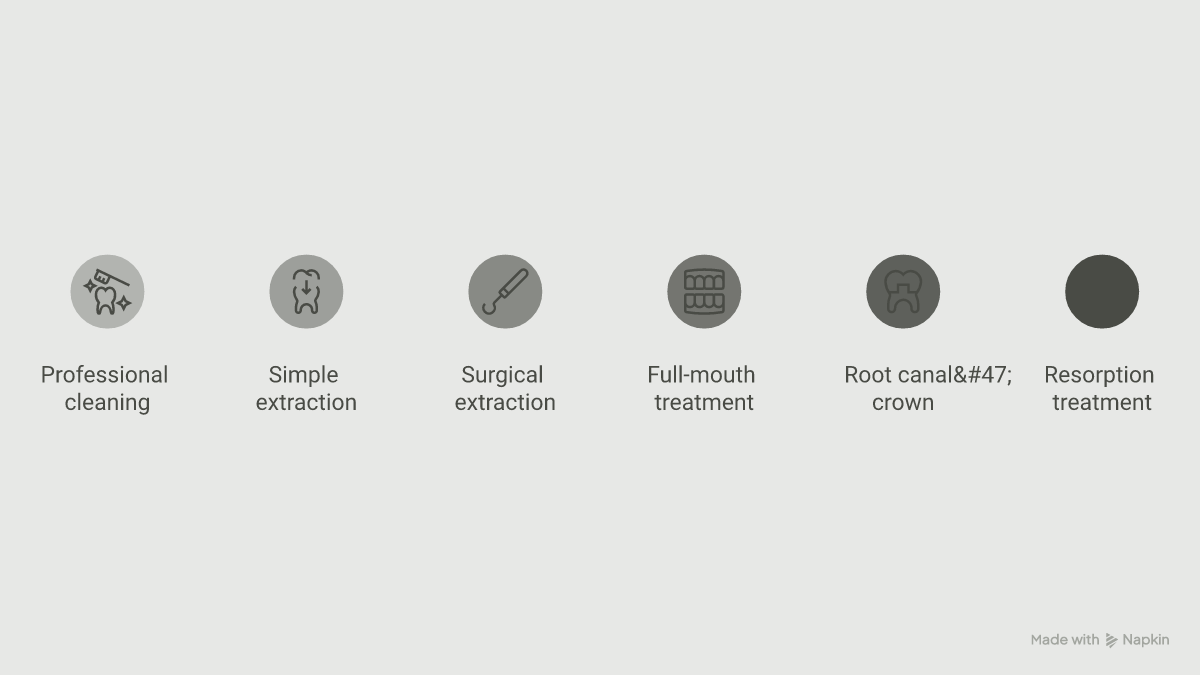
Dental costs vary widely by geography, your pet's size, and whether anesthesia or extractions are needed. Typical ranges:
Professional dental cleaning with anesthesia: $300–$800
Tooth extraction (simple): $50–$300 per tooth; surgical extraction: $500–$1,200 per tooth
Feline tooth resorption treatment: $400–$1,500 per affected tooth
Break-even math: a wellness add-on averaging $25/month ($300/year) pays for itself if it covers a single annual cleaning. For illness coverage, one extraction event recouped through an $80/month accident-and-illness policy ($960/year) will break even within 12–18 months against a $1,500+ periodontal procedure.
What pet dental procedures cost without insurance
Alternatives If Insurance Won't Cover Your Pet's Dental
If your pet has a pre-existing dental condition or has aged out of enrollment, a few alternatives reduce out-of-pocket cost.
CareCredit: a veterinary financing line with 6–24 month no-interest promotions on qualifying dental bills.
Pet Assure: a dental discount plan (not insurance) offering 25% off in-house vet services with no pre-existing exclusions, starting around $12/month.
Veterinary dental schools: Participating programs often perform cleanings and extractions at 30–60% below commercial rates under licensed faculty supervision.
At-home prevention: Daily brushing, VOHC-approved dental chews, and annual oral exams materially slow periodontal progression and push insurance claims to later in your pet's life.
How To Choose the Right Pet Insurance Plan for Dental Care
Finding the best pet insurance with dental coverage takes work. Start with your pet's history and breed. Small dogs (Yorkies, Chihuahuas, dachshunds) are more prone to periodontal disease, as are Siamese and Maine Coon cats.
Once you have a sense of your pet's dental risk, compare plans on three things: monthly cost, coverage caps, and exclusions. The 2026 comparison table above is a starting point; check pet insurance subreddits and reviews for real claims experiences.
Still deciding between carriers rather than procedures? Start from the full compare pet insurance plans hub, then come back here to check the dental fine print on your shortlist.
Making Informed Decisions About Pet Dental Care Insurance With MoneyAtlas
There are dozens of pet insurance providers, and dental coverage is one of the most variable parts of a policy. Compare pet insurance plans with MoneyAtlas runs side-by-side comparisons of cost, coverage, dental rules, and waiting periods so you can pick the plan that fits your pet.
FAQ
Frequently Asked Questions
See what you could be paying
Get auto insurance quotes from top carriers in a couple of minutes.
Kama’s first writing position was at a chain of community radio stations where she wrote promotions, public service announcements, technical manuals, scripts, and news stories. She was then an English instructor for fifteen years and has written articles in the field of higher education. Kama has also worked as a ghostwriter in many different areas, including cryptocurrency, technology, real estate, entertainment, and product descriptions.
Does American Express Gold Card cover car rental insurance? Yes, it offers secondary coverage for theft and damage. Learn how to activate it and stay protected.
Home warranties cover appliance and system breakdowns; home insurance covers disasters and liability. Here's what each covers, what they cost, and whether you need both.
Young drivers pay 2-3x more for car insurance. We compared the best and cheapest options for 18-25-year-olds — including discounts that can cut your rate by 30%.