What Does Gold American Express Mean?


Introduction
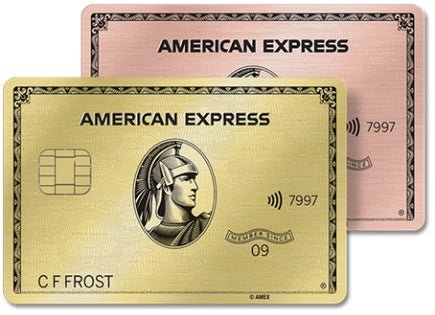
The question of what a gold American Express means has evolved significantly over the last few decades. While it was once primarily a status symbol for high earners, the modern American Express® Gold Card functions as a specialized rewards tool for people who spend heavily on food and travel. Understanding what this card represents means looking past the metal exterior to analyze its specific place in the financial market: a mid-tier lifestyle card that bridges the gap between basic entry-level cards and premium luxury travel cards.
MoneyAtlas tracks dozens of credit products to help you understand how these tiers function in the real world. This guide explores the mechanics of the Gold Card, including its unique spending limits, reward structures, and the actual value of its membership benefits. By the end of this breakdown, you will be better equipped to compare the American Express Gold Card with other credit cards to see if the math aligns with your spending habits.
The Evolution of the Amex Gold Category
To understand what a gold American Express means today, it helps to look at the hierarchy of the brand. American Express organizes its primary cards into colors: Green, Gold, and Platinum. In the past, moving from Green to Gold meant you had reached a certain level of income or creditworthiness. Today, these colors represent different spending profiles rather than just "levels" of prestige.
The Gold Card is currently positioned as the "foodie" card. It is designed for households that see significant monthly charges at U.S. supermarkets and restaurants worldwide. While the Platinum Card focuses on airport lounges and luxury travel perks, the Gold Card focuses on the everyday expenses of a high-spending consumer. It is a tool meant for people who want to earn transferable points on their most frequent daily purchases.
How the Gold Card Mechanics Work
The American Express Gold Card review is not a traditional credit card in the way many people define the term. Understanding its mechanics is essential for anyone comparing it to a standard bank card.
No Preset Spending Limit
One of the most common points of confusion is the spending limit. Unlike most credit cards that give you a hard line: for example, $5,000 or $10,000: the Gold Card has no preset spending limit. This does not mean you have unlimited spending power. Instead, your limit is flexible.
The amount you can spend adjusts based on your past payment history, your credit record, and your financial resources. If you typically spend $2,000 a month and suddenly try to buy a $50,000 car, the transaction might be declined. However, for a consistent spender with a strong payment history, this flexibility allows for larger purchases that might be blocked on a traditional card with a static limit.
Pay Over Time vs. Paying in Full
Historically, American Express cards were "charge cards," meaning the balance had to be paid in full every month. The modern Gold Card offers more flexibility through a feature called Pay Over Time. This allows you to carry a balance on eligible purchases with interest, similar to a traditional credit card.
There is also a "Plan It" feature, which lets you select specific large purchases and split them into equal monthly installments for a fixed fee instead of a variable interest rate. While these options provide breathing room, the most efficient way to use the card is generally paying the balance in full to avoid interest charges that can quickly outweigh the value of the rewards earned.
Evaluating the Annual Fee and Credits
The American Express Gold Card currently carries a $325 annual fee. For many, this is the most important factor in determining what the card means for their wallet. To justify this cost, American Express bundles several statement credits that can offset the fee if used naturally.
For a broader framework, read MoneyAtlas's guide to evaluating credit card annual fees, interest rates, and rewards.
The Math of the Credits
If someone uses all the available credits, the effective cost of the card can drop significantly. MoneyAtlas compares these credits to help users see the "net" cost. Currently, the credits include:
- $120 Dining Credit: This is distributed as up to $10 in monthly statement credits when using the card at partners like Grubhub, The Cheesecake Factory, Five Guys, and Buffalo Wild Wings.
- $120 Uber Cash: When you add the card to your Uber account, you receive $10 in monthly Uber Cash for U.S. rides or Uber Eats orders.
- $100 Resy Credit: This offers up to $50 biannually for purchases at eligible U.S. Resy restaurants.
- $84 Dunkin' Credit: This provides up to $7 monthly for purchases at U.S. Dunkin' locations.
The Reward Structure: Earning Membership Rewards
The primary reason someone chooses the Gold Card is the points. It earns American Express Membership Rewards points, which are widely considered one of the most flexible "currencies" in the credit card world.
High-Value Categories
The card is structured to reward specific behaviors:
- 4X points at restaurants worldwide: This includes takeout and delivery in the U.S. on up to $50,000 in purchases per year.
- 4X points at U.S. supermarkets: This applies on up to $25,000 in purchases per year.
- 3X points on flights: This applies to flights booked directly with airlines or through the American Express travel portal.
- 1X points on other purchases: All other spending earns the base rate.
For a family that spends $1,000 a month on groceries and $500 a month on dining, the 4X rate can generate 72,000 points annually. Depending on how those points are redeemed, that could be worth enough for a significant travel discount or even a round-trip flight.
The Value of Transferability
Unlike cash back credit cards that offer a fixed 1% or 2% return, Membership Rewards points can be transferred to various airline and hotel partners. This transferability is often what gives the points their highest potential value. If you transfer points to a frequent flyer program and book a business-class flight, the "value per point" can be much higher than 1 cent. However, for those who prefer simple statement credits, these points may actually be less valuable than a dedicated cash back card.
For more context on borrowing costs and rewards, see how credit card APR works.
Comparing the Gold Card to Other Amex Tiers
When people ask what a gold American Express means, they are often trying to decide if they should get the Gold, the Green, or the Platinum. Each serves a distinct purpose.
Gold vs. Platinum
The Platinum Card has a much higher annual fee (currently $695) and focuses almost entirely on the travel experience. It offers airport lounge access, hotel elite status, and higher points for booking flights. It is not a good card for groceries or dining, as it usually only earns 1X points on those categories. In contrast, the Gold Card is better for the person who spends more time at the supermarket than at the airport.
Gold vs. Green
The American Express® Green Card is an entry-level travel card with a lower annual fee (currently $150). It earns 3X points on travel, transit, and restaurants. It is a strong choice for commuters or urban dwellers who use rideshares and eat out but do not spend enough at supermarkets to justify the Gold Card's $325 fee.
The Amex Trifecta
Many serious rewards earners use what is called the "Amex Trifecta." This involves carrying the Gold, Platinum, and a third card like the Blue Business® Plus. By using the Gold for food, the Platinum for travel, and the third card for everything else, they ensure they are earning the maximum possible points on every single dollar spent.
Who Is the Amex Gold Card Actually For?
In our editorial judgment, the Gold Card is most suitable for a specific type of consumer. It is not a "one size fits all" product.
The Food-Focused Spender
If a significant portion of your monthly budget goes toward feeding a family or dining out with friends, the 4X points category is difficult to beat. Most competing cards top out at 3% or 3X for these categories.
The Moderate Traveler
While it lacks the lounge access of the Platinum Card, the Gold Card provides solid travel protections and 3X points on flights. It is a good fit for someone who travels a few times a year and wants to use their daily grocery spending to fund those trips.
The "Credit Optimizer"
To get the most out of the Gold Card, you must be willing to manage the various monthly credits and enroll in benefits. If you prefer a "set it and forget it" card, the Gold Card might feel like too much maintenance for the price.
What to Watch Out For: Potential Pitfalls
Before applying for any card in this category, it is important to understand the fine print that can impact your financial outcome.
- Credit Score Requirements: While American Express does not publish an exact number, the Gold Card is generally intended for those with good to excellent credit. This typically means a score in the 670 to 850 range.
- Once-Per-Lifetime Rule: American Express generally limits the "welcome bonus" (the large chunk of points you get for spending a certain amount in the first few months) to once per lifetime for each card. If you have had the Gold Card before, you likely will not qualify for a new bonus.
- Grocery Exclusions: The 4X grocery benefit only applies at "U.S. supermarkets." This usually excludes "superstores" like Walmart and Target, as well as warehouse clubs like Costco and Sam's Club. If you do most of your shopping at those locations, you will only earn 1X points.
- Foreign Transaction Fees: One benefit of the Gold Card is that it has no foreign transaction fees. This makes it a good companion for international travel, especially since it earns 4X points at restaurants worldwide.
Step-by-Step: How to Decide if the Gold Card is Right for You
If you are weighing your options, follow this process to see if the math works for your situation.
How to Decide if the Gold Card Is Right for You
- 1
Audit your food spending
Look at your bank statements for the last three months. Total up what you spend at grocery stores and restaurants. If you spend less than $500 a month across these categories, the 4X points may not earn enough to cover the fee.
- 2
Check the credit partners
Do you already use Uber or Uber Eats? Do you live near a Dunkin' or a Five Guys? If you have to change your habits just to use the credits, you are not really saving money.
- 3
Evaluate your redemption goals
Do you want to travel? If you want cash back to pay your bills, a card like the Blue Cash Preferred Card review might be better. If you want to fly to Europe or Hawaii using points, the Gold Card's Membership Rewards are highly effective.
- 4
Compare side by side
Use comparison tools to look at the Amex Gold next to competitors like the Chase Sapphire Preferred Card review or the Capital One Savor Cash Rewards Card review. Each has different fee structures and point valuations.
Conclusion
A gold American Express means you are carrying a premium lifestyle card that prioritizes food and travel rewards over almost everything else. It represents a commitment to a specific rewards ecosystem: the Membership Rewards program: and requires a high enough level of spending in specific categories to justify its $325 annual fee. While it carries a certain level of historical prestige, its real value lies in the 4X points on groceries and dining and the collection of monthly credits.
If you are a high-spending "foodie" who travels occasionally, the Gold Card is one of the strongest products on the market. However, if you shop mostly at wholesale clubs or don't use delivery apps like Uber Eats and Grubhub, you may find better value in a lower-fee or cash-back card. We suggest using MoneyAtlas's no-annual-fee credit card comparison to see how your specific spending patterns would perform with the Gold Card versus its closest competitors.
FAQ
MoneyAtlas Staff
Articles and reviews from the MoneyAtlas editorial team — independent research on credit cards, banking, loans, insurance, and investing.
Related Articles

What the Difference Between American Express Gold and Platinum Is
Wondering what the difference between American Express Gold and Platinum is? Compare annual fees, 4X food rewards, and luxury travel perks to find your fit.

What Is the Difference Between Gold and Platinum American Express?
What is the difference between gold and platinum american express? Compare fees, 4x dining rewards, and luxury travel perks to find your perfect card.

What Is the Fee for American Express Gold Card?
Wondering what is the fee for american express gold card? It's $325 annually. Learn how to offset this cost with over $400 in credits and 4X rewards.