What Is the Fee for American Express Gold Card?


Introduction
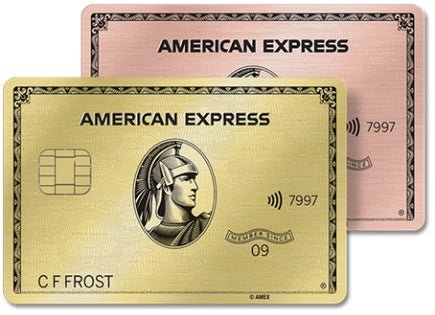
The primary question for most potential cardholders is clear: what is the fee for american express gold card and is the cost justified by the rewards? The American Express Gold Card carries a $325 annual fee, a figure that places it firmly in the mid-tier category of travel and dining rewards cards. Unlike some entry-level cards that waive the first-year cost, this fee is typically charged on your first billing statement and every year thereafter on your account anniversary. MoneyAtlas helps consumers evaluate these costs by looking past the headline number to see how the card mechanics actually impact a monthly budget. This article covers the standard annual fee, costs for additional users, and the specific credits available to offset the price of membership.
Understanding the $325 Annual Fee
The $325 annual fee for the American Express Gold Card is a significant commitment compared to many no-fee or $95-per-year alternatives. When broken down, this fee equates to roughly $27 per month. It is important to realize that this is not a traditional credit card with a fixed limit but a card with No Preset Spending Limit. This means your spending power adjusts based on your payment history, credit record, and financial resources.
The fee is billed to your account automatically. If you open your account in October, you will see the $325 charge on your October statement every year the account remains open. There is a 30-day grace period following the fee's posting date. During this time, if you decide the card no longer fits your needs and you close the account, American Express typically refunds the fee. After this 30-day window, the fee is generally non-refundable.
For a closer look at the card's fee structure, rewards, and benefits, see our American Express Gold Card review.
Fees for Additional Card Members
Many households use a single account for multiple family members to consolidate rewards. For the American Express Gold Card, adding authorized users (known as Additional Card Members) is relatively affordable.
- First 5 Additional Cards: There is a $0 annual fee for the first five additional cards added to the account.
- 6th Card and Beyond: Starting with the sixth additional card, the fee is $35 per card annually.
Note that as the primary cardholder, you are legally responsible for all charges made by authorized users. You can set individual spending limits as low as $200 for these cards to maintain control over the total balance. Adding family members can be an effective way to reach the spending requirements for a welcome bonus or to hit the annual caps on reward categories faster.
How to Offset the Annual Fee with Credits
A central part of the value proposition for this card is the suite of statement credits that can effectively reduce the "net cost" of the $325 fee. If a cardholder naturally spends money at the participating merchants, these credits provide a dollar-for-dollar offset.
$120 Dining Credit
This benefit provides up to $10 in monthly statement credits when you use the card at specific partners. These include Grubhub, The Cheesecake Factory, Buffalo Wild Wings, Five Guys, and Wonder. You must enroll in this benefit through your online account before the credits will apply. Over 12 months, this totals $120 in value.
$120 Uber Cash
By adding your card to the Uber app, you receive $10 in Uber Cash each month. This can be used for Uber Eats orders or Uber rides within the United States. Like the dining credit, this is a "use it or lose it" benefit. If you do not use the $10 in a given month, it does not roll over to the next.
$100 Resy Credit
This is a semi-annual credit. Cardholders can receive up to $50 in statement credits from January through June, and another $50 from July through December. This applies to eligible purchases at U.S. Resy restaurants. Enrollment is required.
$84 Dunkin' Credit
The newest addition to the card's perks is a $7 monthly statement credit for purchases at U.S. Dunkin' locations. If utilized every month, this adds $84 in annual value.
Reward Multipliers and Spending Caps
The true value of the card often comes from its ability to earn Membership Rewards points on everyday spending. These points can be transferred to airline and hotel partners, where they often carry a value of 1 cent to 2 cents each, depending on the redemption.
- 4X Points at Restaurants: This applies to restaurants worldwide and includes takeout and delivery in the U.S. There is a $50,000 annual spending cap on this category. After you spend $50,000 in a calendar year, the rate drops to 1X.
- 4X Points at U.S. Supermarkets: This is one of the highest rates available for groceries. It is limited to the first $25,000 in purchases per year. Once that cap is hit, you earn 1X points.
- 3X Points on Flights: This applies to flights booked directly with airlines or via the travel portal.
- 5X Points on Prepaid Hotels: You must book through the travel portal or its app to receive this rate.
For a household spending $1,000 a month on groceries and $500 a month on dining, the card would earn 72,000 points annually. At a 1 cent per point valuation, that is $720 in value, which significantly outweighs the $325 fee even without the credits.
If you want to compare similar earning structures, browse MoneyAtlas rewards credit card rankings.
Other Costs and Fine Print Fees
Beyond the annual fee, there are other potential costs associated with the American Express Gold Card that can impact the total cost of ownership.
- Foreign Transaction Fees: This card charges $0 in foreign transaction fees. This makes it an excellent choice for international travel, as many other cards charge a 3% fee on every purchase made outside the U.S.
- Late and Returned Payment Fees: These can be up to $40. Since the Gold Card is a charge card, paying the balance in full each month is the standard expectation.
- Interest Rates: While the card is designed to be paid in full, features like Pay Over Time allow you to carry a balance on certain purchases. The variable APR for these purchases is typically competitive but can range from roughly 21% to 29% based on creditworthiness. Always check your specific terms for current rates.
- Excise Tax on Point Transfers: When you transfer points to U.S. domestic airlines, American Express charges an excise tax offset fee of $0.0006 per point, up to a maximum of $99. This is a small but unique fee to be aware of when planning redemptions.
For more context on borrowing costs, read how credit card APR works.
Comparing the Fee to Other Cards
When deciding if the $325 fee makes sense, it is helpful to look at how it sits between other popular options. MoneyAtlas provides tools to compare these cards side by side, which is often the most efficient way to see which fee structure fits your lifestyle.
The American Express Platinum Card has a much higher fee, often exceeding $695, but offers extensive airport lounge access and higher travel credits. On the other end, the Blue Cash Preferred Card from American Express has a lower fee, around $95, and offers cash back rather than points.
For many, the Gold Card is the "sweet spot." It offers premium earning rates on food without the heavy $600+ price tag of a luxury travel card. However, if you do not spend at least a few hundred dollars a month on groceries or dining, a no-fee card that earns a flat 2% cash back might be a more cost-effective choice.
Compare broader options through the best credit card comparison.
Is the American Express Gold Card Worth the Fee?
Whether the $325 fee is "worth it" depends entirely on two factors: your monthly food spend and your willingness to track credits.
For a consumer who already uses Uber and eats at restaurants like Five Guys or The Cheesecake Factory, the credits feel like a natural discount on existing habits. In this scenario, the card can effectively pay for itself before you even factor in the points earned.
However, if you have to change your behavior to use the credits, such as ordering delivery when you would usually cook, you may be spending more money just to "save" on the annual fee. This is a common trap with premium cards. Before applying, review your last three months of bank statements to see if your natural spending aligns with the 4X categories and the specific credit partners.
For a broader method of weighing fees against rewards, read how to evaluate credit card annual fees, interest rates, and rewards.
Step-by-Step: How to Manage the Gold Card Fees
If you decide to move forward with the card, follow these steps to ensure you are getting the most value for your $325.
How to Manage the Gold Card Fees
- 1
Enroll in benefits
Log in to your online account. Navigate to the "Rewards & Benefits" section and click "Enroll" for the Dining Credit, Resy Credit, and Dunkin' Credit. These are not automatic.
- 2
Add to Uber
Link the card to your Uber profile. This ensures the $10 monthly Uber Cash is deposited into your account at the start of every month.
- 3
Track spending caps
Keep an eye on the $25,000 and $50,000 caps. If you are a very high spender, you may want to switch to a different card once you hit these limits to avoid the drop to 1X points.
- 4
Monitor anniversary date
Mark your calendar for the month the fee is charged. Use this time each year to evaluate if the benefits still outweigh the $325 cost based on your actual usage from the previous 12 months.
If avoiding annual fees is a priority, review no annual fee credit card options.
Conclusion
The fee for the American Express Gold Card is $325 per year, and while that number can seem high, the card's structure allows many users to recoup that cost through targeted spending and monthly credits. Between the 4X points on food and over $400 in potential statement credits, the card remains a top contender for anyone whose budget is dominated by dining and supermarket trips. Before committing, use the MoneyAtlas credit card comparison tools to see how the Gold Card stacks up against other high-earning rewards cards and ensure you are choosing the product that best fits your financial habits.
FAQ
MoneyAtlas Staff
Articles and reviews from the MoneyAtlas editorial team — independent research on credit cards, banking, loans, insurance, and investing.
Related Articles

What the Difference Between American Express Gold and Platinum Is
Wondering what the difference between American Express Gold and Platinum is? Compare annual fees, 4X food rewards, and luxury travel perks to find your fit.

What Is the Difference Between Gold and Platinum American Express?
What is the difference between gold and platinum american express? Compare fees, 4x dining rewards, and luxury travel perks to find your perfect card.

What Is the Rose Gold American Express Card?
What is the rose gold American Express card? Learn about this stylish metal card's 4X rewards on dining and groceries, annual credits, and fees.