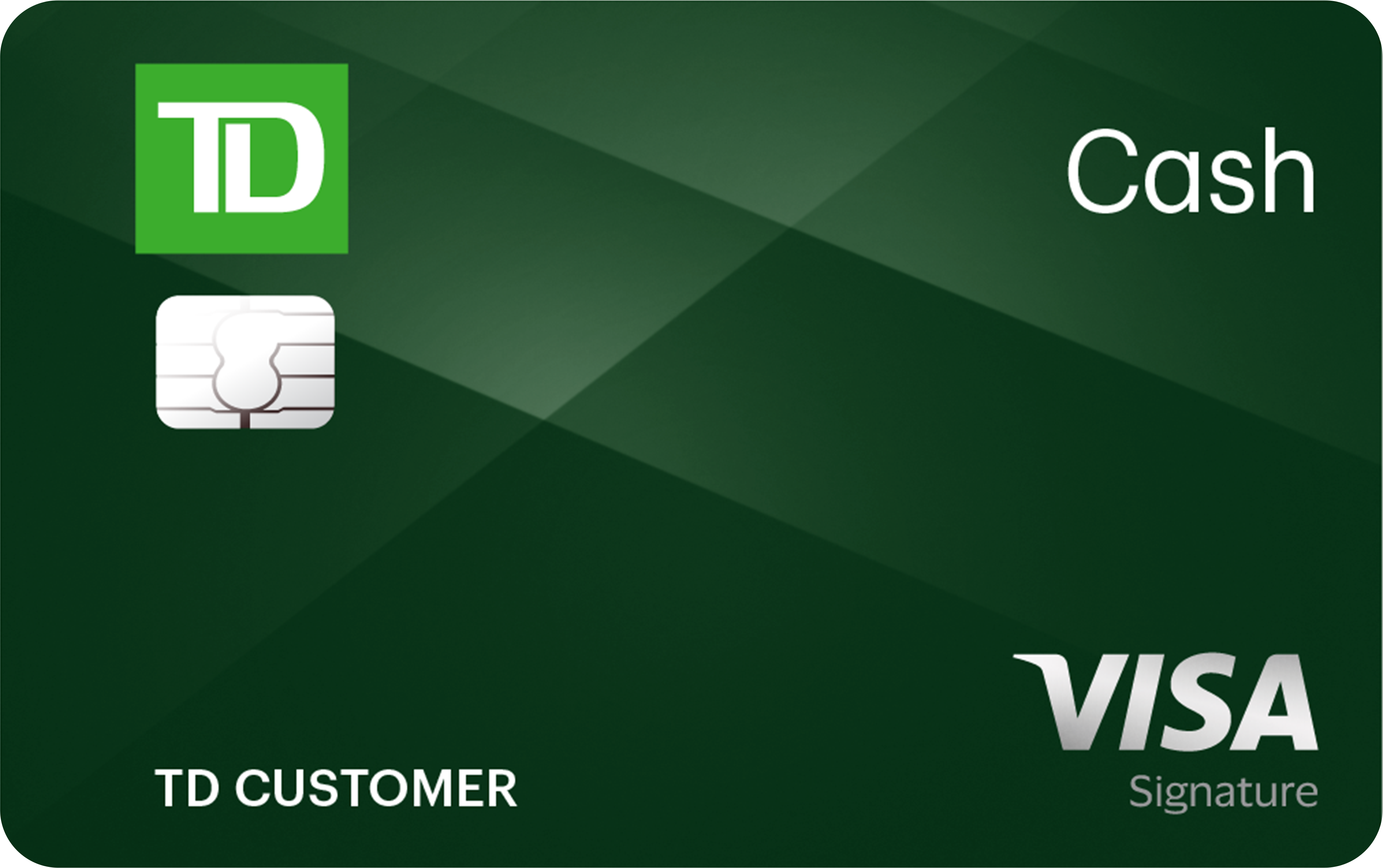
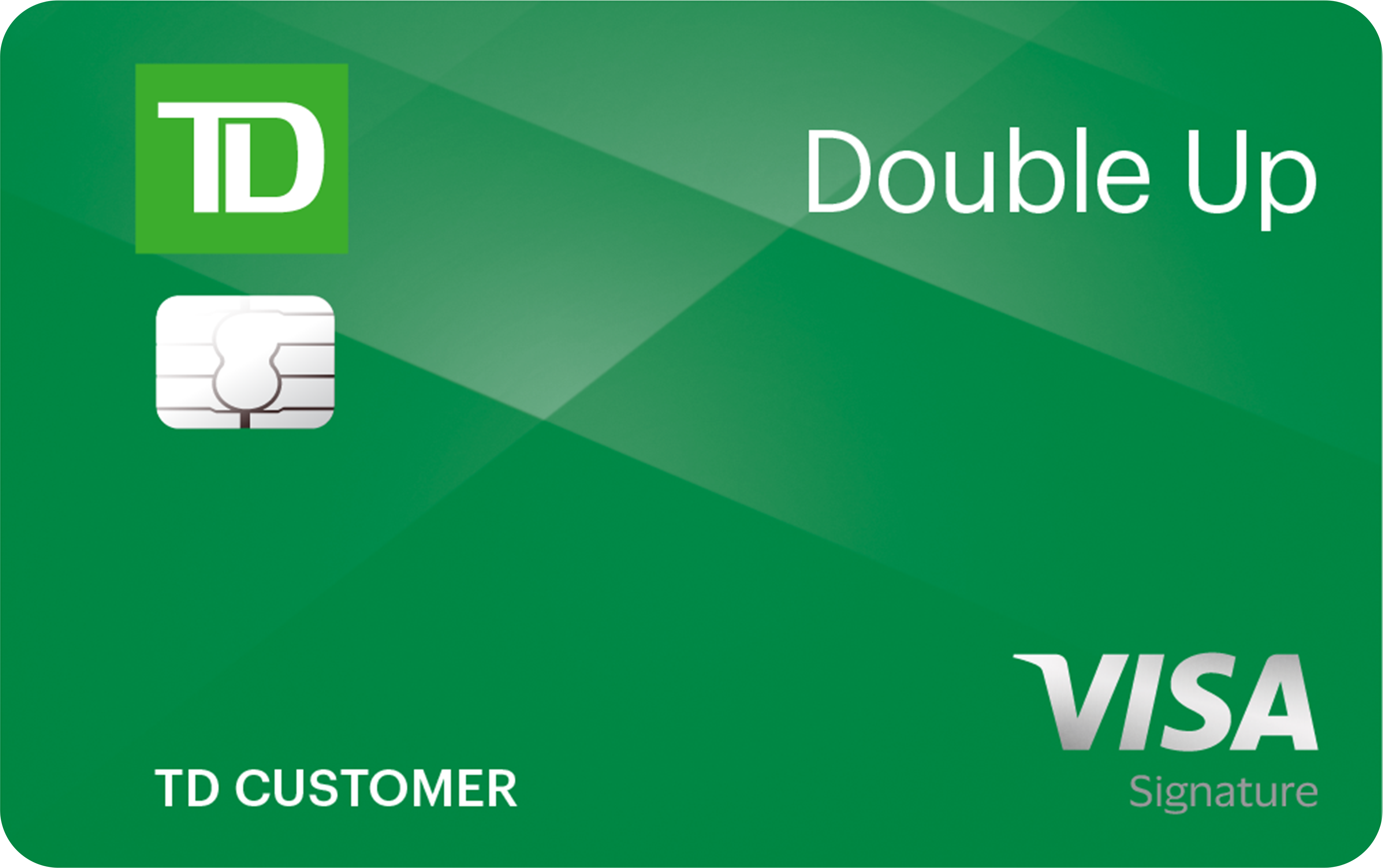
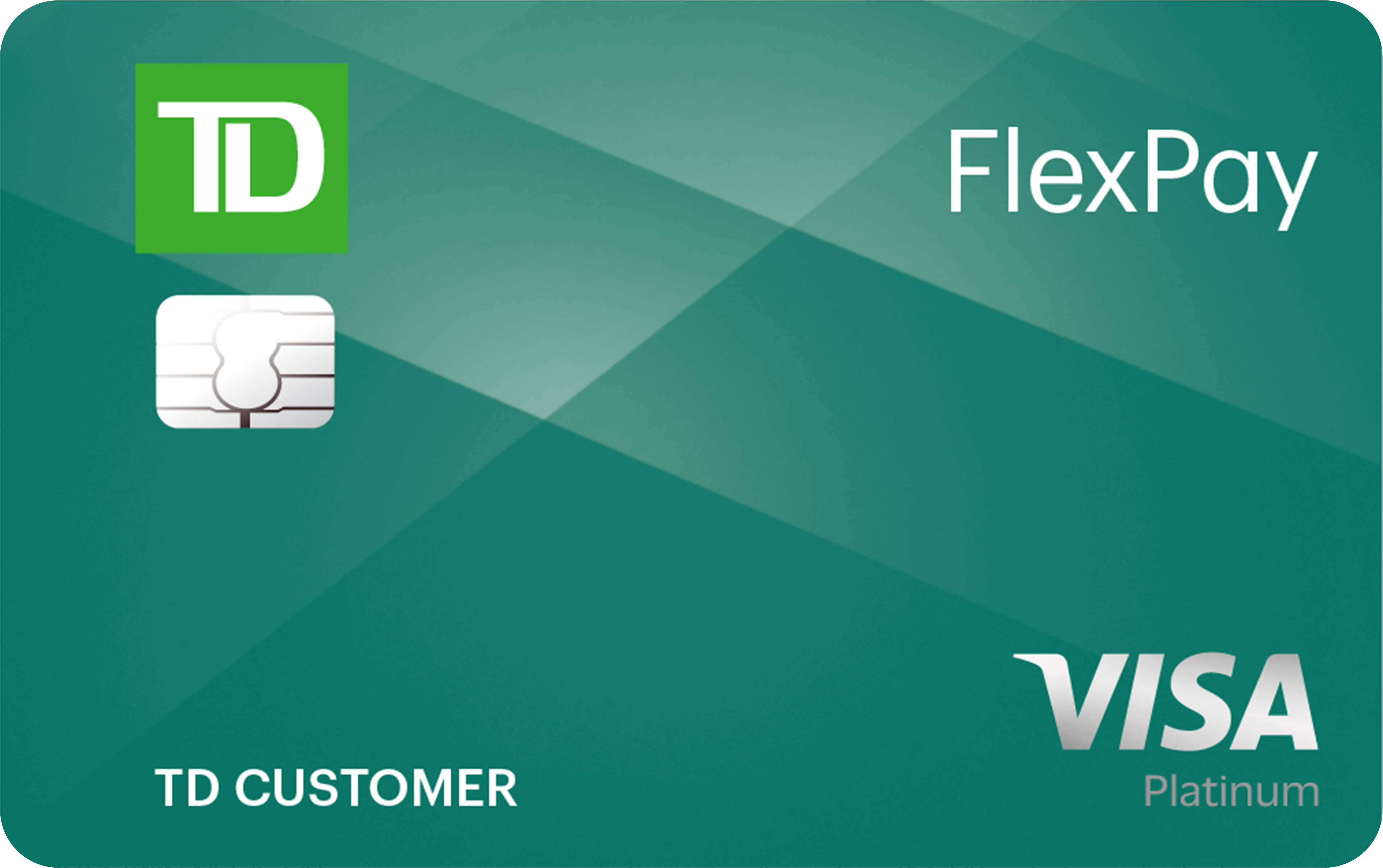
TD Bank issues three credit cards in the United States: TD Cash, TD Double Up, and TD FlexPay. Each one targets a different kind of cardholder. TD Cash leans into food and groceries; TD Double Up doubles your rewards if you bank with TD; and TD FlexPay is built for paying down a balance transfer, with no rewards layer to distract you.
None of the three charges an annual fee, and none requires you to be a TD Bank checking customer to apply (though TD Double Up's biggest perk leans on it). Here is how each card actually works, who it fits, and which TD card to pick if you are stuck deciding.
TD Bank credit cards at a glance
Card
Rewards
Annual Fee
Intro APR
Best For
TD Cash
3% dining, 2% groceries, 1% else
$0
Intro 0% APR on purchases and balance transfers
Foodies and grocery spenders
TD Double Up
2% cash back (1% earn + 1% redeem to TD account)
$0
Intro 0% APR on purchases and balance transfers
TD Bank checking customers
TD FlexPay
No rewards
$0
Extended intro 0% APR on balance transfers
Paying down existing card debt
The table is the short answer. The longer answer matters because the three cards look closer on paper than they really are. The rewards math, the fine print on TD Double Up's 1+1 mechanic, and the way TD FlexPay differs from a typical rewards card all change which one you should actually carry.
TD Cash Credit Card
The TD Cash Credit Card is a tiered cash-back Visa Signature card built around food spending. You earn 3% cash back on dining (restaurants, takeout, delivery), 2% at grocery stores, and 1% on everything else. There is no annual fee, no rotating categories to activate, and no spending cap on the bonus tiers. New cardholders typically get an intro 0% APR window for purchases and balance transfers, plus a welcome bonus when they meet a moderate spending requirement within the first few billing cycles.
For an everyday spender who hits restaurants and supermarkets often, the math works. A household putting $500 a month on groceries and $300 on dining earns about $228 a year before counting any non-bonus spend. The catch is what TD Cash leaves on the table. It does not have a 5% rotating category like Chase Freedom Flex, and the flat 1% on non-bonus categories falls short of cards that pay 2% on everything (TD's own Double Up included).
If your spending skews away from food, TD Cash is the wrong card. If food is most of your monthly outlay, the 3% tier is one of the better uncapped dining rates available without an annual fee. Current intro offer: . Welcome bonus: See the TD Cash review for full terms.
The TD Double Up Credit Card is a 2% cash-back Visa with a twist: you only get the full 2% if you redeem your rewards into an eligible TD Bank deposit account. You earn 1% cash back on every purchase, and TD adds another 1% the moment you redeem to a linked TD Beyond Checking or other qualifying TD deposit account. Redeem to a non-TD method (statement credit to a different bank, gift card, etc.), and you get the base 1% only.
This makes Double Up a strong everyday card for TD customers and a mediocre one for everyone else. If you already keep a checking account at TD, 2% flat on everything beats most no-annual-fee competitors. If you do not bank with TD and have no interest in opening a TD account, the effective rate is 1%, which is poor in 2026. Worth flagging: TD periodically promotes intro APR offers on Double Up, and there is no annual fee at any membership tier.
The 1+1 redemption mechanic is the core of the product story. Most reviews bury it. If you ignore it, the card looks worse than it is. If you depend on it, the card depends on you keeping your money at TD Bank, which is a real switching cost to consider.
The TD FlexPay Credit Card is the outlier in TD's lineup. It earns no rewards. The pitch is a long intro 0% APR window on balance transfers, designed for people who want to consolidate existing card debt and pay it down without interest accruing. There is no annual fee, and the intro 0% APR period is in the same range as competitive transfer cards, though TD generally charges a balance transfer fee on the amount transferred.
FlexPay only makes sense if you actually carry a balance. The math is simple: if you have $5,000 on a 22% APR card and you transfer it to TD FlexPay's intro 0% window, you skip roughly $1,100 in interest over a year, minus the balance transfer fee. That is a real win.
But once the intro period ends, the regular APR kicks in at a standard credit card rate, and there are no cash-back or points incentives to keep using the card afterward. Treat it as a tool for one specific job, not a daily-driver card. If you do not have card debt to consolidate, skip it entirely and look at other balance transfer credit cards.
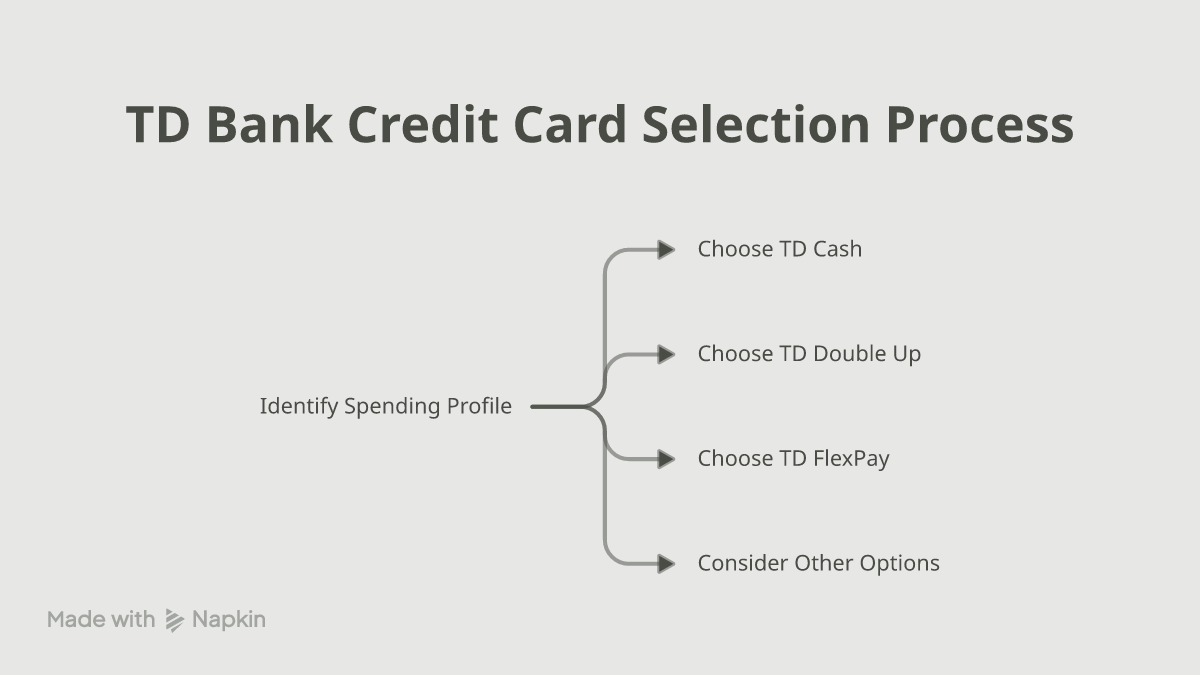
Pick the TD card that matches the way you actually spend, not the one with the prettiest top-line number. Four profiles cover almost everyone, considering this lineup:
Foodie or grocery-heavy household: TD Cash. The 3% on dining and 2% on groceries combined outearn a flat 2% card for anyone spending more than roughly half of their monthly card volume on food.
Everyday spender who banks with TD: TD Double Up. The 1+1 redemption to a TD deposit account gives you a true 2% flat rate, which is hard to beat without an annual fee. Open a TD checking account first if you want this card to earn its keep.
Carrying card debt: TD FlexPay. Transfer the balance, pay it off inside the intro window, and move on. Do not chase rewards while you have interest compounding on another card.
No annual fee and want one simple card: TD Double Up if you bank with TD, otherwise look at the broader no annual fee credit cards market — TD's three options are decent but not category leaders if none of these profiles fits you.
Matching your spending profile to the right TD card
Eligibility, credit score, and how to apply
TD Bank's three credit cards are issued by TD Bank, N.A., which is the U.S. subsidiary of Toronto-Dominion Bank. You do not need to be a TD Bank checking customer to apply for any of them. TD does run a hard credit inquiry when you apply, so expect a small temporary dip in your FICO score regardless of approval. The specific underwriting thresholds are not published, but the consumer credit card agreement TD filed with the regulator outlines the terms you will be held to once approved.
Most TD card approvals require good-to-excellent credit, generally a FICO score around 670 or higher, with the cleanest approvals at 720+. If your score is lower, expect either a denial or an approval at a higher APR with a smaller starting credit limit. TD does not publish a minimum score on its product pages, so use 670 as a working floor, not a guarantee.
How to apply for a TD Bank credit card
1
Confirm you meet the credit floor
Pull your FICO score before you apply. Most TD card approvals require good-to-excellent credit (roughly 670+, with the cleanest approvals at 720 and above). Lower scores can still get approved at a higher APR with a smaller starting limit, but expect a denial below the mid-600s.
2
Gather your application materials
Have your Social Security number, employment details, and household income (including non-wage income you want considered) ready. TD's online form takes about five minutes if you have these in hand.
3
Submit your application
Apply online at TD's site (fastest, usually an instant decision), in a TD Bank branch, or by phone with TD's credit card team. Existing TD checking customers can apply through their online banking dashboard, which pre-fills most fields. Expect a hard credit inquiry on submission.
TD credit cards compared to other rewards cards
TD's cards do not exist in a vacuum. Two of the most direct competitors in the no-annual-fee cash-back space are Citi Custom Cash and Chase Freedom Flex. Both offer 5% bonus categories that TD does not match, so it is worth knowing what you trade off by going with a TD card.
Card
Top bonus rate
Annual fee
Quirk
TD Cash
3% on dining (uncapped)
$0
No rotating categories, no caps on dining
TD Double Up
2% flat (1% earn + 1% TD redemption)
$0
Requires TD deposit account for full 2%
Chase Freedom Flex
5% rotating quarterly categories
$0
Activation required, $1,500/quarter cap
Citi Custom Cash
5% on your top eligible category
$0
Capped at $500 spend per cycle
If your spending fits into a 5% category every quarter and you do not mind activating, Chase Freedom Flex or a Citi Custom Cash–style card will outearn TD Cash on bonused categories. TD Cash wins when you want uncapped 3% on food without playing the activation game. TD Double Up wins for true 2%-flat simplicity, but only if you actually keep a TD deposit account. The right answer depends on your spending pattern, not on which card's marketing copy reads better. Browse the broader cash back credit cards category for context on what 5%-rotating and 2%-flat alternatives currently look like.
FAQ
Frequently asked questions about TD Bank credit cards
Sources
TD's filed cardmember agreements live in the CFPB credit card agreement database. For context on overall U.S. consumer credit card balances and the trajectory of card debt nationwide, see the Federal Reserve consumer credit data. TD Bank, N.A. is FDIC-insured (cert details available via the FDIC's institution directory). Rates, intro offers, and welcome bonuses change frequently — always cross-check current terms on the issuer's filed agreement before applying.
Ready to pick a card?
Compare the cards our editors rate highest right now, side by side, with the fees and rewards that matter.
Wondering what is the difference between American Express Gold and Platinum? Compare annual fees, 4X vs 5X rewards, and luxury travel perks to find your fit.