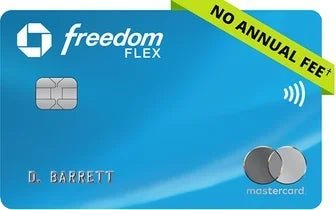
Chase Freedom Flex® Credit Card
Rotating bonus categories with no annual fee
Updated September 24, 2026 · By the MoneyAtlas Editorial Team
Pros
High upside: 5% rotating categories on up to $1,500/quarter (with activation)
Strong everyday earn: 5% Chase Travel + 3% dining + 3% drugstores.
Strong protections: Purchase protection, extended warranty, trip cancellation and auto rental coverage on a $0 annual fee card.
Cons
Foreign transaction fee: 3% on all foreign transaction fees
Quarterly activations: 5% rotating categories require manual activation & category management to maximize value
The best no-annual-fee cash back card for people who will actually activate the categories
Activate the rotating 5% categories each quarter and this is among the highest-earning cards you can carry for $0 a year, especially in quarters where dining stacks to 7%. Forget to activate and you are holding a 1% card with a good dining rate. The 3% foreign transaction fee also rules it out as a travel card.
5% on rotating quarterly categories and 5% through Chase Travel, plus a permanent 3% on dining and drugstores. When dining is the quarterly category the rates stack to 7%, which is premium-card territory on a card that costs nothing to hold.
A $0 annual fee against a 5% category structure means there is no spending level at which this card costs you money.
Purchase protection, extended warranty, trip cancellation and auto rental coverage are still better than most no-annual-fee cards offer. Chase dropped cell phone protection in September 2026, and the 3% foreign transaction fee remains, so this no longer scores near the top.
The rotating calendar demands manual activation every quarter, and a forgotten quarter drops those purchases to 1%. This is the card's real friction and the reason it is not for everyone.
The Chase Freedom Flex® is built for people who don't mind putting in a little effort to earn significantly more rewards. Unlike flat-rate cash back cards that reward every purchase equally, the Freedom Flex rotates its top-tier 5% categories every quarter, and for cardholders willing to activate and pay attention, the payoff can be substantial.
It's one of the more rewarding no-annual-fee cards available right now, and it gets even more interesting when you understand how it fits into the broader Chase rewards ecosystem.
What the Chase Freedom Flex® Offers Right Now
Updated September 2026 with the Q4 5% categories and the end of the card's cell phone protection.
New cardholders can earn a $200 bonus after spending $500 on purchases in the first 3 months from account opening; the same easy-to-reach threshold as its sibling, the Freedom Unlimited.
Here's how the ongoing rewards structure works:
- 5% cash back on up to $1,500 in combined purchases in rotating bonus categories each quarter (activation required)
- 5% cash back on travel purchased through Chase Travel℠
- 3% cash back on dining at restaurants (including takeout and eligible delivery services) and drugstore purchases
- 1% cash back on all other purchases
The card also offers a 0% intro APR for 15 months from account opening on both purchases and balance transfers, rolling into a variable APR of 18.24%–27.74% after the introductory period. A balance transfer fee of $5 or 3% of the transfer amount (whichever is greater) applies within the first 60 days; after that, the fee increases to 5% (minimum $5).
Why This Card Stands Out
The Rotating Categories Can Be Extremely Rewarding
The headline feature of the Chase Freedom Flex® is its quarterly 5% bonus categories. These change every three months, past categories have included grocery stores, gas stations, Amazon, PayPal, and restaurants, and each quarter you can earn 5% on up to $1,500 in combined spending in those categories.
That $1,500 cap means you can earn up to $75 in bonus cash back per quarter just from the rotating categories alone. Over a full year, that's $300 in category bonuses on top of whatever you earn from dining, drugstores, and everyday spending. For a no-annual-fee card, that earning potential is hard to match.
The trade-off is that you need to remember to activate the bonus each quarter. Miss activation and you'll only earn 1% on those purchases. It takes about 30 seconds through the Chase app or website, but it does require that small bit of attention.
2026 5% Cash Back Calendar
Q4 2026 runs October 1 through December 31 and pays 5% at grocery stores (excluding Walmart and Target), on dining, and on donations to the American Red Cross. Activate by December 14, 2026 in the Chase app, on chase.com, or by phone. Chase applies the bonus retroactively, so purchases you made earlier in the quarter still count once you activate.
Dining Earns a Permanent 3%
Even outside of the quarterly rotation, the Freedom Flex earns 3% on all dining purchases year-round. That alone makes it a strong restaurant card for anyone who doesn't want to pay an annual fee. But here's where things get especially interesting: when dining shows up as a quarterly bonus category (it was in Q1 2026 and is again in Q4 2026), the rates stack. The standard 3% dining rate, combined with the 4% quarterly bonus, yields a total of 7% cash back on restaurant spending, up to the $1,500 quarterly cap. That kind of return rivals premium cards costing $250 or more per year.
Built-In Protections That Punch Above Its Weight
For a $0-annual-fee card, the Freedom Flex comes loaded with benefits that many people overlook:
Cell phone protection is gone. Chase no longer lists it among the Freedom Flex's benefits, and the old coverage (up to $800 per claim with a $50 deductible) applies only to losses through September 19, 2026. If phone insurance was your reason to pay your wireless bill with this card, move that bill to a card that still includes it.
Purchase protection covers eligible new purchases for 120 days against damage or theft, up to $500 per item.
Extended warranty adds an extra year to the manufacturer's U.S. warranty on eligible warranties of three years or less.
Trip cancellation/interruption insurance reimburses up to $1,500 per covered traveler and $6,000 per trip for prepaid, non-refundable fares if your trip is canceled or cut short by covered situations.
Auto rental coverage provides secondary collision damage waiver coverage in the U.S. and primary coverage abroad, a genuinely useful benefit for anyone who rents cars.
These protections aren't unique to premium cards, but having all of them on a no-annual-fee card is uncommon and adds real value beyond the rewards structure.
Ultimate Rewards Points
The Freedom Flex is marketed as a cash back card, but the rewards you earn are actually Chase Ultimate Rewards® points. On their own, these points are worth 1 cent each toward cash back (as a statement credit, direct deposit, or gift cards).
But pair the Freedom Flex with a premium Chase card, the Chase Sapphire Preferred®, Chase Sapphire Reserve®, or Ink Business Preferred, and those points become transferable to airline and hotel partners like World of Hyatt, United MileagePlus, Air Canada Aeroplan, and others. This is where the 5% quarterly categories become even more powerful: 5,000 points from a maxed-out quarter could be worth significantly more than $50 when transferred to the right loyalty program.
This flexibility makes the Freedom Flex a much more versatile card than it first appears, especially for anyone building a multi-card Chase strategy.
Where the Card Falls Short
Foreign Transaction Fees
The Freedom Flex charges a 3% foreign transaction fee. For international travelers, this wipes out most of the rewards earned on overseas purchases. It's not the card to bring abroad. Pair it with a no-foreign-transaction-fee card for international spending.
The 1% Base Rate Is Below Average
Outside of the bonus categories, dining, and drugstores, everything else earns just 1% cash back. That's lower than the Freedom Unlimited's 1.5% flat rate on non-category purchases. For everyday spending that doesn't fall into a bonus tier, the Freedom Flex leaves value on the table compared to flat-rate alternatives.
Quarterly Activation Is Required
Forgetting to activate means forfeiting the 5% bonus for that entire quarter. While the activation process is quick, it's a genuine friction point. Set a calendar reminder or enable Chase app notifications; otherwise, the card's best feature goes unused.
The $1,500 Quarterly Cap
The 5% rate on rotating categories is capped at $1,500 in combined purchases per quarter. After that, spending in those categories drops to 1%. High spenders in a given category may hit that ceiling quickly, which limits the card's earning potential in any single quarter.
Freedom Flex vs. Freedom Unlimited: Which One?
This is one of the most common questions in the Chase ecosystem, and the honest answer is that these cards complement each other better than they compete.
The Freedom Unlimited is the better everyday card. Its 1.5% flat rate on all other purchases beats the Flex's 1%, and it requires zero thought or activation. The Freedom Flex is the better strategic card. Its rotating 5% categories and stacking dining bonuses can significantly outperform the Unlimited in specific spending windows.
For anyone who wants maximum rewards without managing categories, the Freedom Unlimited is the simpler choice. For anyone willing to put in minimal effort to activate quarterly bonuses, the Freedom Flex delivers higher peak rewards. And for anyone serious about the Chase ecosystem, carrying both cards is arguably the strongest no-annual-fee combination available.
Who Should Consider the Chase Freedom Flex®?
Strategic spenders who pay attention to bonus categories. If you're the type of person who checks the quarterly calendar and adjusts where you shop accordingly, the Freedom Flex will reward that behavior generously.
People who eat out a lot. Dining earns 3% all year, and in quarters where dining is also a 5% category, those purchases earn 7% on up to $1,500 in combined bonus spending.
People building a Chase Ultimate Rewards strategy. The Freedom Flex is one of the best feeder cards for the Chase ecosystem. Earn 5% in rotating categories, combine those points with a Sapphire card, and transfer to airline or hotel partners for outsized value.
Who Might Want to Look Elsewhere
If you don't want to think about activating categories or tracking spending caps, a flat-rate card like the Chase Freedom Unlimited® will be a better fit, and our list of no-annual-fee credit cards has other options that skip the category tracking. And if you travel internationally regularly, the 3% foreign transaction fee makes this card a poor choice for overseas use.
Compare


The Bottom Line
The Chase Freedom Flex® rewards engagement. For cardholders willing to activate quarterly categories and use the card strategically, it's one of the highest-earning no-annual-fee cards on the market, particularly when dining bonuses stack for rates as high as 7%. Add in useful protections like purchase protection, trip cancellation insurance, and auto rental CDW, and the value proposition becomes hard to argue with.
It's not a set-it-and-forget-it card, and that's by design. But for anyone who enjoys optimizing their spending or wants a powerful building block in a broader Chase rewards strategy, the Freedom Flex delivers more than most cards that charge $95 or more per year.