BankingMay 17, 2026
SoFi vs Discover: Banking, HYSA, and Personal Loan Comparison
Side-by-side comparison of SoFi and Discover for checking, savings, and personal loans: APYs, fees, rates, and who each bank is best for.
Continue Reading


Sometimes you have a bank account you don’t want or need anymore. Instead of just taking your money out of it and conducting transactions with other accounts, it's recommended to go through the bank account closure process.
Learn how to close a bank account effectively to avoid fees and smoothly transition to your new account.
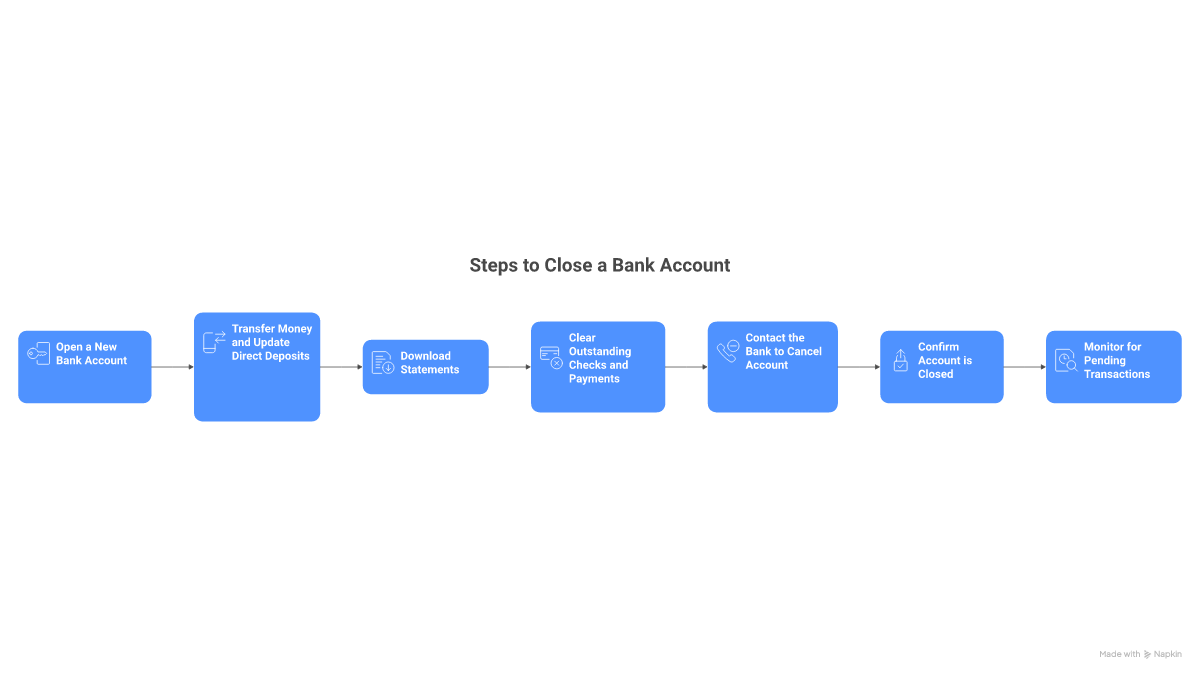
Before you reach out to your bank about closing your account, there are a few steps you should take, starting with finding a new bank.
Open or Confirm a New Account First
Line up your next account before you close anything. If you close first, you can be left without a way to receive a paycheck or pay a bill. Compare checking and savings options, open the new account, and confirm its account and routing numbers are active.
Move Direct Deposits and Automatic Payments
Read your last few statements and list every recurring item: paychecks, ACH transfers, subscriptions, autopay bills. Give each one your new account number so nothing keeps routing to the account you are about to close.
Transfer or Withdraw the Balance
Once no new transactions will hit the old account, move the remaining money to your new bank by electronic transfer, or withdraw it as cash. Leave a small cushion in place until any pending items clear.
Submit the Closure Request in Writing or Online
Ask the bank to close the account through its online portal, by phone, or with a signed form. Some banks require a written or notarized request, so follow your institution's stated process.
Get Written Confirmation
Do not assume the account is closed. Reach back out after a few days and ask for written confirmation that the balance is zero and the account is fully closed.
Destroy Old Checks and Cards, Keep Your Records
Shred any leftover checks and the debit card tied to the closed account. File your final statements somewhere safe, since you may need them for taxes or a future dispute.
If you're planning to open a new account after closing your old one, you need to choose your new financial institution. Alternatively, you may opt to open a different account at your current bank.
Either way, you have to decide what type of account you want to open and where. Research different banks and the benefits they offer for saving money. Consider whether you’d prefer a bank with a local branch or a digital bank instead. There are lots of different options, so take your time finding the right bank for your needs.
Make sure the bank you choose has a strong reputation for security and customer service. With banks backed by the Federal Deposit Insurance Corporation (FDIC), your deposits are insured up to $250,000, which can offer great peace of mind.
Not sure where to open your next account? Compare our top-rated checking accounts and high-yield savings options, or weigh the two in our guide to choosing between checking and savings.
You may have a number of automatic payments or deposits tied to your old bank account. Before you can close it, you need to switch those transactions to a new account.
For example, if you have direct deposit set up for your paycheck, contact your employer to switch those payments to your new bank account. Read through your previous statements to find recurring payments. Then contact those vendors to provide your new account information instead.
Once you’re sure no new transactions will hit your old account, you can move your remaining balance.
One option is to withdraw your funds in cash and make a cash deposit to the new account. Or you can request an electronic transfer.
Make a copy of any account statements or additional information to access it even once the account is closed. While you can figure out how to get statements from a closed bank account, it’s easier to just get them ahead of time.
Finally, it’s time to contact your bank and ask them to close the account. You can complete the closure by phone or online with most banks. Follow your financial institution’s steps for how to close a bank account online or by phone. You may need to fill out a form or possibly a notarized request.
It’s always a good idea to double-check important details like your bank account closure. After giving the bank time to process the request, reach back out to confirm that your account is closed. Get written confirmation so there’s no question.
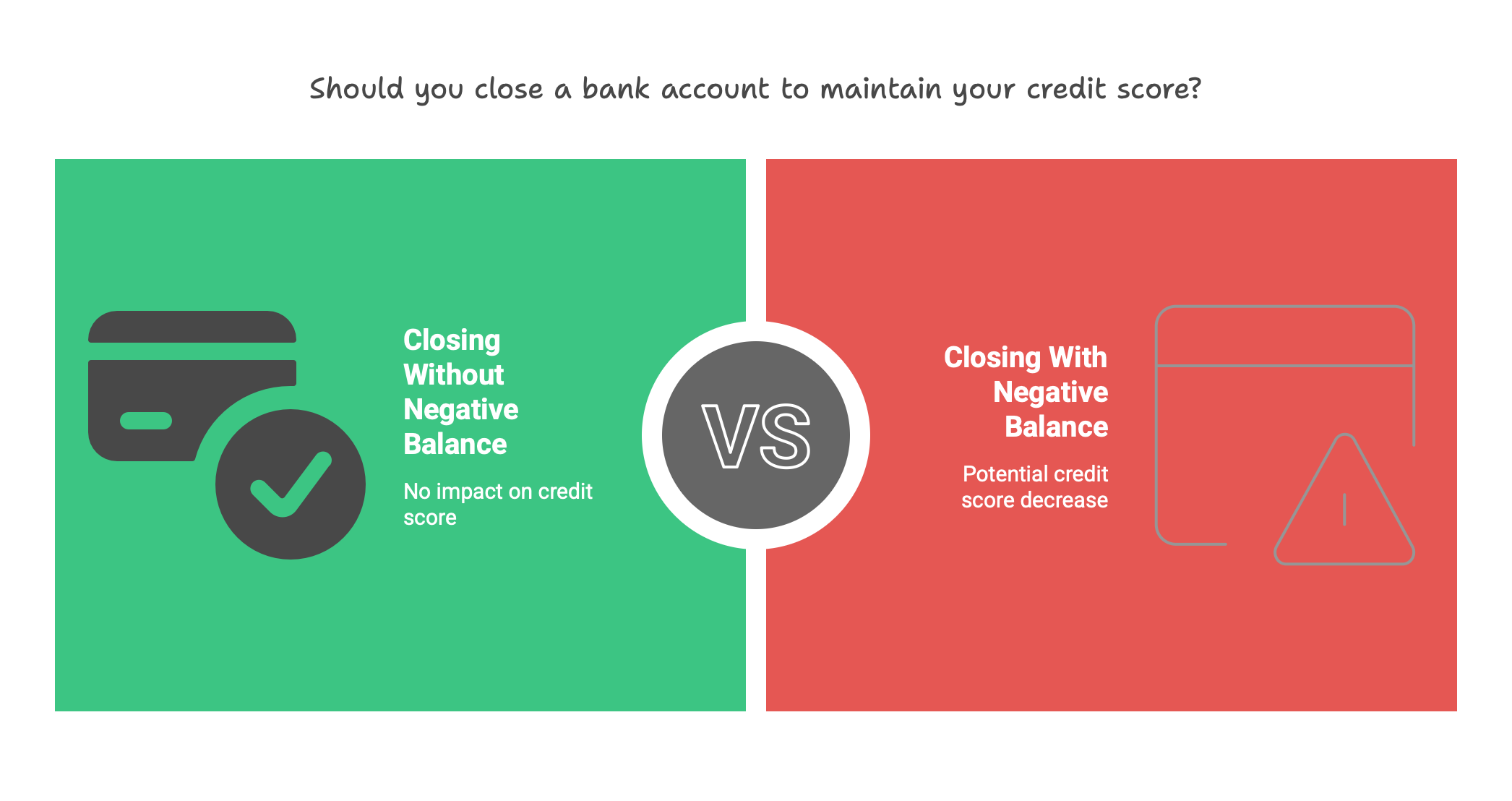
Sometimes people worry that closing any financial accounts, including a bank account, will hurt their credit scores. The good news is that closing a bank account typically won’t impact your credit score at all.
Bank accounts don’t appear on your credit report. Instead, your credit score is all about your behavior of borrowing money and repaying loans. Because regular checking and savings accounts are not loans, they don’t impact your score.
The only time closing a bank account may hurt your credit score is if you do so while your account has a negative balance. In that case, you owe the bank money. If you don’t pay back the amount you owe, the bank could send your account to a collection agency. The agency might then report your debt to the credit bureaus, putting it on your credit report. You may notice your credit score go down as a result.
Choosing the right accounts to store your money is a key part of your financial journey. But with so many options, it can be tricky to find the best ones. MoneyAtlas is here to help you make those decisions. Explore comparisons of top bank accounts today.
See which high-yield savings accounts are paying the most today.
Compare savings accountsSide-by-side comparison of SoFi and Discover for checking, savings, and personal loans: APYs, fees, rates, and who each bank is best for.

Looking for a high-yield savings account with no minimum balance? Explore top options offering great interest with no deposit requirements.
Wondering what do you need to open a business bank account? Here's a complete checklist, including IDs, licenses, and business formation documents.