Why Get an American Express Gold Card: A Value Breakdown


Introduction
The decision to apply for a premium rewards card often comes down to a simple math problem: do the annual benefits outweigh the cost of the membership? For many people, the American Express Gold Card represents the middle ground between basic no-fee cards and ultra-luxury travel cards. It targets two of the largest spending categories for the average household, which are dining and groceries. MoneyAtlas analyzes these types of financial products to help you determine which tools fit your specific spending habits. This article explores the earning structure, the list of monthly credits, and the overall value proposition of the card. Understanding the mechanics of the rewards program is the first step in deciding if this card belongs in your wallet.
The Core Earning Structure
The primary reason to consider the American Express Gold Card is its accelerated earning rate on food-related purchases. While many cards offer 1% or 2% back on various categories, this card focuses on high-volume daily spending.
Dining and Restaurants
The card earns 4X Membership Rewards points per dollar spent at restaurants worldwide. This applies to a wide range of dining experiences, including fast food, fine dining, and most delivery services. As of recent updates, this 4X rate is capped at $50,000 in purchases per calendar year. After hitting that limit, the rate drops to 1X for the remainder of the year.
U.S. Supermarkets
For household grocery shopping, the card also earns 4X points at U.S. supermarkets. This is one of the highest earning rates available for grocery spending, though it is capped at $25,000 in purchases per calendar year. Once you reach the $25,000 threshold, you earn 1X points on those purchases. It is important to note that this category typically excludes "big box" stores like Walmart or Target, and wholesale clubs like Costco or BJ's.
Travel and Flights
While the card is heavily weighted toward food, it also includes travel benefits. You can earn 3X points on flights booked directly with airlines or through the American Express Travel portal. Additionally, the card earns 2X points on prepaid car rentals and other eligible travel booked through the portal. All other purchases earn a standard 1X point per dollar spent.
Understanding the Annual Fee and Statement Credits
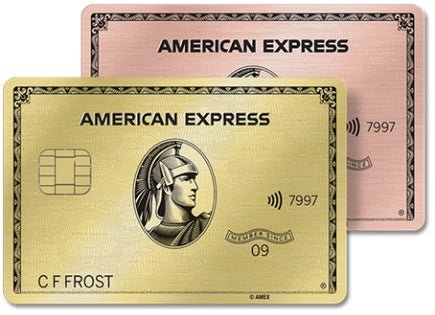
The American Express Gold Card carries an annual fee of $325. For many, this is the most significant hurdle to opening the account. However, the card includes several annual and monthly credits that can offset this cost if they align with your existing spending habits. For more guidance on weighing rewards against fees, read how to evaluate credit card annual fees, interest rates, and rewards.
Uber Cash
Cardholders receive up to $120 in annual Uber Cash, distributed as $10 monthly credits. This can be used for Uber rides in the U.S. or for Uber Eats orders. To use this, you must add the card to your Uber account. The credit expires at the end of each month and does not roll over.
Dining Credit
The card provides an additional $120 annual dining credit, also split into $10 monthly increments. This credit is specific to certain partners, which currently include Grubhub, The Cheesecake Factory, Five Guys, Buffalo Wild Wings, and Wonder. Enrollment is required through the American Express website to activate this benefit.
Resy Credit
A more recent addition to the card is the $100 Resy credit. This is split into two $50 statement credits per calendar year. It applies to purchases made at U.S. restaurants that participate in the Resy platform. Unlike the monthly credits, these are distributed every six months, offering a bit more flexibility for a semi-annual night out.
Dunkin' Credit
The card now includes up to $84 in annual Dunkin' credits. This is issued as a $7 monthly statement credit when you use your card at U.S. Dunkin' locations. For regular coffee drinkers, this functions as a straightforward reduction of the annual fee.
Evaluating Membership Rewards Points
The value of the American Express Gold Card is tied directly to the Membership Rewards program. Unlike cash-back cards where 100 points always equals $1.00, the value of Membership Rewards points fluctuates based on how you use them.
Point Redemption Options
- Travel Transfers: This is generally considered the most valuable way to use points. You can transfer points to various airline and hotel partners, such as Delta, British Airways, or Hilton. When used for international business class flights or high-end hotel stays, the value per point can exceed 2.0 cents.
- Booking Through Amex Travel: You can use points to book flights, hotels, or cruises directly. Points are usually worth 1.0 cent each when used for flights this way.
- Statement Credits: This is often the least efficient use of points. Using points to cover charges on your statement typically yields a value of 0.6 cents per point.
- Gift Cards: Value varies by retailer but generally hovers around 0.7 to 1.0 cent per point.
For someone prioritizing travel, the ability to transfer to partners makes the 4X categories even more powerful. If you value points at 2.0 cents each, the 4X categories effectively provide an 8% return on your spending.
How to Determine If the Card Is Right for You
Because of the high annual fee, it is helpful to follow a specific process when evaluating this card.
How to Determine If the Card Is Right for You
- 1
Audit your food spending
Review your bank statements from the last three months. Calculate how much you spend at grocery stores and restaurants. If your combined spending in these categories is less than $500 per month, the 4X rewards may not be enough to justify the fee compared to a no-fee 2% cash-back card.
- 2
Check the credit math
Be honest about the monthly credits. Do you already use Uber or Grubhub at least once a month? Is there a Dunkin' on your commute? If you have to go out of your way to spend the credits, you are not actually saving money. You are just prepaying for services you might not otherwise want.
- 3
Consider your travel goals
If you prefer cash back to simplify your finances, a different card may be a better fit. The American Express Gold Card is built for people who want to accumulate points for travel. If you do not plan to book flights or hotels in the next 12 to 24 months, these points will sit idle.
- 4
Verify your credit profile
This card generally requires a good to excellent credit score, typically in the 670 range or higher. Before applying, check your current score to ensure you meet the general requirements for premium cards. MoneyAtlas provides comparison tools that allow you to see where your credit score sits relative to different card tiers.
Comparing the Gold Card to Other Options
The credit card market is highly competitive, and the Gold Card often goes head-to-head with other popular travel cards. You can also compare top-rated credit cards across rewards, fees, and benefits.
Amex Gold vs. Chase Sapphire Preferred
The Chase Sapphire Preferred has a lower annual fee, usually around $95. It offers 3X points on dining and online groceries, but it does not have the high 4X rate for in-person U.S. supermarket shopping. The Gold Card is better for heavy grocery spenders, while the Sapphire Preferred is often seen as a better entry-level travel card due to its lower cost and strong transfer partners like United and Hyatt. See the Chase Sapphire Preferred Card review for a closer comparison.
Amex Gold vs. Amex Platinum
The Platinum card is the "big brother" to the Gold card, with a much higher annual fee, currently $695. The Platinum card is almost entirely focused on travel perks, such as airport lounge access and hotel elite status. It actually earns fewer points on dining and groceries than the Gold card. Many people choose to carry both, using the Gold for daily spending and the Platinum for travel benefits.
Amex Gold vs. Blue Cash Preferred
If you prefer cash over points, the Blue Cash Preferred from American Express is a strong alternative. It offers 6% cash back at U.S. supermarkets on up to $6,000 in spending per year. While the 6% rate is higher than the Gold's 4X points, the spending cap is much lower, and the rewards cannot be transferred to travel partners. Read the Blue Cash Preferred Card review to examine the cash-back alternative.
Travel Protections and Other Benefits
Beyond the points and credits, the Gold Card includes several "invisible" benefits that can be useful in specific situations.
Baggage Insurance
If your luggage is lost, damaged, or stolen while traveling on a common carrier, like an airplane or train, the card provides coverage. This typically covers up to $1,250 for carry-on baggage and up to $500 for checked baggage. The entire fare must have been charged to the card for the coverage to apply.
The Hotel Collection
When you book a stay of at least two consecutive nights through the American Express Travel portal at a Hotel Collection property, you receive a $100 experience credit. This credit can be used for qualifying dining, spa, or resort activities. You may also be eligible for a room upgrade upon arrival, depending on availability.
No Foreign Transaction Fees
For international travelers, the Gold Card is a good companion because it does not charge extra fees for purchases made outside the U.S. Many basic cards charge a 3% fee on foreign transactions, which can quickly erase the value of any rewards earned.
Maximizing the Welcome Offer
When you apply for the Gold Card, you will likely see a welcome offer. These offers typically require you to spend a certain amount of money within the first few months of account opening. For example, a common offer might be 60,000 points after spending $6,000 in the first six months.
Because American Express limits how often you can receive these bonuses, it is worth waiting for a high offer. You can use MoneyAtlas to compare current offers and historical highs to see if the current public offer is competitive.
Tips for meeting the spend requirement:
- Move all your recurring bills, utilities, insurance, cell phone, to the new card.
- Time your application around a large planned purchase, such as new appliances or a home repair.
- Offer to pay the bill at group dinners and have friends reimburse you via payment apps.
- Pre-pay for upcoming travel or annual subscriptions.
The "Amex Trifecta" Strategy
Advanced points earners often use the Gold Card as part of a three-card strategy known as the "Amex Trifecta." This approach ensures that almost every dollar spent earns more than the baseline 1X rate.
- Amex Platinum: Used for booking flights, 5X, and for lounge access and travel perks.
- Amex Gold: Used for all dining and U.S. supermarket purchases, 4X.
- Blue Business Plus: Used for all other "non-category" spending, as it earns 2X points on all purchases up to $50,000 per year.
By combining these cards, a household can maximize their point accumulation across every category of their budget. Since all three cards earn Membership Rewards points, the rewards are pooled into a single account, making it easier to book large trips.
Summary of Considerations
The American Express Gold Card is a specialized tool. It is not the best "all-around" card for everyone, but it is exceptionally good at rewarding specific behaviors.
Ideal for:
- High spenders at grocery stores and restaurants.
- Frequent users of Uber and food delivery apps.
- Travelers who know how to use transfer partners to maximize point value.
- People who want a metal card with a premium feel and solid customer service.
Less ideal for:
- Low spenders who won't earn enough points to cover the annual fee.
- People who prefer the simplicity of cash back.
- Those who live in rural areas with limited access to Uber or participating dining partners.
- International residents who cannot use the U.S.-specific credits or grocery bonus.
Before you decide, take a moment to look at your budget. If the math works in your favor, the Gold Card can be one of the most rewarding pieces of plastic in your wallet. If the fee feels too high, use the no-annual-fee credit card comparison to find a card with a lower barrier to entry that still rewards your top spending categories.
FAQ
MoneyAtlas Staff
Articles and reviews from the MoneyAtlas editorial team — independent research on credit cards, banking, loans, insurance, and investing.
Related Articles

Which Card Is Better: American Express Gold or Platinum?
Deciding which card is better: American Express Gold or Platinum? Compare fees, 4X dining rewards, and luxury travel perks to find your perfect match.

Should I Get an American Express Gold Card? Breaking Down the Value
Should I get an American Express Gold card? Explore the 4X rewards on dining and groceries vs. the $325 fee to see if this premium card fits your budget.

How to Get the American Express Gold Card: A Practical Guide
Learn how to get the American Express Gold Card with our guide on credit score requirements, income, and the 'Apply with Confidence' tool. Apply today!