What is the Gold American Express Card?


Introduction
The American Express Gold Card is one of the most recognizable pieces of metal in the financial world. For many, it represents a step up from entry-level credit cards into the world of premium rewards. People often search for this card when they realize their monthly spending on groceries and dining out has reached a level where a standard cash-back card might not be providing enough value.
MoneyAtlas tracks the evolution of premium cards to help you understand how these products fit into a broader financial strategy. This article covers the card’s specific rewards structure, the various annual credits that attempt to offset its fee, and the mechanics of its unique spending limits. By the end of this breakdown, you will have the information needed to determine if this card aligns with your spending habits and travel goals.
What is the Gold American Express Card?
The American Express Gold Card occupies a specific niche between basic travel cards and ultra-premium cards like the Platinum Card. It is designed primarily for people who spend heavily on "food and fuel" for their daily lives, but who also want to earn points that can be used for high-value travel redemptions.
Unlike a traditional credit card with a fixed credit limit, the Gold Card is technically a card with no preset spending limit. This does not mean your spending power is infinite. Instead, your limit adjusts based on your payment history, credit record, and financial resources. This flexibility can be a significant benefit for those who need to make large purchases occasionally, though American Express still monitors account behavior closely to manage risk.
The Charge Card Heritage
Historically, the Gold Card was a "charge card," meaning the balance had to be paid in full every month. While modern versions of the card include a "Pay Over Time" feature that allows you to carry a balance on eligible purchases with interest, the core philosophy remains focused on frequent, high-volume transactions that are settled quickly. For someone who typically pays their bill in full, this structure encourages a disciplined approach to credit.
How the Rewards Structure Works
The primary reason people consider the Gold Card is its earning potential in specific categories. It uses the American Express Membership Rewards program, which is a flexible points currency. MoneyAtlas compares various rewards credit cards, and Membership Rewards consistently ranks as one of the most versatile for international travel.
High-Earning Categories
The card is structured to reward everyday behavior rather than just luxury travel.
- Restaurants: You earn 4% in points (4 points per $1) on purchases at restaurants worldwide. This includes takeout and delivery in the US. There is a $50,000 annual cap on this category, after which the rate drops to 1%.
- US Supermarkets: You earn 4% in points on up to $25,000 in purchases per calendar year. Once you hit that limit, the rate returns to 1%.
- Flights: You earn 3% in points on flights booked directly with airlines or through the American Express travel portal.
- Prepaid Hotels: You earn 5% in points on prepaid hotel stays booked through the American Express travel portal.
Membership Rewards Points Explained
The points you earn are not just worth a flat cent amount. While you can redeem them for gift cards or statement credits, doing so often results in a lower valuation, sometimes as low as 0.6 cents per point. The real value of these points is unlocked when they are transferred to airline or hotel partners. American Express has more than a dozen partners, including Delta, British Airways, and Hilton. In many cases, points transfer at a 1:1 ratio, allowing you to book expensive international flights for fewer points than the cash price would suggest.
Understanding the Annual Credits
The Gold Card carries an annual fee of $325. For many, this is a high barrier to entry. To justify this cost, American Express provides several annual credits that, if used fully, can outweigh the fee itself. However, these credits require active management and specific spending habits.
For a broader framework, read MoneyAtlas’s guide to evaluating credit card annual fees, interest rates, and rewards.
The Uber Cash Credit
Cardholders receive $120 in Uber Cash annually, distributed as $10 per month. This can be used for Uber rides or Uber Eats orders in the US. This credit does not roll over. If you do not use your $10 in January, it disappears on February 1.
The Dining Credit
The card offers another $120 annual dining credit, also distributed as $10 per month. This is limited to specific partners, which currently include:
- Grubhub (including Seamless)
- The Cheesecake Factory
- Five Guys
- Buffalo Wild Wings
- Wonder
Like the Uber credit, this is a "use it or lose it" benefit that requires enrollment through the American Express website.
Resy and Dunkin' Credits
Recent updates to the card added two new credits:
- Resy Credit: Up to $100 in statement credits each year for eligible purchases at US Resy restaurants. This is split into two $50 increments, one for the first half of the year and one for the second half.
- Dunkin' Credit: Up to $84 in annual credits, delivered as $7 per month for purchases at US Dunkin' locations.
The Cost of Ownership: Fees and APR
Beyond the $325 annual fee, there are other costs to keep in mind. Because this card functions with a "Pay Over Time" feature, it does have an Annual Percentage Rate (APR).
Pay Over Time APR
While you can choose to pay your balance in full to avoid interest, any balance carried forward will be subject to a variable APR, which often ranges from 21% to 29% based on creditworthiness. These rates are competitive as of recent data but fluctuate with the market. Carrying a balance on a rewards card like this generally negates the value of the points earned.
For more education on this topic, review MoneyAtlas’s guide to understanding credit card APR.
Foreign Transaction Fees
One of the major perks for travelers is that the Gold Card has no foreign transaction fees. Many other cards charge a 3% fee on every purchase made outside the US. For a two-week international trip, avoiding this fee can save a traveler hundreds of dollars.
How to Evaluate the "No Preset Spending Limit"
A common point of confusion is how the spending limit works. Traditional cards give you a hard cap, such as $5,000. If you try to spend $5,001, the card is declined. The Gold Card is different.
Your spending power is dynamic. If you have a history of spending $2,000 a month and paying it off, and suddenly you need to book a $10,000 group trip, American Express may allow the charge through based on your overall credit profile.
How to manage your spending power:
How to Manage Your Spending Power
- 1
Check the tool
Use the "Check Spending Power" feature in the American Express app before making an unusually large purchase.
- 2
Payment history matters
The longer you hold the card and make on-time payments, the more flexible your limit tends to become.
- 3
It is not unlimited
American Express can and will decline transactions if they feel your spending has outpaced your ability to pay.
Comparing the Gold Card to Alternatives
Before applying for any card, it is useful to compare it against the broader market. MoneyAtlas makes it easier to compare the best credit cards side by side across different tiers and reward structures.
Amex Gold vs. Amex Platinum
The Platinum Card has a much higher annual fee, currently $695. While the Gold Card focuses on daily spending like groceries and dining, the Platinum Card focuses almost exclusively on the travel experience. The Platinum Card offers airport lounge access, hotel elite status, and higher rewards on flight bookings, but only 1% back on groceries and dining. For most people, the Gold Card is the better "daily driver," while the Platinum is a specialized travel tool.
Amex Gold vs. Chase Sapphire Preferred
The Chase Sapphire Preferred is often considered the Gold Card’s primary competitor. It has a much lower annual fee, usually around $95. It also earns points on dining and travel. However, it does not offer the 4% rate on US supermarkets that makes the Gold Card so valuable for families. Someone who spends $1,000 a month on groceries may find the extra 3% in rewards on the Gold Card more than justifies the higher annual fee.
See the full Chase Sapphire Preferred review for a closer look at that alternative.
Step-by-Step: Is This Card Right for You?
Deciding on a premium card involves a bit of math. Use this process to see if the Gold Card fits your life.
Step 1: Audit your food spending.
Check your last three months of bank statements. If you spend less than $500 a month combined on groceries and dining, the 4% earn rate might not generate enough points to be worth the effort.
Step 2: Check your "credit" compatibility.
Do you already use Uber at least once a month? Do you order from Grubhub or eat at The Cheesecake Factory? If you have to change your behavior just to use the credits, you aren't really "saving" money; you are just prepaying for services you didn't want.
Step 3: Define your travel goals.
Membership Rewards points are best for people who want to book flights with partner airlines. If you prefer to use points for cash back or to pay for Amazon purchases, a simple cash-back card will likely serve you better. Compare cash-back card options before making a decision.
Step 4: Verify your credit profile.
The Gold Card generally requires good to excellent credit, typically a score of 670 or higher. If your score is currently in the "fair" range, you might want to focus on building your profile before applying.
MoneyAtlas’s guide to American Express approval requirements explains how credit score, income, and application history can affect eligibility.
Managing the Metal Card
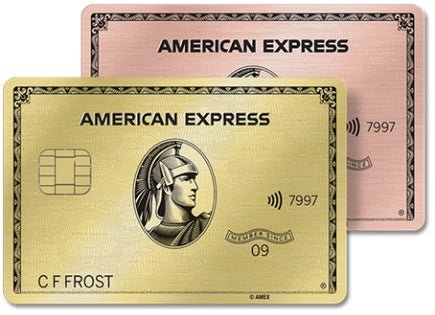
The Gold Card is notably heavy because it is made of stainless steel. While this is a purely aesthetic feature, it does mean you cannot simply shred the card when it expires. American Express provides a prepaid envelope to mail old cards back for secure destruction, or you can take it to a specialized recycling center.
Adding Authorized Users
You can add authorized users to your account. This allows family members to help you earn points on their daily spending. While there is usually a fee for additional Gold Cards on some accounts, the points all flow into your central Membership Rewards balance, making it easier to hit your travel goals faster.
Summary of Key Decision Factors
When evaluating the Gold Card, the decision usually comes down to the "net" annual fee. If you use the $120 Uber credit and the $120 dining credit, your effective fee drops to $85. At that price point, the 4% earn rate on food makes it one of the most powerful cards on the market.
However, for a household that shops at warehouse clubs like Costco (which often don't count as supermarkets) or for someone who rarely eats out at the specific partner restaurants, the $325 fee remains a significant hurdle.
MoneyAtlas provides comparison tools to help you look at these numbers against other travel and cash-back cards. Comparing your actual spending against these reward tiers is the most reliable way to ensure you are getting a positive return on your investment in a credit product.
FAQ
MoneyAtlas Staff
Articles and reviews from the MoneyAtlas editorial team — independent research on credit cards, banking, loans, insurance, and investing.
Related Articles

Is the American Express Gold Card Hard to Get?
Is the American Express Gold Card hard to get? Learn the credit score, income requirements, and tips to get approved for this top foodie card.

Which is Better: Platinum or Gold American Express?
Deciding which is better platinum or gold american express? Compare fees, 4X dining rewards, and luxury travel perks to find your perfect card.

Is Gold American Express Card Good: Reviewing the $325 Fee
Is gold American Express card good for your wallet? Compare the $325 annual fee against 4x food rewards and monthly credits to see if it's worth it.