What Is American Express Card Gold? Understanding the Benefits


Introduction
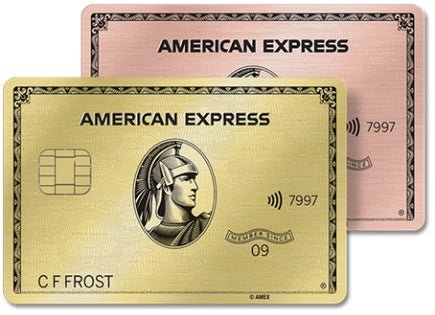
The American Express Gold Card is a premium rewards card designed for people whose highest monthly expenses revolve around food and travel. It occupies a middle ground in the American Express lineup, sitting between the entry-level cards and the ultra-premium Platinum Card. For many households, this card represents a primary way to earn Membership Rewards points on everyday spending like groceries and dining out.
MoneyAtlas tracks dozens of premium card options, and the Gold Card remains one of the most discussed because of its specific earning structure and high annual fee. This article covers the mechanics of how the card works, the breakdown of its $325 annual fee, and the specific credits that can help offset that cost. Understanding these details is the first step toward deciding if this card aligns with your spending habits.
Defining the American Express Gold Card
The American Express Gold Card review is often categorized as a "charge card," which differentiates it from a traditional credit card. While the distinction has blurred over the years due to new features, the core mechanic remains important for how you manage the account.
A traditional credit card gives you a revolving line of credit with a fixed limit. You can carry a balance from month to month while paying interest. In contrast, a charge card historically required the balance to be paid in full every month. The Gold Card still operates on this principle for most purchases, but it includes a "Pay Over Time" feature. This allows cardholders to carry a balance on certain eligible purchases with interest, similar to a standard credit card.
Another defining characteristic is the lack of a "preset spending limit." This does not mean spending is unlimited. Instead, your purchasing power adjusts based on your payment history, credit record, and financial resources. If you plan to make a large purchase that exceeds your typical monthly spending, we recommend using the "Check Spending Power" tool in the American Express app to see if the transaction will be approved.
The Annual Fee and Cost Structure
The Gold Card carries a $325 annual fee. While this is significantly lower than the $695 fee associated with the Platinum Card, it is still a substantial upfront cost. American Express typically charges this fee on the first billing statement after you open the account and then once a year on your account anniversary.
For those who view the fee as a monthly expense, it breaks down to roughly $27 per month. To determine if this cost is justifiable, it is necessary to look at the statement credits provided. If a cardholder already uses the services associated with these credits, the "effective" cost of the card can drop significantly. However, if these services require changing your lifestyle or spending more money than usual, the $325 fee remains a pure expense.
For a broader framework, see this guide on how to evaluate credit card annual fees, interest rates, and rewards.
Earning Membership Rewards Points
The primary draw of the Gold Card is its "4X" earning categories. Membership Rewards are the proprietary currency of American Express, and they are generally considered most valuable when transferred to travel partners.
Dining and Restaurants
The card earns 4X points per $1 spent at restaurants worldwide. This includes takeout and delivery services within the U.S. As of recent updates, this 4X rate applies to the first $50,000 in purchases per calendar year. Once that limit is reached, the earning rate drops to 1X for the remainder of the year.
U.S. Supermarkets
For many families, the 4X points at U.S. supermarkets are the most lucrative feature. This applies to the first $25,000 in purchases per calendar year. After hitting that $25,000 cap, the rate reverts to 1X. Note that "supermarkets" typically excludes "big box" stores like Walmart or Target, and wholesale clubs like Costco or Sam's Club.
Travel and Other Purchases
The card earns 3X points on flights booked directly with airlines or through the American Express Travel portal. It also earns 2X points on prepaid car rentals and cruises booked through the portal. All other eligible purchases earn a flat 1X point per $1 spent.
Readers comparing points, miles, and cash back can browse MoneyAtlas rewards credit card rankings.
Understanding the Annual Statement Credits
To compete with other premium cards, American Express includes several "credits" that act as rebates for specific types of spending. These credits are a core part of the Gold Card value proposition.
The $120 Dining Credit
Cardholders can earn up to $10 in statement credits per month when they use their card at participating dining partners. These partners currently include:
- Grubhub (including Seamless)
- The Cheesecake Factory
- Buffalo Wild Wings
- Five Guys
- Wonder
- Goldbelly and Wine.com (Note: These are scheduled to be removed in mid-2026)
This credit requires enrollment through the American Express account dashboard. Because it is distributed monthly, any unused portion does not roll over to the next month.
$120 Uber Cash
By adding the Gold Card to an Uber account, cardholders receive $10 in Uber Cash each month. This can be used for Uber rides in the U.S. or for Uber Eats orders. Like the dining credit, this is a "use-it-or-lose-it" benefit that expires at the end of each month.
$100 Resy Credit
A newer addition to the card is the Resy credit. Cardholders can receive up to $100 in statement credits each calendar year for eligible purchases at U.S. Resy restaurants. This is split into two $50 credits: one available from January through June, and another from July through December. Enrollment is required.
$84 Dunkin' Credit
The card also offers up to $7 in monthly statement credits for purchases made at U.S. Dunkin' locations. Over a full year, this totals $84. This also requires enrollment and operates on a monthly expiration cycle.
Travel Protections and Lifestyle Perks
While the Gold Card is not as travel-heavy as the Platinum Card, it still offers several protections that are useful for frequent fliers.
Readers evaluating travel-focused alternatives can compare top travel credit cards by rewards, fees, and travel benefits.
The Hotel Collection
When booking a stay of at least two consecutive nights through the American Express Travel portal at a "Hotel Collection" property, cardholders receive a $100 experience credit. This can typically be used for spa services, dining, or other on-property activities. Additionally, these bookings may be eligible for a room upgrade at check-in, though this is subject to availability.
Car Rental and Baggage Insurance
The card provides secondary car rental loss and damage insurance. This can cover theft or damage to most rental vehicles when the entire rental is paid for with the Gold Card. It also includes a baggage insurance plan that provides coverage for lost, damaged, or stolen luggage when traveling on a common carrier, such as a plane or train, provided the ticket was purchased with the card.
Hertz Five Star Status
Gold Card members are eligible for complimentary Hertz Five Star status. This mid-tier elite status allows for quicker check-outs, potential vehicle upgrades, and a wider selection of cars at participating locations.
Redemptions: How to Use Your Points
Earning points is only half the battle. Knowing how to redeem them determines the actual value you get from the card. Membership Rewards points do not have a fixed value.
Transferring to Partners is generally the most effective way to use points. American Express has over a dozen airline and hotel partners, including Delta SkyMiles, British Airways Executive Club, and Hilton Honors. When you transfer points to these programs, you can often book international business class flights or luxury hotel stays that would otherwise cost thousands of dollars. Most transfers happen at a 1:1 ratio.
Booking Through the Portal allows you to use points to pay for flights or hotels directly on the American Express Travel website. For flights, points are typically worth 1 cent each. For hotels and other travel, the value is often lower, around 0.7 cents per point.
Statement Credits and Gift Cards are options, but they represent the lowest value for your points. Using points for a statement credit (often called "Cover Your Charges") usually yields a value of 0.6 cents per point. We generally suggest exploring travel redemptions first to ensure you are getting the most out of your spending.
Comparing the Gold Card to Other Options
Deciding on the Gold Card usually involves comparing it to other high-earning rewards cards. Many consumers find themselves choosing between the Gold Card and the Platinum Card, or looking at competitors like the Chase Sapphire Reserve.
The Platinum Card is better for the "road warrior" who spends a significant amount of time in airports and values lounge access. The Gold Card is better for the "everyday spender" who wants to rack up points on groceries and dinner with friends.
When comparing, look at:
- Where you spend the most money: If you spend $1,000 a month on groceries, the Gold Card is hard to beat.
- Your travel habits: If you only fly once or twice a year, the lounge access on more expensive cards might not be worth the higher fee.
- Your existing subscriptions: If you already use Uber and Grubhub, the Gold Card credits essentially pay for the card.
MoneyAtlas provides side-by-side credit card comparisons that allow you to see exactly how the Gold Card stacks up against other premium rewards cards in terms of fees, point values, and insurance coverage.
Is the American Express Gold Card Right for You?
The American Express Gold Card is a powerful tool for a specific type of consumer. It is not a "one size fits all" financial product.
It might be a good fit if:
- You spend at least $500 to $1,000 per month on groceries and dining.
- You already use Uber or Uber Eats at least once a month.
- You prefer to earn transferable travel points rather than simple cash back.
- You are comfortable paying a $325 annual fee in exchange for higher earning rates.
It might not be a good fit if:
- You prefer a simple, no-fee cash back card.
- You do most of your grocery shopping at wholesale clubs like Costco.
- You do not live near the participating dining partners, such as Cheesecake Factory or Dunkin'.
- You find "use-it-or-lose-it" monthly credits stressful to manage.
Readers who prefer avoiding annual fees can compare no annual fee credit cards.
How to Apply and What to Expect
If you decide to apply, American Express uses a process called "Apply with Confidence." This allows you to submit an application and see if you are approved with a "soft" credit pull. This means your credit score will not be impacted unless you are approved and choose to accept the card.
During the application, you may be eligible for a "Welcome Offer." These offers typically grant a large sum of Membership Rewards points after you spend a certain amount of money within the first six months. These offers vary over time and can range from 60,000 to 100,000 points.
Before applying, we recommend checking your current credit score. Most successful applicants have a "good" to "excellent" credit score, typically in the 670+ range. You will also need to provide income information to satisfy debt-to-income requirements.
For more context on qualification factors, read the guide to American Express approval requirements.
Managing the Card Daily
Once you have the card, management is key to ensuring it remains a net positive for your finances. We recommend setting up the following:
How to Manage the Card Daily
- 1
Enable Auto-Pay
Because this is a charge card, the full balance is usually due every month. Missing a payment can lead to significant fees and damage to your credit score.
- 2
Enroll in Credits
Log into the American Express portal immediately to enroll in the Dining and Resy credits.
- 3
Link Your Uber Account
Add the card to your Uber app so the monthly $10 credit starts appearing.
- 4
Track Your Spending Caps
Keep an eye on your year-to-date spending in the 4X categories to ensure you don't drop down to the 1X rate unexpectedly.
MoneyAtlas offers detailed reviews of the mobile apps and management tools for all major issuers, which can help you understand the user experience before you sign up.
Summary of the Gold Card Decision
Choosing the American Express Gold Card is a math problem. If you spend $25,000 a year across groceries and dining, you would earn 100,000 Membership Rewards points. At a conservative valuation of 1 cent per point, that is $1,000 in value. Subtract the $325 fee, and you are left with $675 in profit, even before accounting for the statement credits.
However, for a lower spender, the math may not work as well. A card with no annual fee that earns 2% cash back might actually result in more money in your pocket at the end of the year if you don't spend enough to overcome the Gold Card's $325 entry price.
The best way to make this decision is to look at your actual bank statements from the last three months. Total up your spending at supermarkets and restaurants, then compare that against the rewards and fees. Using the comparison tools available on MoneyAtlas can make this "apples-to-apples" comparison much easier.
For a broader explanation of this calculation, read how to compare credit card fees, interest rates, and rewards.
FAQ
MoneyAtlas Staff
Articles and reviews from the MoneyAtlas editorial team — independent research on credit cards, banking, loans, insurance, and investing.
Related Articles

Which Card Is Better: American Express Gold or Platinum?
Deciding which card is better: American Express Gold or Platinum? Compare fees, 4X dining rewards, and luxury travel perks to find your perfect match.

Should I Get an American Express Gold Card? Breaking Down the Value
Should I get an American Express Gold card? Explore the 4X rewards on dining and groceries vs. the $325 fee to see if this premium card fits your budget.

How to Get the American Express Gold Card: A Practical Guide
Learn how to get the American Express Gold Card with our guide on credit score requirements, income, and the 'Apply with Confidence' tool. Apply today!