What Does the Gold American Express Card Mean?


Introduction
The question of what the American Express Gold card means often points toward its status as a premium financial tool designed for a specific type of consumer. For some, the card represents a step up from entry-level credit products into a world of travel rewards and luxury perks. For others, it is a practical engine for earning points on daily necessities like groceries and dining. MoneyAtlas compares over 1,500 products to help people understand where cards like this fit into a broader financial strategy. This article covers the technical mechanics of the card, the value of its rewards structure, and how its "no pre-set spending limit" actually works. By the end, the functional and financial meaning of carrying this card will be clear.
The Functional Meaning of the American Express Gold Card
To understand what the card means, one must first understand its classification. Unlike a standard credit card that gives a fixed revolving credit line, the American Express Gold card was historically known as a charge card. While modern versions allow for "Pay Over Time" features on certain purchases, the card still operates differently than most traditional bank cards.
The primary functional meaning of the card is a focus on "Membership Rewards" points. These points are the proprietary currency of the issuer. They are not tied to a single airline or hotel chain. Instead, they can be transferred to various travel partners or used for statement credits. For a cardholder, this means having a flexible asset that can fluctuate in value depending on how it is redeemed. Readers can compare rewards credit cards to see how flexible points-based products differ from cash-back options.
Understanding "No Pre-Set Spending Limit"
One of the most misunderstood aspects of what this card means is the spending limit. Many people incorrectly assume that "no pre-set spending limit" means the spending is unlimited. This is not the case.
Instead, the limit is dynamic. The issuer adjusts the amount a person can spend based on several factors:
- The cardholder's payment history and debt levels.
- Current financial resources and income.
- Past spending patterns with the card.
- Credit bureau data and overall credit health.
This means the "meaning" of the card changes as the cardholder's financial situation evolves. A person who consistently pays their balance in full and has a high income may find their purchasing power is significantly higher than what a traditional credit card would allow. Conversely, a change in credit score or a missed payment could cause the issuer to restrict spending quickly. For broader context, readers can review how APR works on credit cards.
The Rewards Meaning: A Focus on Food and Travel
For many, the American Express Gold card means one thing above all else: a way to maximize points on food. The card is structured to reward the "daily life" of a person who eats out frequently and cooks at home.
The current rewards structure generally includes:
- 4% back (in the form of 4X points) at restaurants worldwide, up to $50,000 in purchases per year.
- 4% back (4X points) at U.S. supermarkets, up to $25,000 in purchases per year.
- 3% back (3X points) on flights booked directly with airlines or through the issuer’s travel portal.
- 1% back (1X point) on all other eligible purchases.
Readers who prefer a simpler rewards structure can browse cash-back card rankings and compare fixed-value rewards with transferable points.
The Financial Math of the $325 Annual Fee
A significant part of what this card means is a $325 annual fee. For some, this fee is a barrier. For others, it is a calculated cost of doing business. The card includes several "credits" that are designed to offset this fee, provided the cardholder already spends money in those areas. MoneyAtlas explains this type of calculation in its guide to evaluating credit card annual fees and rewards.
The Uber Cash Credit
Cardholders receive $10 in Uber Cash each month, totaling $120 per year. This can be used for Uber rides or Uber Eats orders in the U.S. To receive this, the card must be added to the Uber app, and the benefit does not roll over from month to month.
The Dining Credit
The card offers another $120 annual dining credit, distributed as $10 per month in statement credits. This is specific to certain partners, such as Grubhub, The Cheesecake Factory, Five Guys, and Buffalo Wild Wings. Enrollment is required to use this feature.
The Resy and Dunkin' Credits
Recent updates to the card have added a $100 Resy credit, which is split into two $50 bi-annual increments. This can be used at participating U.S. Resy restaurants. There is also an $84 annual Dunkin' credit, provided in $7 monthly increments.
The Social and Status Meaning of the Card
While MoneyAtlas focuses on the financial data, it is impossible to ignore that the Gold card carries a historical status meaning. In the 20th century, the color of a card was a shorthand for a person's net worth or creditworthiness.
Today, that meaning has shifted. Because the card is now more accessible to those with "good to excellent" credit (typically a score of 670 or higher), the status is less about exclusive wealth and more about "lifestyle branding." Carrying the card signifies that the user is likely someone who values travel, appreciates fine dining, and is willing to pay a premium for a high level of customer service and purchase protection.
Comparing Gold to Other Options
When deciding what the American Express Gold card means for a specific wallet, it helps to compare credit card options side by side.
Gold vs. Green: The Green card is often seen as the entry-point for travel rewards, with a lower fee and a focus on transit and general travel.
Gold vs. Platinum: The Platinum card carries a much higher fee, currently $695. It means prioritizing airport lounge access, hotel elite status, and luxury concierge services. The Gold card remains the better "earner" for most people because its 4X categories cover more common expenses than the Platinum card's travel-heavy categories.
Gold vs. Blue Cash Preferred: For someone who wants simple cash back instead of travel points, a card like the Blue Cash Preferred might mean more. It offers a higher percentage back on U.S. supermarkets (6% on up to $6,000 per year) but the rewards cannot be transferred to airlines. See the Blue Cash Preferred card review for a closer look at that alternative.
The Risks and Fine Print
Every financial tool has trade-offs. The "meaning" of the Gold card can turn negative if the balance is not managed correctly.
- Annual Fee Impact: If a cardholder does not use the $424 in potential credits, the $325 fee is a straight loss.
- Point Valuation: Membership Rewards points do not have a fixed value. While they can be worth 2 cents per point or more when transferred to airlines for international business class, they may be worth less than 1 cent per point if used for "Pay with Points" at checkout with certain retailers.
- No Pre-Set Limit Volatility: Because the limit can change, relying on this card for a massive emergency purchase without checking the "Check Spending Power" tool in the app can lead to a declined transaction.
Who Is the Card Best For?
In the editorial judgment of our team, the American Express Gold card carries the most meaning for a specific profile:
- The Urban Professional: Someone who uses rideshares frequently and orders through delivery apps.
- The Home Chef: Someone with a large monthly grocery bill who shops at traditional U.S. supermarkets.
- The Strategic Traveler: Someone who understands how to transfer points to airline partners for maximum value rather than just taking a statement credit.
How to Decide if the Card Fits Your Strategy
To determine what this card would mean for your finances, look at your last three months of bank statements. Total up your spending at restaurants and supermarkets. If that number is high, the 4X points could be significant.
Next, look at your current subscriptions and habits. Do you already use Uber? Do you eat at Five Guys or order through Grubhub? If the answer is no, you are essentially paying $325 for a piece of metal that does not pay for itself.
MoneyAtlas provides tools to help you look at these numbers side by side. Comparing the Gold card against a no-annual-fee credit card can reveal whether the "premium" experience actually nets you more money at the end of the year.
The Application Process and Requirements
Applying for this card typically requires a "good to excellent" credit score. This generally means a score in the 670 to 850 range, though approval is never guaranteed. The issuer also looks at your "internal score" if you have had other cards with them in the past.
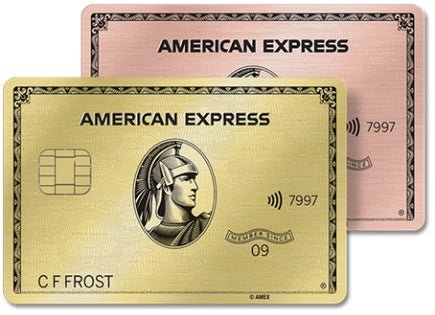
If you are approved, the card will usually arrive as a heavy metal card in either Gold or Rose Gold. This physical weight is part of the brand's "meaning," but the real value remains in the digital ledger of points you accumulate.
Conclusion
The American Express Gold card means different things depending on how it is used. It is a tool for high-earning on food, a membership into a flexible rewards ecosystem, and a statement of a certain lifestyle. However, its $325 annual fee requires the cardholder to be diligent about using the provided credits. Without a plan to maximize those credits and the 4X point categories, the card's meaning is reduced to an expensive status symbol.
To see how this card compares to other premium rewards options, you can compare the latest credit card options to evaluate the real-world value of 4X points versus flat-rate cash back.
FAQ
MoneyAtlas Staff
Articles and reviews from the MoneyAtlas editorial team — independent research on credit cards, banking, loans, insurance, and investing.
Related Articles

Is the American Express Gold Card Hard to Get?
Is the American Express Gold Card hard to get? Learn the credit score, income requirements, and tips to get approved for this top foodie card.

Which is Better: Platinum or Gold American Express?
Deciding which is better platinum or gold american express? Compare fees, 4X dining rewards, and luxury travel perks to find your perfect card.

Is Gold American Express Card Good: Reviewing the $325 Fee
Is gold American Express card good for your wallet? Compare the $325 annual fee against 4x food rewards and monthly credits to see if it's worth it.