What Does Gold American Express Card Mean for Your Finances


Introduction
Understanding what the American Express Gold Card means often requires looking past the brand name to the actual math behind the plastic. For many, this card is a financial tool designed to reward high spending on food and travel. It sits as a mid-tier option between entry-level rewards cards and the ultra-premium Platinum Card. MoneyAtlas helps users evaluate these options by looking at the real-world value of points and statement credits compared to the $325 annual fee. This post explores the card earning structure, the specific credits that help offset its cost, and how to determine if it fits your spending patterns. Ultimately, the Gold Card functions as a powerhouse for those who spend heavily on groceries and dining, whether at home or out in the world.
Defining the American Express Gold Card
The American Express Gold Card is a rewards credit card that focuses on lifestyle spending. It is not a traditional credit card in the sense that it historically functioned as a "charge card," meaning users were expected to pay the balance in full each month. While modern versions offer "Pay Over Time" features, its primary purpose remains rewards accumulation rather than carrying a long-term balance.
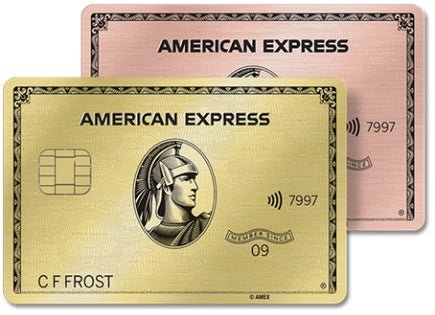
When someone asks what the card means, they are often referring to its place in the market. It is widely considered one of the best cards for "foodies" because of its 4X earning rate at restaurants and US supermarkets. It is also a status symbol for some, available in both Gold and Rose Gold metal finishes. However, the financial meaning is found in its rewards currency: Membership Rewards points.
These points are flexible. They can be used for travel bookings, gift cards, or transferred to various airline and hotel partners. Because these points are transferable, they often carry a higher value than standard cash back or fixed-value points. You can compare similar earning structures in MoneyAtlas's rewards credit card rankings.
How the Rewards Structure Works
The primary appeal of the Gold Card is the points-earning potential in specific categories. For consumers whose largest monthly expenses are food and groceries, the math often works in their favor.
Earning Points on Food
The card earns 4X Membership Rewards points per $1 spent at restaurants worldwide. This includes everything from fine dining to fast food, as well as takeout and delivery services in the US.
It also earns 4X points at US supermarkets. This rate is applicable on up to $25,000 in purchases per calendar year. Once that cap is reached, the earning rate drops to 1X for the remainder of the year. For a household spending $500 a week on groceries, hitting this cap is a real possibility.
Earning Points on Travel
While it is not as travel-focused as the Platinum Card, the Gold Card still offers competitive rates for travelers. It earns 3X points on flights booked directly with airlines or through the American Express Travel website. It also earns 2X points on prepaid car rentals and cruises booked through the same platform. You can review other options through MoneyAtlas's travel credit card comparison.
All other purchases earn 1X point per $1 spent. This makes it a specialized tool rather than a "catch-all" card for every expense. MoneyAtlas tracks how these rates compare to other premium cards that might offer higher baseline rewards for non-category spending.
Understanding the $325 Annual Fee
The $325 annual fee is a significant upfront cost. To understand what this card means for your budget, you must determine if you can "zero out" that fee using the built-in statement credits. If you already use the services associated with these credits, the card can effectively pay for itself. For a broader framework, read MoneyAtlas's guide to evaluating credit card annual fees, interest rates, and rewards.
The Uber Cash Credit
Cardholders receive up to $120 in Uber Cash annually. This is distributed as $10 in Uber Cash each month. It can be used for Uber rides in the US or for Uber Eats orders. To use this, the Gold Card must be added to the Uber app as a payment method.
The Dining Credit
There is an additional $120 annual dining credit. Like the Uber credit, it is broken down into $10 monthly increments. This credit applies to purchases made at specific participating partners. These currently include:
- Grubhub, including Seamless
- The Cheesecake Factory
- Five Guys
- Buffalo Wild Wings
- Wonder
New Credits: Resy and Dunkin'
A recent refresh added two more potential sources of value. Cardholders can receive up to $100 in Resy credits annually, delivered as two $50 statement credits, one from January to June, and one from July to December. These are valid at US restaurants participating in the Resy platform.
There is also a $84 Dunkin' credit. This is delivered as a $7 monthly statement credit for purchases made at US Dunkin' locations.
Comparing Gold vs. Platinum
A common question is whether the Gold Card or the Platinum Card is a better fit. The answer depends on your lifestyle. The Gold Card is a "daily driver" for food, while the Platinum Card is a "travel kit" for frequent flyers. MoneyAtlas's best travel credit cards provide a way to compare premium travel options.
The Platinum Difference
The Platinum Card carries a much higher annual fee, currently $695. In exchange, it offers 5X points on flights and prepaid hotels, plus extensive airport lounge access. It also includes luxury perks like elite status with Hilton and Marriott, and a wide array of travel-related credits.
The Gold Advantage
The Gold Card is often more useful for the average person because most people spend more on groceries and dining than they do on luxury travel. While the Platinum Card offers 5X on flights, it only offers 1X on restaurants. If you spend $10,000 a year on dining, the Gold Card earns 40,000 points, while the Platinum Card earns only 10,000 points.
Who Should Consider the Gold Card?
This card is suited for a specific type of spender. It is worth comparing if you fall into one of the following categories:
- The Grocery Shopper: If your US supermarket bill is consistently high, the 4X points can generate significant travel rewards.
- The Restaurant Regular: Those who eat out or order delivery frequently can maximize the 4X rate and the monthly $10 dining and Uber credits.
- The Travel Optimizer: If you want to earn Membership Rewards points but do not travel enough to justify the $695 Platinum fee, the Gold Card is an excellent middle ground.
Conversely, it is less suited for those who:
- Do not live near participating dining partners.
- Prefer cash back over travel points.
- Do not spend enough in the 4X categories to offset the $325 fee.
- Travel internationally and shop at supermarkets, as the 4X grocery rate only applies within the US.
For a broader side-by-side look at available products, browse MoneyAtlas's best credit card comparison.
How to Apply and Qualify
Applying for the Gold Card generally requires good to excellent credit. Most successful applicants have a credit score in the 670+ range, though this is not a guarantee of approval. American Express also considers factors like your income, existing debt, and your history with the brand. MoneyAtlas's guide to American Express approval requirements covers related qualification considerations.
The Welcome Offer
New cardholders can often earn a substantial welcome bonus. These offers usually require spending a certain amount, such as $6,000 or $8,000, within the first six months of account opening. These bonuses can be worth 60,000 to 100,000 points, which can translate to over $1,000 in travel value depending on how they are redeemed.
Application Steps
- Check your credit score: Ensure you are in the good to excellent range.
- Evaluate your spending: Look at your last three months of bank statements to see how much you spend on groceries and dining.
- Compare offers: Use MoneyAtlas to see the current welcome bonuses and terms.
- Complete the application: You can often get a "Apply with Confidence" decision that tells you if you are approved before your credit score is impacted.
Maximizing the Value of Your Points
Once you earn your points, the "meaning" of the card comes down to how you spend them. Not all redemptions are equal. The American Express Gold Card review provides a closer look at its rewards and redemption features.
Transfer Partners
The most valuable way to use Membership Rewards points is usually by transferring them to airline partners. Examples include Delta SkyMiles, British Airways Executive Club, and Singapore Airlines KrisFlyer. When transferred and used for business or first-class international flights, points can sometimes be worth 2 cents or more each.
Amex Travel Portal
You can use points to book travel directly through American Express Travel. This usually gives you a value of 1 cent per point for flights. It is simpler than transferring to partners but often provides lower total value.
Statement Credits and Gift Cards
Using points for statement credits or "Cover Your Charges" is generally the least efficient option. This often results in a value of only 0.6 cents per point. Similarly, gift cards and shopping with points at retailers like Amazon usually provide poor value.
Potential Drawbacks and Risks
While the card offers high rewards, it is not without risks. The $325 annual fee is charged immediately upon opening the card. If you do not use the credits or earn enough points, this is a pure loss.
Credit Utilization
Because the card has no preset spending limit, it does not always contribute to your credit utilization ratio in the same way a traditional credit card does. This means it may not help your credit score as much as a card with a fixed $10,000 limit might, though it still reports on-time payments.
Foreign Transaction Fees
The American Express Gold Card does not charge foreign transaction fees. This makes it a good companion for international travel. However, remember that the 4X supermarket rewards are limited to US supermarkets. You will only earn 1X at grocery stores abroad.
Interest Rates
If you use the "Pay Over Time" feature, the interest rates can be high. It is always best to pay the balance in full to avoid these charges, which can quickly erase the value of any points earned. For more background, read what APR means on a credit card.
Practical Steps to Decide
If you are on the fence, take these steps to make a data-driven decision.
How to Decide If the Gold Card Is Worth It
- 1
Calculate spending
Calculate your average monthly spending at restaurants and US supermarkets. Multiply that annual total by 4% to see your potential points.
- 2
Assign credit value
Assign a realistic value to the credits. If you already use Uber and Grubhub once a month, value those at $240. If you never go to Dunkin', value that credit at $0.
- 3
Compare totals
Compare the final number to the $325 fee. If your total value is significantly higher, the card likely makes financial sense.
- 4
Check alternatives
Visit MoneyAtlas to compare rewards cards against other high-earning food and travel cards to ensure there isn't a better fit for your specific habits.
FAQ
MoneyAtlas Staff
Articles and reviews from the MoneyAtlas editorial team — independent research on credit cards, banking, loans, insurance, and investing.
Related Articles

Is the American Express Gold Card Hard to Get?
Is the American Express Gold Card hard to get? Learn the credit score, income requirements, and tips to get approved for this top foodie card.

Which is Better: Platinum or Gold American Express?
Deciding which is better platinum or gold american express? Compare fees, 4X dining rewards, and luxury travel perks to find your perfect card.

Is Gold American Express Card Good: Reviewing the $325 Fee
Is gold American Express card good for your wallet? Compare the $325 annual fee against 4x food rewards and monthly credits to see if it's worth it.