
InvestingApril 22, 2025
Brokerage Account vs Mutual Fund: Pros, Cons & Best Uses
A brokerage account lets you trade individual stocks, while a mutual fund offers a managed portfolio of diversified investments. Learn more here!
Continue Reading


When you’re looking to grow your wealth through investing, choosing the right account for your holdings is key. Two of the most popular options are Roth IRAs and brokerage accounts.
You don’t have to choose between a Roth IRA vs. a brokerage account. In fact, investors can benefit from having both types. Each of these accounts can help you prepare for the future and achieve long-term financial security. Before you decide which to open, explore their different tax implications, withdrawal rules, and contribution limits.
What is a brokerage account vs. a Roth IRA?
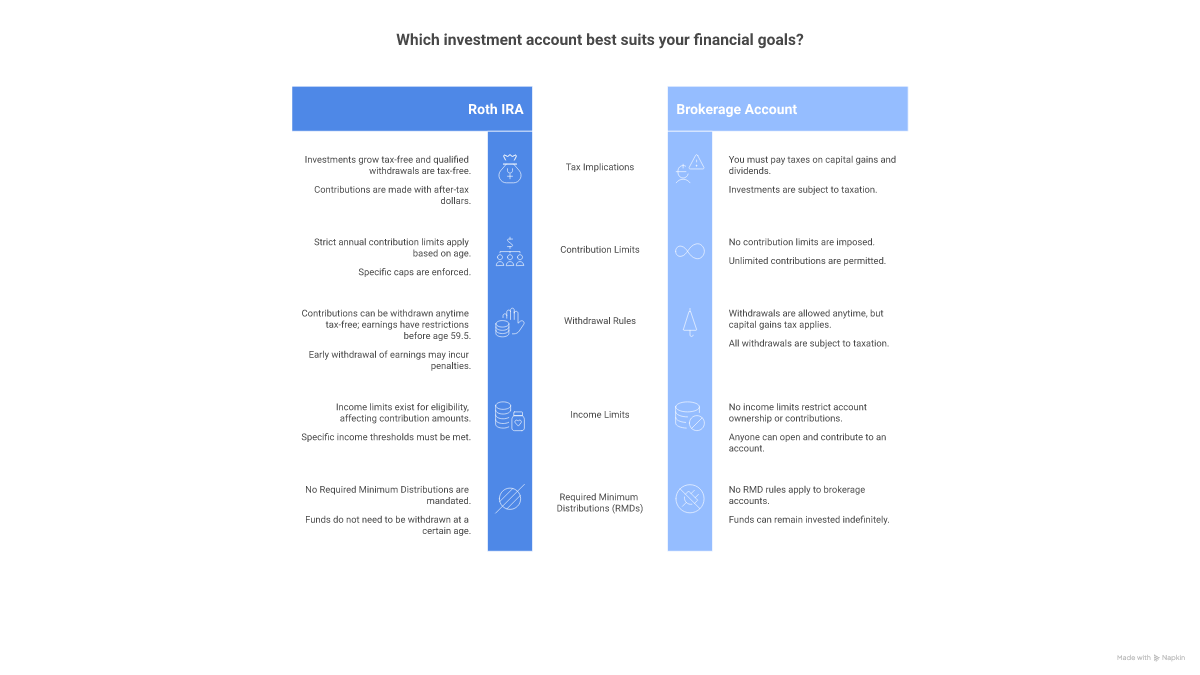
In a brokerage account, you must pay taxes on capital gains and dividends. Roth IRA contributions must be made with after-tax dollars, but investments grow tax-free and you won’t pay taxes on qualified withdrawals.
When choosing a brokerage account vs. Roth IRA, know that Roth IRAs have strict contribution limits imposed by the federal government. Brokerage accounts have no limits on contributions, so you can invest as much as you want. However, it’s always advisable not to invest money that you may need in the next five years.
You can withdraw contributions from your Roth IRA any time without paying taxes or penalties, but there are restrictions on withdrawing investment earnings before you reach 59½. There are no limits on brokerage account withdrawals, but you must pay capital gains tax on your profits.
With a Roth IRA, you won’t incur taxes on the capital gains, interest, or dividends. While contributions must be after-tax dollars, the money you deposit and invest will grow over time without further tax burdens or limitations.
As long as you’re over 59½ and the account is at least five years old, you can withdraw your investment earnings tax-free. You can withdraw original contributions at any age without penalties.
There are a number of reasons why Roth IRAs are excellent retirement savings accounts:
Many retirement accounts are subject to required minimum distributions (RMDs). This means you have to withdraw a minimum amount of your retirement savings each year once you reach the age of 73.
Roth IRAs don't impose RMDs, so your money can grow for longer and you can withdraw money when you truly need it.
Roth IRAs have set annual contribution limits:
However, there's no monthly limit, so you can make deposits on your own schedule via recurring contributions or in one lump sum.
Roth IRAs have income limits, meaning you cannot contribute if your modified adjusted gross income (MAGI) is over the maximum dollar amount:
Because there aren't strict rules on contributions or withdrawals, you can use your brokerage account for shorter-term financial goals.
For example, a brokerage account is a better option for younger individuals and couples who want to save for a big purchase in the next 5-10 years, such as a down payment on a house. You can also use a brokerage account to supplement your retirement savings.
There's no limit on brokerage account contributions. You can invest as much and as frequently as you want. This makes brokerage accounts particularly advantageous for high earners and those who want to invest larger amounts based on market fluctuations.
Brokerage accounts let you withdraw your investment earnings at any age without penalties. While you’ll still be subject to taxes on earnings, you won’t be punished for withdrawing before retirement age.
With a brokerage account, any interest or dividends earned from your investments are taxable. The taxes you owe on profits depend on how long you've held the asset.
A security sold after being held for less than a year is subject to a higher short-term capital gains tax, while those held for longer are subject to long-term capital gains tax.
Some brokerage accounts come with fees and costs. For example, brokers may charge a small commission to purchase stocks, bonds, and ETFs.
Other common brokerage fees include:
When choosing a broker, carefully review their policy regarding fees and commissions to ensure you don’t end up paying more than you need to.
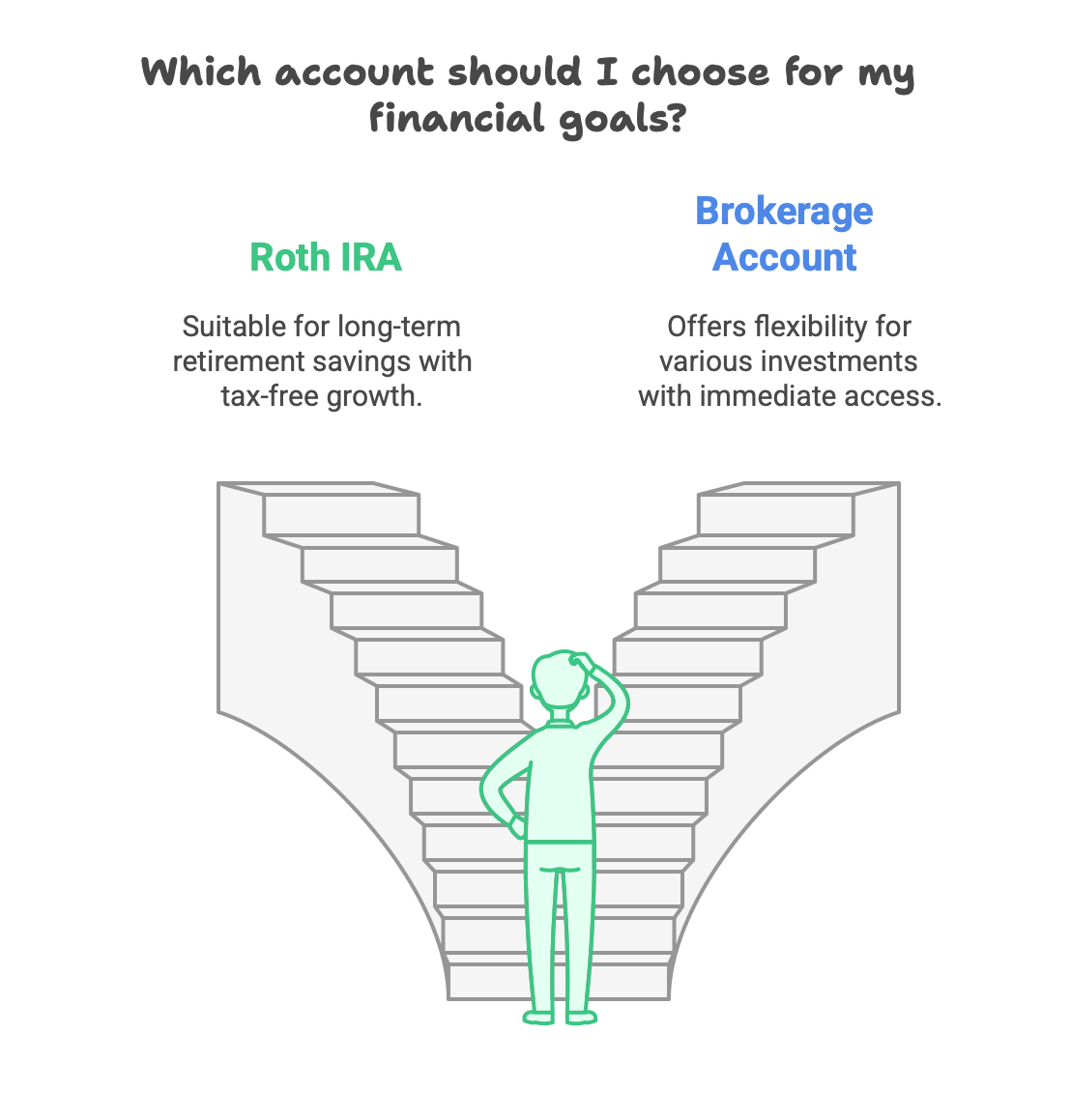
There’s no reason you have to choose between a Roth IRA vs a brokerage account. You can use either to invest in stocks, bonds, mutual funds, and other securities. You may open both types of accounts and use them to reach different financial goals.
When choosing which account(s) to open, consider:
Most of the best brokerages offer both general brokerage accounts and retirement accounts. However, it’s important to research Roth IRA options and compare advisory and brokerage accounts carefully before you choose a broker and start making investments.
Whether you’re planning for retirement, looking to expand your portfolio, or just beginning your investment journey, turn to MoneyAtlas for comprehensive financial education and resources to broaden your horizons and secure your financial future.
In addition to investment information, we also offer insights on banking and finance topics, including deep dives into individual products like Fifth Third Bank promotional CD rates and practical strategies for saving money.
Compare brokerages on fees, tools and account types.
Compare brokeragesA brokerage account lets you trade individual stocks, while a mutual fund offers a managed portfolio of diversified investments. Learn more here!

Looking for a safe crypto exchange? Discover the most secure platforms for trading, key security features, and tips to protect your investments.

HYSA pays guaranteed interest with FDIC insurance; a brokerage account targets higher long-term returns with risk. Compare both side-by-side and see which one fits each saving goal.