

BankingMay 17, 2026
SoFi vs Discover: Banking, HYSA, and Personal Loan Comparison
Side-by-side comparison of SoFi and Discover for checking, savings, and personal loans: APYs, fees, rates, and who each bank is best for.
Continue Reading

When you've got some extra cash you don't expect to use any time soon, you don't have to stick it in a savings account with a low interest rate. Instead, you can put it to use by investing it in a certificate of deposit (CD). These accounts earn a higher interest rate but require you to leave the money in the account for a predetermined length of time.
If you want to use a CD to save, learn how Fifth Third's rates actually work, which of its accounts are worth opening, and how they measure up against the CD rates on offer elsewhere.
Rates verified 25 August 2026. Fifth Third posts CD rates by ZIP code and changes them without notice, so confirm your area's rate before opening an account.
As of 25 August 2026, Fifth Third's standard CDs pay 0.01% APY on most terms, while its featured CDs pay roughly 3% APY on terms of four to twelve months with a $5,000 minimum. That gap is the whole story here: the standard CD is a placeholder rate, and the featured CD is the only version worth the paperwork.
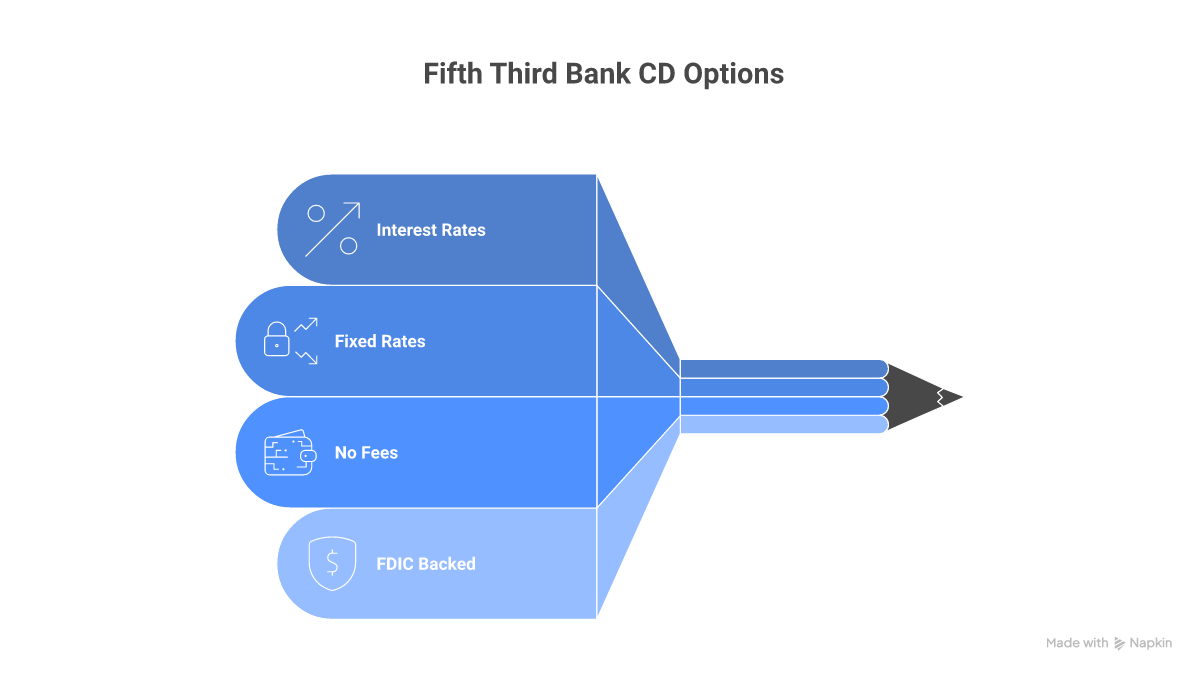
Fifth Third Bank offers several CD options to give you a low-risk but higher-rate savings option. Some of the features of these accounts include:
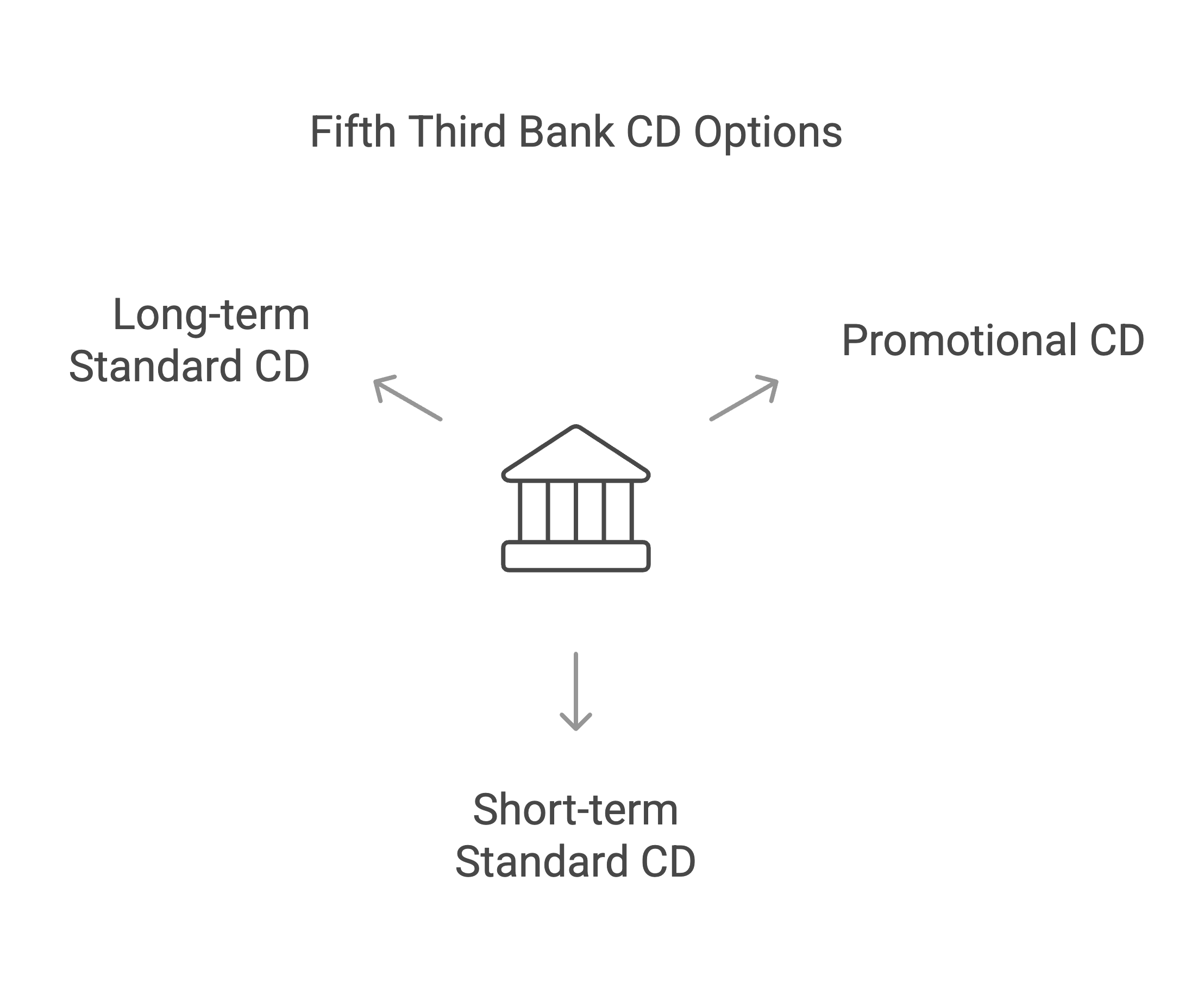
Fifth Third Bank offers the following types of Certificates of Deposit with different terms — the length of time you need to leave your money in the account:
A Fifth Third IRA CD is the same deposit product wrapped in a retirement account. Terms run from seven days to seven years, with a $500 or $5,000 minimum depending on the term. The posted rate is identical, so an IRA CD in a standard term earns the same 0.01% APY that makes the standard CD unattractive in the first place.
What changes is the tax treatment and the withdrawal rules. Contributions to a traditional IRA or Roth IRA are capped by the annual limit, and pulling money out before age 59 and a half can trigger an IRS penalty on top of the bank's own early withdrawal charge. That second penalty is the one people forget to price. If you want a CD inside a retirement account, price the featured terms.
To understand the earnings potential or annual percentage yield of a given CD, you’ll need to consider the following factors:
The more money you deposit, the bigger your potential for earnings. That is because the interest rate will give you earnings at X% of the deposit. The higher the interest rate, the larger the earnings on the deposit.
The longer the term of the CD, the greater time you have to earn. Depending on the compounding schedule (the frequency at which interest earnings are added back to the initial deposit to create a new sum to earn interest on), longer-term CDs can outperform shorter ones.
No major bank is paying 5% on a CD as of 25 August 2026. The top of the market sits near 4% APY at online banks and CD marketplaces, and the FDIC national average for a 12-month CD is 1.71%. Fifth Third's featured CDs land between those two numbers, and its standard CDs sit far below both.
Before opening an account to take advantage of 5/3 promotional CD rates, compare how the Fifth Third CDs stack up to offerings from popular US banks:
That table compares how the products are structured. This one compares what they pay. For the broader market, compare CD rates across the shelf.
Fifth Third charges 1% of principal under a year, 2% from one to three years, and 3% beyond that if you break the term early, which is a lot on an account earning 0.01%. Those early withdrawal penalties are standard across banks, so the rate decides this. If the featured terms do not fit your timeline, CD marketplace rates let you shop many banks at once, and a direct alternative like the Quontic CD is worth pricing first.
If stashing money in a CD doesn't fit your current financial plans, you might like the alternative Momentum® Savings from Fifth Third Bank. Though these earn a lower standard interest rate, they automate savings, so you don't have to think about putting money away for a rainy day.
Momentum Savings accounts work by pulling small amounts of money from your Fifth Third checking account. You don't have to move money manually, and you can put limits on how much automatically transfers. Fifth Third will never transfer more than $80 per week.
A Momentum Savings account offers more flexibility than a CD. The automation could even help you save enough to have extra put aside in a CD later.
CDs are just one way to increase your savings. Other types of accounts where you can invest extra money and see a better return on it include:
If you are locking up a larger balance, price a jumbo CD, a brokered CD through a brokerage account, or a CD ladder that spreads maturity dates across the rate environment instead of betting everything on one term.
Fifth Third Bank CDs are worth it if you have extra money to lock up for a set time. The 5/3 promotional CD rates change over time, like all interest rates. Still, with a relatively low minimum deposit starting at $500 for the Long-term Standard CD, these CDs are an accessible savings option for a low-risk investment.
See which high-yield savings accounts are paying the most today.
Compare savings accountsSide-by-side comparison of SoFi and Discover for checking, savings, and personal loans: APYs, fees, rates, and who each bank is best for.

Looking for a high-yield savings account with no minimum balance? Explore top options offering great interest with no deposit requirements.
Wondering what do you need to open a business bank account? Here's a complete checklist, including IDs, licenses, and business formation documents.