Is It Worth Having an American Express Gold Card?


Introduction
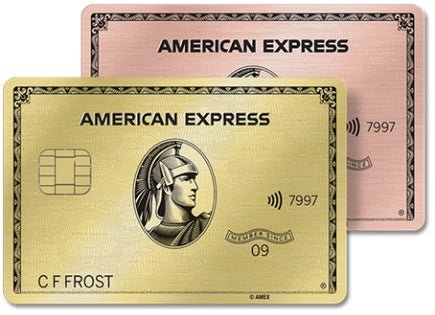
Deciding whether to pay a $325 annual fee for a credit card requires a clear look at your monthly spending and lifestyle habits. The American Express Gold Card is often debated because it sits between entry-level travel cards and high-end luxury cards. While the fee is significant, the card offers heavy rewards for food and travel that can outweigh the cost for the right person. MoneyAtlas helps consumers compare these complex financial products by breaking down the math behind the marketing. This article covers the rewards structure, the specific credits available, and the spending patterns that make this card a logical choice. Ultimately, determining if it is worth having an American Express Gold Card depends on whether you naturally use its monthly credits and spend heavily on groceries and dining.
The Cost of Entry vs. Potential Value
The $325 annual fee is the first hurdle for any potential cardholder. Unlike cards with no annual fee or those in the $95 range, this card requires a strategy to break even. To understand the value, you must look at the "effective" annual fee. This is the amount you pay after subtracting the dollar value of the credits you would have spent money on anyway.
The card currently offers up to $424 in annual statement credits. If a person uses every dollar of these credits, the card effectively pays the cardholder to keep it in their wallet. However, these credits are distributed monthly and across specific vendors, which adds a layer of complexity to the card's value proposition.
Breaking Down the Monthly Credits
The value of this card is heavily front-loaded into its monthly credits. These are not lump-sum amounts. They are "use it or lose it" benefits that reset at the start of each month or half-year period.
Uber Cash and Dining Credits
Cardholders receive up to $120 in Uber Cash annually, distributed as $10 monthly credits. These can be used for Uber rides in the U.S. or for Uber Eats orders. Additionally, there is a separate $120 dining credit, also given as $10 per month. This credit applies to specific partners including Grubhub, The Cheesecake Factory, Five Guys, and certain other restaurants. Enrollment is required through the American Express app or website to activate these.
Resy and Dunkin' Credits
Recent updates to the card added two more specific credits. The first is a $100 Resy credit, which is split into two $50 increments. The first $50 is available from January through June, and the second is available from July through December. It can be used at any U.S. restaurant that participates in the Resy platform. The second is a $7 monthly Dunkin' credit, totaling up to $84 per year.
Maximizing the 4% Rewards Categories
For many, the primary reason to carry this card is the points-earning potential on daily essentials. The card earns American Express Membership Rewards points, which are generally considered a flexible and valuable travel currency.
Dining at restaurants worldwide earns 4 points per $1 spent. This applies to the first $50,000 in purchases per calendar year. For someone who spends $1,000 a month on dining, this equates to 48,000 points annually.
U.S. supermarket purchases also earn 4 points per $1 spent, capped at $25,000 in purchases per calendar year. After hitting that limit, the rate drops to 1 point per $1. For a family spending $800 a month on groceries, this adds another 38,400 points per year.
Travel and other categories offer different rates. Flights booked directly with airlines or through the American Express travel portal earn 3 points per $1. Prepaid hotels booked through the portal earn 5 points per $1. All other eligible purchases earn 1 point per $1.
Understanding the "Foodie" Math
To see if the card makes sense, you must calculate your "break-even" point. This is the amount of spending required to cover the annual fee if you ignore the credits entirely.
If we value Membership Rewards points at roughly 2 cents each, a common valuation for travel transfers, you would need to earn 16,250 points to cover the $325 fee. At a 4% earning rate on food, that requires spending about $4,063 per year, or roughly $338 per month, across groceries and dining.
However, most people should not ignore the credits. If you already spend $10 a month on Uber and $10 a month on Grubhub, your "effective" fee is only $85. In that scenario, you only need to earn 4,250 points to break even, which requires spending just $1,063 per year on food.
For a broader framework, review this guide to evaluating credit card annual fees, interest rates, and rewards.
Travel Benefits and Protections
While it is branded as a premier food card, it also carries several travel-related perks. These help round out the value for someone who takes at least one or two trips per year.
The Hotel Collection
When you book a stay of at least two consecutive nights through The Hotel Collection with American Express Travel, you receive a $100 experience credit. This can typically be used for dining, spa services, or resort activities at the property. You also become eligible for a room upgrade upon arrival, depending on availability.
Car Rental and Baggage Insurance
The card includes secondary car rental loss and damage insurance. It also provides a baggage insurance plan that covers lost, damaged, or stolen luggage when you use the card to pay for the entire fare of a "common carrier" ticket, such as a plane, train, or bus.
No Foreign Transaction Fees
Many mid-tier cards charge a 3% fee on every purchase made outside the U.S. This card has no foreign transaction fees, making it a strong companion for international travel, especially since it earns 4% on dining worldwide.
Travel-focused shoppers can compare travel credit cards to see how rewards, fees, and protections differ.
Who Should Consider This Card?
The Heavy Grocery Spender. For a household that spends $1,500 a month at U.S. supermarkets, the 4% earn rate is one of the highest available in the market. The points accumulated can quickly fund an international flight or a luxury hotel stay.
The Urban Commuter. Someone who uses Uber for rides and relies on food delivery services like Grubhub or Uber Eats at least twice a month will find the credits easy to use. The $20 in monthly combined credits becomes an automatic discount on existing habits.
The Transfer Partner Enthusiast. This card is best for someone willing to learn how to transfer points to airlines like Delta, British Airways, or Air France-KLM. MoneyAtlas provides reviews of these transfer partners to help cardholders understand how to get the most value from every point.
Readers who want to evaluate the card's current fee, credits, and rewards structure can read the American Express Gold Card review.
Who Should Avoid This Card?
The Cash-Back Seeker. If you prefer the simplicity of a check in the mail or a direct statement credit, this card will likely frustrate you. Redemptions for cash are often poor value. You might be better served by a card that offers a flat 2% or 3% cash back on all purchases with no annual fee.
The Rural or Minimalist Spender. If you live in an area without Uber, Resy restaurants, or Dunkin', the credits lose their value. Without the credits, you have to spend significantly more on food just to justify the $325 cost.
The One-Card User. Because American Express has lower merchant acceptance than other networks, this cannot always be your only card. If you want the simplicity of carrying only one piece of plastic that works everywhere, a Visa or Mastercard is a safer bet.
How to Calculate Your Personal Value
To decide if the card fits your wallet, follow these steps:
How to Calculate Your Personal Value
- 1
Audit your last three months of spending
Calculate your average monthly spend on U.S. supermarkets and restaurants. Multiply this by 12 to get an annual figure.
- 2
Assign a real value to the credits
Look at the list of credits, including Uber, Dining, Resy, and Dunkin'. Be honest about how many you would use if you didn't have the card. Only count the dollar value of the services you already pay for.
- 3
Do the final math
Subtract your "useful" credit value from the $325 fee. Then, multiply your annual food spend by 0.04 to see how many points you will earn. If the value of those points exceeds your remaining fee, the card is likely a good fit.
For another perspective on application standards, read the guide to American Express approval requirements.
Comparing the Alternatives
Before applying, it is helpful to look at how this card stacks up against its closest competitors. Most people choosing between travel cards look at the Chase Sapphire Preferred or the Capital One Venture X.
The Chase Sapphire Preferred has a much lower $95 annual fee. While it only earns 3% on dining and 3% on online groceries, it offers more flexible redemption options for non-travelers. The Capital One Venture X has a higher $395 fee but offers a $300 travel credit and airport lounge access, which the Gold Card lacks.
When you use a comparison tool, look specifically at the "effective fee" and the "earn rate" for your highest spending categories. MoneyAtlas makes it easier to compare the latest credit card options side by side so you can see which card rewards your specific lifestyle.
Managing the Membership Rewards System
The value of the Gold Card is tied directly to the American Express Membership Rewards program. Unlike airline-specific cards, these points are "transferable." This means you can move them to over a dozen different loyalty programs.
This flexibility is a double-edged sword. It allows for high-value redemptions, such as booking a business-class flight that would otherwise cost thousands of dollars. However, it requires a time investment to find the best transfer ratios and available award seats. If you are not interested in "playing the points game," the card's complexity might not be worth the effort.
Readers comparing points, miles, and cash back can browse MoneyAtlas rewards credit card rankings.
Final Decision Factors
Before you commit to the $325 fee, consider these three questions:
- Do I spend more than $500 a month on combined groceries and dining?
- Do I already use Uber and Grubhub at least once a month?
- Am I planning to use my points for travel rather than cash back?
If the answer to all three is "yes," the card is one of the most powerful earning tools available. If the answer to more than one is "no," you may find better value in a no-annual-fee card or a more general travel card.
We suggest looking at current welcome offers before applying. These bonuses, which often require a certain amount of spending in the first few months, can provide enough points to cover the annual fee for several years. Always check the official American Express site for the most up-to-date terms and rates.
FAQ
MoneyAtlas Staff
Articles and reviews from the MoneyAtlas editorial team — independent research on credit cards, banking, loans, insurance, and investing.
Related Articles

What the Difference Between American Express Gold and Platinum Is
Wondering what the difference between American Express Gold and Platinum is? Compare annual fees, 4X food rewards, and luxury travel perks to find your fit.

What Is the Difference Between Gold and Platinum American Express?
What is the difference between gold and platinum american express? Compare fees, 4x dining rewards, and luxury travel perks to find your perfect card.

What Is the Fee for American Express Gold Card?
Wondering what is the fee for american express gold card? It's $325 annually. Learn how to offset this cost with over $400 in credits and 4X rewards.