Is Having a American Express Gold Card Good for Your Wallet?


Introduction
Deciding if a premium credit card earns its place in your wallet usually comes down to a single math problem. For many, the central question is whether the rewards and perks outweigh the cost of the annual fee. The American Express Gold Card carries a $325 annual fee, which is a significant jump from standard no-fee or entry-level cards. It is designed specifically for people who spend a high percentage of their budget on food, whether that means grocery shopping at home or dining out. MoneyAtlas tracks these types of premium offers to help you determine if the benefits align with your actual spending habits. This post explores the rewards structure, the monthly statement credits, and the trade-offs to help you decide if having an American Express Gold Card is good for your specific financial situation.
Evaluating the $325 Annual Fee
The first hurdle for any potential cardholder is the annual fee. At $325, this card sits in the mid-tier of the market. It is more expensive than a basic travel card but cheaper than high-end "luxury" cards that often cost $695 or more.
To determine if this fee makes sense, you have to look at the card's effective cost. The effective cost is the annual fee minus the value of the credits you will actually use. If you already spend money every month on Uber and dining delivery, these credits can bring your out-of-pocket cost down significantly. If you have to change your behavior to use the credits, the value is much lower. For more context, read this guide to how credit card annual fees differ from APR.
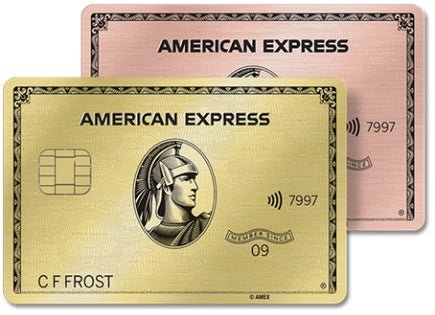
Earning Points on Food and Travel
The primary reason to carry this card is its earning potential on food-related purchases. It uses Membership Rewards points, which are flexible points that can be transferred to various airline and hotel partners.
4x Points at Restaurants and Supermarkets
The card earns 4 points per $1 spent at restaurants worldwide. This includes takeout and delivery in the U.S. This rate is capped at $50,000 in purchases per calendar year, after which the rate drops to 1%.
It also earns 4 points per $1 spent at U.S. supermarkets. This category is capped at $25,000 in purchases per calendar year, then it reverts to 1%. For a household that spends $500 per month on groceries, this earns 24,000 points per year just from the supermarket category.
Travel and Other Categories
While food is the focus, the card also provides rewards for travel. It earns 3 points per $1 on flights booked directly with airlines or through the provider's travel portal. Prepaid hotels booked through the portal earn 5 points per $1. All other eligible purchases earn 1 point per $1. Readers comparing broader travel rewards can browse MoneyAtlas travel credit card options.
Understanding the Statement Credits
The card offers several different credits that, when combined, total up to $424 in annual value. However, these credits are "use it or lose it" and are distributed monthly or bi-annually. Enrollment is required for most of these benefits.
Uber Cash
Cardholders receive $10 in Uber Cash each month, totaling $120 per year. This can be used for Uber rides in the U.S. or for Uber Eats orders. To get this, you must add your card to the Uber app and select it as the payment method.
Dining Credit
There is an additional $10 monthly dining credit, which equals $120 per year. This is only valid at specific partners. These currently include:
- Grubhub, including Seamless
- The Cheesecake Factory
- Five Guys
- Buffalo Wild Wings
- Wonder
Resy and Dunkin' Credits
As part of a recent refresh, the card now includes a $100 Resy credit and an $84 Dunkin' credit. The Resy credit is split into two $50 statement credits. One is available from January through June, and the second is available from July through December. It can be used at any U.S. restaurant that uses the Resy platform.
The Dunkin' credit is a $7 monthly statement credit for purchases made at U.S. Dunkin' locations. If you are a regular coffee drinker, this is a simple way to shave $84 off your annual cost.
The Welcome Offer and Point Value
Most new cardholders are eligible for a welcome bonus. Recent offers have ranged from 60,000 to 100,000 Membership Rewards points after spending a certain amount, often $8,000, within the first 6 months of account opening.
The value of these points depends on how they are used. If you redeem them for statement credits or gift cards, you often get 1 cent per point or less. If you transfer them to airline partners, the value can potentially exceed 2 cents per point. MoneyAtlas suggests comparing redemption options before using points to ensure you are getting the best return. You can also compare rewards credit cards to see how different programs approach points and perks.
Who Is the Card a Good Fit For?
This card is not a universal solution. It is built for a specific type of consumer.
The Dedicated Foodie
If you spend at least $10,000 a year between groceries and restaurants, the 4x points alone generate 40,000 points. At a conservative valuation of 1 cent per point, that is $400 in value, which already covers the annual fee.
The Urban Commuter or Delivery User
People who already use Uber or Grubhub at least once a month will find the credits easy to use. In this scenario, the credits act like a pre-payment for services you were already going to buy.
The International Traveler
This card has no foreign transaction fees. Many other mid-tier cards charge a 3% fee on every purchase made outside the U.S. If you travel abroad once or twice a year, this feature can save you hundreds of dollars.
Who Should Consider Other Options?
There are several reasons why this card might not be the right choice for everyone.
Cash Back Enthusiasts
If you prefer a simple check in the mail or a statement credit, this card may feel frustrating. Membership Rewards are most valuable when used for travel. If you want cash back, a card with no annual fee that offers 2% or 3% back might be more practical. Compare cash back credit card rankings for simpler rewards structures.
Low Food Spenders
If you live alone and rarely dine out or spend very little at the supermarket, you will struggle to earn enough points to justify the $325 fee.
Chase 5/24 Strategists
In the world of credit cards, the "5/24 rule" is a common hurdle. This is an unofficial policy where Chase will generally not approve you for a new card if you have opened 5 or more personal credit cards from any issuer in the last 24 months. If you are planning to build a "Chase Trifecta" soon, opening an Amex Gold card will take up one of those valuable slots.
How to Compare Your Options
Before applying, it is helpful to look at how this card stacks up against competitors. For example, the Chase Sapphire Preferred has a lower annual fee ($95) and also offers travel and dining rewards. However, its grocery rewards are usually limited to online orders or specific rotating categories.
MoneyAtlas makes it easier to compare the best credit cards side by side by looking at the total cost of ownership. When comparing, look at:
- The base earning rate on your highest spend categories.
- The actual cash value of the "perks," only count them if you would have spent that money anyway.
- The transferability of the points to the airlines you actually fly.
Step-by-Step: Is the Card Worth It for You?
Follow these steps to calculate the card's value for your own situation.
How to Decide if the Card Is Worth It for You
- 1
Calculate your annual food spend
Add up your monthly grocery and restaurant bills. Multiply by 12, then multiply by 0.04 to see how many points you would earn.
- 2
Audit your app usage
Check your phone for Uber and Grubhub. If you use them less than once a month, subtract that credit value from your calculations.
- 3
Check for Dunkin' and Resy locations
If you live in a rural area without a Dunkin' or Resy-affiliated restaurant, those credits have zero value for you.
- 4
Determine your redemption goal
Decide if you want to use points for a specific trip. If you do not have a travel goal, a cash-back card is likely a better fit.
Additional Perks to Consider
Beyond the headline rewards, the card offers several secondary benefits that add value.
The Hotel Collection
When you book a stay of at least two nights through the provider's travel portal at a Hotel Collection property, you get a $100 experience credit. This can be used for dining, spa services, or resort activities. You also get a room upgrade at check-in if one is available.
Hertz Five Star Status
Cardholders are eligible for Hertz Five Star status. This includes perks like a 25% bonus on Hertz Gold Plus Rewards points and space-available vehicle upgrades. This can make the car rental process faster and more comfortable.
Purchase Protections
The card comes with purchase protection, which covers eligible items against theft or accidental damage for up to 90 days from the date of purchase. It also includes extended warranty protection, which can add up to one year to a manufacturer's warranty of five years or less.
Managing the Membership Rewards Program
Membership Rewards points do not expire as long as you have at least one active card open that earns them. This allows you to stockpile points for a major purchase or a large international flight. For more information about eligibility and credit requirements, see this guide to American Express approval requirements.
One of the most effective ways to use these points is through transfer bonuses. Occasionally, the provider will offer a 20% or 30% bonus when you move points to a specific airline partner. Waiting for these windows can significantly increase the value of the rewards you have earned from your grocery shopping.
Final Decision Factors
Having an American Express Gold Card is good if your lifestyle revolves around food and travel. If you are a family of four spending $1,000 a month on groceries, you are earning 48,000 points a year. That is often enough for a round-trip domestic flight or a significant discount on an international ticket.
However, the card requires "maintenance." You have to remember to use your Uber Cash each month because it does not roll over. You have to remember to use the dining credit and check the list of participating restaurants. For some, this feels like a chore. For others, it is a fun way to optimize their spending.
MoneyAtlas suggests looking at your last three months of bank statements. If your restaurant and supermarket spending is the dominant feature, and you already use the covered apps, this card is a strong contender for a permanent spot in your wallet. Before making a decision, review the American Express Gold Card evaluation.
FAQ
MoneyAtlas Staff
Articles and reviews from the MoneyAtlas editorial team — independent research on credit cards, banking, loans, insurance, and investing.
Related Articles

Which Card Is Better: American Express Gold or Platinum?
Deciding which card is better: American Express Gold or Platinum? Compare fees, 4X dining rewards, and luxury travel perks to find your perfect match.

Should I Get an American Express Gold Card? Breaking Down the Value
Should I get an American Express Gold card? Explore the 4X rewards on dining and groceries vs. the $325 fee to see if this premium card fits your budget.

How to Get the American Express Gold Card: A Practical Guide
Learn how to get the American Express Gold Card with our guide on credit score requirements, income, and the 'Apply with Confidence' tool. Apply today!