Is American Express Gold a Good Credit Card?


Introduction
Deciding whether to add a premium rewards card to your wallet often comes down to a simple mathematical equation: do the benefits outweigh the annual cost? The American Express Gold Card is a frequent subject of this debate due to its $325 annual fee and its specific focus on food and dining. MoneyAtlas evaluates this card based on its earning potential, statement credits, and redemption flexibility to see how it fits into a modern financial plan. This card is often categorized as a "lifestyle" card because its value is highly dependent on how much a person spends at supermarkets and restaurants. Our analysis covers the mechanics of the rewards program and the practical reality of using its monthly credits. For the right spender, this card can be a powerful tool for earning travel rewards, but for others, the fee may be difficult to justify.
The Rewards Structure: Earning 4X on Food
The primary draw of this card is its earning rate on everyday spending. It is widely regarded as one of the most competitive cards for food related purchases in the US market. The rewards are issued in the form of American Express Membership Rewards points, which are flexible points that can be transferred to various airline and hotel partners.
Dining and Restaurants
The card earns 4X points per $1 spent at restaurants worldwide. This category is expansive, typically including fine dining, fast food, and even some delivery services. There is a cap of $50,000 in annual spending for this 4X rate, after which the earning rate drops to 1X. For a household that spends $1,000 per month on dining, this translates to 48,000 points per year from this category alone.
US Supermarkets
For those who prefer cooking at home, the card also offers 4X points at US supermarkets. This category has a lower annual cap of $25,000 in purchases per calendar year. Once that limit is reached, the rate reverts to 1X. It is important to note that this category generally excludes "big box" stores like Walmart or Target and wholesale clubs like Costco.
Travel and Other Purchases
While the card is food focused, it does offer rewards for travelers. It earns 3X points on flights booked directly with airlines or through the American Express Travel portal. Additionally, it earns 2X points on prepaid car rentals and other eligible travel booked through the portal. All other eligible purchases earn 1X point per $1 spent.
Understanding the $325 Annual Fee
The $325 annual fee is a significant commitment. To determine if the card is "good," a prospective cardholder must look at the statement credits provided. These credits are designed to offset the fee, but they require active management and enrollment. For a broader framework, read our guide to evaluating credit card annual fees, interest rates, and rewards.
Monthly and Semi-Annual Credits
The card offers four distinct credit types that, if used in full, total up to $424 in annual value. However, these are not lump sum amounts; they are distributed in smaller increments throughout the year.
The Enrollment Requirement
None of these credits are automatic upon opening the account. A cardholder must log into their account and manually enroll in the dining, Resy, and Dunkin' credits. For the Uber Cash, the card must be added as a payment method in the Uber app. Because these credits are "use it or lose it" each month, the card is best suited for someone who already uses these services regularly.
Redemption Options: What Are Points Worth?
A rewards card is only as good as its redemption options. Membership Rewards points are highly valued because they are transferable. While you can redeem points for statement credits or gift cards, these methods often result in a lower value, sometimes as low as 0.6 cents per point. Our credit card rewards comparison can help you compare cards with different earning and redemption structures.
Transfer Partners
The most effective way to use these points is by transferring them to airline and hotel partners. American Express has over 20 partners, including Delta SkyMiles, British Airways Executive Club, and Hilton Honors. Most transfers happen at a 1:1 ratio. For example, 50,000 points earned from grocery shopping could be transferred to an airline partner to book a flight that might otherwise cost $1,000, resulting in a value of 2 cents per point.
Amex Travel Portal
Points can also be used to book travel directly through the American Express Travel portal. In this scenario, points are typically worth 1 cent each toward flights. This is a simpler option for those who do not want to navigate the complexities of airline loyalty programs, though it rarely offers the highest possible value.
Comparing the Gold Card to Alternatives
To decide if the American Express Gold is the right choice, it helps to look at how it compares to other popular cards in the same price bracket or category. Browse top-rated credit cards to compare rewards, fees, and benefits side by side.
Amex Gold vs. Chase Sapphire Preferred
The Chase Sapphire Preferred Card review covers a common alternative with a lower $95 annual fee. While it only offers 3X on dining and does not have a dedicated high earning category for US supermarkets, its lower fee makes it more accessible. Chase also allows points to be worth 25% more when redeemed through their portal, which is a benefit the Gold card lacks.
Amex Gold vs. Amex Platinum
The American Express Platinum Card review covers the "big brother" to the Gold card. It has a much higher annual fee, currently $695, and focuses on luxury travel benefits like airport lounge access and hotel elite status. The Platinum card is generally better for frequent flyers, while the Gold card is better for daily spending on food. Many people choose to hold both cards to maximize their points across all categories, a strategy often called the "Amex Trifecta."
Amex Gold vs. Capital One Savor
The Capital One Savor review covers another strong contender for food spend. It offers cash back on dining and grocery purchases. The main difference is that Savor provides cash back, while the Gold card provides points. For those who want simplicity without an annual fee, Capital One may be preferable.
Practical Considerations Before Applying
Applying for a premium card like this requires a certain financial profile. American Express generally looks for "good to excellent" credit, which typically means a score of 670 or higher.
Steps to evaluate your fit:
How to Evaluate Your Fit Before Applying
- 1
Review your grocery budget
Look at your last three months of supermarket spending. If you spend less than $300 a month, the 4X rewards may not generate enough value to cover the fee.
- 2
Check your delivery habits
If you already use Grubhub or Uber Eats at least once a month, the $240 in combined credits is essentially "found money."
- 3
Analyze your travel goals
Are you looking for a free flight to Europe or a simple 1% back on your spending? This card is built for the former.
- 4
Verify your supermarket locations
Ensure your primary grocery store is not a "wholesale club" or "superstore," as these will likely only earn 1X.
Who Is the Card Suited For?
This card is not a universal fit. In our editorial judgment, it is most effective for a specific type of consumer.
The "Foodie" or Home Cook
If a large portion of your monthly income goes toward restaurants or groceries, the 4X multiplier is hard to beat. A family spending $1,500 a month across these categories would earn 72,000 points a year. At a 2 cent valuation, that is $1,440 in travel value.
The Urban Commuter
Because of the Uber and Dunkin' credits, people living in cities where these services are ubiquitous will find the credits very easy to use. The $10 monthly Uber Cash can be applied to a ride home or an Uber Eats lunch, making it highly functional.
The Transfer Partner Enthusiast
Someone who enjoys "hunting" for the best redemption value will love the Membership Rewards program. The ability to move points to partners like ANA or Virgin Atlantic allows for high value bookings that cash back cards cannot match.
Who Should Look Elsewhere?
Low Spenders and Small Households
If you live alone and rarely spend more than $200 a month on food, the math for a $325 fee rarely works out. You might be better served by no-annual-fee credit cards that offer 2% or 3% on dining.
People Who Dislike "Couponing"
The credits on the Gold card require monthly attention. If you find it annoying to remember to use a $10 credit before the end of the month, you will likely lose money on this card. A card with a simple, lower annual fee and no credits might be a better fit for your lifestyle.
Non-US Residents
While the dining 4X is worldwide, the supermarket 4X is strictly for US supermarkets. Furthermore, almost all the statement credits are restricted to US locations. If you spend significant time abroad, much of the card's value disappears.
Is the Metal Card Worth the Hype?
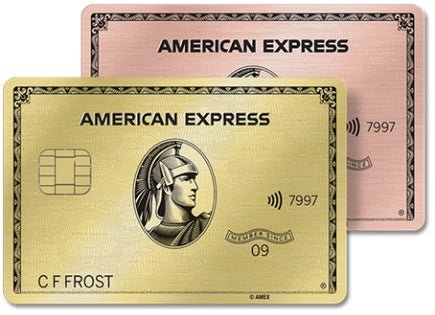
The American Express Gold Card is famous for its heavy, gold colored metal construction. While the "clink" of a metal card on a restaurant table is a popular talking point, it has no impact on the card's financial utility. When deciding if this is a good card, it is important to ignore the aesthetics and focus on the Annual Percentage Rate (APR), the fees, and the reward multipliers.
Final Decision Factors
Ultimately, the American Express Gold is a "good" card if you can answer "yes" to at least two of these three questions:
- Do you spend more than $6,000 a year on groceries and dining combined?
- Do you already use Uber or Grubhub at least once a month?
- Do you plan to use your points for travel rather than cash back?
If the answer to those is "no," the card might be a financial burden rather than a benefit. MoneyAtlas provides comparison tools to help you look at this card side by side with options from Chase, Capital One, and Citi. You can also browse cash back credit card rankings to compare simpler rewards structures.
FAQ
Summary
The American Express Gold Card remains a top tier choice for food focused spenders. While the $325 annual fee is high, the 4X rewards on dining and US supermarkets provide significant earning power. When combined with over $400 in potential statement credits, the card offers a path to high value travel redemptions for those willing to manage its monthly requirements. To see how it compares to other high earning cards, use MoneyAtlas' credit card comparison tools to evaluate your options side by side.
MoneyAtlas Staff
Articles and reviews from the MoneyAtlas editorial team — independent research on credit cards, banking, loans, insurance, and investing.
Related Articles

How to Cancel Your American Express Gold Card
Learn how to cancel American Express Gold card accounts without losing points. Step-by-step guide on chat cancellation, fee refunds, and credit score impact.

Which Is Better American Express Gold or Platinum?
Which is better American Express Gold or Platinum? Compare rewards, fees, and travel perks to find the right card for your lifestyle and spending.

What Is the Limit for American Express Gold Card?
Wondering what is the limit for American Express Gold card? Learn how the No Preset Spending Limit works and how to check your dynamic spending power.