How to Use American Express Gold Card for Maximum Value


Introduction
Choosing a high-tier rewards card often comes down to a single question: will the benefits outweigh the annual cost? For the American Express Gold Card, the answer depends entirely on how a cardholder navigates its specific ecosystem of credits and point multipliers. With an annual fee of $325, as of recent terms, this card is designed for people who spend significantly on groceries and dining. It is not a passive card. To extract the most value, a cardholder must actively manage monthly credits and understand the mechanics of the Membership Rewards program. MoneyAtlas tracks these types of premium products to help users decide which cards align with their actual spending habits. This guide breaks down the specific steps and strategies required to maximize the value of the card while avoiding common pitfalls.
Getting Started: The Activation Phase
Using the American Express Gold Card effectively begins the moment the physical card arrives. Unlike many cards where benefits are automatic, most of the "Gold" perks require manual enrollment. Failing to complete these steps means leaving hundreds of dollars in value on the table.
Getting Started: The Activation Phase
- 1
Enroll in Statement Credits
The card offers several recurring credits that can total over $400 in annual value. However, the $120 dining credit, the $100 Resy credit, and the $84 Dunkin' credit all require the cardholder to log into their account and click an enrollment button. We see many cardholders miss out on these credits because they assume the discount will apply automatically at the register.
- 2
Link to Uber and Grubhub
The $120 annual Uber Cash is distributed as $10 monthly increments. To use this, the card must be added as a payment method in the Uber app. Similarly, the dining credit is most easily used through Grubhub. Linking these accounts immediately ensures that the first month of credits does not expire unused.
- 3
Understand the Welcome Offer Math
New cardholders often have a specific spending target to hit within the first six months to earn a large batch of Membership Rewards points. For example, an offer might require spending $6,000 to $8,000. It is vital to track this progress closely. Only "eligible purchases" count toward this goal. Annual fees, interest charges, and cash-like transactions such as person-to-person payments typically do not count toward the requirement.
Maximizing the 4% Reward Categories
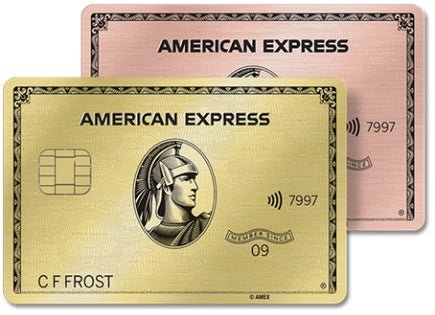
The primary reason to use this card for daily spending is its high earning rate on food. It offers 4 points per dollar at restaurants worldwide and at U.S. supermarkets. In the world of credit rewards, 4 points per dollar is an elite tier of earning. To compare it with other rewards products, review the best rewards credit cards.
Strategic Grocery Spending
The 4% rate at U.S. supermarkets applies to the first $25,000 in purchases per calendar year. After reaching that limit, the rate drops to 1%. For a household spending $500 per week on groceries, this cap is reached almost exactly at the end of the year.
It is important to note that "supermarkets" is a specific merchant category. Massive retailers like Target, Walmart, and wholesale clubs like Costco or Sam's Club usually do not code as supermarkets. If someone does the bulk of their shopping at these big-box stores, they will likely only earn 1% back, making the card a poor choice for those specific trips.
The Dining Multiplier
The 4% rate on dining is even more flexible because it applies to restaurants worldwide. This includes everything from high-end fine dining to fast food and coffee shops. It also includes delivery services like Uber Eats and Grubhub. For someone who travels internationally, this is a significant advantage, as many other US-based cards limit their high-earning dining categories to domestic purchases only.
When to Switch Cards
The card earns only 1% on "everything else." This is a low rate for general purchases like gas, utility bills, or retail shopping. We suggest that cardholders use a different card for these categories. A simple flat-rate card that earns 2% on all purchases is often a better companion for non-food spending. Readers who prefer straightforward rewards can compare cash back credit cards.
Navigating the Monthly Credit Ecosystem
The American Express Gold Card is often described as a "coupon book" card because its value is tied to monthly increments. If these credits are not used, they disappear. They do not roll over to the next month.
The $120 Uber Cash
Each month, $10 is added to the linked Uber account. This can be used for Uber rides in the U.S. or for Uber Eats orders. Since the credit expires at the end of the month, a simple strategy is to set a recurring calendar reminder for the last week of the month to order a pickup meal if the credit hasn't been used for a ride.
The $120 Dining Credit
This credit is also distributed as $10 per month. It is valid at specific partners:
- Grubhub, including Seamless
- The Cheesecake Factory
- Five Guys
- Buffalo Wild Wings
- Wonder
Using this for a monthly pickup order at Five Guys or through Grubhub effectively offsets $120 of the annual fee.
The $100 Resy Credit
This is a newer addition to the card. It provides up to $50 in statement credits every six months, January through June and July through December. This credit applies when the card is used at any restaurant that uses the Resy platform. You do not necessarily need to book through the Resy app, but the restaurant must be a Resy partner.
The $84 Dunkin' Credit
Cardholders receive up to $7 per month in statement credits for purchases at Dunkin' locations. For a regular coffee drinker, this is a straightforward "set and forget" benefit.
Advanced Travel Strategies
While the Gold Card is famous for food, it is also a competent travel tool. It earns 3% on flights booked directly with airlines or through the American Express Travel portal. Compare it with other travel credit card options before choosing a card for frequent trips.
The Hotel Collection
When booking a stay of two nights or more through The Hotel Collection via American Express Travel, cardholders receive a $100 experience credit. This credit can usually be used for dining, spa treatments, or resort activities. This is an editorial favorite for weekend getaways because the $100 credit often covers a significant portion of a hotel dinner or breakfast.
Transferring Points for High Value
The "points" earned on this card are Membership Rewards (MR) points. You can redeem them for gift cards or use them to pay for Amazon purchases, but these are generally poor value choices. Often, these redemptions value points at 0.5% to 0.7% each.
For the highest value, points should be transferred to travel partners. American Express has partnerships with over 20 airlines and hotels, including:
- Delta SkyMiles
- British Airways Executive Club
- Air France/KLM Flying Blue
- Hilton Honors
- Marriott Bonvoy
In our editorial judgment, transferring points to an airline for an international business class ticket can sometimes yield a value of 2% or even 3% per point. This effectively turns the 4% dining category into a 12% return on spending if the points are used strategically.
No Foreign Transaction Fees
The card does not charge extra for purchases made outside the U.S. This, combined with the 4% worldwide dining rate, makes it a top-tier choice for international travel. However, cardholders should remember that American Express is not accepted as widely as Visa or Mastercard in some countries, so carrying a backup card is necessary.
Understanding the "No Pre-Set Spending Limit"
A common point of confusion with the American Express Gold Card is that it is not a traditional credit card. It is technically a charge card, although it has evolved to include features of both.
How Spending Limits Work
"No pre-set spending limit" does not mean unlimited spending. Instead, the limit is dynamic. It adjusts based on spending patterns, payment history, and credit profile. If someone suddenly tries to buy a $20,000 item when they usually spend $2,000 a month, the transaction might be declined. There is a "Check Spending Power" tool in the mobile app that allows cardholders to see if a specific large purchase will be approved before they reach the register.
Pay Over Time
While charge cards used to require the balance to be paid in full every single month, the Gold Card now features "Pay Over Time." This allows cardholders to carry a balance on certain purchases with interest, much like a traditional credit card. The Annual Percentage Rate (APR) for Pay Over Time is typically comparable to other rewards cards. However, to maximize the card's value, we always suggest paying the statement balance in full to avoid interest charges that would quickly wipe out the value of any points earned. For more education on borrowing costs, read how APR works on a credit card.
Credit Score Impact
Because the card does not have a fixed credit limit, it is treated differently by credit bureaus regarding utilization. For many traditional cards, using 90% of your limit can hurt your credit score. With the Gold Card, the "limit" isn't reported in the same way, which can sometimes be beneficial for those who have high monthly spend but don't want it to reflect as high utilization on their credit report.
Avoiding Common Mistakes
Even experienced cardholders can make errors that diminish the value of the Gold Card. Avoiding these "traps" is key to a successful strategy.
1. Booking Hotels Directly
The Gold Card earns only 1% on hotels booked directly with the hotel chain. To get the 5% rate recently introduced for certain hotel stays, the booking must be prepaid and made through the American Express Travel portal. However, be aware that booking through a portal often means you will not earn hotel loyalty points or enjoy elite status perks with chains like Marriott or Hilton.
2. Forgetting the Excise Tax
When transferring Membership Rewards points to a U.S.-based airline, American Express charges a small excise tax of $0.0006 per point, up to a maximum of $99. While this fee is small, it is a cost that many cardholders forget to calculate when comparing the value of a point transfer.
3. Using Points for Cash Back
Redeeming MR points for a statement credit is one of the least efficient ways to use them. This usually results in a value of 0.6% per point. If a cardholder prefers cash back, they would be better served by a dedicated cash-back card that offers a higher baseline return without the complex credit ecosystem.
4. Not Tracking the Supermarket Cap
For a large family, spending more than $25,000 a year at supermarkets is possible. Once that cap is hit, the card earns only 1%. MoneyAtlas recommends checking the "Year-to-Date" spend in the grocery category around October or November to see if a different card should be used for the remainder of the year.
Comparing the Gold Card to Alternatives
The American Express Gold Card exists in a competitive field of mid-tier and premium cards. Before committing to the $325 annual fee, it is worth comparing how it stacks up against other popular options.
The Amex Gold vs. The Amex Platinum
The Platinum Card carries a much higher annual fee, currently $695, and focuses heavily on travel perks like lounge access and high-end hotel status. While the Platinum earns 5% on flights, it only earns 1% on groceries and dining. For the average person's daily life, the Gold Card often produces more points, while the Platinum Card provides more "luxury" experiences. See the American Express Platinum Card review for a closer comparison.
The Amex Gold vs. Chase Sapphire Preferred
The Sapphire Preferred has a much lower annual fee, typically $95, and offers a strong 3% rate on dining. While it doesn't have the monthly credits of the Gold Card, it is much easier to manage. Someone who doesn't want to track monthly Grubhub and Dunkin' credits may find the Sapphire Preferred to be a more relaxing and cost-effective choice. Read the Chase Sapphire Preferred review for more details.
The Amex Gold vs. Capital One Savor
The Capital One Savor is another heavy hitter in the dining and grocery category. It often provides a high cash-back rate on dining and streaming services. For those who prefer simple cash back over the complexity of travel transfer partners, the Savor is a strong alternative.
Is the American Express Gold Card Right for You?
The math for this card is actually quite simple once the noise is cleared away. If you spend at least $2,000 a year on groceries and dining, and you already use Uber and Grubhub at least once a month, the card essentially pays for itself.
The "ideal" user for this card:
- Spends $500+ per month on groceries at U.S. supermarkets.
- Dines out or orders takeout multiple times per month.
- Is comfortable using a mobile app to track monthly credits.
- Intends to use points for travel rather than cash back.
- Values the flexibility of a card with no pre-set spending limit.
If those criteria don't fit, the annual fee may be difficult to justify. You can use the MoneyAtlas comparison tools to compare the latest credit card options based on your specific monthly budget.
Summary Checklist for Maximum Value
To ensure you are getting the most out of the card, follow this routine:
- Monthly: Ensure the $10 Uber Cash and $10 Dining Credit are used before the last day of the month. Use the $7 Dunkin' credit for a coffee or snack.
- Biannually: Check that the $50 Resy credit has been used in both the first and second half of the year.
- Annually: Review your total supermarket spend to see if you are approaching the $25,000 cap.
- Redemption: Never use points for Amazon or statement credits. Save them for transfer partners to maximize the cent-per-point value.
FAQ
MoneyAtlas Staff
Articles and reviews from the MoneyAtlas editorial team — independent research on credit cards, banking, loans, insurance, and investing.
Related Articles

Is the American Express Gold Card Hard to Get?
Is the American Express Gold Card hard to get? Learn the credit score, income requirements, and tips to get approved for this top foodie card.

Which is Better: Platinum or Gold American Express?
Deciding which is better platinum or gold american express? Compare fees, 4X dining rewards, and luxury travel perks to find your perfect card.

Is Gold American Express Card Good: Reviewing the $325 Fee
Is gold American Express card good for your wallet? Compare the $325 annual fee against 4x food rewards and monthly credits to see if it's worth it.