How Much Is the Gold American Express Card


Introduction
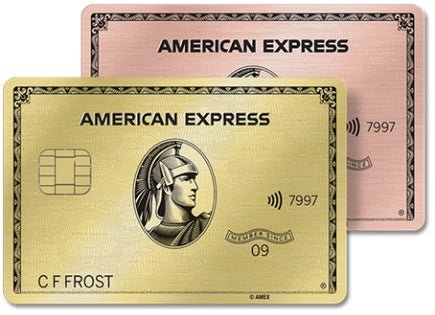
The American Express® Gold Card is a popular choice for people who spend heavily on dining and groceries. The primary cost of the card is a $325 annual fee. While this is a significant upfront expense, the card provides several credits and reward structures designed to offset that price for the right user. Read our American Express Gold Card review for a closer look at its fees, rewards, and benefits. MoneyAtlas tracks these costs and benefits to help you determine if a specific financial product aligns with your spending habits. This article explores the total cost of ownership, including the annual fee, potential interest charges, and the value of the included credits. We will also compare the standard Gold Card to its co-branded counterparts, like the Delta SkyMiles® Gold American Express Card, to clarify which version best fits your needs.
Breaking Down the Annual Fee
The most direct answer to how much the card costs is the $325 annual fee. This fee is charged once per year and appears on your billing statement shortly after you open the account and every year thereafter on your anniversary. It is important to note that this fee is not waived for the first year on the standard Gold Card.
There is another version of the card that often causes confusion: the Delta SkyMiles® Gold American Express Card. This version has a lower annual fee, currently $150. Some offers for the Delta version even include a $0 introductory annual fee for the first year. However, these two cards serve very different purposes. The standard Gold Card earns Membership Rewards points, which are flexible and can be transferred to many different airlines and hotels. The Delta Gold Card earns SkyMiles specifically for use with Delta Air Lines. You can compare the differences in our Delta SkyMiles Gold American Express Card review.
When comparing these costs, look at the long term. A $325 fee represents a commitment of over $1,600 over five years. MoneyAtlas suggests reviewing your previous year of spending to see if your habits justify this recurring expense. For more guidance, read how to evaluate credit card annual fees, interest rates, and rewards.
The Cost of the Welcome Offer
While a welcome offer provides a large influx of points, it actually comes with a specific cost: the required spending. Most offers require you to spend a certain amount, such as $6,000 or $8,000, within the first six months of card membership.
If you do not usually spend that much, you might find yourself buying things you do not need just to "earn" the bonus. This is a hidden cost. For example, if you spend an extra $2,000 purely to hit a bonus threshold, the points are not truly free. Furthermore, if you carry a balance to meet that spending requirement, the interest charges will quickly outweigh the value of the points.
American Express also uses a "once per lifetime" rule for welcome bonuses. This means if you have received a bonus for the Gold Card in the past, you are generally ineligible to receive it again. Before applying, use the American Express "Apply with Confidence" tool. This allows you to see if you are approved and what your specific welcome offer will be without a hard pull on your credit report. Your credit score is only impacted if you are approved and choose to accept the card.
Offsetting the Price with Annual Credits
To understand the true cost of the card, you must look at the "net" annual fee. American Express provides several statement credits that can reduce the effective price of the card to zero, or even a negative number, if you use them fully.
Dining Credit
The card offers up to $120 in annual dining credits. This is distributed as a $10 monthly credit. It applies to purchases made at Grubhub, The Cheesecake Factory, Goldbelly, Wine.com, Five Guys, Buffalo Wild Wings, and Wonder. You must enroll for this benefit through your account portal.
Uber Cash
Cardholders receive $120 in Uber Cash annually, delivered as $10 per month. This can be used for Uber rides in the U.S. or for Uber Eats orders. To use this, you must add your Gold Card as a payment method in the Uber app.
Resy Credit
A newer addition to the card is a $100 Resy credit. This is split into two $50 credits, one for the first half of the year and one for the second half. This credit applies to eligible purchases at U.S. Resy restaurants.
Dunkin' Credit
The card also includes an $84 annual Dunkin' credit, paid out as $7 per month. This is valid at U.S. Dunkin' locations and requires enrollment.
The Earning Structure: How Much Can You Gain?
The Gold Card is designed to be a "daily driver" for food spending. The rewards points you earn can be used to offset the annual fee if you redeem them for travel or transfer them to partners. To compare this structure with other points-based products, browse MoneyAtlas rewards credit card rankings.
- 4X points at Restaurants: This applies worldwide on up to $50,000 in purchases per year.
- 4X points at U.S. Supermarkets: This applies on up to $25,000 in purchases per year.
- 3X points on Flights: This applies to flights booked directly with airlines or through the American Express Travel portal.
- 2X points on prepaid Car Rentals: This applies to bookings through the American Express Travel portal.
If a household spends $1,000 per month on groceries and $500 per month on dining, they would earn 72,000 Membership Rewards points in a year. Depending on how those points are redeemed, they could be worth $720 or more. In this scenario, the rewards alone more than cover the $325 annual fee.
Understanding Interest Rates and Fees
While many people focus on the annual fee, the cost of carrying a balance is often much higher. The American Express® Gold Card is unique because it is a charge card with "Pay Over Time" features. For a broader explanation of borrowing costs, see how APR works on a credit card.
Historically, charge cards required you to pay the full balance every month. The Gold Card still encourages this, but it also allows you to carry a balance on certain purchases with interest. The Annual Percentage Rate for these purchases is variable and based on your creditworthiness.
If you carry a balance of $2,000 at a 25% interest rate, you would pay roughly $500 in interest over a year. This cost is separate from and in addition to the $325 annual fee. To keep the cost of the card low, it is best to pay the statement balance in full each month.
Other potential costs include:
- Late Payment Fee: Up to $40.
- Returned Payment Fee: Up to $40.
- Cash Advance Fee: Usually 5% or $10, whichever is greater.
- Foreign Transaction Fees: The Gold Card has $0 foreign transaction fees, making it a good choice for international travel.
Comparing the Gold Card to the Platinum Card
For some, the $325 fee for the Gold Card feels high, leading them to look at other "levels" of American Express cards. The Platinum Card® has a much higher annual fee, currently $695. You can review its travel benefits and fee structure in the American Express Platinum Card review.
The Platinum Card is built for luxury travel, offering airport lounge access and higher credits for things like hotel stays and digital entertainment. The Gold Card is built for "lifestyle" spending like food and groceries.
MoneyAtlas makes it easier to compare these side by side. If you spend more on flights and hotels than you do on groceries, the higher fee of the Platinum Card might actually result in a lower "net" cost because of its specific travel credits. However, for the average family, the Gold Card’s 4X grocery and dining multipliers are often more lucrative. You can also compare top-rated credit cards before deciding.
How the Charge Card Model Affects Cost
The American Express® Gold Card has "no preset spending limit." This does not mean you have unlimited spending power. Instead, your limit adjusts based on your history, credit record, and financial resources.
This can be a benefit because it allows for large purchases that might exceed a traditional credit limit. However, there is a psychological cost to this flexibility. Without a hard limit, some users may find it easier to overspend.
If you are planning a large purchase, we suggest using the "Check Spending Power" tool in the American Express app. This tells you if a specific transaction will be approved before you reach the register. This helps avoid the embarrassment and potential fees of a declined transaction.
The Impact of Redemption Choices on Value
The "cost" of your annual fee is also affected by how you use your points. If you redeem your points for statement credits, they are generally worth 0.6 cents each. At this rate, the 72,000 points mentioned earlier would only be worth $432.
If you transfer those points to airline partners like Delta, British Airways, or Air Canada, you can often get 1.5 cents to 2 cents of value per point. At 2 cents per point, that same 72,000-point balance is worth $1,440.
By learning how to transfer points, you effectively lower the "cost" of the card because each point you earn works harder to cover your expenses. MoneyAtlas provides breakdowns of these transfer partners to help you understand where the most value lies.
Insurance and Protection Benefits
Part of what you pay for with a $325 annual fee is a suite of protections that can save you money in an emergency. These benefits are often overlooked but contribute to the card's overall value proposition.
Car Rental Loss and Damage Insurance
When you use the Gold Card to pay for a rental car and decline the rental company's collision damage waiver, you receive secondary coverage for theft or damage. This can save you $20 to $30 per day in insurance fees at the rental counter.
Baggage Insurance Plan
If your luggage is lost, damaged, or stolen while traveling on a common carrier, such as a plane or train, the card provides coverage. This is up to $1,250 for carry-on bags and $500 for checked bags.
Global Assist Hotline
If you are traveling more than 100 miles from home, you have access to a 24/7 hotline for medical, legal, or financial coordination. While you must pay for the third-party services, the coordination is included in your card membership.
Is the Gold Card Right for You?
Determining if the $325 fee is worth it requires a simple math exercise. Follow these steps to evaluate the card for your situation.
How to Decide if the Gold Card Is Right for You
- 1
Calculate your annual food spend
Multiply your monthly grocery and restaurant spending by 12. If you spend $10,000 total, you will earn roughly 40,000 points.
- 2
Review the credits
Look at the list of participating merchants for the Dining, Uber, Resy, and Dunkin' credits. Be honest about how many you would use without changing your habits.
- 3
Factor in the welcome offer
If you can meet the spending requirement without carrying a balance, add the value of those points to your first-year calculation.
- 4
Compare against other cards
Use MoneyAtlas comparison tools to look at no-annual-fee credit cards that offer 2% or 3% cash back. Sometimes a simple cash-back card is more cost-effective than a high-fee rewards card.
For many, the $325 fee is easily justified. If you use the Uber and Dining credits alone, you have recovered $240 of the fee. The remaining $85 is often covered by the points earned on just a few months of grocery shopping.
Common Pitfalls That Increase the Cost
The Gold Card can become very expensive if you fall into certain traps. Because it is a premium product, the fees for mismanagement are high.
One major pitfall is the "point tax." When you transfer Membership Rewards points to U.S. airlines, American Express charges an excise tax offset fee of $0.0006 per point, up to a maximum of $99. While small, this is a direct cost of using your rewards.
Another pitfall is forgetting to enroll. Most of the credits, including the Dining and Resy credits, require you to manually click "Enroll" in your online account. If you spend money at these merchants before enrolling, you will not receive the statement credit.
Finally, the annual fee is charged regardless of whether you use the card. If your spending habits change and you stop eating out or traveling, the $325 fee can quickly become a financial burden. We suggest reviewing your card portfolio once a year to ensure you are still getting value from every fee you pay.
Managing Your Account to Minimize Costs
To keep the cost of the American Express® Gold Card as low as possible, stay proactive with your account management. Use the mobile app to track your progress toward your monthly credits. You can see exactly how much Uber Cash you have left or if your monthly dining credit has been applied.
Setting up autopay for the full balance is the most effective way to avoid interest and late fees. Since the Gold Card is primarily a charge card, its "Pay in Full" default setting helps maintain a healthy credit utilization ratio, which is beneficial for your credit score.
If you find the $325 fee too high after the first year, you can call the number on the back of your card to discuss your options. Sometimes, the issuer may offer a "retention bonus" of points to help justify the fee for another year. Alternatively, you can ask about "downgrading" to a card with a lower fee, though this may change your rewards earning potential.
Summary of the Gold Card's Value
The American Express® Gold Card is not a "cheap" card, but it is a "high-value" card for a specific type of spender. It bridges the gap between basic cash-back cards and ultra-premium travel cards.
The $325 annual fee buys you into one of the most flexible rewards ecosystems in the world. For someone who spends $500 a month on groceries and uses Uber twice a month, the card practically pays for itself. For someone who rarely eats out and prefers to shop at big-box retailers, which often do not count as "supermarkets," the card's cost will likely exceed its benefits.
MoneyAtlas provides the data you need to make these comparisons. By looking at the fees, interest rates, and credit values side by side, you can decide if the Gold Card belongs in your wallet. For another perspective on American Express pricing, read the guide to American Express credit card interest rates.
FAQ
MoneyAtlas Staff
Articles and reviews from the MoneyAtlas editorial team — independent research on credit cards, banking, loans, insurance, and investing.
Related Articles

How Much Is the American Express Gold Card Limit?
Wondering how much American Express Gold Card limit you can get? Learn how its no preset spending limit works and how to grow your purchasing power.

How Good Is the American Express Gold Card?
Wondering how good is the American Express Gold Card? Learn how the 4x food rewards and $424 in credits can outweigh the $325 fee in our expert review.

How to Get the Gold American Express Card: Requirements and Steps
Learn how to get the Gold American Express Card with our guide on credit scores, income requirements, and how to apply without hurting your credit.