How Good Is American Express Gold Card? A Comprehensive Value Review


Introduction
Determining how good the American Express Gold Card is depends largely on two factors: your annual food budget and your willingness to manage a specific set of monthly statement credits. This card occupies a unique middle ground in the premium card market. It carries a $325 annual fee, which places it significantly higher than entry-level travel cards but well below luxury cards like the American Express Platinum Card. For many households, the value proposition rests on its 4% rewards rate at U.S. supermarkets and restaurants worldwide.
MoneyAtlas analyzes hundreds of financial products to help you decide which tools fit your spending patterns. You can compare credit cards side by side while reviewing the rewards structure, annual fees, and benefits that matter most to you. This review breaks down the rewards structure, the complex list of statement credits, and the travel benefits of the American Express Gold Card. By the end, you will understand how to calculate if the points earned and credits used outweigh the annual cost.
Understanding the Cost: The $325 Annual Fee
The first hurdle for any potential cardholder is the $325 annual fee. Unlike many cards that waive the fee for the first year, the American Express Gold Card typically requires this payment upfront. To determine if this cost is justifiable, you must look at the net cost.
The net cost is the annual fee minus the value of the credits you would have spent anyway. American Express has designed this card as a "coupon book" of sorts. If you already use Uber, Grubhub, and Dunkin' regularly, the credits are nearly as good as cash. If you have to go out of your way to use them, the card becomes a chore rather than a benefit.
MoneyAtlas compares cards based on real-world utility. For someone who lives in an area without Dunkin' or who never uses delivery services, the $325 fee stays closer to its face value. For a city dweller who orders takeout twice a month, the effective fee can drop significantly.
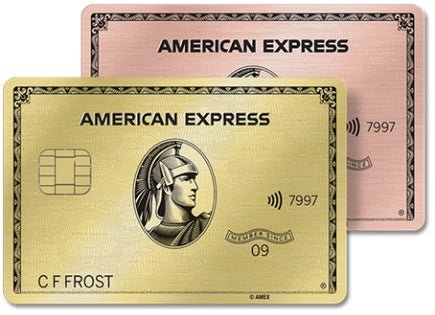
Earning Points: The Power of 4% on Food
The primary reason to hold this card is the earning potential on daily necessities. The American Express Gold Card earns Membership Rewards points, which are flexible travel rewards.
Restaurants and U.S. Supermarkets
The card offers 4% back, earned as 4 points per $1, in two massive categories:
- Restaurants worldwide: This includes takeout and delivery in the U.S. This rate applies on up to $50,000 in purchases per calendar year, then drops to 1%.
- U.S. Supermarkets: This is capped at $25,000 in purchases per calendar year, then drops to 1%.
For a household spending $1,000 a month on groceries and $500 a month on dining, the card would generate 72,000 points per year. In the world of travel rewards, these points are often valued at 2 cents each when transferred to airline partners, making that annual spend worth roughly $1,440 in travel.
Travel and Other Categories
While the card is food-focused, it does offer travel-specific earnings:
- 3% on flights: This applies to flights booked directly with airlines or through the American Express Travel portal.
- 2% on prepaid car rentals: Specifically those booked through the American Express Travel portal.
- 1% on all other purchases: This is the baseline rate for any spending that does not fall into the categories above.
Statement Credits: Offsetting the Annual Fee
The American Express Gold Card includes several monthly and semi-annual credits that total up to $424 in value. Because these are "use it or lose it" benefits, they require active management.
Uber Cash
Cardholders receive up to $120 in Uber Cash annually, distributed as $10 monthly credits. This can be used for Uber rides in the U.S. or Uber Eats orders. To use this, the card must be added to the Uber app. It is important to note that the monthly $10 does not roll over to the next month.
Dining Credit
The card offers another $120 annual credit, also distributed as $10 per month. This is limited to specific partners, including Grubhub, Buffalo Wild Wings, Five Guys, The Cheesecake Factory, and Wonder. Enrollment is required through the American Express account dashboard.
Resy Credit
A newer addition to the card is the $100 Resy credit. This is split into two $50 statement credits available semi-annually, January through June and July through December. It applies to purchases made at U.S. restaurants that use the Resy platform.
Dunkin' Credit
The card provides up to $84 in annual credits at Dunkin' locations in the U.S., delivered as $7 per month. For those who grab a coffee once a week, this is a straightforward win. For those who do not live near a Dunkin', this credit holds zero value.
Travel Perks and Protections
While it is not as travel-heavy as the Platinum version, the Gold Card includes several features that are useful for frequent flyers.
The Hotel Collection
When booking a stay of at least two consecutive nights through the American Express Travel portal at Hotel Collection properties, cardholders receive a $100 experience credit. This can typically be used for dining, spa services, or resort activities. You may also receive a room upgrade upon arrival if one is available.
Transfer Partners
The real value of American Express points lies in the ability to transfer them to over 20 airline and hotel partners. Partners include Delta SkyMiles, British Airways Executive Club, Air Canada Aeroplan, and Hilton Honors. Most transfers happen at a 1:1 ratio. This flexibility allows you to shop for the best redemption value rather than being locked into a single airline's pricing.
Insurance and Protections
The card offers several "peace of mind" benefits that are standard for premium cards:
- Car Rental Loss and Damage Insurance: This is secondary coverage. It can provide reimbursement for theft or damage to most rental vehicles.
- Global Assist Hotline: Access to medical, legal, or financial coordination when traveling more than 100 miles from home.
- No Foreign Transaction Fees: This makes the card an excellent companion for international dining, as you will still earn 4% back without being hit by the typical 3% fee most other cards charge.
Is the Welcome Offer Good?
American Express frequently changes its welcome offers. It is common to see offers ranging from 60,000 to 100,000 Membership Rewards points. These usually require a spending threshold of $6,000 to $8,000 within the first six months of account opening.
When evaluating an offer, consider the "return on spend." If an offer provides 60,000 points for $6,000 in spend, you are essentially getting a 10% return in points on top of your normal earnings. Because American Express often limits welcome offers to once per lifetime for each card type, it is generally better to wait for a high offer, near 90,000 or 100,000 points, if you are not in a rush to apply.
Who the American Express Gold Card Suits Best
Determining how good the card is depends on your lifestyle. It is not a "one size fits all" product.
The Food Enthusiast
For a person or family that spends $15,000 to $25,000 a year on groceries and dining out, the 4% rate is unbeatable. No other card offers this high of a return on such broad food categories with such high spending caps.
The Urban Commuter
If you already use Uber or Grubhub at least once a month, you are essentially recovering $240 of the $325 annual fee without changing your behavior. Add in a few coffee runs and a Resy-booked dinner, and the card's effective cost drops below zero.
The Transfer Partner Strategist
If you prefer to book business class international flights by transferring points to partners like Virgin Atlantic or ANA, the points earned on this card are significantly more valuable than cash back.
Who Should Skip This Card?
Despite its popularity, the American Express Gold Card is a poor fit for several types of consumers.
The Low-Maintenance Spender
If you prefer a "set it and forget it" card, the monthly credits will be frustrating. Forgetting to use your $10 Uber credit or $7 Dunkin' credit even a few times a year reduces the card's value. A simple 2% cash-back card with no annual fee might be a more practical choice.
The Non-U.S. Supermarket Shopper
The 4% rate on supermarkets is restricted to U.S. locations. If you spend a significant amount of time living or traveling abroad, you will only earn 1% on groceries. While the 4% restaurant rate is worldwide, the supermarket restriction is a major caveat for expats or frequent international travelers.
Those Under the Chase 5/24 Rule
If you are early in your credit card journey and plan to apply for several Chase cards, you may want to wait. Chase has a "5/24 rule," meaning they will not approve you for a new card if you have opened five or more cards from any issuer in the last 24 months. Because the American Express Gold Card is often available later, many experts suggest securing Chase cards first.
Comparison: American Express Gold vs. The Competition
To understand how good the American Express Gold Card really is, it helps to see it alongside its closest competitors.
The Chase Sapphire Preferred review is the most common alternative. It has a much lower fee of $95 and offers strong travel protections. However, its 3% dining and 1% grocery rates cannot keep pace with the Gold Card's 4% in both categories for heavy spenders.
The Platinum Card is a different beast entirely. It is designed for airport lounge access and hotel elite status. It is actually a poor card for daily spending, earning only 1% on groceries and dining. Many people hold both: the Gold for the grocery store and the Platinum for the airport.
How to Apply and What to Expect
The American Express Gold Card generally requires a "Good" to "Excellent" credit score. Most successful applicants have scores in the 700+ range, though income and existing debt-to-income ratios also play a role.
One unique feature of the application process is the "Apply with Confidence" tool. American Express allows you to see if you are approved with a soft credit pull, which does not impact your credit score. If you are approved and choose to accept the card, only then will a hard inquiry be performed.
For a broader look at approval factors, read the guide to American Express approval requirements.
Practical Steps to Evaluate the Card
If you are debating whether this card belongs in your wallet, follow these steps:
How to Evaluate the Card
- 1
Review recent spend
Check your last three months of grocery and dining spend. Calculate how many points you would have earned at a 4% rate.
- 2
Audit your apps
Audit your current apps. If you already have Uber and Grubhub installed, the credits are easy to use.
- 3
Check merchants
Check for Dunkin' and Resy locations on your local map. If you never visit these merchants, subtract those credits from your value calculation.
- 4
Compare net fee
Subtract the value of the credits you will definitely use from the $325 fee. If the remaining cost is lower than the value of the points you'll earn, the card is a good fit.
MoneyAtlas provides comparison tools to help you look at these numbers side by side with other premium travel cards. Taking the time to do the math ensures you are choosing a card that adds to your net worth rather than just adding another fee to your monthly statement.
FAQ
MoneyAtlas Staff
Articles and reviews from the MoneyAtlas editorial team — independent research on credit cards, banking, loans, insurance, and investing.
Related Articles

Is the American Express Gold Card Hard to Get?
Is the American Express Gold Card hard to get? Learn the credit score, income requirements, and tips to get approved for this top foodie card.

Which is Better: Platinum or Gold American Express?
Deciding which is better platinum or gold american express? Compare fees, 4X dining rewards, and luxury travel perks to find your perfect card.

Is Gold American Express Card Good: Reviewing the $325 Fee
Is gold American Express card good for your wallet? Compare the $325 annual fee against 4x food rewards and monthly credits to see if it's worth it.