How Do You Get the Gold American Express Card?


# How Do You Get the Gold American Express Card?
Obtaining the American Express Gold Card is a process that balances credit requirements with a clear understanding of the card's specific fee structure. Many applicants view the card as a high-tier status symbol, but its primary function is as a rewards-earning tool for dining and groceries. To get the card, an applicant typically needs a good to excellent credit score and a demonstrated ability to manage a revolving line of credit or a charge card. MoneyAtlas provides comparison tools to help you see how this card stacks up against other premium options in the market. This article covers the eligibility standards, the application process, and the financial math required to determine if the $325 annual fee serves your specific spending habits. Understanding these factors is the first step toward a successful application.
Eligibility Requirements for the Gold Card
The first hurdle in getting the American Express Gold Card is meeting the basic eligibility criteria. Like most premium US credit cards, the requirements focus on your financial stability and credit history.
Credit Score Standards
While the issuer does not publicly disclose a minimum credit score, data from approved applicants suggests that a score in the "good" to "excellent" range is typically necessary. This generally means a FICO score of 670 or higher. Applicants with scores above 700 often have a smoother approval process. If your score is currently in the "fair" range (580 to 669), it may be worth focusing on credit improvement before applying to avoid a potential rejection.
If you want to understand how new applications can affect your credit profile, review this guide to credit inquiries and introductory APR cards.
Income and Employment
You must have a steady source of income to qualify. During the application, you are required to report your total annual income. This includes wages, but it can also include interest, dividends, and retirement benefits. For those over 21, you can also include income from a spouse or partner that is regularly used to pay your expenses. There is no specific "minimum" income published, but the issuer needs to see that you can comfortably manage the $325 annual fee and your monthly spending.
Age and Residency
Standard legal requirements apply. You must be at least 18 years old to apply for a card in your own name. You also need a valid Social Security Number (SSN) or Individual Taxpayer Identification Number (ITIN). Finally, you must be a US resident with a permanent home address.
The "Once Per Lifetime" Rule
A critical factor in your decision to apply is the issuer's "once per lifetime" policy. Generally, you can only earn a welcome bonus on a specific card once. If you have had the Gold Card in the past and earned a bonus, you may be approved for the card again, but you will likely be ineligible for the introductory points offer. It is important to check the terms of your specific offer during the application process.
The Application Process
The issuer has modernized its application flow to make it more transparent for the consumer. The "Apply with Confidence" feature is a significant part of how you get the card today.
How to Apply for the American Express Gold Card
- 1
Research the Current Welcome Offer
Before applying, look for the best available welcome offer. These offers change frequently. For example, you might see an offer for 60,000 points, while another link might show 90,000 points for the same spending requirement. These points are typically awarded after you spend a certain amount, such as $6,000, within the first 6 months of card membership.
- 2
Use the Soft Pull Application
When you apply, the issuer typically performs a "soft pull" on your credit report to determine your eligibility. This does not affect your credit score. You will receive a decision indicating whether you are approved and what your specific welcome offer will be.
- 3
Accept and Confirm
If you are approved and decide to accept the card, the issuer will then perform a "hard pull" on your credit report. This is the point at which your credit score may be slightly impacted, usually by five points or less. If you are not approved during the soft pull stage, you can walk away with no damage to your credit score.
- 4
Card Delivery and Activation
Once accepted, your card is usually mailed within 3 to 7 business days. In many cases, the issuer provides an "instant card number" upon approval. This allows you to add the card to digital wallets and start spending immediately while you wait for the physical card to arrive.
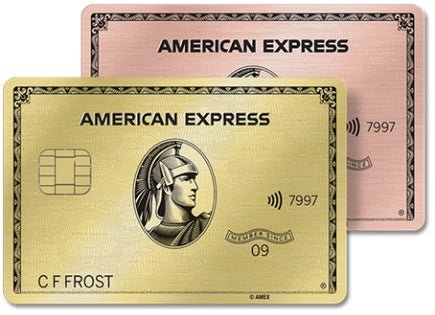
Understanding the Cost: The $325 Annual Fee
To get the card and keep it, you must be comfortable with the $325 annual fee. This fee is charged on your first billing statement and then annually on your account anniversary. Rates and fees are current as of late 2024 but are subject to change.
For a deeper look at evaluating fees, rewards, and interest costs, read how to calculate the real value of a credit card.
How the Fee is Calculated
While $325 sounds like a high upfront cost, many cardholders view it through the lens of "effective cost." This means subtracting the value of the credits you use from the total fee. If you use every credit provided by the card, the effective cost can drop significantly. However, if you do not naturally shop at the participating merchants, the fee remains a straight expense.
Authorized Users
One way to maximize the value of the fee is by adding authorized users. The American Express Gold Card allows you to add up to five additional people to your account for $0 extra. Starting with the sixth authorized user, there is a $35 annual fee per person. All spending by authorized users earns points for the primary cardholder, which can help you reach spending requirements for the welcome bonus faster.
Earning Rewards: Is It Right for Your Spending?
How you get the most out of the Gold Card depends on where you spend your money. This card is specifically designed for two major categories: dining and groceries.
4% Back on Dining
The card earns 4 Membership Rewards points per $1 spent at restaurants worldwide. This includes takeout and delivery services in the US. For a household that spends $1,000 a month on dining, this results in 4,000 points per month, or 48,000 points per year.
4% Back at US Supermarkets
You also earn 4 points per $1 spent at US supermarkets, up to the first $25,000 in purchases per calendar year. After you hit that $25,000 cap, the rate drops to 1% for the remainder of the year. Note that "supermarkets" typically excludes "big box" stores like Walmart, Target, or Costco.
Travel Rewards
The card earns 3 points per $1 on flights booked directly with airlines or through the issuer's travel portal. It also earns 2 points per $1 on prepaid hotels and other eligible travel booked through the portal. While these rates are good, they are lower than what you might find on the American Express Platinum Card.
The Monthly Credit System
A major part of the Gold Card experience is managing its monthly credits. These are "use it or lose it" benefits. If you do not use them in a given month, they do not roll over to the next.
$120 Dining Credit
This is distributed as a $10 monthly statement credit. It is valid at specific partners, including food delivery services, restaurants, and other participating merchants. You must enroll in this benefit through the issuer's app or website before it becomes active.
$120 Uber Cash
When you add your Gold Card to the rideshare app, you receive $10 in cash each month. This can be used for rides or food delivery orders in the US.
$100 Resy Credit
This is a newer benefit that provides up to $100 in statement credits each year for purchases at participating restaurants. The credit is split into two $50 increments: one for the first half of the year (January to June) and one for the second half (July to December).
$84 Dunkin' Credit
Cardholders receive up to $7 in monthly statement credits for purchases at participating US locations. This adds up to $84 annually.
Charge Card Mechanics vs. Credit Cards
It is important to understand that the American Express Gold Card is a charge card, not a traditional credit card. This changes how you interact with your balance.
No Preset Spending Limit
Unlike a credit card with a fixed $5,000 or $10,000 limit, a charge card has "no preset spending limit." This does not mean unlimited spending. Your purchasing power adjusts based on your credit record, your income, and your payment history. If you plan to make a very large purchase, you can use the issuer's spending-check tool to see if the transaction will be approved.
Paying in Full
Traditionally, charge cards required you to pay the full balance every month. Today, the issuer offers a "Pay Over Time" feature. This allows you to carry a balance on eligible purchases with interest, similar to a standard credit card. However, the default expectation for a Gold Card is that you pay the balance in full to avoid interest charges, which are often quite high.
Impact on Credit Utilization
Because charge cards do not have a fixed credit limit, they are often excluded from the "credit utilization" portion of your credit score calculation. This can be a benefit if you spend a lot each month, as it won't look like you are "maxing out" a card.
Comparing the Gold Card to Alternatives
Before you apply, it is worth comparing the Gold Card to other products to see which offers the best value for your specific lifestyle. MoneyAtlas makes it easier to compare these options side by side.
Gold vs. Platinum
The Platinum Card has a much higher annual fee (currently $695) but offers 5% back on flights and extensive airport lounge access. If you travel frequently, the Platinum might be better. If your biggest expenses are food and groceries, the Gold is likely the stronger choice.
Gold vs. Chase Sapphire Reserve
The Chase Sapphire Reserve review covers a card with a $550 annual fee and a flexible $300 travel credit. Its rewards are earned in a travel rewards ecosystem. Many people choose the Amex Gold for its 4% grocery rate, as the Sapphire Reserve focuses more on travel and general dining.
Gold vs. Capital One SavorCash
For those who want to avoid high annual fees, the Capital One Savor Cash Rewards review covers a card with high rewards on dining and entertainment. The main difference is that Capital One earns cash back, while the Amex Gold earns Membership Rewards points, which can be more valuable when transferred to travel partners.
Readers who want to compare more cash-back options can browse MoneyAtlas's cash-back credit card rankings.
Redemption Options: Making Your Points Count
Once you get the card and start earning points, you need a strategy for using them. Not all redemptions are created equal.
Transfer Partners (Highest Value)
The most effective way to use Membership Rewards points is by transferring them to airline and hotel partners. The issuer has over 20 partners, including Delta, British Airways, Hilton, and Marriott. In many cases, points transfer at a 1:1 ratio. If you find a "sweet spot" in a frequent flyer program, your points could be worth 2 cents or more each.
Travel Portal Redemptions
You can book travel directly through the issuer's portal. In this scenario, your points are usually worth 1 cent each. This is a simple, no-fuss way to book, but it rarely offers the best value.
Statement Credits and Gift Cards
You can use points to cover charges on your statement or buy gift cards. This is generally the lowest value for your points, often netting you 0.6 to 0.7 cents per point. We generally recommend avoiding this unless you have no travel plans in the future.
Checklist Before You Apply
To increase your chances of getting the card and ensuring it is the right fit, follow this checklist:
- Check your credit score: Ensure you are in the 670+ range.
- Audit your spending: Look at your last three months of bank statements. If you aren't spending at least $500 to $1,000 a month on groceries and dining combined, the card may not pay for itself.
- Evaluate the credits: Do you already spend money at participating dining, rideshare, or coffee merchants? If yes, the card is an easy win. If you have to change your habits to use the credits, it might be a "fee trap."
- Verify the welcome offer: Don't settle for the first offer you see. Search for elevated offers that provide more points for the same spending.
- Understand the "Pay Over Time" limit: Check your approval terms to see how much of a balance you are allowed to carry if you don't pay in full.
Summary of Benefits
Conclusion
Getting the American Express Gold Card requires a solid credit profile and a spending habit that prioritizes food and travel. While the $325 annual fee is significant, the combination of 4% rewards on dining and groceries alongside over $400 in potential annual credits makes it a powerful tool for the right user. The application process is user-friendly, allowing you to see if you qualify without immediate damage to your credit score. If you are ready to move beyond basic cash-back cards and enter the world of premium travel rewards, the Gold Card is a strong contender. You can use MoneyAtlas to compare top-rated credit cards to ensure your choice aligns with your long-term financial goals.
FAQ
MoneyAtlas Staff
Articles and reviews from the MoneyAtlas editorial team — independent research on credit cards, banking, loans, insurance, and investing.
Related Articles

How Much Is the American Express Gold Card Limit?
Wondering how much American Express Gold Card limit you can get? Learn how its no preset spending limit works and how to grow your purchasing power.

How Good Is the American Express Gold Card?
Wondering how good is the American Express Gold Card? Learn how the 4x food rewards and $424 in credits can outweigh the $325 fee in our expert review.

How to Get the Gold American Express Card: Requirements and Steps
Learn how to get the Gold American Express Card with our guide on credit scores, income requirements, and how to apply without hurting your credit.