Finding an unexpected interest charge on a credit card statement is a common source of frustration for many cardholders. This usually happens when the full statement balance was not paid by the due date, but there are several other technical reasons why these fees appear. Whether it is a small residual charge or a significant finance fee, the mechanics of how banks calculate interest can feel opaque. Understanding these rules is the first step toward managing debt and reducing the total cost of borrowing. MoneyAtlas helps users compare different credit cards and their interest structures to find the most cost-effective options. This article covers the mechanics of grace periods, daily interest accrual, and the specific transactions that bypass standard interest-free windows. Learning how these factors interact allows for better control over monthly statements.
The Role of the Grace Period
Most credit cards offered in the United States come with what is known as a grace period. This is a specific window of time where a cardholder is not charged interest on new purchases. Federal law requires that if a card offers a grace period, it must be at least 21 days long. This period typically runs from the date a statement is generated to the payment due date.
For someone who pays their statement balance in full and on time every single month, the grace period remains active. In this scenario, the credit card acts as an interest-free loan. The issuer provides the funds for the purchase, and as long as the money is paid back by the due date, no interest is assessed.
The grace period is a fragile benefit. If even a small portion of the statement balance remains unpaid after the due date, the grace period is usually lost for the next billing cycle. This means that new purchases will start accruing interest the very day they are made, rather than waiting until the next statement period.
Credit card interest is not a flat monthly fee. Instead, it is a dynamic calculation based on how much is owed each day. Most issuers use a method called the average daily balance to determine how much to charge.
The Daily Periodic Rate
While the Annual Percentage Rate (APR) is the most prominent number on a credit card agreement, it is not the number used for the actual calculation. Banks convert the APR into a Daily Periodic Rate (DPR). To find this, the APR is divided by 365. For example, if a card has a 24% APR, the calculation is 0.24 divided by 365, which results in a daily rate of approximately 0.0657%.
The Average Daily Balance
The issuer tracks the balance on the account for every single day of the billing cycle. If the balance was $1,000 for the first 15 days and $1,500 for the next 15 days, they do not just charge interest on the ending balance. They add up the balance from each of the 30 days and divide by 30 to find the average.
Compounding Interest
One reason interest charges can grow so quickly is compounding. On most credit cards, interest is compounded daily. This means the interest charged today is added to the balance tomorrow. The following day, interest is charged on that new, higher balance. Over a month, this effect can significantly increase the total finance charge compared to simple interest.
If you want a broader starting point for comparing cards, the best credit cards comparison is a useful place to begin.
Factor
Description
APR
The yearly cost of the credit, such as 21% or 25%.
Daily Periodic Rate
The APR divided by 365, representing the daily cost.
Billing Cycle
Usually a 28 to 31 day period.
Average Daily Balance
The sum of daily balances divided by days in the cycle.
Why Residual Interest Appears
One of the most confusing scenarios is seeing an interest charge on a statement that follows a month where the balance was paid in full. This is known as residual interest or trailing interest.
When a balance is carried over from the previous month, interest accrues every day. When the statement arrives, it shows the interest that has accrued up to that point. However, interest continues to build between the day the statement is printed and the day the payment is actually received.
If a cardholder sees a balance of $500 on their statement and pays exactly $500 on the due date, they have paid off the purchases and the interest shown on the statement. But they have not yet paid for the interest that accrued during the 21 days they waited to make the payment. That remaining interest shows up on the next statement, even if no new purchases were made.
If you are trying to understand how much interest similar consumers are paying, this credit card interest rate overview gives helpful context.
Transactions Without Grace Periods
Not all transactions on a credit card are eligible for a grace period. Even if a cardholder pays their balance in full every month, certain actions will trigger immediate interest charges.
Cash Advances
Using a credit card to get cash from an ATM is a cash advance. These transactions almost never have a grace period. Interest begins accruing the moment the cash is dispensed. Furthermore, the APR for cash advances is often significantly higher than the APR for standard purchases. There is also typically a flat fee or a percentage fee associated with the withdrawal.
Balance Transfers
Moving debt from one card to another is known as a balance transfer. While many cards offer promotional 0% APR periods for balance transfers, standard transfers often begin accruing interest immediately if a promotional rate is not active. It is important to check the terms to see if a grace period applies to the transferred amount.
Some issuers mail checks that are linked to a credit card account. Using these checks is usually treated as a cash advance or a specialized transaction. Like cash advances, these often lack a grace period and start accruing interest from the day the check is processed.
Types of APR to Monitor
A single credit card can have multiple different interest rates depending on how the card is used. Reviewing the monthly statement will reveal which rates are currently being applied.
Purchase APR: This is the standard rate applied to things bought at stores or online.
Balance Transfer APR: The rate applied to debt moved from other cards.
Cash Advance APR: A higher rate for cash-equivalent transactions.
Penalty APR: A very high rate that may be applied if a payment is late by 60 days or more.
Introductory APR: A temporary low rate, often 0%, used to attract new customers.
MoneyAtlas makes it easier to compare these different rates side by side across hundreds of cards. Understanding which APR applies to a specific transaction is vital for avoiding unexpected costs.
Most credit cards in the US use variable interest rates. These rates are tied to an index, most commonly the Prime Rate. The Prime Rate is influenced by the federal funds rate set by the Federal Reserve.
When the Federal Reserve raises interest rates, the Prime Rate usually follows. Because credit card APRs are often calculated as the Prime Rate plus a certain percentage (called a margin), a cardholder's APR can increase even if their credit score stays the same and they never miss a payment. These changes usually happen automatically and do not require the issuer to provide advanced notice, as the relationship between the APR and the index is already established in the cardholder agreement.
While interest is a significant part of how credit card companies make money, there are several ways to reduce or eliminate these charges.
Paying More Than Once a Month
Because interest is calculated based on the average daily balance, making multiple payments throughout the month can lower the total interest owed. If someone makes a large purchase and pays half of it off two weeks before the due date, their average daily balance for that month will be lower than if they waited until the final due date to pay the full amount.
Using Automatic Payments
Setting up an automatic payment for the full statement balance ensures that the grace period is never lost due to forgetfulness. Even if the full balance cannot be paid, setting an auto-pay for at least the minimum amount prevents late fees and the potential application of a penalty APR.
Utilizing 0% APR Offers
For those currently carrying a balance, moving that debt to a card with an introductory 0% APR offer on balance transfers can provide a window of time to pay down the principal without new interest accruing. It is important to calculate the balance transfer fee, which is often 3% to 5% of the total amount, to ensure the move actually saves money.
If you are specifically looking for ways to reduce borrowing costs, the MoneyAtlas credit card reviews can help you compare features and terms.
Reviewing the Schumer Box
Every credit card application includes a standardized table called the Schumer Box. This table clearly lists the APRs, fees, and interest calculation methods. Reading this box before applying for a new card is the best way to understand how a specific bank handles interest charges.
If you need a broader search for lower borrowing costs, the best personal loans page can help you compare fixed-rate alternatives.
Managing Credit Card Debt Effectively
If interest charges have already caused a balance to grow, the focus should shift to a repayment strategy. There are two common methods for tackling this debt:
The Avalanche Method: This involves paying the minimum on all cards and putting all extra funds toward the card with the highest APR. This is mathematically the fastest way to save money on interest.
The Snowball Method: This involves paying off the smallest balance first. While it may not save the most in interest, it provides psychological wins that can help a borrower stay motivated.
When comparing repayment options, users can look at personal loans as an alternative. A personal loan often has a lower fixed interest rate than a variable credit card APR. Using a loan to pay off high-interest credit card debt can consolidate multiple payments into one and potentially lower the overall interest cost. MoneyAtlas provides comparison tools to see how personal loan rates compare to current credit card APRs.
If you are researching how to lower a rate before moving a balance, this credit card APR reduction guide is a useful follow-up.
Conclusion
Interest charges on a credit card are usually the result of a carried balance that has voided the grace period. By understanding that interest is calculated daily and compounded, cardholders can see why even a small balance can grow over time. Staying aware of the difference between purchase APRs and cash advance APRs, as well as being mindful of residual interest, helps prevent surprises on a monthly statement.
To minimize costs, the most effective strategy is to pay the statement balance in full every month. For those already navigating interest charges, making frequent payments and exploring 0% APR balance transfer options are practical steps forward. Comparing the terms and rates of various cards is essential for finding a product that fits a specific financial situation.
Quick Checklist:
If you are comparing rewards cards and low-interest options together, the best credit cards comparison is the clearest next step.
FAQ
Ready to pick a card?
Compare the cards our editors rate highest right now, side by side, with the fees and rewards that matter.
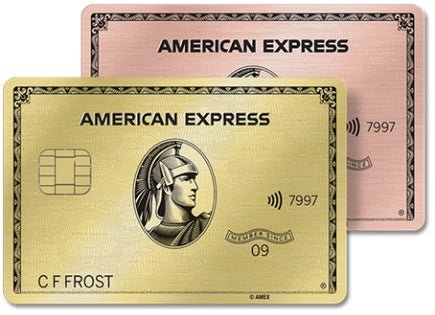
Should I get an American Express Gold card? Explore the 4X rewards on dining and groceries vs. the $325 fee to see if this premium card fits your budget.
Learn how to get the American Express Gold Card with our guide on credit score requirements, income, and the 'Apply with Confidence' tool. Apply today!