Understanding when a credit card company adds interest to a balance is the first step toward managing the total cost of borrowing. For most cardholders, interest is not an immediate charge but a consequence of carrying debt past a specific deadline. The timing depends on the billing cycle, the type of transaction, and whether the account has an active grace period.
MoneyAtlas tracks a wide range of financial products to help consumers identify which terms best suit their spending habits. This article explains the mechanics of the billing cycle, the triggers for interest charges, and the specific rules for different transaction types. By understanding these timelines, someone can better compare credit options and choose a card that aligns with their repayment strategy. If you are starting from scratch, begin with our best credit cards comparison.
How the Grace Period Works
A grace period is the window of time between the end of a billing cycle and the date the payment is due. For most credit cards, this period lasts at least 21 days. During this time, the credit card issuer does not charge interest on new purchases if the previous month's balance was paid in full.
The grace period is the primary way to use a credit card without paying interest. If a cardholder starts the month with a $0 balance and pays the entire statement balance by the due date, the issuer usually waives interest charges. This makes the credit card a free short-term loan for those who manage their cash flow effectively.
Losing the grace period occurs when a balance is carried over. If a cardholder pays only the minimum amount or any amount less than the full statement balance, they typically lose the grace period for the next billing cycle. This means interest begins accruing on new purchases the moment they are made, rather than waiting until the next due date.
Reinstating the grace period often requires paying the balance in full. In many cases, a cardholder must pay the full statement balance for two consecutive months to reset the interest-free window. It is important to check the specific cardholder agreement, as terms can vary between banks and credit unions. For a plain-English refresher on the timing, see our guide to avoiding APR fees on credit card balances.
While interest appears on a monthly statement as a single finance charge, it is usually calculated every day. Most issuers use a method called the Average Daily Balance. This means the bank looks at the balance on an account every single day of the month, adds those totals together, and divides by the number of days in the billing cycle.
The Daily Periodic Rate (DPR) is the multiplier used for these daily calculations. To find the DPR, the Annual Percentage Rate (APR) is divided by 365 days. For example, a card with a 24% APR has a DPR of approximately 0.0657%. Each day that a balance remains on the card, that percentage is applied to the current total.
Compounding interest is why balances can grow quickly. Most credit cards compound interest daily. This means the interest charged today is added to the principal balance tomorrow. The next day, interest is charged on that new, higher total. Over a 30-day billing cycle, this compounding effect can significantly increase the total finance charge compared to simple interest.
Payment timing impacts the total interest charged. Because interest is calculated based on the daily balance, making a payment early in the billing cycle reduces the average daily balance more than making a payment on the due date. For someone carrying debt, paying as soon as funds are available can lower the total interest paid for that month. If you want to understand why balances still generate charges, read why people get interest charges on their credit cards.
Transaction Types That Charge Interest Immediately
Not all credit card transactions are treated the same way. While standard purchases often benefit from a grace period, other types of transactions may begin accruing interest the moment they occur.
Cash Advances
A cash advance is when a cardholder uses their credit card to get cash from an ATM or a bank teller. These transactions almost never have a grace period. Interest begins accruing on the same day the cash is withdrawn. Additionally, cash advances often carry a higher APR than standard purchases and may include a separate cash advance fee, which is usually a percentage of the amount withdrawn.
Balance Transfers
A balance transfer involves moving debt from one credit card to another, often to take advantage of a lower interest rate. While many cards offer a 0% introductory APR on these transfers, the interest-free period only applies if the balance is paid off before the promotional period ends. If the promotional rate is not 0%, interest usually starts accruing as soon as the transfer is completed. For a deeper look at that strategy, compare our balance transfer credit card options.
Convenience Checks
Some credit card companies provide paper checks linked to the credit account. Using these is generally treated as a cash advance or a balance transfer. Like cash advances, they often lack a grace period, meaning interest starts building up immediately. It is useful to read the terms associated with these checks before using them for a purchase or bill payment.
Understanding Trailing Interest
Many cardholders are surprised to see a small interest charge on their statement the month after they have paid off their entire balance. This is known as trailing interest or residual interest. It occurs because interest accrues daily between the time the statement is printed and the time the payment is received.
Trailing interest bridges the gap between billing cycles. If a statement is generated on the 1st of the month but the payment is not made until the 15th, interest has been building up for those 15 days. Even if the full amount on the statement is paid, the interest that accrued during those two weeks will appear on the following month's bill.
To stop trailing interest, a cardholder may need to pay the current balance, not just the statement balance. The statement balance only reflects what was owed on the closing date of the last cycle. The current balance includes all interest and new purchases made since that date. Paying the full current balance is the most effective way to bring an account to zero and stop the daily accrual of interest.
Contacting the issuer can sometimes resolve trailing interest. For those who have just paid off a large debt and want to ensure no more interest is charged, calling the customer service department to ask for a "payoff amount" is a common strategy. This amount includes the principal plus the interest that will accrue until the payment is processed. If interest still seems higher than expected, compare it with current credit card interest rate trends.
The Impact of Penalty APRs
A Penalty APR is a significantly higher interest rate that an issuer may apply to an account after a cardholder misses a payment or has a payment returned. While standard purchase APRs might be 18% or 24%, a penalty APR can often climb toward 30%.
The trigger for a penalty APR is usually a late payment of 60 days or more. Once this rate is triggered, it may apply to existing balances and new purchases. Federal law requires issuers to provide a 45-day notice before increasing an interest rate due to a penalty, though the rules differ slightly for accounts that are already significantly past due.
Reversing a penalty APR requires consistent on-time payments. If a cardholder makes six consecutive on-time payments, the issuer is generally required to review the account and consider restoring the original APR. However, during those six months, the higher interest rate can drastically increase the cost of any debt remaining on the card.
Late fees are separate from interest charges. In addition to a higher interest rate, missing a payment usually results in a late fee. These fees are flat amounts added to the balance, which then also begin to accrue interest if they are not paid immediately.
Variable Rates and the Prime Rate
Most credit cards in the United States use variable interest rates. Unlike a fixed-rate loan, a variable APR can change over time based on shifts in the broader economy. Most issuers tie their variable rates to the Prime Rate, which is the interest rate commercial banks charge their most creditworthy corporate customers.
When the Federal Reserve changes the federal funds rate, the Prime Rate usually follows. If the Federal Reserve raises rates to combat inflation, the Prime Rate increases, and most credit card APRs rise shortly thereafter. These changes usually happen automatically and do not require the 45-day notice that other rate increases might.
Reviewing the cardholder agreement reveals the margin. A credit card APR is typically calculated as the Prime Rate plus a specific percentage called a margin. For example, if the Prime Rate is 8.5% and the card's margin is 12%, the total APR would be 20.5%. While the Prime Rate fluctuates, the margin set by the bank usually stays the same unless the issuer decides to change the terms of the account.
Monitoring rate changes helps in comparing financial products. Because rates are variable, a card that looked affordable a year ago might now be significantly more expensive. MoneyAtlas provides tools to compare current rates across different issuers, allowing cardholders to see if their current APR is still competitive. For broader context, review our credit card reviews.
How to Calculate Your Monthly Interest Charge
Calculating the exact interest charge for a month involves a few specific steps. While the bank does this automatically, knowing the math helps in understanding how much a balance truly costs.
How to Calculate Your Monthly Interest Charge
1
Find the Daily Periodic Rate
Divide the current APR by 365. For a card with a 21% APR, the daily rate is 0.0575%.
2
Determine the Average Daily Balance
Look at the balance for each day in the billing cycle, add them up, and divide by the number of days in that cycle.
3
Multiply the figures
Multiply the Average Daily Balance by the Daily Periodic Rate.
4
Account for the number of days
Multiply that result by the total number of days in the billing cycle. The final number is the finance charge that will appear on the statement.
Strategies to Minimize Interest Costs
For those who cannot pay their statement balance in full every month, there are several ways to reduce the amount of money spent on interest. These strategies focus on lowering the balance that the interest calculation is based on.
Make multiple payments per month. Since interest is calculated on the average daily balance, making small payments throughout the month rather than one large payment on the due date lowers the daily average and reduces the finance charge.
Pay more than the minimum. The minimum payment is designed to cover the interest and a tiny fraction of the principal. Paying even $20 or $50 above the minimum can significantly reduce the time it takes to pay off the debt and the total interest accrued.
Target the highest APR card first. If someone has multiple credit cards, focusing extra payments on the card with the highest interest rate while paying the minimum on others is often the most cost-effective way to reduce total debt. This is known as the avalanche method.
Use 0% introductory offers. For those with good credit, moving a high-interest balance to a card with a 0% introductory APR for 12 to 18 months can provide a window to pay down the principal without new interest accruing. For side-by-side product comparisons, see our cash back credit cards and other card categories.
Comparing Credit Cards Based on Interest
When selecting a new credit card, the APR is one of the most important factors for anyone who might carry a balance. However, the "best" rate is often relative to the cardholder's credit score and the card's specific features.
Cards with rewards often have higher APRs. If a card offers heavy cash back or travel points, the interest rate is often higher to offset the cost of those perks. For someone who consistently pays their balance in full, a high APR might not matter. For someone who carries a balance, a low-interest card without rewards is often a better financial choice.
Credit unions often offer lower rates than large national banks. Because they are member-owned, credit unions may have lower caps on interest rates and fees. It is worth comparing these options against standard bank offerings when looking for a long-term borrowing tool.
Comparison tools simplify the decision. Navigating dozens of different cardholder agreements is time-consuming. We provide side-by-side comparisons of APRs, fees, and grace period terms so that the trade-offs are clear. Looking at the "purchase APR" range gives a realistic idea of what to expect based on current credit health.
Conclusion
Interest charges on a credit card are not inevitable. They are a cost triggered by carrying a balance past the due date or by using specific features like cash advances. By understanding the timing of the grace period and the mechanics of daily compounding, cardholders can take control of their finances and avoid unnecessary fees.
Paying the statement balance in full every month remains the most effective way to keep the cost of a credit card at zero. For those currently managing debt, making frequent payments and targeting high-rate cards can accelerate the path to becoming interest-free. To find a card with better terms or a 0% introductory offer, use our best credit cards comparison or browse the credit card reviews.
FAQ
Ready to pick a card?
Compare the cards our editors rate highest right now, side by side, with the fees and rewards that matter.
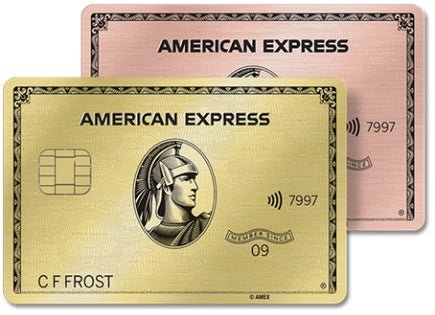
Should I get an American Express Gold card? Explore the 4X rewards on dining and groceries vs. the $325 fee to see if this premium card fits your budget.
Learn how to get the American Express Gold Card with our guide on credit score requirements, income, and the 'Apply with Confidence' tool. Apply today!