When Are You Charged APR on a Credit Card?


Introduction
The timing of credit card interest charges is often a source of confusion for cardholders. Many people assume they are only charged once a month when the statement arrives. However, the reality of how financial institutions calculate and apply interest is more complex and depends on your daily habits and the specific terms of your card agreement. MoneyAtlas tracks these terms across hundreds of products to help consumers understand the real cost of borrowing.
The primary factor in when you are charged Annual Percentage Rate (APR) is whether you carry a balance from one month to the next. For those who pay their statement balance in full, the APR may never actually result in a charge. For others, interest may accrue every single day. This article explores the mechanics of the grace period, daily interest accrual, and how different types of transactions trigger immediate charges. Understanding these timelines is the first step toward comparing credit cards through our best credit cards comparison and choosing the most cost-effective option for your financial situation.
Understanding the Mechanics of APR
The Annual Percentage Rate (APR) represents the yearly cost of borrowing money on your credit card. While the term interest rate is often used interchangeably with APR in the context of credit cards, the APR is technically a broader measure. It includes the interest rate plus any other fees or costs associated with the loan. Because most credit cards do not have the same upfront fees as mortgages or personal loans, the APR and the interest rate are usually the same number on your statement.
Credit card APR is expressed as an annual figure, but it is applied much more frequently. Even though you see a single interest charge on your monthly bill, the card issuer calculates that charge based on what you owe each day. This is a critical distinction for anyone trying to minimize their costs. If you understand that the interest is "alive" and growing every day, you can make more informed decisions about when to send in your payments. For a deeper breakdown of the math, see how APR is calculated for credit cards.
Most credit cards utilize a variable APR. This means the rate is tied to an index, such as the U.S. Prime Rate. When the Federal Reserve adjusts interest rates, your credit card APR will likely move in tandem. MoneyAtlas makes it easier to compare side by side how these variable rates differ across various issuers. Variable rates mean that the cost of your debt can change even if your spending habits do not.
The Grace Period: Why You Might Not Be Charged at All
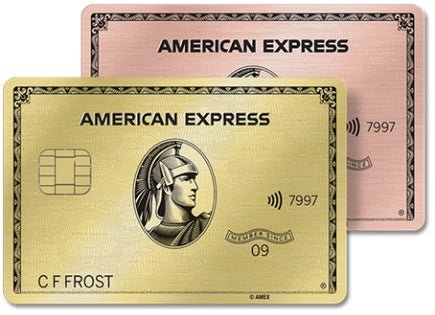
The grace period is the window of time between the end of a billing cycle and your payment due date. Federal law requires that if an issuer offers a grace period, they must mail or deliver your bill at least 21 days before the payment is due. During this window, you have the opportunity to pay off your new purchases without being charged a cent in interest. This is the most effective way to use a credit card as a free short-term loan.
Grace periods only apply if you have no existing debt carried over from the previous month. If you paid your last statement balance in full and on time, the new purchases you make during the current month fall under the grace period. However, if you "revolve" a balance, meaning you only paid the minimum or a portion of the total, you usually lose the grace period for all new purchases immediately. If you want a more detailed explanation, read how to avoid APR fees on credit card balances.
Losing the grace period means interest begins accruing the moment you swipe your card. This is a trap that many consumers fall into. Once the grace period is gone, every coffee, grocery run, or gas station visit starts gathering interest from the day of the transaction. To regain your grace period, you typically must pay the statement balance in full for two consecutive billing cycles.
When the Clock Starts: Daily vs. Monthly Interest
While you only see the interest charge once a month, it is calculated using a daily periodic rate. To find this rate, the bank takes your APR and divides it by 365 (or sometimes 360). For a card with a 24% APR, the daily periodic rate is approximately 0.0657%. Every day that you have a balance, the bank multiplies your balance by that daily rate and adds it to your total.
This process is known as daily compounding. Compounding means that the interest you earned yesterday is added to your principal balance today. Tomorrow, you will be charged interest on that new, higher amount. Over a 30-day billing cycle, this compounding effect causes your debt to grow faster than a simple interest calculation would suggest. To compare related strategies for lowering this cost, read how credit card APR works.
The interest charge you see on your statement is the sum of these daily calculations. If you carry a $2,000 balance throughout a 30-day month at 24% APR, you would accrue roughly $1.31 in interest every day. By the end of the month, your statement would show a "finance charge" or "interest charge" of approximately $39.30. This amount is then added to your balance, becoming part of the principal that will accrue interest during the next month.
Transactions That Do Not Have a Grace Period
Not all credit card activities are treated the same when it comes to interest timing. While standard purchases usually benefit from a grace period, other types of transactions are far more expensive because the interest clock starts immediately. It is important to read the fine print of your cardholder agreement to identify these high-cost actions.
Cash Advances
A cash advance is when you use your credit card to get physical cash at an ATM or bank branch. These transactions almost never have a grace period. Interest begins accruing the very minute the cash is in your hand. Furthermore, the APR for cash advances is typically much higher than the APR for purchases. Many cards also charge a flat fee or a percentage fee on top of the immediate interest. For a related explainer, see what happens when you use a credit card at an ATM.
Balance Transfers
Balance transfers allow you to move debt from a high-interest card to one with a lower rate. Unless you are using a card with a 0% introductory APR offer, interest on a balance transfer usually starts accruing immediately. Even with a 0% offer, there is often a balance transfer fee of 3% to 5% of the total amount. We provide tools to help you compare these fees and promotional windows so you can decide if a transfer is financially beneficial. If that is your goal, start with our balance transfer credit card comparison.
Convenience Checks
Issuers sometimes send checks in the mail that allow you to pay for things using your credit line. These are often treated as cash advances. Like ATM withdrawals, these checks usually trigger immediate interest accrual and higher APRs. Relying on these checks can be a very expensive way to manage expenses compared to standard card purchases.
How to Calculate Your Monthly Interest Charge
Calculating your own interest helps you see exactly where your money is going. You do not have to wait for your statement to know what the damage will be. You can use this step-by-step process to estimate your monthly finance charge.
How to Calculate Your Monthly Interest Charge
- 1
Convert your APR
Divide your APR by 365. For example, 0.20 (20%) divided by 365 equals 0.000547.
- 2
Determine your average daily balance
Look at your statement for the daily balance for each day of the billing cycle. Add these numbers together and divide by the number of days in the cycle.
- 3
Calculate the daily interest charge
Multiply your average daily balance by the daily rate. If your average balance was $1,000, multiply it by 0.000547 to get $0.547 per day.
- 4
Multiply by the number of days
If your billing cycle is 30 days, multiply $0.547 by 30 to get a total monthly interest charge of $16.41.
The Different Types of Credit Card APR
Your card may have four or five different APRs depending on how you use it. Each one has its own rules for when charges are applied. When you compare cards, looking only at the "Purchase APR" might give you an incomplete picture of the potential costs.
- Purchase APR: The standard rate for buying goods and services.
- Introductory APR: A temporary low or 0% rate for new cardholders.
- Penalty APR: A very high rate (often around 29.99%) triggered by a late payment.
- Cash Advance APR: A higher rate for cash-equivalent transactions.
- Balance Transfer APR: The rate applied to debt moved from another card.
Penalty APRs are particularly dangerous because they can last for months. If you miss a payment by 60 days, many issuers will spike your APR to the penalty rate. This rate applies to your existing balance and any new purchases. The issuer must generally review your account after six months of on-time payments to consider lowering it back to your standard rate.
Managing Interest Costs: Practical Strategies
Reducing the amount of interest you pay requires a proactive approach to timing. Because interest is calculated daily, the timing of your payments is just as important as the amount. Small shifts in your payment habits can result in significant savings over the course of a year.
Paying early is one of the most effective strategies. If you have the funds available halfway through the month, sending a payment immediately reduces your average daily balance for the remaining 15 days. This lowers the daily interest charge. Waiting until the due date allows the maximum amount of interest to accrue.
Setting up automatic payments ensures you never miss a due date. Missing a payment even by a single day can result in a late fee, and if it happens repeatedly, it can trigger the penalty APR. Automated payments for at least the minimum amount protect your credit score, though paying the full statement balance is always the goal to avoid APR charges entirely.
Using 0% Introductory Offers
A 0% introductory APR card is an option for those looking to manage existing debt. These cards pause the interest clock for a set period, usually 12 to 21 months. During this time, every dollar you pay goes toward the principal balance rather than interest. MoneyAtlas compares these offers side by side so you can see which cards have the longest windows and the lowest fees. A good place to start is the best no annual fee credit cards comparison.
How Credit Scores Impact Your APR
Your creditworthiness determines the APR you are assigned when you open a card. Lenders view higher credit scores as a sign of lower risk. Consequently, applicants with excellent credit scores (typically 740+) are often offered the lowest available APR in a card's range. Those with fair or poor credit may be charged the maximum rate.
Improving your credit score can help you qualify for lower rates in the future. Even a 5% difference in APR can save you hundreds of dollars in interest over time if you carry a balance. If your credit has improved since you first opened a card, you can sometimes call the issuer and request a rate reduction. Alternatively, you can use our comparison tools to find a new card with a more competitive rate.
Market conditions also play a role. Even if your credit score remains the same, your APR may rise if the Federal Reserve increases the prime rate. Most variable APRs are calculated by taking the Prime Rate and adding a "margin" based on your credit score. For example, if the Prime Rate is 8.5% and your margin is 12%, your total APR is 20.5%.
Comparison as a Cost-Saving Tool
The market for credit cards is highly competitive, and APRs vary wildly. Some cards are designed for people who pay in full every month and offer high rewards, while others are designed for people who need to carry a balance and offer lower ongoing APRs. Choosing the wrong tool for your spending style can be an expensive mistake.
MoneyAtlas provides the data needed to make an informed choice. By looking at the purchase APR, cash advance terms, and balance transfer offers side by side, you can identify which card fits your specific needs. If you know you will need to carry a balance for a few months, prioritizing a low-interest card or a 0% intro offer is more important than chasing travel points or cash back. For reward-focused shoppers, compare our cash back credit cards rankings as a next step.
Always read the Schumer Box on a credit card application. This is the standardized table that lists all interest rates and fees. It is required by law to be clear and easy to read. It tells you exactly when you will be charged APR, what the grace period is, and what fees might apply to cash advances or late payments.
Summary of Interest Timing
Knowing the timeline of APR charges puts you in control of your finances. It moves the conversation from "why is my bill so high" to "how can I reduce my daily balance." Most consumers can avoid interest entirely by staying within the grace period, but for those who cannot, the goal should be to minimize the daily accrual.
- Purchases: Interest is avoided if you pay the full statement balance by the due date.
- Existing Balances: Interest is calculated daily and added to your bill once a month.
- Special Transactions: Cash advances and convenience checks start charging interest immediately.
- Promotional Rates: 0% offers provide a temporary break from interest, but the rate spikes once the offer expires.
FAQ
MoneyAtlas Staff
Articles and reviews from the MoneyAtlas editorial team — independent research on credit cards, banking, loans, insurance, and investing.
Related Articles

Mastering Your Balance: How to Avoid Interest Charges on a Credit Card
Learn how to avoid interest charges on a credit card by mastering grace periods, paying your statement balance, and using 0% intro APR offers effectively.

Why 2 Interest Charges on Credit Card: Common Causes Explained
Wondering why 2 interest charges on credit card statements appear? Learn about residual interest and APR categories to manage your debt effectively.
Why Does a Credit Card Charge Interest?
Why does a credit card charge interest? Learn how banks calculate APR, how to use grace periods to avoid fees, and tips to minimize your daily interest costs.