What Is the Benefit of American Express Gold Card for Your Finances


Introduction
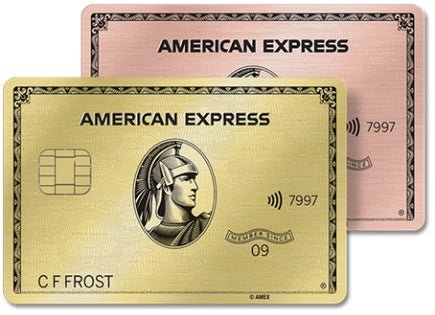
Choosing a premium credit card often comes down to a single question: do the rewards outweigh the cost of the annual fee? The American Express Gold Card represents a specific middle ground in the premium card market. It targets people who spend heavily on daily essentials like groceries and dining rather than just high-end travel. MoneyAtlas tracks these high-tier cards to help consumers see past the marketing and into the actual math of the benefits.
This post examines the point-earning structure, the specific monthly credits provided, and the travel protections included with the card. We will break down how the 4% reward rate on food compares to other options and whether the $325 annual fee makes sense for your budget. The goal is to provide a clear view of the card's value so you can compare it effectively against other rewards credit cards.
The Core Benefit: A Powerhouse for Food Rewards
The defining feature of the American Express Gold Card is its focus on food-related spending. While many travel cards prioritize flights or hotels, this card focuses on where most Americans spend a significant portion of their monthly budget: the kitchen and the restaurant table.
4X Points at Restaurants Worldwide
Cardholders earn 4X Membership Rewards points per dollar spent at restaurants. This applies to dining in, takeout, and delivery within the U.S. and internationally. For someone who spends $500 a month on dining, that represents 2,000 points per month or 24,000 points per year. There is a cap of $50,000 in eligible purchases per calendar year on this category, after which the rate drops to 1X.
4X Points at U.S. Supermarkets
The card also offers 4X points at U.S. supermarkets on up to $25,000 in purchases per calendar year. This is one of the highest available rates for grocery spending in the premium card category. After the $25,000 limit is reached, the earn rate returns to 1X for the remainder of the year. This benefit is specifically restricted to U.S. supermarkets, so international grocery shopping will not trigger the 4X rate.
3X Points on Flights
For travel, the card earns 3X points on flights booked directly with airlines or through the American Express Travel portal. While this is lower than the 5X points offered by some luxury travel cards, it provides a solid return for the "average" traveler who takes a few flights per year. Travelers can review MoneyAtlas travel credit card comparisons to compare this earning structure with other travel-focused options.
Breaking Down the Annual Statement Credits
Beyond the points you earn on spending, the American Express Gold Card includes several "use it or lose it" statement credits. These credits are designed to offset the $325 annual fee, but they require active management. You can also read MoneyAtlas's American Express Gold Card review for a broader look at the card's rewards and benefits.
The $120 Dining Credit
Cardholders can receive up to $10 back in statement credits each month when they use their card at specific participating partners. These include Grubhub, The Cheesecake Factory, Five Guys, Buffalo Wild Wings, and Wonder. This totals $120 annually. To receive this benefit, you must enroll through your account.
$120 Uber Cash
By adding the Gold Card to the Uber app, you receive $10 in Uber Cash each month. This can be used for Uber Eats orders or Uber rides within the U.S. Like the dining credit, this totals $120 per year. It is important to note that these credits do not roll over to the next month. If you do not use your $10 in January, you cannot spend $20 in February.
The $100 Resy Credit
A newer addition to the card is the Resy credit. Cardholders can receive up to $100 in statement credits per calendar year for eligible purchases at U.S. Resy restaurants. This is distributed as two $50 credits: one for the first half of the year, January through June, and one for the second half, July through December. Enrollment is required.
$84 Dunkin' Credit
The card also provides up to $7 in monthly statement credits for purchases at U.S. Dunkin' locations. Over a full year, this amounts to $84. While this is a smaller monthly amount, it is a straightforward benefit for those who already visit Dunkin' for coffee or breakfast.
Summary of Potential Credits
Travel and Lifestyle Protections
While the American Express Gold Card is categorized by many as a lifestyle card, it carries several travel benefits that are standard for a premium product. These protections can save a cardholder significant money in the event of travel disruptions.
Baggage Insurance Plan. If your carry-on or checked luggage is lost, stolen, or damaged while traveling with a common carrier, like an airline or bus line, you may be covered. This benefit typically provides up to $1,250 for carry-on baggage and up to $500 for checked baggage. The entire fare must be charged to your Gold Card to qualify.
The Hotel Collection. When you book a stay of at least two consecutive nights through American Express Travel at a property in The Hotel Collection, you receive a $100 experience credit. This credit can be used for qualifying dining, spa, or resort activities at the hotel. You may also receive a room upgrade at check-in if one is available.
No Foreign Transaction Fees. For those who travel abroad, the lack of foreign transaction fees is a critical benefit. Many standard cards charge a 3% fee on every purchase made outside the U.S. Using the Gold Card avoids these extra costs, making it a viable companion for international dining.
Hertz Five Star Status. Cardholders can enroll to receive Hertz Five Star status. This status includes benefits like a 25% point bonus on rentals and a one-class car upgrade when available.
Understanding Membership Rewards Points
The "benefit" of the card is only as good as the value of the points you earn. American Express Membership Rewards points are a flexible currency, but their value varies depending on how you use them. For more context, see how American Express credit card interest rates work.
- Transfer Partners: This is generally the most valuable way to use points. You can transfer points to over 20 airline and hotel partners, such as Delta, British Airways, or Hilton. When used for high-value international flights, points can sometimes be worth 2 cents or more each.
- Travel Bookings: Points can be used to book travel directly through the American Express portal. Usually, this provides a value of 1 cent per point.
- Statement Credits: Using points to cover your bill, known as Cover It with Points, is generally the least efficient method. This often values points at only 0.6 cents each.
- Gift Cards and Shopping: Points can be redeemed for gift cards or used at checkout with retailers like Amazon. The value here usually ranges from 0.5 cents to 1 cent per point.
Evaluating the $325 Annual Fee
The American Express Gold Card has an annual fee of $325. Rates and fees are subject to change, so you should check current terms before applying. To determine if the card is worth it, you have to look at your "break-even" point. A review of current credit card interest rates can also help you consider the cost of carrying a balance.
If you use the Uber Cash ($120) and the Dining Credit ($120) fully, you have already extracted $240 in value. This leaves an "effective" fee of $85. If you also use the Resy and Dunkin' credits, the card actually pays you to hold it.
However, if you do not use these credits, you must earn enough points to cover the $325 cost. If we value points at a conservative 1 cent each, you would need to earn 32,500 points per year to break even. On the 4X food category, that requires $8,125 in annual spending on dining and groceries. That averages out to about $677 per month.
Steps to Decide if the Card Fits Your Budget:
How to Decide if the Card Fits Your Budget
- 1
Review spending
Review your last three months of grocery and restaurant spending to find your average monthly "food" spend.
- 2
Check merchant use
Determine if you currently use Uber, Grubhub, or the other participating merchants regularly.
- 3
Compare alternatives
Compare the effective annual fee against a "no-fee" 2% cash back card to see which puts more money back in your pocket.
How to Compare Your Options
The American Express Gold Card exists in a competitive field. Before deciding, it is helpful to compare it against MoneyAtlas's leading credit card options using the tools available on the platform.
- Amex Gold vs. Amex Platinum: The Platinum card has a much higher fee, typically $695, and focuses on airport lounges and luxury travel. If you don't travel frequently, the Gold card is likely the better daily earner.
- Amex Gold vs. Chase Sapphire Preferred: The Sapphire Preferred has a lower fee, typically $95, and offers 3X on dining and 2X on travel. It does not have the 4X grocery benefit, making the Gold card superior for supermarket shoppers.
- Amex Gold vs. Blue Cash Preferred: If you prefer cash back over travel points, the Blue Cash Preferred offers 6% back at U.S. supermarkets, on up to $6,000 per year, for a much lower annual fee.
MoneyAtlas makes it easier to compare side by side the specific earn rates and fee structures of these products. Looking at the long-term cost versus the short-term welcome offer is the best way to ensure a card fits your lifestyle for years rather than just months.
Is the Amex Gold Right for You?
The American Express Gold Card is not a "general purpose" card. It is a specialized tool for people who spend heavily on food and can navigate a complex system of monthly credits. Readers who want a simpler alternative can compare cash back credit cards.
The card may be a good fit if:
- You spend at least $150 a week at the grocery store.
- You eat out or order delivery at least once a week.
- You prefer earning travel points over simple cash back.
- You already use Uber or Grubhub regularly.
The card may not be a good fit if:
- You shop primarily at wholesale clubs, like Costco, or discount stores, like Walmart or Target, which often do not count as "supermarkets."
- You find monthly "use it or lose it" credits frustrating to track.
- You prefer a simple, flat-rate cash back system.
- You rarely travel and have no use for airline transfer partners.
Conclusion
The American Express Gold Card offers a unique value proposition centered on the "foodie" lifestyle. With its 4X earn rate on dining and U.S. groceries, it is one of the most aggressive point earners on the market for daily essentials. While the $325 annual fee is substantial, the combination of Uber Cash, dining credits, and Resy credits provides a path to offset that cost entirely. For additional education, readers can browse MoneyAtlas credit card guides.
The true benefit depends on your willingness to engage with the card's ecosystem. For those who want a "set it and forget it" experience, a flat-rate cash back card might be better. But for those who maximize transfer partners and monthly credits, the Gold Card remains a top contender in the premium space. We encourage you to use the American Express Gold Card review and comparison tools on our platform to see how the Amex Gold stacks up against other high-earning rewards cards based on your specific spending habits.
FAQ
MoneyAtlas Staff
Articles and reviews from the MoneyAtlas editorial team — independent research on credit cards, banking, loans, insurance, and investing.
Related Articles

Which Card Is Better: American Express Gold or Platinum?
Deciding which card is better: American Express Gold or Platinum? Compare fees, 4X dining rewards, and luxury travel perks to find your perfect match.

Should I Get an American Express Gold Card? Breaking Down the Value
Should I get an American Express Gold card? Explore the 4X rewards on dining and groceries vs. the $325 fee to see if this premium card fits your budget.

How to Get the American Express Gold Card: A Practical Guide
Learn how to get the American Express Gold Card with our guide on credit score requirements, income, and the 'Apply with Confidence' tool. Apply today!