What Is an American Express Gold Card? A Full Breakdown


Introduction
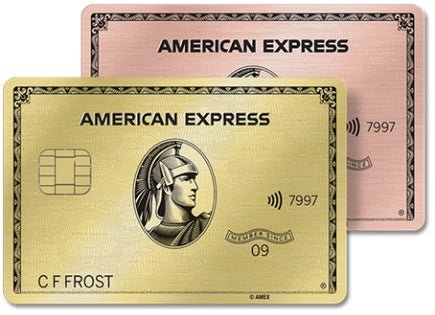
The American Express Gold Card represents one of the most recognizable premium financial products in the United States. It sits in a unique middle ground between standard credit cards and the ultra-premium luxury cards that often carry much higher price tags. For many people, the core question is whether the annual fee justifies the rewards earned on daily essentials like groceries and dining. Understanding the mechanics of this card is essential for anyone looking to optimize their household spending.
MoneyAtlas tracks dozens of premium card offerings to help consumers see how these products stack up against the competition. This article explains the technical structure of the American Express Gold Card, its specific earning categories, and the suite of credits that define its value proposition. By the end of this guide, you will have a clear picture of how this card functions as both a payment tool and a rewards engine.
The Core Mechanics of the Gold Card
Unlike a traditional credit card that provides a rigid credit limit from the start, the American Express Gold Card is historically known as a charge card. While modern versions of the card include features that allow for carrying a balance on certain purchases, its primary structure is different from the revolving credit lines most consumers use.
No Preset Spending Limit
One of the defining features of this card is that it has no preset spending limit. This does not mean spending is unlimited. Instead, the capacity to spend adjusts dynamically based on factors like your payment history, credit record, and financial resources. This flexibility can be beneficial for large, one-time purchases that might otherwise trigger a high credit utilization ratio on a standard card.
The Pay Over Time Feature
While the card is designed to be paid in full every month, it includes a "Pay Over Time" feature. This allows cardholders to carry a balance on eligible purchases of $100 or more, subject to an interest rate. As of recent data, the purchase APR for these balances is around 29.1% variable, though this rate can change based on the market and individual creditworthiness. It is important to verify the current rates and terms directly with the provider. For more context, read this guide to how credit card APR works.
Annual Fee Structure
The American Express Gold Card carries a $325 annual fee. This fee is charged on the card anniversary date and appears on the monthly billing statement. For those who choose to add family members to the account, up to five additional cards can be added for no annual fee. Starting with the sixth additional card, there is a $35 annual fee for each.
The annual fee should be evaluated alongside the card's rewards and benefits. MoneyAtlas explains this process in its guide to evaluating credit card annual fees, interest rates, and rewards.
Earning Points: The 4x Power
The primary appeal of the Gold Card lies in its earning structure, which is heavily weighted toward food. It earns Membership Rewards points, which are the proprietary currency of the American Express ecosystem.
Restaurants Worldwide
The card earns 4% back (expressed as 4 points per $1 spent) at restaurants worldwide. This category includes not just traditional sit-down dining but also takeout and delivery within the United States. This rate applies on up to $50,000 in purchases per calendar year. Once that cap is reached, the earning rate drops to 1% for the remainder of the year.
U.S. Supermarkets
For household grocery spending, the card earns 4% back at U.S. supermarkets. This is capped at $25,000 in purchases per calendar year. It is worth noting that this category specifically excludes "superstores" like Target or Walmart and wholesale clubs like Costco or Sam's Club. To earn the 4% rate, the merchant must be classified as a supermarket.
Travel Earning Rates
While food is the main focus, the card also serves as a travel tool. It earns 3% back on flights booked directly with airlines or through the American Express Travel portal. Additionally, as part of a recent refresh, the card now earns 5% back on prepaid hotels booked through the Amex Travel portal or mobile app.
Readers comparing similar products can browse MoneyAtlas rewards credit card rankings to review other points-earning structures.
Annual Credits and Statement Offsets
To balance the $325 annual fee, the card includes several statement credits. These are "use it or lose it" benefits that require enrollment and specific spending habits to be effective.
The Dining Credit
The $120 dining credit is distributed in $10 monthly increments. To use it, you must enroll through your account and then use the card at one of the participating partners. If you do not use the $10 in a given month, the credit does not roll over to the next month.
Uber Cash
By adding the Gold Card as a payment method in the Uber app, cardholders receive $10 in Uber Cash each month. This can be used for rides or for ordering food through Uber Eats. Similar to the dining credit, this expires at the end of each month.
The Resy Credit
Resy is a restaurant reservation platform owned by American Express. The Gold Card provides up to $100 in statement credits each year for eligible purchases at Resy-affiliated restaurants in the U.S. This is split into two $50 chunks: one available from January through June, and the other from July through December.
Dunkin' Credit
The most recent addition to the card is a monthly $7 credit for use at Dunkin' locations. Over a full year, this adds up to $84 in potential value.
Travel Perks and Insurance
Beyond points and credits, the Gold Card offers several "soft" benefits that improve the travel experience. These are particularly useful for those who travel a few times a year but do not need the ultra-premium lounge access provided by higher-tier cards. To compare similar products, review current travel credit card options.
The Hotel Collection
When booking a stay of two nights or more through the American Express Travel portal at a property in The Hotel Collection, cardholders receive a $100 experience credit. This credit can typically be used for on-property spending like dining, spa services, or resort activities. Additional perks often include room upgrades upon arrival, depending on availability.
Hertz Five Star Status
Cardholders are eligible for complimentary Hertz Five Star status. This mid-tier elite status allows for benefits such as skipping the rental counter at many locations, access to a wider selection of vehicles, and a one-class car upgrade when available. Enrollment in the Hertz Gold Plus Rewards program is required to activate this benefit.
Global Assist and Insurance
The card provides a layer of protection for travelers. This includes:
- No Foreign Transaction Fees: You can use the card abroad without paying the 3% fee common on many basic credit cards.
- Car Rental Loss and Damage Insurance: This is secondary coverage that can provide protection for theft or damage to most rental vehicles.
- Baggage Insurance Plan: Coverage for lost, damaged, or stolen baggage when the entire fare is charged to the card.
- Global Assist Hotline: A 24/7 service that provides medical, legal, and financial coordination when you are traveling more than 100 miles from home.
Membership Rewards: How to Use the Points
Membership Rewards (MR) points are often considered one of the most valuable travel currencies because of their versatility. Unlike cash back, which has a fixed value, the value of MR points depends entirely on how you redeem them.
Transfer Partners
The most effective way to use points earned on the Gold Card is often by transferring them to airline and hotel partners. American Express has partnerships with over a dozen airlines, including Delta, British Airways, Air Canada, and Emirates. Most transfers occur at a 1:1 ratio. By transferring points to a frequent flyer program, you may be able to book high-value international business class seats or last-minute domestic flights that would otherwise be very expensive.
Booking Through the Portal
You can also use points to book travel directly through the Amex portal. Generally, points are worth 1 cent each when used for flights in this manner. While this is simpler than transferring to partners, it rarely yields the highest possible value for your points.
Other Redemption Options
Points can be used for gift cards, statement credits, or shopping at checkout with retailers like Amazon. However, these options often value points at less than 1 cent each, which generally results in a lower return on your spending compared to travel redemptions.
Comparing the Gold Card to Alternatives
To decide if the Gold Card is the right tool for your wallet, it helps to compare it to other options. MoneyAtlas offers tools to compare the latest credit card options side by side, focusing on fees, rewards, and long-term value.
Gold vs. Platinum
The Platinum Card from American Express has a much higher annual fee (currently $695) and focuses heavily on luxury travel perks like airport lounge access and status with Marriott and Hilton. While the Platinum card earns 5x on flights, it only earns 1x on groceries and dining. For daily household spending, the Gold Card is often the superior earning tool.
Gold vs. Blue Cash Preferred
If you prefer cash back over travel points, the Blue Cash Preferred Card from American Express is a strong alternative. It offers 6% cash back at U.S. supermarkets (on up to $6,000 per year) and 6% on select U.S. streaming subscriptions. The annual fee is much lower than the Gold Card, making it a more accessible choice for those who do not want to manage travel points.
Gold vs. Chase Sapphire Preferred
The Chase Sapphire Preferred is a direct competitor in the mid-tier travel space. It has a lower annual fee (currently $95) and earns 3x points on dining and online grocery purchases. While the earning rates are lower than the Gold Card, the lower fee and different transfer partners make it a compelling choice for many. Read the Chase Sapphire Preferred review for a closer look at this alternative.
How to Determine if the Gold Card Fits Your Budget
Evaluating a premium card requires a bit of math. You should look at your actual spending from the last 12 months to see how many points you would have earned.
How to Determine if the Gold Card Fits Your Budget
- 1
Review your grocery and dining spend
Total your monthly spending at supermarkets and restaurants. If you spend $1,000 a month across these categories, you would earn 48,000 points per year.
- 2
Assign a value to the points
At a conservative valuation of 1 cent per point, those 48,000 points are worth $480.
- 3
Evaluate the credits
Be honest about which credits you will actually use. If you already use Uber once a month and eat at Five Guys or use Grubhub, you can likely count the full $240 from those two credits.
- 4
Subtract the annual fee
Take your point value ($480) and your usable credit value ($240), then subtract the annual fee ($325). In this scenario, the card provides $395 in net annual value.
If the result of this calculation is positive, the card is likely a strong candidate for your wallet. If you find yourself "forcing" spend just to use a credit, the card may be more of a burden than a benefit.
Application and Credit Requirements
The American Express Gold Card is generally intended for individuals with good to excellent credit. While there is no specific "hard" cutoff, a credit score in the 670+ range is typically expected.
The "Apply with Confidence" Feature
A notable feature of the American Express application process is the ability to see if you are approved with no impact on your credit score. If you are approved and choose to accept the card, only then will a hard inquiry be performed, which may affect your credit score. This allows you to check your eligibility and see the specific welcome offer available to you without risk.
The Welcome Bonus
Most new applicants are eligible for a welcome bonus after meeting a specific spending requirement in the first few months. These bonuses can vary significantly. Some applicants may see offers for 60,000 points, while others might see 100,000 points. It is worth checking multiple sources or using the MoneyAtlas comparison tools to see which offers are currently available.
Final Considerations Before Applying
The American Express Gold Card is a powerful tool for a specific type of spender. It rewards high-frequency, everyday activities and provides a path into one of the most flexible rewards programs in the country. However, the $325 fee and the "coupon book" nature of the credits require active management.
For someone who values simplicity and a low annual fee, a flat-rate cash-back card might be a better fit. For the dedicated traveler who wants to maximize every dollar spent on food, the Gold Card remains a top-tier contender. Use the American Express Gold Card review and side-by-side comparison tools available on our site to see how the Gold Card stacks up against other premium travel and dining cards before you make your final decision.
FAQ
MoneyAtlas Staff
Articles and reviews from the MoneyAtlas editorial team — independent research on credit cards, banking, loans, insurance, and investing.
Related Articles

Which Card Is Better: American Express Gold or Platinum?
Deciding which card is better: American Express Gold or Platinum? Compare fees, 4X dining rewards, and luxury travel perks to find your perfect match.

Should I Get an American Express Gold Card? Breaking Down the Value
Should I get an American Express Gold card? Explore the 4X rewards on dining and groceries vs. the $325 fee to see if this premium card fits your budget.

How to Get the American Express Gold Card: A Practical Guide
Learn how to get the American Express Gold Card with our guide on credit score requirements, income, and the 'Apply with Confidence' tool. Apply today!