What Does American Express Gold Card Mean for Your Wallet?


Introduction
The American Express Gold Card represents a specific middle ground in the world of premium credit cards. For many, searching for what the American Express Gold Card means is a way to determine if its high rewards on food and travel justify its $325 annual fee. It is not just a piece of metal in a wallet. It is a financial tool designed for people who spend significantly on dining and groceries and want to turn that everyday spending into travel rewards. MoneyAtlas helps consumers navigate these complex card terms by providing side-by-side comparisons of premium rewards cards. This article explores the mechanics of the card, the real value of its credits, and how it compares to other options. Understanding the specific benefits and requirements of the Amex Gold Card helps determine if it fits your financial profile.
The Definition of the American Express Gold Card
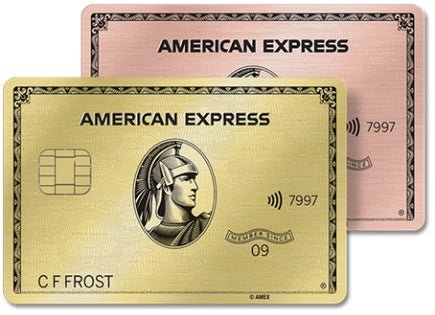
The American Express Gold Card is a premium rewards card that focuses heavily on lifestyle categories, specifically dining and U.S. supermarkets. Historically, this card was known as a charge card, meaning the balance had to be paid in full every month. While it still functions similarly for many users and offers no preset spending limit, it now includes a Pay Over Time feature. This feature allows cardholders to carry a balance on certain purchases with interest, similar to a traditional credit card.
The "meaning" of the card in a financial plan is usually tied to its earning potential. It earns Membership Rewards points, which are a flexible currency that can be transferred to various airline and hotel partners. For someone who spends $1,000 a month on groceries and dining, this card is a primary engine for accumulating travel points. MoneyAtlas tracks how these points compare to cash-back alternatives to help users see which reward type fits their goals.
How the Rewards Structure Works
The primary draw of the Amex Gold Card is its "4X" earning rate. This means cardholders earn 4 points for every $1 spent in specific categories. These categories are often the largest line items in a household budget after housing costs.
Earning Categories
- Restaurants Worldwide: Cardholders earn 4 points per $1 on up to $50,000 in annual purchases. This includes takeout and delivery services in the U.S.
- U.S. Supermarkets: The card earns 4 points per $1 on up to $25,000 in purchases per calendar year. After that limit is reached, the rate drops to 1 point per $1.
- Flights: You earn 3 points per $1 on flights booked directly with airlines or through the American Express travel portal.
- Prepaid Hotels: The card offers 2 points per $1 on prepaid hotels and other eligible travel booked through the Amex portal.
- Other Purchases: All other spending earns 1 point per $1.
The value of these points depends on how they are redeemed. If redeemed for statement credits, they are typically worth 0.6 cents each. However, when transferred to travel partners, the value can often exceed 2 cents per point. This makes the "4X" category effectively an 8% return on spending for those who maximize travel redemptions. For a deeper look at these trade-offs, read how credit card points and rewards value are evaluated.
Understanding the $325 Annual Fee
The $325 annual fee is a significant commitment. To understand what this card means for your budget, you must calculate whether the benefits outweigh this cost. American Express structures the card so that users who already use services like Uber, Grubhub, or Resy can "buy down" the fee through statement credits.
Monthly and Annual Credits
The card provides several credits that refresh on a monthly or biannual basis. These require enrollment through the American Express app or website.
- $120 Dining Credit: This is distributed as $10 per month in statement credits. It applies to purchases at Grubhub, The Cheesecake Factory, Five Guys, Buffalo Wild Wings, and Wonder.
- $120 Uber Cash: When the card is added to an Uber account, the user receives $10 in Uber Cash each month. This can be used for Uber Eats orders or Uber rides in the U.S.
- $100 Resy Credit: This is a newer addition, providing $50 in statement credits every six months for purchases at U.S. restaurants listed on the Resy platform.
- $84 Dunkin' Credit: This provides $7 per month in statement credits for purchases at U.S. Dunkin' locations.
If a cardholder uses every one of these credits, the total annual value is $424. In this scenario, the card effectively "pays" the user $99 to carry it. However, if these services are not part of your normal routine, the fee becomes a pure expense. Evaluate credit card annual fees, interest rates, and rewards before treating credits as cash value.
The Difference Between Gold and Platinum
Many people compare the Gold Card to the American Express Platinum Card. While they are in the same family, they serve different financial purposes.
The Platinum Card is a travel-heavy card. It offers airport lounge access, high rewards on flight bookings, and credits for hotel stays and airline incidentals. Its annual fee is significantly higher, often around $695.
The Gold Card is a "lifestyle" card. It is designed for the Monday through Friday expenses: the grocery run, the Friday night dinner, and the morning coffee. For most people, the Gold Card is a more effective "daily driver" because its 4X categories cover more frequent spending than the Platinum’s 5X flight category. MoneyAtlas compares these two cards side by side to show how the different fee structures impact net value based on different spending habits. You can compare premium credit card options before deciding which type of rewards structure to examine more closely.
Who Should Consider the American Express Gold Card?
This card is not a universal fit. It is geared toward a specific spending profile. Because the U.S. supermarket 4X benefit is restricted to domestic stores, it is less useful for those living abroad.
The Ideal User
- High Food Spenders: Someone who spends at least $500 to $1,000 a month on groceries and dining will see rapid point accumulation.
- Urban Commuters and App Users: Those who already use Uber or Grubhub at least once a month can easily use the $240 in combined annual credits.
- Travelers Seeking Flexibility: Membership Rewards points are highly regarded because they aren't locked into a single airline. They can be moved to Delta, British Airways, or Marriott, among others.
When to Avoid the Card
- Low Monthly Spending: If your grocery and dining spend is low, a no-fee cash-back card might offer a better net return.
- Difficulty Tracking Credits: If you find it a chore to remember to use a $7 Dunkin' credit or a $10 Grubhub credit every month, the annual fee will feel much heavier.
- Carrying a Balance: While the card has a Pay Over Time feature, the interest rates are typically high. Using this card to carry debt will quickly erase the value of any points earned. Learn more about what counts as a high credit card APR before carrying a balance.
How to Compare the Amex Gold with Other Cards
Before applying, it is useful to look at competitors. The Chase Sapphire Preferred, for example, has a lower $95 annual fee and earns 3X points on dining. While the earning rate is lower than the Gold's 4X, the lower fee makes it easier to break even. You can review the Chase Sapphire Preferred Card for a closer look at its rewards and fee structure.
Another competitor is the Capital One Savor Cash Rewards Credit Card, which offers high cash back on dining and grocery stores without the complexity of a points system. MoneyAtlas provides tools to filter cards by these specific categories so you can see which one earns more based on your actual monthly budget. Browse cash-back card rankings to compare simpler redemption options.
Application and Credit Requirements
The American Express Gold Card generally requires good to excellent credit. This typically means a FICO score in the 670 to 850 range. American Express also considers your relationship with them if you already have other accounts. For additional context, read this guide to American Express approval requirements.
One unique aspect of applying for American Express cards is their "Apply with Confidence" feature. This allows you to see if you are approved with a soft credit pull, which does not affect your credit score. If you are approved and choose to accept the card, a hard pull will then occur, which may have a temporary impact on your score.
Steps to Evaluate Your Choice
How to Evaluate Your Choice
- 1
Review your last three months of bank statements.
Calculate your average monthly spend at supermarkets and restaurants.
- 2
Assess your current app usage.
Do you already use Uber or Grubhub? If not, would you start using them just for the credit?
- 3
Check for a welcome offer.
American Express often offers a large "bonus" of points for spending a certain amount, such as $6,000, within the first six months. These bonuses can be worth over $1,000 when used for travel.
- 4
Verify the current rates.
Interest rates and fees change. Always check the current terms or use the MoneyAtlas comparison tool for the latest data before applying.
Redemption Options and Point Value
Once you earn points, you have several ways to use them. The "meaning" of the card changes based on how you redeem.
- Transfer Partners: This is the most lucrative path. Transferring to an airline like Virgin Atlantic or Air Canada can help you book international business class flights for a fraction of the retail price.
- Amex Travel Portal: You can use points to book flights at a rate of 1 cent per point. This is straightforward but usually offers less value than transferring.
- Statement Credits: This is the least efficient use of points. Redeeming for cash against your balance usually gives you 0.6 cents per point.
- Gift Cards: Rates vary, but some gift cards offer 1 cent per point value.
If you prefer simple cash back that you can deposit into a bank account, a different card may be a better fit. The Gold Card is specifically a "travel rewards" card at its core. Compare travel credit card options to see how other points-based products are structured.
The Impact of the Recent Refresh
American Express recently refreshed the Gold Card, increasing the annual fee from $250 to $325. They added the Resy and Dunkin' credits to help offset this increase. For some, these new credits make the card more valuable. For others, particularly those who do not live near a Dunkin' or a Resy-affiliated restaurant, the refresh made the card more expensive without adding usable value.
It is also important to note the spending caps. The 4X at U.S. supermarkets is capped at $25,000 per year. For a large family, this cap is reachable. If you spend $2,500 a month on groceries, you will hit the cap in ten months, after which your rewards drop significantly.
Summary Checklist for Potential Cardholders
- Spend Volume: Ensure you spend enough on dining and U.S. supermarkets to justify a premium card.
- Credit Utilization: Use the monthly Uber, Dining, Resy, and Dunkin' credits to offset the $325 fee.
- Travel Goals: Only get this card if you plan to use Membership Rewards points for travel, as other redemptions offer poor value.
- Credit Score: Ensure your score is generally in the "good to excellent" range before applying.
- Comparison: Use MoneyAtlas to see how the Gold Card’s net value compares to cards from Chase, Capital One, or Wells Fargo based on your specific spending. You can also explore no-annual-fee credit cards if avoiding a yearly fee is a priority.
FAQ
MoneyAtlas Staff
Articles and reviews from the MoneyAtlas editorial team — independent research on credit cards, banking, loans, insurance, and investing.
Related Articles

What the Difference Between American Express Gold and Platinum Is
Wondering what the difference between American Express Gold and Platinum is? Compare annual fees, 4X food rewards, and luxury travel perks to find your fit.

What Is the Difference Between Gold and Platinum American Express?
What is the difference between gold and platinum american express? Compare fees, 4x dining rewards, and luxury travel perks to find your perfect card.

What Is the Fee for American Express Gold Card?
Wondering what is the fee for american express gold card? It's $325 annually. Learn how to offset this cost with over $400 in credits and 4X rewards.