What Does American Express Gold Card Do? Benefits and Costs


Introduction
The American Express Gold Card is a premium financial tool designed to reward high spending on food and travel. Many people consider this card when they realize a significant portion of their monthly budget goes toward dining out or buying groceries. It functions primarily as a rewards card that earns American Express Membership Rewards points, which are flexible points used for travel bookings, statement credits, or transfers to airline and hotel partners.
MoneyAtlas tracks rewards cards and premium credit card options to help consumers determine if high annual fees translate into actual value. This article explains how the card earns points, how its monthly credits function, and what costs are involved in maintaining the account. The goal is to clarify what the card does so you can decide if it fits your spending habits. The American Express Gold Card serves as a high-earning bridge between entry-level rewards cards and ultra-premium travel cards.
How the Rewards Program Functions
The core purpose of the American Express Gold Card is to accumulate Membership Rewards points. These are not cash-back rewards in the traditional sense. Instead, they are a form of digital currency managed by American Express. The value of these points depends entirely on how they are redeemed.
When a cardholder makes a purchase, the transaction earns a specific number of points per dollar spent. These points do not expire as long as the account remains open and in good standing. MoneyAtlas notes that points generally have the highest value when transferred to partner loyalty programs, such as international airlines or hotel chains, rather than being used for shopping at online retailers or for statement credits.
The Earning Categories
The card is structured to reward specific types of daily spending. While most cards offer 1% back or 1 point per dollar on everything, this card uses a tiered system.
- 4X Points at Restaurants: This applies to restaurants worldwide. It also includes takeout and delivery services like Grubhub or Uber Eats. This earning rate is capped at $50,000 in purchases per calendar year. After that, the rate drops to 1X.
- 4X Points at U.S. Supermarkets: This is a major draw for households. The 4X rate applies to the first $25,000 spent at U.S. supermarkets per calendar year. Once that limit is hit, the rate becomes 1X.
- 3X Points on Flights: This applies to flights booked directly with airlines or through the American Express Travel portal.
- 1X Points on Other Purchases: All other spending earns 1 point for every dollar.
Understanding the Annual Credits
To offset the $325 annual fee, the American Express Gold Card includes several recurring credits. These credits act like coupons or subsidies for specific services. However, they do not apply automatically to your balance in a lump sum. They are distributed monthly or semi-annually and usually require enrollment.
For more guidance on weighing fees against benefits, read how to evaluate credit card annual fees, interest rates, and rewards.
Dining and Delivery Credits
The card offers two primary monthly credits related to food. First is the $120 Dining Credit. This is distributed as up to $10 in statement credits each month. It can only be used at specific partners, including Grubhub, The Cheesecake Factory, Five Guys, Buffalo Wild Wings, and Wonder.
Second is the $120 Uber Cash benefit. Cardholders receive up to $10 in Uber Cash each month, which can be used for Uber rides or Uber Eats orders in the U.S. To receive this, the card must be added to the Uber app. It is a "use it or lose it" benefit, meaning if the $10 is not used by the end of the month, it does not roll over.
Lifestyle and Restaurant Credits
Recent updates to the card have added new categories for credits. Cardholders can now access up to $100 in Resy credits annually. This is split into two $50 credits, one available from January through June, and the second available from July through December. These credits apply to purchases made at U.S. Resy restaurants after the cardholder enrolls in the benefit.
There is also an $84 Dunkin' credit. This provides up to $7 in monthly statement credits for purchases made at U.S. Dunkin' locations. Similar to the Uber Cash, this credit is distributed monthly and requires enrollment.
Travel Benefits and Protections
While the card is heavily focused on food, it also functions as a travel card. Beyond earning 3X points on flights, it offers perks that improve the experience of staying at hotels or renting cars.
Readers comparing travel-focused alternatives can browse MoneyAtlas travel credit card rankings to review other rewards structures and travel benefits.
The Hotel Collection
When booking a stay of at least two consecutive nights through American Express Travel at properties in The Hotel Collection, cardholders receive specific perks. This typically includes a $100 experience credit to use on-site for things like spa treatments or dining. Some properties also offer room upgrades upon arrival, depending on availability.
Car Rental and Travel Insurance
The card provides complimentary Hertz Gold Plus Five Star status. This status allows for potential car upgrades and faster point accumulation within the Hertz program. Enrollment is required to activate this benefit.
The card also includes various travel protections. These typically include car rental loss and damage insurance, which provides secondary coverage if a rental car is damaged or stolen. It also offers baggage insurance and a global assist hotline for travelers who are more than 100 miles from home.
Mechanics of Costs and Payments
Understanding what the American Express Gold Card does requires looking at the financial obligations. It is not a standard credit card in the traditional sense, though it has evolved to behave like one in many ways.
The Annual Fee
The card has a $325 annual fee. This fee is charged to the first statement and then once every year on the account anniversary. When evaluating the card, it is helpful to subtract the value of the credits you will actually use from this $325 figure to find the "effective" annual fee.
Pay Over Time and Interest Rates
Historically, American Express Gold was a charge card, meaning the balance had to be paid in full every month. Today, most cards come with a "Pay Over Time" feature. This allows cardholders to carry a balance on eligible purchases, similar to a traditional credit card.
The interest rate for Pay Over Time is a variable APR. This rate is often between 21.24% and 29.24% based on creditworthiness and the market prime rate. If the balance is paid in full each month, no interest is charged. MoneyAtlas recommends paying the full balance whenever possible to avoid high interest costs that can quickly outweigh the value of rewards points.
For a deeper explanation of how card interest works, review what APR means in credit card accounts.
No Foreign Transaction Fees
For those who travel internationally, the card does not charge foreign transaction fees. Many other cards charge a fee, often around 3%, for every purchase made outside the U.S. This makes the Gold card a viable option for dining and shopping while abroad.
Is It a Credit Card or a Charge Card?
The American Express Gold Card is unique because it features "No Preset Spending Limit." This does not mean unlimited spending. Instead, the amount you can spend adapts based on your use of the card, your payment history, credit record, and financial resources known to American Express.
Unlike a traditional credit card with a fixed limit, such as $5,000, a card with no preset spending limit provides more flexibility for large purchases. However, it requires a disciplined approach to spending. Because the card encourages paying in full, it can be a useful tool for those who want to avoid long-term debt while still earning high rewards.
Evaluating the Value for Your Household
Deciding if the American Express Gold Card is the right choice involves a simple math exercise. You must determine if the points earned and the credits used exceed the $325 cost of ownership.
Calculating Potential Rewards
If a household spends $1,000 a month on groceries and $500 a month on dining, they would earn 72,000 points per year just from those categories. That equals $1,500 multiplied by 4 points per dollar, multiplied by 12 months. If those points are valued at roughly 1 cent each, that is $720 in value.
Households comparing points, miles, and cash back can also browse MoneyAtlas rewards credit card comparisons to review different earning structures.
Usage of Credits
The credits are only valuable if they represent money you would have spent anyway. If you already use Uber once a month and eat at Five Guys or order from Grubhub, the $240 in annual credits from those two sources effectively reduces the annual fee to $85. If you also use the Resy and Dunkin' credits, the card can theoretically "pay for itself" and provide a profit in rewards.
Comparison to Other Options
MoneyAtlas allows you to compare the Gold card against alternatives like the American Express Platinum, which has a higher fee but more travel perks, or the Chase Sapphire Preferred, which has a lower fee and different reward categories.
The Chase Sapphire Preferred Card review provides a closer look at a lower-fee travel rewards alternative, while the Chase Sapphire Reserve review covers a higher-fee option with more premium travel benefits.
Step-by-Step: Getting Started with the Card
If the card aligns with your spending, there are specific steps to take to ensure you are receiving the full value of what it does.
Getting Started with the Card
- 1
Enroll Credits
Go to the "Benefits" section of the American Express app or website. You must manually enroll in the Dining Credit, Resy Credit, and Dunkin' Credit to start receiving statement credits.
- 2
Link Uber
Add the Gold card as a payment method in the Uber app. The $10 monthly Uber Cash will automatically appear in your Uber account at the start of each month.
- 3
Set Delivery Payment
Set the card as the primary payment for Grubhub or Uber Eats. This ensures you earn 4X points on the delivery and helps you use the monthly $10 credits.
- 4
Monitor Caps
Keep an eye on the $25,000 annual limit for U.S. supermarkets and the $50,000 limit for dining. If you exceed these, you may want to switch to a different card for those categories for the remainder of the year.
Summary of Key Features
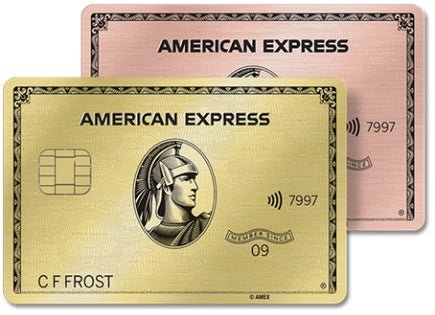
The American Express Gold Card is more than just a piece of metal. It is a complex package of rewards, credits, and travel protections. It excels in the kitchen and at the restaurant table but requires active management to justify its price tag.
- Rewards: 4X points on the two largest household spending categories, food and groceries.
- Credits: Over $400 in potential annual credits, though they are distributed in small monthly increments.
- Flexibility: Points can be transferred to many airlines, making it a favorite for travel enthusiasts.
- Cost: A $325 annual fee and a variable APR for those who carry a balance.
To see how this card stacks up against other premium options, use the MoneyAtlas best credit card comparison. You can view side-by-side breakdowns of fees, point values, and credit requirements to compare options based on your budget.
FAQ
MoneyAtlas Staff
Articles and reviews from the MoneyAtlas editorial team — independent research on credit cards, banking, loans, insurance, and investing.
Related Articles

Is the American Express Gold Card Hard to Get?
Is the American Express Gold Card hard to get? Learn the credit score, income requirements, and tips to get approved for this top foodie card.

Which is Better: Platinum or Gold American Express?
Deciding which is better platinum or gold american express? Compare fees, 4X dining rewards, and luxury travel perks to find your perfect card.

Is Gold American Express Card Good: Reviewing the $325 Fee
Is gold American Express card good for your wallet? Compare the $325 annual fee against 4x food rewards and monthly credits to see if it's worth it.