What Does a Gold American Express Card Mean?


Introduction
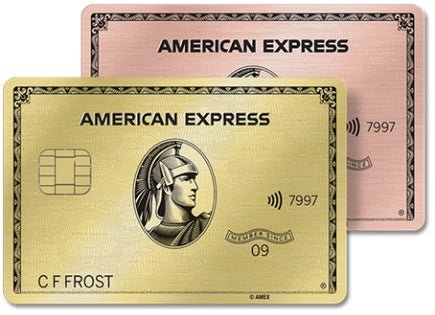
A Gold American Express card signifies that a cardholder has moved beyond entry-level credit products into the realm of premium rewards. Specifically, the American Express® Gold Card is a mid-tier financial tool designed for individuals who spend heavily on groceries and dining out. It represents a shift from simple cash-back structures to a more complex points-based ecosystem known as Membership Rewards. While once a symbol of exclusive status, it now functions primarily as a high-utility tool for "foodies" and frequent travelers who can justify its annual fee through targeted spending and monthly statement credits. MoneyAtlas tracks these premium offerings to help consumers determine if the rewards outweigh the costs. This article explores the specific meanings behind the card's features, fee structure, and its place in a broader financial strategy.
The Financial Positioning of the Gold Card
In the ecosystem of American Express products, the Gold Card occupies the middle ground between the entry-level Green Card and the luxury-focused Platinum Card. Historically, this card was a "charge card," meaning it had to be paid in full every month. Today, it functions more like a traditional credit card with a "Pay Over Time" feature, though the core value remains in its rewards rather than carrying a balance.
For a consumer, carrying this card means prioritizing points over simplicity. Unlike a card that gives a flat 1.5% or 2% cash back on everything, the Gold Card is highly specialized. It rewards specific lifestyle behaviors: cooking at home, ordering delivery, and dining out. For those who do not spend significantly in these areas, the card often means paying a high fee for benefits they cannot fully utilize.
Core Rewards and Earning Potential
The primary "meaning" of the Gold Card is found in its earning rates. It is widely considered one of the strongest cards in the market for food-related expenses.
- 4x Points at Restaurants: This applies to restaurants worldwide and includes takeout and delivery in the US.
- 4x Points at US Supermarkets: This is capped at the first $25,000 in purchases per year. After that, the rate drops to 1%.
- 3x Points on Flights: This applies to flights booked directly with airlines or through the provider's travel portal.
- 2x Points on Car Rentals: This applies to specific bookings through the provider's travel site.
- 1x Points on Other Purchases: All other spending earns the baseline rate.
Note that the "4x" refers to Membership Rewards points. These are not equivalent to 4% cash back unless redeemed in specific ways. If redeemed for statement credits, the value is often lower, around 0.6 cents per point. However, when transferred to airline or hotel partners, the value can exceed 2 cents per point.
For a broader look at competing rewards structures, compare the best credit card options.
Understanding the Annual Fee and Credits
The Gold Card carries a $325 annual fee. For many, this figure is the most significant part of what the card "means." It is a financial commitment that requires a "break-even" analysis. To help cardholders offset this cost, the card provides several monthly and annual credits.
Monthly Dining Credit
Cardholders can receive up to $10 in statement credits monthly when they use the card at participating partners. These currently include Grubhub, The Cheesecake Factory, Five Guys, and Buffalo Wild Wings. This totals up to $120 per year. Enrollment is required to access this benefit.
Uber Cash
By adding the Gold Card to an Uber account, the cardholder receives $10 in Uber Cash each month. This can be used for Uber Eats orders or Uber rides in the US. This adds another $120 in potential annual value.
Resy and Dunkin' Credits
Recent updates to the card included a $100 Resy credit, split as $50 semi-annually, for use at participating restaurants. There is also an $84 Dunkin' credit, delivered as $7 monthly statement credits for purchases at US Dunkin' locations.
Before evaluating whether the annual fee is worthwhile, review this guide on how to evaluate credit card annual fees, interest rates, and rewards.
Membership Rewards vs. Cash Back
What a Gold American Express card means for your wallet depends on how you value Membership Rewards (MR) points. This card does not earn "dollars"; it earns a proprietary currency.
Membership Rewards points are designed for travelers. They can be transferred to various airline programs, such as Delta, British Airways, or Singapore Airlines. For a traveler, 50,000 MR points might be enough for a round-trip flight that would otherwise cost $1,000, giving the points a value of 2 cents each.
For a non-traveler, these points are less valuable. Using points to pay for Amazon purchases or for a statement credit typically yields less than 1 cent per point. MoneyAtlas makes it easier to compare these point-based cards against cash-back credit cards to see which fits your actual redemption preference.
Who the Gold Card Suits Best
Determining what this card means for an individual requires looking at their monthly budget. Editorial analysis suggests the card is best suited for a specific type of spender.
The High-Volume Grocery Shopper
If a household spends $800 a month on groceries at US supermarkets, they would earn 38,400 points per year in that category alone. At a 2-cent valuation, that is $768 in travel value. This easily covers the $325 annual fee even before considering the dining credits.
The Frequent Diner
Someone who frequently uses delivery apps like Grubhub or Uber Eats can naturally exhaust the monthly credits. For this person, the effective cost of the card drops significantly. If they use the full $240 in Uber and Dining credits, the "net" fee is closer to $85.
The Amex Trifecta Seeker
Some enthusiasts use a strategy called the "Amex Trifecta." This involves carrying the Platinum Card for travel, the Gold Card for food, and a business or everyday card for all other spending. This setup is meant to ensure that every dollar spent earns the maximum possible points.
To assess the product's current rewards, fee, and credit structure, read the American Express Gold Card review.
The Differences Between Gold and Platinum
A common question is whether the Gold Card or the Platinum Card is "better." They mean different things for your lifestyle.
The Gold Card is often a better "everyday" card for the average person. The Platinum Card is a "perks" card meant for someone who spends a significant amount of time in airports and luxury hotels.
Eligibility and Credit Requirements
Applying for a Gold American Express card means you likely need a "good" to "excellent" credit score. Typically, this means a FICO score of 670 or higher, though most successful applicants are in the 700+ range.
American Express also has internal rules regarding "welcome offers." If you have had this card before, or if you have had many other cards recently, you may be ineligible for the introductory points bonus. We recommend checking the "Apply with Confidence" feature on the provider's site, which allows you to see if you are approved with no impact on your credit score until you accept the offer.
For more context on score ranges and application factors, read the American Express approval requirements guide.
Is the Gold Card Still a Status Symbol?
Decades ago, the "Gold Card" was a distinct marker of wealth. Today, the meaning has shifted toward financial utility. While the card is now made of metal and has a premium weight, it is widely available to anyone with a solid credit history and the ability to pay the fee.
The real status in the American Express world has moved to the "Centurion" or Black Card. The Gold Card now signifies that the holder is a "smart spender" who understands how to play the rewards game. It shows a commitment to maximizing a specific area of the budget, food and travel, rather than just having a generic credit line.
Potential Drawbacks to Consider
What the card "means" is not all positive. There are clear risks and downsides to this specific product.
- High Opportunity Cost: If you do not use the $424 in potential credits, you are essentially paying $325 for the privilege of earning points. A no-annual-fee credit card might actually net you more money at the end of the year.
- Credit Fragmentation: Because the credits are monthly, $10 here and $7 there, they require constant management. If you forget to use your Uber Cash in June, it does not roll over to July. It is gone.
- Acceptance Issues: While American Express is accepted at 99% of US merchants that take credit cards, it still faces some hurdles internationally compared to Visa or Mastercard.
- No-Interest Traps: While the card allows you to "Pay Over Time," the interest rates are typically high. Carrying a balance on a rewards card almost always negates the value of the points earned.
For a clearer explanation of how card interest affects rewards value, read what APR means on a credit card.
How to Compare Your Options
Before deciding that the Gold Card is the right "meaning" for your wallet, you should compare it against other premium cards.
- Chase Sapphire Preferred: Often carries a lower annual fee, around $95, and offers great travel protections, though lower earning rates on groceries.
- Capital One Savor: Offers high cash back on dining and entertainment with a different fee structure.
- Amex Blue Cash Preferred: A better option for those who want simple cash back on groceries, up to 6% at US supermarkets, rather than points.
MoneyAtlas provides comparison tools that let you look at these cards side by side. You can input your estimated monthly spending on groceries, gas, and dining to see which card's rewards structure actually generates the most value for your specific life.
Step-by-Step: Evaluating the Gold Card
If you are considering this card, follow these steps to see if it makes financial sense.
Evaluating the Gold Card
- 1
Audit your grocery and dining spend
Look at your last three months of bank statements. If you aren't spending at least $500 a month in these categories combined, the Gold Card's 4x points may not be enough to justify the fee.
- 2
Check the credit partners
Do you already use Uber, Grubhub, or Dunkin'? If these are already part of your routine, the credits are "found money." If not, you are paying for services you don't need.
- 3
Determine your redemption goal
Decide if you want to book international flights or if you just want to lower your monthly bill. If it is the latter, a cash-back card is likely a better fit.
- 4
Check for a welcome offer
American Express often offers 60,000 to 90,000 points for spending a certain amount in the first few months. This bonus alone can pay for the annual fee for several years.
Bottom Line: The "Meaning" of the Gold Card
Ultimately, a Gold American Express card means you have a specialized tool for converting food spending into travel experiences. It is a card for the disciplined spender who is willing to track monthly credits and navigate a points ecosystem to get premium value. It is not a card for someone who wants to "set it and forget it" or someone who carries a monthly balance. By using the MoneyAtlas credit card comparison, you can determine if your spending habits align with the Gold Card's strengths or if a simpler cash-back option would serve you better.
FAQ
MoneyAtlas Staff
Articles and reviews from the MoneyAtlas editorial team — independent research on credit cards, banking, loans, insurance, and investing.
Related Articles

How to Cancel Your American Express Gold Card
Learn how to cancel American Express Gold card accounts without losing points. Step-by-step guide on chat cancellation, fee refunds, and credit score impact.

Which Is Better American Express Gold or Platinum?
Which is better American Express Gold or Platinum? Compare rewards, fees, and travel perks to find the right card for your lifestyle and spending.

What Is the Limit for American Express Gold Card?
Wondering what is the limit for American Express Gold card? Learn how the No Preset Spending Limit works and how to check your dynamic spending power.