Should I Get American Express Gold Card? Costs vs. Rewards


Introduction
The decision to apply for a premium rewards card often comes down to a simple mathematical equation: do the benefits outweigh the annual cost? For many, the central question is "should I get American Express Gold Card" given its $325 annual fee and specific focus on food and travel. This card is frequently cited as one of the best options for high spenders in categories like dining and groceries, but its value depends heavily on your ability to use its various monthly credits. MoneyAtlas helps you compare these features against other top rewards credit cards to ensure your choice aligns with your actual spending habits. This article explores the mechanics of the rewards, the reality of the monthly credits, and the specific types of consumers who might find the most value in this particular piece of metal.
The Cost of Entry: Understanding the $325 Annual Fee
Before diving into the rewards, it is necessary to address the upfront cost. The American Express Gold Card carries a $325 annual fee. Unlike many entry-level rewards cards that waive the fee for the first year, this charge typically appears on your first billing statement.
For someone used to no-annual-fee credit cards, $325 can feel like a significant hurdle. To determine if this fee makes sense, you have to look at the card not just as a payment tool, but as a subscription service. If you are already paying for services like Uber Eats or Grubhub, the card may effectively pay for itself. If those are not services you currently use, the card might represent an unnecessary expense.
It is also important to consider the Annual Percentage Rate (APR). Like most rewards cards, the interest rates on the American Express Gold Card can be high, often exceeding 20% or even 29% based on creditworthiness. If you carry a balance month to month, the interest charges will almost certainly exceed the value of any points you earn. This card is best suited for those who plan to pay their balance in full every month. For more context, read this guide to credit card APR.
The Earning Power: Where the 4x Matters
The primary draw of this card is its "4x" earning structure. For every $1 spent in specific categories, you earn 4 Membership Rewards points.
Restaurants Worldwide
You earn 4x points at restaurants globally. This includes fine dining, fast food, and even many bars. There is a cap of $50,000 in annual spending on this category. After you hit that limit, the earning rate drops to 1x for the remainder of the year. For a household that spends $1,000 a month on dining out and takeout, that represents 48,000 points annually.
U.S. Supermarkets
The card also offers 4x points at U.S. supermarkets. This is capped at $25,000 in purchases per calendar year. After that, it reverts to 1x. It is worth noting that this category generally excludes "big box" stores like Walmart, Target, or wholesale clubs like Costco. If you do the bulk of your shopping at traditional grocery stores, this is one of the highest earning rates available on the market.
Travel and Flights
For travel, the card offers 3x points on flights booked directly with airlines or through the American Express travel portal. It also offers 2x points on prepaid car rentals and other eligible travel booked through their portal. While other cards might offer higher travel multipliers, the 3x on flights is a solid middle-ground for the occasional traveler.
The "Coupon Book" Credits: Offsetting the Fee
To justify the $325 fee, most cardholders rely on a series of statement credits. American Express often structures these as monthly "use it or lose it" benefits. If you do not use them in a given month, they do not roll over.
- $120 Dining Credit: You can earn up to $10 in statement credits monthly when you pay with the card at participating partners. These currently include Grubhub, The Cheesecake Factory, Five Guys, and several others.
- $120 Uber Cash: By adding your card to your Uber account, you receive $10 in Uber Cash each month. This can be used for Uber rides or Uber Eats orders within the U.S.
- $100 Resy Credit: This is split into two $50 credits per year. You receive $50 back in statement credits for spend at U.S. Resy restaurants from January to June, and another $50 from July to December.
- $84 Dunkin' Credit: Cardholders can receive up to $7 per month in statement credits for purchases at U.S. Dunkin' locations.
If you use all of these credits to their full potential, you receive $424 in annual value. In this scenario, you are essentially being paid to hold the card. However, if you have to change your habits, like ordering delivery when you would usually cook, just to use a credit, the "value" is less clear.
Evaluating Membership Rewards Points
The points you earn are part of the Membership Rewards program. Unlike cash-back cards, where 1,000 points usually equals $10, the value of Amex points varies wildly based on how you use them. MoneyAtlas explains more about this calculation in its guide to evaluating credit card fees, interest rates, and rewards.
Transfer Partners: This is generally the most valuable way to use points. You can transfer points to various airline and hotel partners, often at a 1:1 ratio. For example, transferring points to a frequent flyer program to book an international business class seat can sometimes result in a value of 2 cents per point or higher.
Travel Portal: If you book flights through the American Express travel site, your points are generally worth 1 cent each.
Statement Credits and Gift Cards: This is usually the least valuable way to use points. Redeeming points for a statement credit, often called "Cover Your Charges," frequently results in a value of only 0.6 cents per point.
Who Should Get the American Express Gold Card?
Editorial evaluation suggests this card is a strong contender for specific types of spenders. It is worth comparing if you fall into one of these categories:
- The High-Volume Grocery Shopper: If you spend $500 or more per month at supermarkets, the 4x points accumulation is difficult to beat.
- The Frequent Diner: Whether it is lunch at the office or dinner on the weekends, 4x points on all restaurant spending adds up quickly.
- The Uber and Grubhub Regular: If you are already spending $10 a month on these services, the credits are essentially cash in your pocket.
- The Aspiring Traveler: If you want to earn points to fund a vacation, the ability to transfer points to partners like Delta, British Airways, or Hilton is a major advantage.
For a closer look at the card's benefits, fees, and earning structure, read the American Express Gold Card review.
Who Should Look for a Different Card?
This card is not a universal fit. You might want to consider other options if:
- You Prefer Cash Back: If you do not want to deal with transfer partners or travel portals, a card like the Blue Cash Preferred from American Express or a flat 2% cash-back card may be more practical.
- You Shop at Wholesale Clubs: Since Costco and Sam's Club generally do not count as "supermarkets" for the 4x bonus, you would only earn 1x point on those large hauls.
- You Live in a Rural Area: If there are no Dunkin' locations or Resy-affiliated restaurants nearby, and Uber Eats does not deliver to your zip code, the credits become much harder to use.
- You Rarely Travel: The $325 fee is steep if you are not using the points for high-value travel redemptions.
Comparing the Competition
When asking "should I get American Express Gold Card," it is vital to look at what else is on the market. MoneyAtlas allows you to compare rewards cards side by side.
Chase Sapphire Preferred: This card has a much lower annual fee, currently $95. It offers 3x on dining and various travel protections. While the dining multiplier is lower, the lower fee makes it an easier "entry point" for many. See the Chase Sapphire Preferred review.
Capital One Savor: This card also targets foodies with high rewards on dining and grocery stores. Depending on the version you choose, it may have a lower annual fee and offers cash back rather than points, which some people find simpler.
Amex Platinum: If you travel constantly, the Platinum card offers 5x on flights and lounge access, but with a much higher annual fee, currently $695. The Gold card is often seen as the better "daily driver" for food, while the Platinum is the "travel tool."
How to Apply and What to Expect
How to Apply and What to Expect
- 1
Check for a Welcome Offer
Welcome offers change frequently. You might see offers for 60,000 points, 75,000 points, or even 100,000 points after meeting a minimum spending requirement. These requirements are usually several thousand dollars within the first 6 months.
- 2
Use the "Apply with Confidence" Feature
American Express often allows you to see if you are pre-approved with a "soft" credit pull, which does not affect your credit score. If you are approved and choose to accept the card, they will then do a "hard" pull, which may have a minor, temporary impact on your score.
- 3
Set Up Your Credits
Once the card arrives, you must enroll in the dining and Dunkin' credits through your online account. The Uber Cash requires you to add the card to your Uber app.
Managing the Metal Card
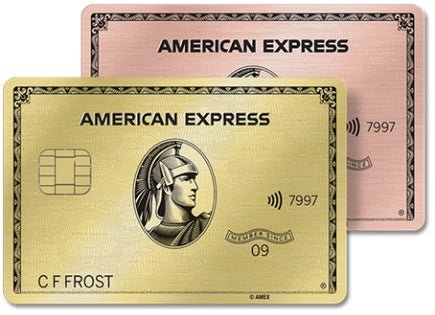
The American Express Gold Card is notably heavy because it is made of metal. While this provides a premium feel, it also means you cannot simply shred it when it expires. You will need to mail it back to American Express for proper disposal.
From a practical standpoint, the metal construction can sometimes be a tight fit in older card readers or thin wallets. However, the card is equipped with contactless technology, allowing you to tap to pay at most modern terminals.
Final Decision Factors
Before making the move, run your numbers for the last three months. Calculate how much you spent on groceries and dining. Multiply that by 4 to see how many points you would have earned.
To see how this card stacks up against your current wallet, use the MoneyAtlas credit card comparison tools. We track current offers and fee structures to help you see the real-world value of these products before you apply.
FAQ
MoneyAtlas Staff
Articles and reviews from the MoneyAtlas editorial team — independent research on credit cards, banking, loans, insurance, and investing.
Related Articles

What the Difference Between American Express Gold and Platinum Is
Wondering what the difference between American Express Gold and Platinum is? Compare annual fees, 4X food rewards, and luxury travel perks to find your fit.

What Is the Difference Between Gold and Platinum American Express?
What is the difference between gold and platinum american express? Compare fees, 4x dining rewards, and luxury travel perks to find your perfect card.

What Is the Fee for American Express Gold Card?
Wondering what is the fee for american express gold card? It's $325 annually. Learn how to offset this cost with over $400 in credits and 4X rewards.