Is American Express Gold Good? A Real Value Breakdown


Introduction
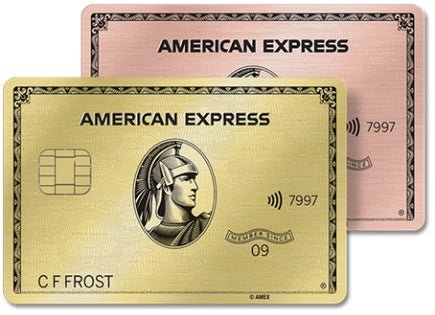
Whether the American Express Gold Card is good depends entirely on two factors: how much you spend on food and how much you enjoy traveling. With a recently increased annual fee of $325, this card has moved into a more premium category that requires a closer look at the numbers. MoneyAtlas evaluates financial products by looking at the practical return on every dollar spent rather than the prestige of the brand. For many households, this card serves as a primary engine for earning travel rewards through daily grocery and dining purchases. For others, the complex structure of monthly credits can feel more like a chore than a benefit. This article examines the rewards structure, the true value of the statement credits, and how the card compares to other top-tier options to determine if it earns a spot in your wallet.
The Math Behind the $325 Annual Fee
The most significant hurdle for any prospective cardholder is the $325 annual fee. In the world of credit cards, fees generally fall into three buckets: no-fee, mid-tier, around $95, and premium, $395 to $695. The American Express Gold Card sits in a unique middle ground. It is more expensive than the average travel card but cheaper than "luxury" cards like the Amex Platinum.
To determine if the card is good for your situation, you must decide if you will get more than $325 in value from it each year. This value comes from two sources: the rewards points you earn on purchases and the statement credits provided by the card.
For a broader framework on weighing annual fees against rewards, read our guide to evaluating credit card annual fees, interest rates, and rewards.
If you are someone who prefers a simple, low-maintenance financial life, a high annual fee might be a deterrent. However, if your spending naturally aligns with the card's bonus categories, the fee can be viewed as a pre-payment for future travel. MoneyAtlas recommends looking at your past three months of bank statements to see exactly how much you spend at restaurants and grocery stores before committing to this fee.
Earning Potential: The Foodie's Powerhouse
The primary reason the American Express Gold Card is often cited as a top-tier choice is its earning rates. It is specifically engineered for "foodies" and heads of households who manage the grocery budget.
4X Points at Restaurants and Supermarkets
The card earns 4 Membership Rewards points per dollar spent at restaurants worldwide. This includes takeout and delivery services in the U.S. The 4X rate is capped at $50,000 in purchases per calendar year. After that, the rate drops to 1X.
The card also earns 4X points at U.S. supermarkets on up to $25,000 in purchases per calendar year. Once you hit that cap, the rate reverts to 1X. For a family spending $800 a month on groceries, that is 38,400 points per year just from the supermarket category.
3X Points on Flights
For travelers, the card offers 3X points on flights booked directly with airlines or through the Amex Travel portal. While this is not as high as the 5X offered by the Amex Platinum, it is still competitive with most mid-tier travel cards.
Other Earning Categories
- 2X points on prepaid car rentals booked through Amex Travel.
- 1X points on all other eligible purchases.
It is important to remember that these points are "Membership Rewards" points. Their value is not fixed. While they can be redeemed for gift cards or statement credits, they are most valuable when transferred to airline and hotel partners.
The Statement Credits: Offsetting the Cost
American Express uses a "coupon book" approach to its premium cards. To get the full value of the Gold Card, you must be willing to track and use several monthly and semi-annual credits. If you use all of them, the total value exceeds $400, which effectively "pays" you to hold the card.
$120 Dining Credit
You can earn up to $10 in statement credits monthly when you pay with the card at participating partners. These include Grubhub, The Cheesecake Factory, Five Guys, Buffalo Wild Wings, and Wonder. This credit does not roll over. If you do not use your $10 in January, it is gone.
$120 Uber Cash
By adding your card to your Uber account, you receive $10 in Uber Cash each month. This can be used for Uber rides in the U.S. or Uber Eats orders. Similar to the dining credit, this is a "use it or lose it" monthly benefit.
$100 Resy Credit
This is a newer benefit that offers up to $100 in statement credits each calendar year for purchases at U.S. Resy restaurants. The credit is split into two $50 chunks: one for the first half of the year, January to June, and one for the second half, July to December.
$84 Dunkin' Credit
Cardholders get up to $7 in monthly statement credits for purchases made at U.S. Dunkin' locations. While this is a smaller amount, it can add up for regular coffee drinkers.
Is the Value Real?
The "effective annual fee" is a term often used to describe the fee minus the credits. If you use all $424 in credits, your effective fee is actually negative. You are gaining roughly $99 in value just by having the card.
However, you must ask if you would have spent that money anyway. If you do not usually use Grubhub or Uber Eats, and you are only doing so to use the credit, you are not truly "saving" money. You are just changing your spending habits to justify a credit card. For someone who already orders delivery twice a month and drinks Dunkin' coffee, the American Express Gold is arguably the best value on the market.
How to Redeem Points for Maximum Value
The question "is American Express Gold good" often turns on how you plan to use the points. Membership Rewards are flexible, but not all redemptions are equal.
Transfer Partners (The Best Value)
The most effective way to use Amex points is by transferring them to travel partners. Common partners include Delta Air Lines, British Airways, Hilton, and Marriott. In many cases, 1,000 Amex points can be turned into 1,000 airline miles. For someone booking an international business class flight, these points can often be worth 2 cents or more per point.
Amex Travel Portal
You can use points to book flights directly through the Amex portal at a rate of 1 cent per point. This is a solid, straightforward option, but it rarely offers the "outsized" value that transfer partners provide.
Statement Credits and Gift Cards (The Worst Value)
Redeeming points for cash back or statement credits usually results in a value of 0.6 cents per point. MoneyAtlas suggests avoiding this redemption method whenever possible, as it cuts the value of your earned rewards nearly in half.
Who Should Consider the American Express Gold?
This card is not a one-size-fits-all product. Based on the rewards structure, it fits a very specific type of consumer.
The Heavy Food Spender
If your household spends more than $15,000 a year on groceries and dining combined, the 4X points will accumulate rapidly. At this level of spending, the points alone often justify the annual fee, even without the credits.
The Suburban Commuter or City Dweller
If you frequently use Uber or Uber Eats, the $120 annual credit is as good as cash. Likewise, if you live near a Dunkin' or a Cheesecake Factory, the credits are easy to trigger.
The Aspiring Traveler
For someone who wants to earn enough points for one or two major trips per year without having to fly every week for work, the "daily spend" categories on the Gold Card are the fastest way to get there.
Who Should Avoid the American Express Gold?
Despite its popularity, there are several reasons why this card might be a poor fit for your finances.
The Low-Maintenance Spender
If you do not want to track four different monthly credits or deal with "use it or lose it" deadlines, the Gold Card will likely frustrate you. You might be better off with a simple 2% cash back card that requires zero management. You can review alternatives in our no annual fee credit card comparison.
The International Traveler Living Abroad
While the card has no foreign transaction fees, rates and fees change, so check current terms. The 4X supermarket bonus is limited to U.S. supermarkets. If you live in London or Tokyo, you will only earn 1X on your groceries, making the card much less valuable.
The Budget-Conscious Shopper
If you shop primarily at Target, Walmart, or Costco, you should be aware that American Express typically does not code these as "supermarkets." You will likely only earn 1X points at these retailers. MoneyAtlas suggests checking how your favorite stores are coded before applying.
Comparison: Amex Gold vs. The Alternatives
To decide if the Gold Card is good, you have to compare it to what else is out there. Browse MoneyAtlas's best credit card rankings to compare annual fees, earning structures, and travel benefits.
Amex Gold vs. Amex Platinum
The Platinum card is a travel tool. It is for people who spend a lot of time in airports and want lounge access and hotel elite status. The Gold card is a daily spending tool. Most people actually earn more points on the Gold card because they spend more on food than they do on flights.
Amex Gold vs. Chase Sapphire Preferred
The Sapphire Preferred is often the biggest competitor. It has a much lower fee of $95. It earns 3X on dining and 3X on online groceries. While its earning rates are lower than the Gold, the fee is significantly easier to justify for a casual spender. Chase points are also generally considered slightly easier to use for beginners. Read our Chase Sapphire Preferred Card review for a closer look at its rewards and travel benefits.
Steps to Decide if You Should Apply
If you are leaning toward the American Express Gold, follow these steps to confirm it is a smart move for your budget.
Steps to Decide if You Should Apply
- 1
Check your grocery and dining spend
Look at your bank statements for the last 90 days. Calculate your average monthly spend at U.S. supermarkets and restaurants. Multiply that by 12 and then by 4 to see how many points you would earn in a year.
- 2
Evaluate the credits
Be honest about your habits. Do you already use Uber or Grubhub? If you don't, will you actually remember to use them every single month? If you only value the credits at 50% of their face value, does the math still work?
- 3
Check your credit score
The American Express Gold typically requires "good to excellent" credit. Most successful applicants have a score in the 670+ range, though many have scores significantly higher. Read MoneyAtlas's American Express approval requirements guide for more on credit scores and eligibility.
- 4
Review the welcome offer
American Express offers vary wildly. You might see offers ranging from 60,000 to 100,000 points. Since Amex has a "once per lifetime" rule for welcome bonuses, it is worth waiting or searching for a higher offer. MoneyAtlas comparison tools can help you see what current offers are available.
Potential Pitfalls: What to Watch Out For
Even a "good" card can become a "bad" financial decision if handled incorrectly.
Interest Rates
Like most rewards cards, the American Express Gold has a high Annual Percentage Rate (APR). If you carry a balance from month to month, the interest charges will quickly wipe out any value you gained from points or credits. This card is only good for those who pay their balance in full every month. For more background, read when credit card interest is charged and how to avoid it.
The "Apply to Know" Feature
American Express often allows you to see if you are approved with no impact on your credit score. However, if you are approved and choose to accept the card, a "hard pull" will occur, which may temporarily lower your score by a few points.
Redemption Complexity
If you want "set it and forget it" rewards, this is not the card for you. To get the 2 cents per point value that enthusiasts talk about, you have to be willing to research airline transfer partners and search for award flight availability.
The Verdict: Is It Good?
The American Express Gold Card is an excellent financial tool for a specific type of person: a U.S. resident who spends heavily on food, pays their bill in full, and knows how to use travel transfer partners.
For the average American family spending $1,000 a month across groceries and dining, the card generates 48,000 points a year. If those points are used for a flight valued at 2 cents per point, that is $960 in value. Subtract the $325 fee, and you are still $635 ahead. When you add the statement credits on top of that, the card becomes one of the most rewarding products on the market.
However, if you shop at big-box stores like Costco or Walmart, or if you find the monthly credit system annoying, the card's value evaporates. In that case, a card with a lower fee or simpler cash back structure would be a better choice.
FAQ
MoneyAtlas Staff
Articles and reviews from the MoneyAtlas editorial team — independent research on credit cards, banking, loans, insurance, and investing.
Related Articles

How to Cancel Your American Express Gold Card
Learn how to cancel American Express Gold card accounts without losing points. Step-by-step guide on chat cancellation, fee refunds, and credit score impact.

Which Is Better American Express Gold or Platinum?
Which is better American Express Gold or Platinum? Compare rewards, fees, and travel perks to find the right card for your lifestyle and spending.

What Is the Limit for American Express Gold Card?
Wondering what is the limit for American Express Gold card? Learn how the No Preset Spending Limit works and how to check your dynamic spending power.