Is American Express Gold Card Worth It? Comparing Value vs. Cost


Introduction
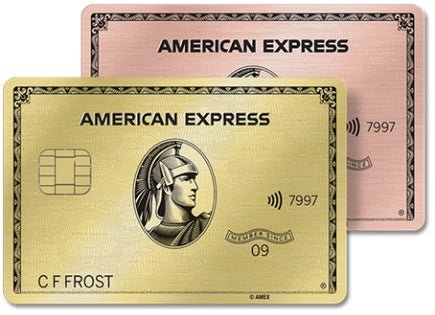
Deciding whether the American Express Gold Card is worth its $325 annual fee depends almost entirely on how much you spend on food and how often you use specific delivery apps. This card occupies a unique middle ground in the premium credit card market. It is more expensive than entry-level travel cards but cheaper than ultra-luxury options. MoneyAtlas helps readers compare these tiers side-by-side to see where the math actually lands for their specific spending habits.
The card is widely considered a powerhouse for earning rewards on groceries and dining, but the high fee requires a clear strategy to offset. We will break down the credits, the point-earning potential, and the logistical hurdles of the monthly "use it or lose it" benefits. This analysis aims to help you determine if the card is a financial asset or an unnecessary expense for your wallet. For a closer look at the card's benefits and earning structure, read our American Express Gold Card review.
The Math of the $325 Annual Fee
The most significant hurdle for any potential cardholder is the $325 annual fee. To determine if the American Express Gold Card is worth it, we must look at the "effective fee." This is the amount you actually pay after subtracting the value of the credits you would have used anyway.
Unlike some cards that offer a single, easy-to-use travel credit, this card provides four distinct credits that are distributed monthly or biannually. If a cardholder uses every dollar of these credits, the total value reaches $424 per year. In that specific scenario, the card effectively pays the user $99 to keep it in their wallet. However, because these credits are fragmented, many people fail to maximize them. For more guidance, see this guide to evaluating credit card annual fees, interest rates, and rewards.
Breaking Down the Annual Credits
The value of this card is heavily weighted toward its statement credits. To understand the real-world value, we need to look at how these credits function in daily life.
The Uber Cash Benefit
Cardholders receive up to $120 in Uber Cash annually, delivered as $10 monthly increments. This can be used for Uber rides in the U.S. or for Uber Eats orders. It is important to note that this credit does not roll over. If you do not use your $10 in January, it disappears on February 1.
The Dining Credit
This is another $120 annual benefit, also split into $10 monthly credits. It is restricted to specific partners. Currently, these include Grubhub, The Cheesecake Factory, Five Guys, Buffalo Wild Wings, and Wonder. Just like the Uber benefit, this is a monthly "use it or lose it" perk.
The Resy Credit
A more recent addition to the card is the $100 Resy credit. This is split into two $50 installments: one for the first half of the year and one for the second half. It applies to purchases made at U.S. restaurants that participate in the Resy platform. While you do not always need a reservation to use it, the restaurant must be on the Resy list for the credit to trigger.
The Dunkin' Credit
The card also offers up to $84 in annual Dunkin' credits, delivered as $7 per month. For those who grab a coffee or breakfast once a month, this is a simple way to claw back value. For those who live in regions without Dunkin' locations, this credit effectively has zero value.
Earning Points: The "Foodie" Favorite
Beyond the credits, the primary reason to carry the American Express Gold Card is its earning structure. It is designed for households that spend heavily on food, whether cooking at home or eating out. Readers comparing rewards structures can browse the best credit card rankings.
- 4% back at Restaurants: You earn 4 points per dollar on dining at restaurants worldwide. This now applies to up to $50,000 in annual spending, after which it drops to 1%.
- 4% back at U.S. Supermarkets: This is one of the highest rates available for grocery shopping. It applies to the first $25,000 in annual spending, then drops to 1%.
- 3% back on Flights: For travel, you earn 3 points per dollar on flights booked directly with airlines or through the American Express travel portal.
- 2% back on Prepaid Car Rentals: This applies to bookings made through the brand's travel site.
- 1% back on everything else: Standard spending outside of the bonus categories earns the baseline rate.
The Welcome Offer and Its Impact
For many, the initial decision to get the card is driven by the welcome bonus. These offers vary, but they often range from 60,000 to 100,000 points after meeting a specific spending requirement within the first 6 months.
When evaluating the welcome offer, it is vital to consider the "opportunity cost." For example, if the requirement is to spend $6,000 in 6 months, you must ensure this fits your natural budget. Points are generally valued at roughly 1 cent to 2 cents each when transferred to travel partners, meaning a 60,000-point bonus could be worth $600 to $1,200 in travel value. MoneyAtlas provides comparison tools to see how this welcome offer stacks up against other premium cards in the same category.
Membership Rewards: How to Use the Points
The American Express Gold Card earns Membership Rewards (MR) points. These are "transferable" points, which are generally more valuable than "fixed-value" points used for cash back.
To get the most value, cardholders usually transfer points to airline or hotel partners like Delta, British Airways, or Hilton. When used this way, points can often exceed 2 cents in value. If you prefer to use points for statement credits or gift cards, the value often drops below 1 cent per point. For someone who wants simple cash back, a card with no annual fee and a flat 2% cash-back rate may be a better financial choice. Compare those alternatives through MoneyAtlas's cash back credit card rankings.
Who the Card Is Best For
In our editorial judgment, this card serves a specific profile exceptionally well. It is not a "catch-all" card for every consumer.
The Urban Professional
If you live in a city where you frequently use Uber for transport and Grubhub for dinner, the $240 in combined credits feels like cash. If you already spend $20 a month on these services, the effective fee of the card drops from $325 to $85 before you even count the Resy or Dunkin' perks.
The Large Family
For a family spending $1,500 a month on groceries, the 4% earn rate is massive. At $18,000 in annual grocery spending, you would earn 72,000 points. At a conservative 1.5 cent valuation, that is $1,080 in value from groceries alone. This easily covers the annual fee, even if the family ignores the monthly credits.
The Strategic Traveler
The card is an excellent "companion" card. Many people pair it with the American Express Platinum Card. They use the Platinum for travel bookings and lounge access, while using the Gold for all food-related spending to maximize point accumulation. Compare premium travel benefits through the American Express Platinum Card review.
When the Card Is Not Worth It
There are several scenarios where the American Express Gold Card becomes a "money-loser." It is important to be honest about your habits before applying.
1. You Live in a Rural Area
If there are no Uber drivers, no Resy-partnered restaurants, and no Dunkin' locations nearby, you are essentially paying $325 for a card where the credits are unusable. You would have to spend over $8,000 on groceries just to earn enough points to break even on the fee.
2. You Prefer Cash Back
American Express Membership Rewards are built for travel. If you try to redeem them for a check in the mail or a statement credit, you will likely get a poor conversion rate. A card like the Capital One SavorOne, which offers 3% cash back on dining and groceries for no annual fee, would be a better choice for cash-back enthusiasts. Those seeking simpler rewards can compare no-annual-fee credit cards.
3. You Struggle with Monthly Tracking
The credits on this card require management. You must enroll in the benefits through the app or website. You must remember to use the Uber Cash before the end of the month. You must check if your favorite local spot is a "participating merchant" for the dining credit. If this feels like a chore, you will likely leave money on the table.
Step-by-Step: How to Calculate Your Personal Value
Before applying, follow these steps to see if the math works for you.
How to Calculate Your Personal Value
- 1
Calculate your annual food spend
Add up your average monthly grocery and dining bills and multiply by 12.
- 2
Estimate your points
Multiply that annual spend by 4.
Then multiply that total by 0.015 (a middle-ground point valuation).
- 3
Evaluate the credits
Look at the Uber, Dining, Resy, and Dunkin' perks.
Be honest about which ones you would use without changing your behavior.
Add their value together.
- 4
Do the final math
Add the point value from Step 2 to the credit value from Step 3. If the total is significantly higher than $325, the card is likely worth it.
Comparing the Gold Card to Alternatives
When deciding if the American Express Gold Card is worth it, we should compare it to its closest rivals. Readers can also review MoneyAtlas's credit card reviews index for additional product comparisons.
Amex Gold vs. Chase Sapphire Preferred
The Chase Sapphire Preferred has a much lower annual fee (currently $95). It offers 3% on dining and 2% on travel. While it earns fewer points on groceries, the lower fee makes it easier for casual spenders to turn a "profit" on the card. Chase points are also generally easier to use for beginners. Read the Chase Sapphire Preferred Card review for a closer comparison.
Amex Gold vs. Capital One SavorOne
For those who want the high earning rates without the high fee, the SavorOne offers 3% back on dining and groceries for $0 annual fee. While 3% is lower than 4%, the lack of an annual fee means every penny earned is pure profit.
Amex Gold vs. Amex Platinum
The Platinum card has a much higher fee ($695) and focuses on luxury travel perks like airport lounge access and hotel elite status. It only earns 1% on groceries and dining. Most users find that the Gold card is a better "daily driver," while the Platinum is a "travel tool." To compare additional travel-focused options, browse the best travel credit cards.
Maximizing the Value: Practical Tips
If you decide to move forward with the card, there are ways to ensure you get the maximum return on your $325.
Link Your Accounts Immediately
The Uber Cash benefit requires you to add your Gold Card to the Uber app as a payment method. The dining and Dunkin' credits often require "enrollment" in the American Express app. Do this on day one, or you might miss your first month of credits.
Use the "Pickup" Strategy
If you want to use the $10 Uber Eats or Grubhub credit without paying delivery fees and tips that eat into the value, use the "pickup" option. Ordering a $12 sandwich for pickup and paying $2 out of pocket is a more efficient use of the credit than paying $25 for the same sandwich to be delivered.
Watch the Supermarket Categories
Check for "Amex Offers"
Beyond the standard credits, the card gives access to "Amex Offers." These are targeted discounts, such as "Spend $50 at a specific retailer, get $10 back." Checking these once a week can lead to an extra $100 to $200 in savings per year, further justifying the annual fee.
The Bottom Line
The American Express Gold Card is worth it for high-spending households that can naturally integrate the monthly Uber and dining credits into their lifestyle. It is one of the most effective tools for earning travel rewards on everyday expenses. However, for those who do not live near participating merchants or prefer the simplicity of cash back, the $325 fee will likely outweigh the benefits.
FAQ
MoneyAtlas Staff
Articles and reviews from the MoneyAtlas editorial team — independent research on credit cards, banking, loans, insurance, and investing.
Related Articles

How Much Is the American Express Gold Card Limit?
Wondering how much American Express Gold Card limit you can get? Learn how its no preset spending limit works and how to grow your purchasing power.

How Good Is the American Express Gold Card?
Wondering how good is the American Express Gold Card? Learn how the 4x food rewards and $424 in credits can outweigh the $325 fee in our expert review.

How to Get the Gold American Express Card: Requirements and Steps
Learn how to get the Gold American Express Card with our guide on credit scores, income requirements, and how to apply without hurting your credit.