Is American Express Gold Card Good


Introduction
Deciding if the American Express Gold Card is a smart addition to a wallet usually comes down to a single calculation: do the rewards on food and travel outweigh the $325 annual fee? This card occupies a unique middle ground in the premium card market. It is more expensive than entry level travel cards but less costly than ultra premium options that include airport lounge access.
MoneyAtlas evaluates hundreds of financial products to help consumers determine which tools actually serve their spending habits. This review breaks down the earning rates, the monthly statement credits, and the redemption options for the American Express Gold Card. The card is often called the gold standard for foodies because of its high rewards at supermarkets and restaurants. However, for those who do not use delivery apps or specific dining partners, the math may not lean in their favor.
The Cost of Entry: Understanding the Annual Fee
The first hurdle for any potential cardholder is the $325 annual fee. Unlike many basic cards that charge $0 or $95, this card requires a significant upfront investment. To determine if the American Express Gold Card is good for a specific budget, it is necessary to look at the "effective" annual fee. This is the amount left over after subtracting the value of the credits that a person would have used anyway.
If a cardholder utilizes every credit provided, they receive up to $424 in annual value. In this scenario, the card essentially pays the user to keep it in their wallet. However, if those credits go unused, the $325 fee becomes a straight cost. For a broader framework, review this guide to evaluating credit card annual fees, interest rates, and rewards. The value of this card depends heavily on a person’s willingness to manage monthly "coupons" that expire if not used.
Earning Rewards on Everyday Spending
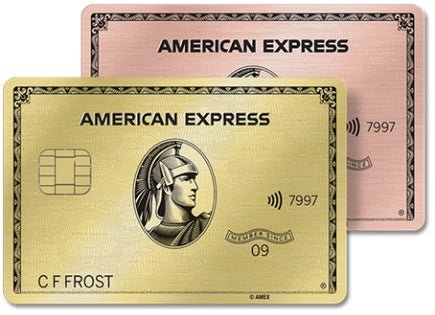
The primary appeal of the American Express Gold Card is its earning structure. It targets the two largest non-housing expenses for many Americans: groceries and dining out.
High Stakes for Foodies
The card earns 4 points per $1 spent at restaurants worldwide. This includes takeout and delivery in the U.S. This rate applies to the first $50,000 in purchases per calendar year. After that, the rate drops to 1x. For someone who spends $1,000 a month on dining, this results in 48,000 Membership Rewards points annually.
U.S. Supermarket Earnings
Cardholders also earn 4 points per $1 spent at U.S. supermarkets. This is capped at $25,000 in purchases per calendar year. Once that limit is reached, the earning rate reverts to 1x. It is important to note that "supermarkets" typically excludes "superstores" like Walmart or Target and warehouse clubs like Costco.
Travel Rewards
While food is the main focus, the card also provides rewards for travelers:
- 3 points per $1 on flights booked directly with airlines or through the travel portal.
- 2 points per $1 on prepaid car rentals booked through the travel portal.
- 1 point per $1 on all other eligible purchases.
- 5 points per $1 on prepaid hotels booked through the travel portal or app.
Readers comparing premium rewards products can also browse the best credit cards to compare annual fees, earning structures, and travel benefits.
Navigating the Statement Credits
One reason people ask if the American Express Gold Card is good is the complexity of its credits. To offset the fee, a cardholder must navigate several different monthly and semi-annual "use it or lose it" benefits.
Uber Cash
Cardholders receive up to $120 in annual Uber Cash, distributed as $10 per month. This can be used for Uber rides or Uber Eats orders in the U.S. The credit does not roll over to the next month. If it is not used by the last day of the month, the $10 vanishes.
The Dining Credit
There is an additional $120 annual dining credit, also split into $10 monthly increments. This credit is only valid at specific partners. Current partners include:
- Grubhub
- The Cheesecake Factory
- Five Guys
- Buffalo Wild Wings
- Wonder
Enrollment is required through the American Express account dashboard. Like the Uber Cash, this credit resets every month.
Resy Credit
The card includes up to $100 in annual Resy credits. This is split into two $50 credits. One is available from January through June, and the second is available from July through December. This credit applies to purchases at U.S. restaurants that are part of the Resy platform.
Dunkin' Credit
The most recent addition to the card is an $84 annual Dunkin' credit. This is delivered as a $7 monthly statement credit for purchases made at U.S. Dunkin' locations. For regular coffee drinkers, this is an easy win, but for those who do not live near a Dunkin', it adds little value.
What Are Membership Rewards Points Worth?
Earning points is only half the battle. Determining if the card is good requires understanding the value of American Express Membership Rewards points. These points are flexible, but their value fluctuates wildly based on how they are used.
The Best Value: Travel Transfers
The highest potential value comes from transferring points to airline and hotel partners. American Express has over 20 partners, including Delta Air Lines, British Airways, Hilton, and Marriott. When transferred to an airline partner to book international business class or high-demand domestic flights, points can often be worth 2 cents or more.
Mid-Range Value: Travel Portal
Booking flights through the travel portal typically yields a fixed value of 1 cent per point. This is a straightforward way to use points without worrying about blackout dates or transfer ratios. However, using points for hotels or car rentals through the portal usually results in a lower value, often around 0.7 cents per point.
The Worst Value: Cash Back and Gift Cards
Redeeming Membership Rewards points for a statement credit, or cash back, is generally a poor financial move. The value is usually 0.6 cents per point. This means 10,000 points would only be worth $60. In comparison, a dedicated cash back card might offer $100 or more for the same level of spending. Gift card redemptions vary but usually fall between 0.7 cents and 1 cent per point.
If cash back is the preferred reward, compare cash back credit cards before choosing a premium points card.
Comparing the Amex Gold to Other Options
To understand if the American Express Gold Card is good for a specific situation, it helps to look at how it compares to other popular cards.
For someone who wants a simple rewards structure without an annual fee, a 2% cash back card might be a better fit. For a traveler who wants airport lounge access and a higher travel credit, a premium travel card may be more appropriate. MoneyAtlas provides comparison tools to see these cards side by side based on actual spending patterns.
Potential Drawbacks and Considerations
While the rewards are high, there are several reasons why the American Express Gold Card might not be the right choice for everyone.
The "Coupon Book" Effect
Managing the four different credits requires effort. A cardholder must remember to order through Grubhub, use Uber, visit a Resy restaurant, and stop at Dunkin' every month to get the full value. For people who prefer a "set it and forget it" financial life, this can feel like a chore.
Acceptance Issues
While American Express is widely accepted in the U.S., it still lags behind Visa and Mastercard in some international locations. For a card that markets itself as a travel companion with no foreign transaction fees, this can be a limitation. It is often necessary to carry a backup Visa or Mastercard when traveling abroad.
Credit Score Requirements
This card generally requires good to excellent credit. This typically means a score in the 670 to 850 range. While American Express has an "Apply with Confidence" feature that allows applicants to see if they are approved without a hard credit pull, the final approval will eventually involve a credit check that may impact a score. Read this guide to American Express approval requirements for more information about credit scores and eligibility.
High APR
Like most rewards cards, the American Express Gold Card is not designed for carrying a balance. The Annual Percentage Rate on the "Pay Over Time" feature can be quite high, often exceeding 20% to 25% depending on creditworthiness. Paying the balance in full every month is necessary to avoid interest charges that would quickly wipe out the value of any rewards earned.
For more information about avoiding interest charges, read when credit card interest is charged.
Who Should Get the American Express Gold Card?
Editorial analysis suggests this card is most beneficial for a specific type of consumer.
The card is likely a good fit if:
- Spending at U.S. supermarkets exceeds $500 per month.
- Dining out or ordering delivery is a frequent habit.
- Uber or Uber Eats is already a regular expense.
- Transferring points to airlines for maximum value is an interest.
- Monthly management of statement credits is not a burden.
The card is likely a poor fit if:
- Most grocery shopping is done at Walmart, Target, or Costco.
- A "no-fee" or "low-fee" card is preferred.
- Cash back is the preferred reward over travel points.
- Living in an area where Dunkin' or Resy restaurants are unavailable.
Readers who prefer to avoid annual fees can compare no annual fee credit cards with premium rewards options.
How to Maximize the Welcome Offer
The welcome offer is often the most valuable part of the first year of membership. Currently, eligible new cardholders can earn a significant amount of Membership Rewards points after spending a specific amount, such as $8,000, on eligible purchases within the first 6 months.
This bonus can be worth $1,000 or more when transferred to travel partners. However, it is vital to only spend what was already planned. Overspending just to hit a bonus requirement can lead to debt and interest charges. Checking current offers through MoneyAtlas is a good way to see the most recent available bonuses, as these change frequently.
Step-by-Step: How to Evaluate the Card for Your Budget
How to Evaluate the Card for Your Budget
- 1
Calculate annual food spend
Add up the last 12 months of grocery and restaurant spending. Multiply the total by 4 to see how many points would have been earned.
- 2
Assign a value to the credits
Look at the Uber, Dining, Resy, and Dunkin' credits, and only count the value of the credits that would have been used anyway without the card. If the total is less than $325, the card has a net cost.
- 3
Determine redemption style
Decide if transferring points to airlines is a realistic goal. If the plan is only to use points for cash back, a different card is almost certainly a better financial choice.
- 4
Check for targeted offers
American Express often has different welcome offers for different people. Using comparison tools can help find the highest available bonus.
Understanding the Fine Print: Fees and Protections
Beyond the annual fee, the card has other terms that matter for a complete financial picture.
No Foreign Transaction Fees
This is a key feature for travelers. Many cards charge a 3% fee on every purchase made outside the U.S. On a $3,000 international trip, this saves $90.
Travel and Purchase Protections
The card includes several built-in protections that can provide peace of mind:
- Baggage Insurance Plan: Can cover lost, damaged, or stolen baggage when the entire fare is paid with the card.
- Car Rental Loss and Damage Insurance: Provides secondary coverage for theft or damage to most rental vehicles.
- Purchase Protection: Can protect eligible purchases against accidental damage or theft for up to 90 days from the purchase date.
- Extended Warranty: Can add an extra year to a manufacturer's warranty on eligible items.
No Preset Spending Limit
Unlike a traditional credit card with a hard "credit limit," the American Express Gold Card has no preset spending limit. This does not mean unlimited spending. The amount a person can spend adjusts based on their use of the card, payment history, credit record, and financial resources.
Final Decision: Is It Good?
The American Express Gold Card is "good" if it fits a specific lifestyle. It is a niche product designed for a person who views food as a major category of both spending and enjoyment. If the points are used for high-value travel transfers, the return on spending can be 8% or higher.
If a household spends the national average on groceries and dining and uses at least two of the monthly credits, they will likely come out ahead. For everyone else, there are simpler, cheaper cards that provide competitive rewards without the high-maintenance fee structure. MoneyAtlas makes it easier to compare credit card options side by side to see which one fits a specific wallet.
FAQ
MoneyAtlas Staff
Articles and reviews from the MoneyAtlas editorial team — independent research on credit cards, banking, loans, insurance, and investing.
Related Articles

How to Cancel Your American Express Gold Card
Learn how to cancel American Express Gold card accounts without losing points. Step-by-step guide on chat cancellation, fee refunds, and credit score impact.

Which Is Better American Express Gold or Platinum?
Which is better American Express Gold or Platinum? Compare rewards, fees, and travel perks to find the right card for your lifestyle and spending.

What Is the Limit for American Express Gold Card?
Wondering what is the limit for American Express Gold card? Learn how the No Preset Spending Limit works and how to check your dynamic spending power.