Is American Express Gold a Good Card for Your Spending Habits?


Introduction
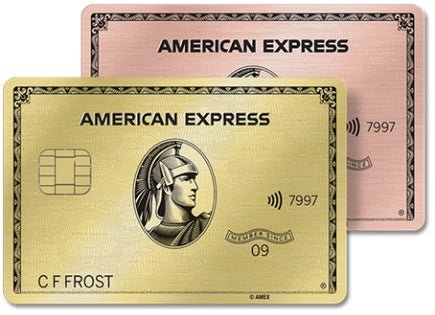
Deciding whether the American Express Gold Card is a good choice for your wallet usually comes down to two specific areas of your budget: how much you spend at the grocery store and how often you eat out. With a $325 annual fee, this is not a low-cost entry-level card. It sits in a middle ground between basic rewards cards and ultra-premium luxury cards like the American Express Platinum.
MoneyAtlas looks at the actual value provided by the card's rewards structure and its list of monthly statement credits. Whether the card is a smart financial move depends on your ability to use those credits to offset the fee and your appetite for earning Membership Rewards points. This article breaks down the fees, the points math, and the specific types of cardholders who benefit most from this premium metal card.
Understanding the $325 Annual Fee
The first hurdle for any potential cardholder is the annual fee. American Express currently charges $325 per year for the Gold Card, which is a significant commitment. Unlike some cards that waive the fee for the first year, this charge typically appears on your first billing statement.
To determine if the card is good for you, it is helpful to view the fee through the lens of effective cost. The effective cost is the annual fee minus the value of the credits you were already going to spend money on anyway. If you already spend $10 a month on Uber and $10 a month on Grubhub, you are already spending $240 per year on those services. In that specific case, the effective cost of the card drops to $85.
However, if you have to change your behavior to use the credits, you are not truly saving money. Spending money just to "use up" a credit is a common trap that can make a premium card more expensive than it appears. For more guidance, read our guide to evaluating credit card annual fees, interest rates, and rewards.
Earning Points: The Food and Travel Powerhouse
The primary reason to carry this card is its earning potential on food. It is widely considered one of the strongest cards on the market for dining and groceries.
Restaurants and Dining
The card earns 4x Membership Rewards points per $1 spent at restaurants worldwide. This includes takeout and delivery services in the US. This rate applies on up to $50,000 in purchases per calendar year. After you hit that limit, the earning rate drops to 1x point per $1 for the rest of the year.
US Supermarkets
For those who cook at home, the card offers 4x points at US supermarkets. This is capped at $25,000 in purchases per calendar year. Once that cap is reached, the rate reverts to 1x point per $1. Note that this category specifically applies to supermarkets, which often excludes "big box" stores like Walmart or Target and wholesale clubs like Costco.
Travel and Other Purchases
The card also functions as a travel rewards tool, though it is less robust than some dedicated travel cards.
- 3x points on flights booked directly with airlines or through the American Express travel portal.
- 2x points on prepaid car rentals and other eligible travel booked through the portal.
- 1x point per $1 on all other eligible purchases.
Navigating the Statement Credits
The Gold Card is often described as a "coupon book" card because much of its value is tied to monthly or semi-annual credits. To get the full value, you must enroll in these benefits through your online account.
Uber Cash
Cardholders receive $10 in Uber Cash each month, totaling up to $120 per year. This can be used for Uber rides or Uber Eats orders in the US. To receive this, you must add your Gold Card as a payment method in the Uber app.
Dining Credit
You can earn up to $10 in statement credits monthly when you pay with your card at participating partners. These currently include Grubhub, The Cheesecake Factory, Five Guys, Buffalo Wild Wings, and Wonder. This adds up to another $120 per year.
Resy Credit
A newer addition to the card is the Resy credit. You can receive up to $100 in statement credits each calendar year for eligible purchases at US Resy restaurants. This is broken down into two $50 credits, one for each half of the year.
Dunkin' Credit
For the coffee drinkers, the card offers up to $7 in monthly statement credits at US Dunkin' locations. This totals up to $84 per year.
The Value of Membership Rewards Points
Points are only as good as what you can buy with them. Membership Rewards points are flexible, but their value varies wildly based on how you redeem them.
Transfer Partners (High Value)
The most lucrative way to use points is by transferring them to airline or hotel partners. American Express has over 20 partners, including Delta, British Airways, Hilton, and Marriott. When you transfer points to an airline for a high value international flight, you might get 2 cents or more in value per point.
Travel Portal (Moderate Value)
Booking flights through the American Express travel portal usually gives you a value of 1 cent per point. This is a simple, no-fuss way to use points, but it rarely offers the best "bang for your buck."
Statement Credits and Gift Cards (Low Value)
Using points to cover your card balance, often called "Pay with Points," usually yields only 0.6 cents per point. We generally advise against this redemption method because it cuts the potential value of your rewards nearly in half.
Who Should Consider the American Express Gold Card?
This card is not a universal fit. Based on its structure, it is most beneficial for specific types of consumers.
The Dedicated Foodie
If a large portion of your monthly budget goes toward supermarket trips and dining out, the 4x multiplier is hard to beat. For someone spending $15,000 a year on these categories combined, the 60,000 points earned could easily fund a round-trip domestic flight or contribute significantly to an international business class seat.
The Urban Commuter or Delivery User
People who already use Uber and Grubhub multiple times a month will find it very easy to "zero out" the annual fee. If these services are already part of your lifestyle, the credits feel like found money rather than a chore.
The Strategic Traveler
The Gold Card is a popular component of what many call the "Amex Trifecta." By pairing this card with the Platinum card, for travel perks, and a business card for general spending, cardholders can maximize point earnings across every category of their lives. See our American Express Gold Card review for a closer look at the card's rewards and benefits.
Who Should Skip the American Express Gold Card?
There are several scenarios where this card becomes a financial burden rather than a benefit.
The Occasional Spender
If you live alone and spend very little on groceries or rarely eat out, the 4x earning rate won't generate enough points to justify a $325 fee. A no-annual-fee credit card comparison might offer a simpler alternative.
People Focused on Chase 5/24
In the world of credit card rewards, Chase has a "5/24 rule." This means they will generally not approve you for a new card if you have opened five or more personal credit cards from any issuer in the last 24 months. If you are planning to build a collection of Chase cards, you may want to secure those before adding the Amex Gold to your wallet.
International Residents or Frequent Expats
While the card has no foreign transaction fees, many of its best features are US-centric. The 4x earning rate at supermarkets is limited to US supermarkets. The Uber, Dining, Resy, and Dunkin' credits are also generally limited to US-based transactions. If you spend most of your time abroad, the card loses most of its "offsetting" value.
Comparing Your Options
When deciding if the Amex Gold is a good card, it helps to look at its closest competitors.
The Chase Sapphire Preferred has a much lower fee of $95, but its earning rates are lower. For some, the lower barrier to entry makes the Chase card a better "starter" travel card. MoneyAtlas provides comparison tools to help you look at these cards side-by-side based on your actual monthly spending. You can also read the Chase Sapphire Preferred Card review.
How to Evaluate the Decision
To decide if the card is good for your specific situation, follow these steps:
How to Evaluate the Decision
- 1
Audit your spending
Look at your bank statements for the last three months. Calculate your average monthly spend on groceries and dining. Multiply that by 12 to see your annual total.
- 2
Do the math on credits
Be honest about the credits. If you don't like Dunkin' or don't have one nearby, the $84 credit is worth $0 to you. Calculate the total value of the credits you will actually use.
- 3
Calculate the "Break-even" point
Subtract your usable credit value from the $325 fee. Then, see how many points you need to earn to cover that remaining cost. If your points value exceeds the remaining fee, the card is likely a good fit.
Conclusion
The American Express Gold Card is one of the most polarizing cards on the market. For some, it is a "keeper" card that pays for itself several times over through heavy grocery and restaurant spending. For others, it is an expensive "coupon book" that creates a monthly chore of tracking credits.
If you spend at least $5,000 to $7,000 annually on food and can use the Uber and Dining credits, the card is one of the most rewarding options available. However, if you prefer simplicity and a lower annual fee, you may find better value elsewhere. To see how this card stacks up against other high-earning rewards cards, use the best credit cards comparison on MoneyAtlas.
FAQ
MoneyAtlas Staff
Articles and reviews from the MoneyAtlas editorial team — independent research on credit cards, banking, loans, insurance, and investing.
Related Articles

Which Card Is Better: American Express Gold or Platinum?
Deciding which card is better: American Express Gold or Platinum? Compare fees, 4X dining rewards, and luxury travel perks to find your perfect match.

Should I Get an American Express Gold Card? Breaking Down the Value
Should I get an American Express Gold card? Explore the 4X rewards on dining and groceries vs. the $325 fee to see if this premium card fits your budget.

How to Get the American Express Gold Card: A Practical Guide
Learn how to get the American Express Gold Card with our guide on credit score requirements, income, and the 'Apply with Confidence' tool. Apply today!