
Chase Slate®
A clean slate for paying down existing card balances
Updated October 20, 2026 · By the MoneyAtlas Editorial Team
Pros
21 months at 0% APR: One of the longest interest-free windows on any card
No annual fee: Every dollar goes toward paying down your balance,
Auto credit line reviews every 6 months: Utilization improves passively, helping your credit score as you pay down debt
Cons
Zero rewards: Every purchase earns nothing, no cash back or points
5% balance transfer fee: A $10,000 transfer adds $500 to what you owe on day one
3% foreign transaction fee: Leave it at home when you travel abroad
A long 0% window and nothing else
Twenty-one months at 0% on purchases and balance transfers, no annual fee and no rewards. Worth it only with a payoff plan.
There are no rewards at all. Not a reduced rate, not a flat 1%: zero cash back, points or miles on every purchase you make. That is the deliberate trade for the long interest-free window, but it still scores at the bottom of the category.
No annual fee, which is what makes the math work. A balance transfer card exists to save you interest, and a yearly charge would eat straight into that saving. Nothing to earn back before you come out ahead.
Purchase protection, extended warranty, secondary rental coverage and free Credit Journey scores are more than a no-fee card usually carries. The 3% foreign transaction fee and the 5% balance transfer fee are what hold this down.
Nothing to activate, no rotating categories, no caps to track. Move the balance, set a monthly payment and clear it before month 21. The only date that matters is the one you put in your calendar.
The Chase Slate® isn't trying to dazzle you with points, miles, or a flashy welcome bonus. It does one thing, and it does it exceptionally well: it gives you time to pay off debt without interest eating into every payment.
With a 0% intro APR for 21 months (18.24% - 28.24% variable APR after) on both purchases and balance transfers, and no annual fee, the Slate offers one of the longest interest-free runways available on any credit card right now. For anyone carrying a balance on a high-interest card or planning a large purchase, they need time to pay down; that 21-month window can translate into hundreds or even thousands of dollars in saved interest.
It's a purpose-built card, not an everyday rewards earner. And for the right person, that focus is exactly what makes it valuable.
What the Chase Slate® Offers Right Now
- 0% intro APR for 21 months (18.24% - 28.24% variable APR after) from account opening on both purchases and balance transfers
- Balance transfer fee: Either $5 or 5% of the amount of each transfer, whichever is greater
- No annual fee
- No rewards program
- No welcome bonus
The card also includes automatic credit line increase reviews every six months, purchase protection, extended warranty coverage, and secondary auto rental collision damage waiver.
Why This Card Stands Out
21 Months Is an Exceptionally Long Interest-Free Window
Most balance transfer cards offer 12 to 15 months at 0% APR. The Chase Slate® gives you 21. That distinction matters more than it might seem on paper.
Consider a real scenario: if you're carrying $5,000 in credit card debt at 25% APR and making $250 monthly payments, you'd pay roughly $1,535 in interest over 27 months before the balance is cleared. Transfer that same balance to the Slate, and even after paying the balance transfer fee (5% = $250), you'd save approximately $1,285 in interest and be debt-free faster because every dollar goes toward principal rather than interest charges.
The 21-month window also applies to new purchases, which is uncommon. Many balance transfer cards offer an introductory rate on transfers but charge regular APR on new purchases from day one. The Slate treats both the same, giving you flexibility to use the card for planned expenses, a home repair, a medical bill, or an appliance replacement, without worrying about interest accruing while you pay it down.
No Annual Fee Keeps the Math Simple
There's no annual cost to hold this card. That matters for a balance transfer card because the entire value proposition is about saving money. An annual fee would cut into the interest savings that are the whole reason to apply. The Slate doesn't create that friction.
Automatic Credit Line Reviews
Chase automatically reviews Slate cardholders' credit lines for an increase every six months. For people using this card to build or rebuild credit, that's a meaningful benefit. A higher credit limit improves your credit utilization ratio (the percentage of available credit you're using), which is one of the most influential factors in your credit score. You don't have to request the review or trigger a hard inquiry.
Protections You Might Not Expect
For a no-frills card, the Slate includes a surprisingly solid set of protections:
Purchase protection covers eligible new purchases for 120 days against damage or theft, up to $500 per item. This is the same coverage offered on Chase's rewards cards.
Extended warranty adds an extra year to the manufacturer's U.S. warranty on eligible products with warranties of three years or less.
Auto rental collision damage waiver provides secondary coverage (primary outside the U.S.) when you decline the rental company's insurance and charge the rental to your Slate card.
Zero liability protection ensures you won't be held responsible for unauthorized charges.
Chase Credit Journey gives you free access to your credit score, personalized score improvement plans from Experian™, and identity-monitoring alerts, all useful tools for anyone actively working on their credit health.
These aren't headline features, but they add real value to a card that costs nothing to hold.
DashPass
Slate cardholders can activate a six-month complimentary DashPass membership (through December 31, 2027), which provides $0 delivery fees and reduced service fees on eligible DoorDash and Caviar orders. DashPass members also get up to $10 off on non-restaurant DoorDash orders each quarter. It's a small perk, but a welcome one on a card that otherwise doesn't offer ongoing benefits.
Where the Card Falls Short
No Rewards
The Slate earns zero cash back, points, or miles on any purchase. Every dollar you spend earns nothing beyond the transaction itself. For everyday spending after you've paid down your balance, this card offers no ongoing value. Once the 0% intro period ends, there's very little reason to keep using the Slate as your primary card. You'd be better served switching your daily spending to a rewards card like the Chase Freedom Unlimited® (1.5% cash back on everything) or Chase Freedom Flex® (up to 5% in rotating categories).
No Welcome Bonus
Unlike the Freedom cards ($200 bonus) or the Sapphire Preferred (75,000 points), the Slate offers no sign-up bonus. The card's value is entirely in the interest you don't pay, not in any upfront reward. That's the correct trade-off for a balance transfer card, but it's worth understanding before you go in.
Balance Transfer Fee
At 5% of the transfer amount (or $5, whichever is greater), the card's balance transfer fee is slightly higher than the 3% charged by some competitors. On a $10,000 balance transfer, that's a $500 fee. It's still dramatically less than the interest you'd pay at 20%+ APR, but it's not free. Run the numbers on your specific balance to confirm the savings justify the fee.
The older version of the Chase Slate was once known for having no balance transfer fee. But even with the 5% fee, the 21-month 0% window typically makes the math work in your favor for balances of almost any size.
Foreign Transaction Fees
The Slate charges 3% on purchases made outside the United States. This isn't the card to bring abroad. For international spending, pair it with a card that waives foreign transaction fees.
Post-Promo APR
Once the 21-month introductory period ends, the variable APR of 18.24%–28.24% is standard for the market but not particularly competitive. If you haven't paid off your balance by the time the promo expires, you'll start accruing interest at rates that can undo months of progress. The Slate works best when you treat the 21-month window as a hard deadline, not an open-ended arrangement.
How to Get the Most Out of the Chase Slate®
The Slate is most effective when used with a clear payoff plan:
Calculate your monthly payment target. Divide your total balance (including the transfer fee) by 21 months. That's the minimum you should aim to pay each month to clear the balance before the intro rate expires. For a $5,000 transfer with a $250 fee, that's roughly $250 per month.
Avoid adding new debt. The 0% rate on purchases is appealing, but adding new spending to a card you're trying to pay down can extend your timeline and create a cycle that's hard to break. Use a separate card for daily spending and keep the Slate focused on debt repayment.
Set a calendar reminder for month 19 or 20. Give yourself a buffer before the 21-month window closes. If you still have a remaining balance, you'll want to explore your options, whether that's accelerating payments, transferring the remainder to another 0% card, or preparing for the ongoing APR.
Use the automatic credit line reviews to your advantage. As your balance decreases and your credit line potentially increases, your utilization ratio improves. This can boost your credit score over the payoff period, putting you in a better position to qualify for rewards cards once you're debt-free.
If you have never moved a balance before, read how a balance transfer works first. The Slate adds a few rules of its own, and the steps below come from the card's current pricing and terms.
How to transfer a balance to the Chase Slate
- 1
Check what you can move
Chase caps the total you can transfer, fees included, at your available credit or $15,000, whichever is lower. It also won't process a transfer from another Chase account or loan, so a balance on a Freedom or Sapphire card can't move to the Slate. Debt on other issuers' cards can.
- 2
Request the transfer
List the accounts you want paid off on the application itself, or ask after approval through your online account or by phone. Have each old card's account number and the exact amount ready. Chase works through requests in the order you list them, so put the highest-rate balance first.
- 3
Budget for the fee
Each transfer costs $5 or 5% of the amount, whichever is greater, and the fee is added to the balance you owe. Moving $6,000 means you start at $6,300.
- 4
Keep paying the old card until it clears
Chase says account setup and processing can take up to three weeks. Until the old issuer shows the payment, keep making at least the minimum there so you don't pick up a late fee.
- 5
Set a payment that beats the deadline
Divide the balance, fee included, by 21 and pay at least that much every month. Don't miss a due date either. Under Chase's terms, a minimum payment that is 60 days late ends the intro APR and brings in the penalty rate.
What Credit Score Do You Need for the Chase Slate?
Chase doesn't publish a minimum score. A 0% offer this long generally goes to applicants with good to excellent credit, a band that starts around 670 on the FICO score scale. The number is one input among several. Chase also looks at your income, your existing debt and your payment history, and a credit score only summarizes that record. It doesn't guarantee an approval.
Two rules matter as much as the number. The first is 5/24. Chase has never put it in writing, but applicants have reported it for years: open five or more credit cards with any issuer in the past 24 months and a decline is likely, whatever your score. The second is in Chase's own offer terms. The Slate isn't available if you already hold one, or if you received a new cardmember bonus on it in the past 24 months.
Before you apply, look up your score for free in Chase Credit Journey, which doesn't require a Chase account, and check Chase's preapproved offers page. Neither one puts a hard inquiry on your report. If your credit is fair instead of good, the Chase card aimed at you is the Slate Edge, which Chase markets to that band.
Who Should Consider the Chase Slate®?
Anyone carrying high-interest credit card debt. If you're paying 20%+ APR on an existing balance, transferring to the Slate and paying 0% for 21 months is one of the most straightforward ways to save money and accelerate your debt payoff.
People planning a large purchase that they can't pay off immediately. A home appliance, medical expense, or car repair that you need to spread over several months is significantly cheaper to finance at 0% than at a standard credit card APR.
Credit builders who want a simple, no-fee card. The combination of no annual fee, automatic credit line reviews, and Chase Credit Journey tools makes the Slate a reasonable starter card for people focused on establishing or improving their credit profile.
Who Should Look Elsewhere
If you're already debt-free and looking for a card to use for everyday purchases, the Slate isn't it; a rewards card will deliver far more value. If you want a welcome bonus or ongoing cash back, the Chase Freedom Unlimited® or Freedom Flex® is a better choice. And if your balance transfer needs are modest and you can pay off the debt within 12–15 months, a card with a shorter intro period but a lower balance transfer fee might save you more overall.
Compare


Chase Slate vs. Chase Slate Edge
These are two different cards, and Chase takes applications for both. The Slate is the balance transfer card this review covers. The Slate Edge is pitched at people with fair credit who want to build a record. On Chase's current terms it has no intro APR offer, and its single variable APR sits above the top of the Slate's range.
The Edge used to be the more interesting of the two. Earlier versions carried their own intro APR period and an automatic APR reduction for paying on time. Neither appears in Chase's terms today. Both cards skip the annual fee, charge the same balance transfer fee and price their ongoing rates off the prime rate. If you qualify for the Slate and have a balance to clear, the Edge has nothing extra to offer you. New to intro rates? Our guide explains how 0% APR offers work.
Chase Slate vs. Chase Freedom Unlimited
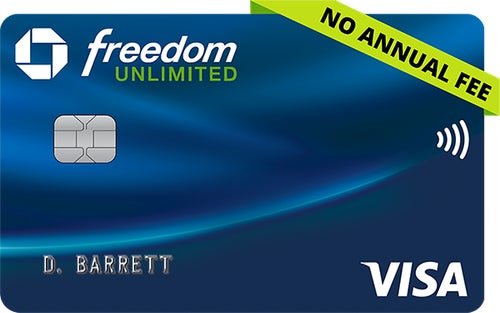
Pick by whether you owe money. If you're carrying a balance, the Slate's longer 0% window is worth more than any cash back, because interest at card rates outruns rewards many times over. If you pay in full every month, the Slate gives you nothing, while the Chase Freedom Unlimited pays you on every purchase and has a shorter intro APR period of its own. Plenty of people use the two in sequence: clear the debt on the Slate, then move everyday spending to the Freedom Unlimited. One catch is that a balance on one Chase card can't be transferred to another.
Bottom Line
The Chase Slate® is a single-purpose card, and it executes that purpose better than almost anything else on the market. Twenty-one months at 0% APR (18.24% - 28.24% variable APR after), on both purchases and balance transfers, with no annual fee, gives you nearly two years to pay down debt or finance a major expense without a dollar going to interest.
It won't earn you rewards. It won't impress you with perks. But if you're carrying a balance and watching interest pile up every month, the Slate offers something more valuable than points: a clear path to being debt-free. And for that specific goal, it's hard to find a better tool in 2026.