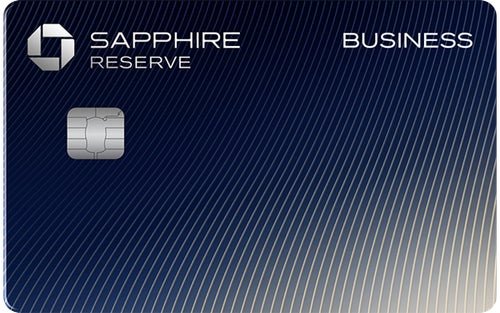
Chase Sapphire Reserve® for Business
Elite travel perks and premium rewards for business owners
Updated September 28, 2026 · By the MoneyAtlas Editorial Team
Category Ratings
Pros
Exceptional earning rates on travel: 8x points on Chase Travel bookings — plus 4x on flights and hotels booked direct — give this card one of the highest return rates available on business travel spending.
Priority Pass Select lounge access for cardholder and guests: Complimentary membership covers you and two guests per visit, providing real comfort and savings during layovers and delays.
$300 annual travel credit reduces net fee to $495: Automatically applied to the first $300 in travel purchases each cardmember year, this credit meaningfully offsets the headline annual fee.
Cons
$795 annual fee is the highest among Chase business cards: This is a significant fixed cost that requires substantial travel spending to justify, making it a poor fit for businesses with modest travel budgets.
Top earning rates require booking through Chase Travel: The headline 8x rate only applies when you book through the Chase Travel portal; booking directly with airlines or hotels earns 4x instead.
Travel credit delays bonus point earning: The first $300 you spend on travel each year goes toward the Annual Travel Credit rather than earning bonus points, reducing your travel rewards until you clear that threshold.
Why we rate it 4.7/5
A premium business-travel card that earns its $795 fee only for heavy travelers: lounge access, the travel credit, and strong Ultimate Rewards earning can outweigh the cost, but lighter spenders will struggle to break even.
Earns elevated Ultimate Rewards on travel and dining and lets you transfer points to airline and hotel partners, which puts it among the stronger premium-business earners for companies with real travel spend.
At $795, the annual fee is the highest in its class; the travel credit and statement perks claw back a good share, but you need steady travel to actually come out ahead.
Priority Pass and Sapphire Lounge access, solid travel insurance, and no-cost employee cards give it a benefits stack that holds up against personal premium travel cards.
Chase's 5/24 rule and business-entity requirements gate approval, and several credits only pay off if you use them, so it rewards organized, frequent spenders.
Card Overview
The Chase Sapphire Reserve for Business launched in 2025 as Chase's answer to the growing demand for a premium business travel card built on the Ultimate Rewards ecosystem. Issued on the Visa Infinite network, this card carries a $795 annual fee and targets business owners and entrepreneurs who spend heavily on travel. It sits at the top of the Chase business card hierarchy, offering earning rates and perks that go well beyond those of the Ink lineup.
Here is a quick snapshot of what the card offers:
How the Sapphire Reserve Business Earns Points
The earning structure on this card is aggressive by any standard. You earn 8x points per dollar on Chase Travel purchases — flights, hotels (including The Edit), car rentals, cruises, activities, and tours — plus 4x points on flights and hotels booked directly with the airline or hotel, and 3x points on social media and search engine advertising. Lyft rides earn 5x through 9/30/27, and everything else earns 1x. These rates make the Sapphire Reserve Business one of the most rewarding cards available for business travel spending.
Important: Note that the first $300 you spend annually on travel purchases goes toward your $300 Annual Travel Credit. You won't earn bonus points on travel until you've exceeded that $300 threshold each cardmember year. This means your effective bonus earning on travel starts only after the credit has been fully consumed. For a business that routinely spends thousands on travel each month, this $300 gap is minor. But it is important to understand the mechanics so you can accurately project your rewards return.
The 8x Chase Travel rate deserves special attention. On a $1,000 hotel booking made through Chase Travel, you would earn 8,000 points worth approximately $120 when redeemed through Chase Travel at 1.5 cents per point — a 12% return. Booking flights and hotels directly still earns 4x, and the 3x advertising category rewards a major recurring expense for many businesses, putting this card well ahead of most competitors in the business card space.
The 3x advertising category also stacks up favorably for businesses that spend on social and search campaigns — a recurring cost that rarely earns bonus points elsewhere. And unlike some premium personal cards like the Chase Sapphire Reserve, this business version keeps your business expenses cleanly separated from personal spending.
Premium Travel Benefits
The Sapphire Reserve Business comes loaded with travel perks that directly benefit frequent business travelers. These are not token benefits designed to pad a marketing page. They provide real, tangible value that can offset a significant portion of the annual fee.
Priority Pass Select: You receive a complimentary Priority Pass Select membership, which grants access to over 1,500 airport lounges worldwide. This covers the primary cardholder and up to two guests per visit. For business travelers facing long layovers or frequent delays, lounge access provides Wi-Fi, food, drinks, and a quieter workspace. Individual lounge visits typically cost $30-$50 per person, so even occasional use adds up fast.
$300 Annual Travel Credit: The card automatically applies a $300 statement credit to travel purchases each cardmember year. This applies broadly to airlines, hotels, car rentals, tolls, parking, and other travel-coded merchants. Most active business travelers will exhaust this credit within the first few months without changing their spending habits.
Global Entry or TSA PreCheck Credit: Every four years, you receive a statement credit of up to $100 for Global Entry (which includes TSA PreCheck) or $85 for a standalone TSA PreCheck application. This eliminates the need to pay out of pocket for expedited security screening.
Trip Cancellation and Interruption Insurance: If a covered trip is canceled or cut short due to illness, severe weather, or other qualifying reasons, the card reimburses up to $10,000 per person and $20,000 per trip for non-refundable expenses. This can save your business thousands on a single disrupted trip.
Primary Rental Car Insurance: Unlike most credit cards that offer secondary coverage, the Sapphire Reserve Business provides primary rental car insurance. This means Chase pays first, without requiring you to file through your personal or business auto insurance. This alone can save $15-$30 per rental day that you would otherwise spend on the rental company's coverage.
DoorDash Benefits: Cardholders receive a complimentary DashPass membership, which waives delivery fees on eligible DoorDash orders. While this is a lighter perk compared to the travel benefits, it provides consistent savings for teams that order meals to the office or during work travel.
Chase Ultimate Rewards for Business
One of the strongest arguments for the Sapphire Reserve Business is its place within the Chase Ultimate Rewards ecosystem. Points earned on this card are not locked into a single redemption path. Instead, you have multiple options that let you extract maximum value depending on your situation.
Transfer Partners: Ultimate Rewards points transfer 1:1 to a wide roster of airline and hotel loyalty programs, including United MileagePlus, Hyatt World of Hyatt, Southwest Rapid Rewards, British Airways Executive Club, and Air France-KLM Flying Blue. Transferring to Hyatt, in particular, often yields valuations well above 2 cents per point, making this one of the most lucrative redemption paths available.
Chase Travel Portal (1.5 cpp): When you redeem points through Chase Travel, each point is worth 1.5 cents. A 200,000-point balance is therefore worth $3,000 in travel bookings. This guaranteed floor means you never have to worry about devaluations that plague airline loyalty programs.
Pay Yourself Back: Sapphire Reserve cardholders can redeem points at 1.25 cents each for statement credits on select rotating categories. This provides flexibility when travel redemptions are not practical.
The ability to combine points from other Chase business cards significantly amplifies the value of the Sapphire Reserve Business. If your business also carries the Chase Freedom Unlimited or Chase Freedom Flex (or their business equivalents), you can pool those points into the Sapphire Reserve account, where they unlock the 1.5 cpp portal rate and transfer partner access. Points earned at 1x on a no-annual-fee card suddenly become worth 1.5 cents each, which is a meaningful upgrade.
What 100,000 Ultimate Rewards points are actually worth
Chase never puts a dollar figure on its own points, which is why the question keeps turning up in search. The arithmetic is not complicated. Redeemed for cash, 100,000 Ultimate Rewards points are worth $1,000 flat. Run the same balance through Chase Travel at the Reserve's 1.5 cent rate and it covers $1,500 of flights or hotels. Pay Yourself Back sits between the two at 1.25 cents, or $1,250, and only when a rotating category happens to match something you were buying anyway.
Transfers to airline and hotel partners are where the number gets interesting and a lot less predictable. Points move one to one, so 100,000 points becomes 100,000 miles, and whether that beats $1,500 depends entirely on what the award chart is asking on the day you book. Premium cabins usually clear it comfortably. A domestic economy seat often does not. The honest way to plan is to treat 1.5 cents as the floor you can always take and anything a transfer partner returns above it as upside rather than budget. Against the 200,000 point welcome bonus, that floor alone is $3,000 of travel. Measured in cents per point, that puts the realistic working range somewhere between 1.5 and 2.2, and the spread depends far more on which points transfer partners you can actually use than on how many points you hold.
Business-Specific Perks
Beyond the travel rewards, the Sapphire Reserve Business includes practical tools for managing company spending:
Employee Cards at No Additional Cost: You can issue additional cards to employees, and their spending earns points on your primary account. This is a straightforward way to consolidate company spending into a single rewards pool without paying per-card fees.
Spending Controls: Account administrators can set individual spending limits for employee cards. This helps prevent unauthorized or excessive charges while still allowing team members to handle travel bookings and business expenses independently.
Expense Management and Reporting: Chase provides detailed transaction reporting, categorized spending summaries, and quarterly business insights. These tools simplify bookkeeping and make reconciliation with accounting software more efficient. For businesses tracking expenses across multiple employees and categories, this level of reporting can save hours each month.
Quarterly Business Insights: Chase delivers periodic spending reports that break down your business expenses by category, helping you identify trends and optimize your budget. These reports are generated automatically and can highlight areas where spending is increasing or where alternative vendors might reduce costs.
Annual Fee Justification
The $795 annual fee is the first objection most business owners raise, and rightfully so. Let us break down the math to see whether the card pays for itself.
Before you count a single rewards point, the travel perks alone can deliver over $1,000 in value for a moderately active business traveler. Subtract the $300 travel credit from the $795 fee and you are looking at an effective cost of $495, which the Priority Pass benefit alone can offset with roughly 12-13 lounge visits per year.
On the rewards side, a business spending $50,000 annually through Chase Travel would earn approximately 400,000 points at the 8x rate, worth $6,000 at the 1.5 cpp portal rate. Even at more conservative spending levels, the rewards return easily justifies the fee for businesses that travel regularly.
The card is hardest to justify for businesses spending under $20,000 per year on travel. At that spending level, the rewards return may not meaningfully exceed what you would earn with a no-fee or lower-fee business card, and the premium perks go underutilized.
Compare
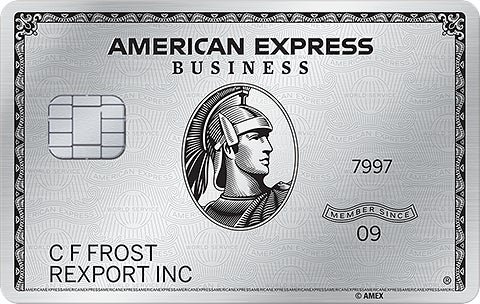



Two cards come up in almost every shortlist next to this one. The Business Platinum Card from American Express costs more each year and leans on statement credits rather than transferable point value, so it suits companies that will actually spend those credits down. The personal Chase Sapphire Reserve is the closer call: it carries the same annual fee and nearly the same travel benefits, which means the business version has to earn its keep on free employee cards, spending controls, and staying off your 5/24 count. If neither fits, Chase's other premium business card is far cheaper, and the wider premium travel category is worth a scan first. Card terms are filed publicly with the CFPB and change more often than the marketing pages suggest.
Sapphire Reserve Business vs Personal
If you already carry the Chase Sapphire Reserve personal card, you may wonder whether the business version is a worthwhile addition or a redundant expense. The two cards share a common foundation but diverge in important ways.
The personal Sapphire Reserve carries the same $795 annual fee and offers a comparable slate of earning rates and travel benefits. The business version adds employee cards, spending controls, and business reporting tools, while also keeping your business spending separate from personal expenses for cleaner accounting.
For sole proprietors with limited business travel, the personal card is likely the better fit. But for businesses with multiple employees who travel, the business version's ability to issue employee cards, consolidate points, and manage spending centrally easily justifies carrying it instead of — or alongside — the personal card. The two cards also maintain separate points balances, so holding both lets you accumulate rewards faster across personal and business spending simultaneously.
Sapphire Reserve Business vs Ink Business Preferred
The Chase Sapphire Preferred and the Ink Business Preferred are often compared to the Sapphire Reserve Business as more affordable alternatives within the Chase ecosystem. The Ink Business Preferred, in particular, is the card most business owners evaluate alongside the Reserve.
The Ink Business Preferred wins on annual fee ($95 vs $795) and earns 3x on categories the Sapphire Reserve Business does not emphasize, like shipping, internet, and phone services. For businesses whose largest expenses fall into those categories rather than travel, the Ink Business Preferred delivers a better return per dollar of fees paid.
The Sapphire Reserve Business dominates for travel-heavy businesses. The 8x Chase Travel rate, 4x direct-booking rate, 1.5 cpp portal redemption, Priority Pass, travel credit, and insurance benefits create a massive value gap that the Ink Preferred cannot match. An ideal strategy for many businesses is to carry both cards: the Ink Preferred for shipping and everyday business expenses, and the Sapphire Reserve Business for travel. Points from both cards can be combined, unlocking the Reserve's 1.5 cpp rate across your entire points balance.
Who Should Get This Card
The Chase Sapphire Reserve for Business is built for a specific type of business owner. If any of the following describe your situation, this card deserves serious consideration:
Frequent business travelers: If your company spends $30,000 or more annually on flights, hotels, and car rentals, the earning rates and travel perks will easily outweigh the annual fee. The Priority Pass benefit alone can justify the cost for road warriors who pass through airports weekly.
Multi-employee businesses: The free employee cards and spending controls make this card particularly valuable for companies with traveling team members. Every employee's spending funnels into your rewards balance, accelerating point accumulation without additional card fees.
Chase ecosystem users: If you already hold other Chase cards, adding the Sapphire Reserve Business lets you funnel all accumulated points through the 1.5 cpp portal rate. This elevates the value of points earned on lower-tier Chase cards and creates a cohesive rewards strategy across your entire wallet.
International travelers: No foreign transaction fees, primary rental car coverage abroad, and trip cancellation insurance make this card a reliable companion for international business trips. The Priority Pass network is especially valuable overseas, where airport amenities can be inconsistent.
This card is not ideal for businesses with minimal travel spending, those focused primarily on office supplies or advertising expenses (the Ink Preferred is better), or sole proprietors who would get comparable benefits from the personal Sapphire Reserve at a lower annual fee.