What Is the Interest Rate on a Chase Credit Card


Introduction
Understanding the interest rate on a Chase credit card is a necessary step for anyone looking to manage their balances effectively or choose a new piece of plastic for their wallet. If you are comparing options from the start, MoneyAtlas’s best credit cards comparison is a useful place to see how Chase cards stack up against the rest of the market. There is no single interest rate that applies to every card or every borrower. Instead, Chase utilizes a range of rates based on the specific card type, the applicant's creditworthiness, and broader market conditions. MoneyAtlas tracks these fluctuating figures to help consumers identify where they might fall on the spectrum of available offers. This article explains how these rates are determined, the current ranges for popular cards, and how the underlying mechanics of interest can affect your monthly statement. By looking at the different tiers of Chase products, you can better understand the potential costs of carrying a balance.
How Chase Determines Your Interest Rate
When you apply for a credit card, the issuer does not pull a number out of thin air. The interest rate, often referred to as the Annual Percentage Rate or APR, is the yearly cost of borrowing money on the card. For a plain-English breakdown of how this works, see MoneyAtlas’s guide to understanding variable APR on a credit card. For most Chase products, this rate is variable. This means it can change over time based on a specific benchmark.
The most common benchmark is the U.S. Prime Rate. Banks use the Prime Rate as a base. They then add a certain percentage on top of it, known as a margin, to determine your final APR. If the Federal Reserve raises or lowers interest rates, the Prime Rate usually follows, which in turn causes your credit card interest rate to shift.
Beyond market factors, your personal financial profile plays a massive role. Chase evaluates several criteria to decide if you qualify for the lower or higher end of their advertised range:
- Credit Score: Higher scores generally lead to lower interest rates. A score in the excellent range, typically 740 or above, often qualifies for the lowest available APR.
- Payment History: A track record of on-time payments signals to the bank that you are a lower-risk borrower.
- Credit Utilization: This is the percentage of your total available credit that you are currently using. Keeping this number below 30% suggests you are managing your debt well.
- Income and Debt-to-Income Ratio: The bank wants to ensure you have the financial capacity to pay back what you borrow.
Current Interest Rate Ranges for Popular Chase Cards
Chase offers dozens of different cards, each tailored to different spending habits. Because these cards serve different purposes, their interest rate structures vary. For a broader benchmark on today’s market, MoneyAtlas also covers what APR is good for credit card purchases and balances. For example, a card designed for travel rewards may have a higher minimum interest rate than a card designed specifically for balance transfers.
Cash Back and Everyday Cards
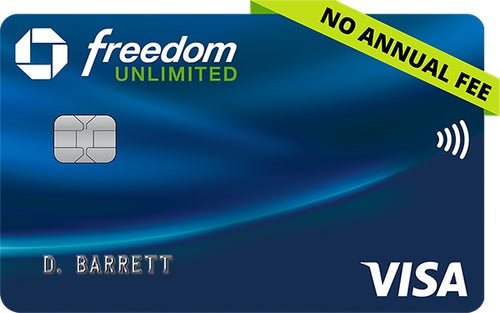
Cards like the Chase Freedom Unlimited and Chase Freedom Flex are popular for their lack of an annual fee and straightforward rewards. If you want a broader set of no-cost options, check out MoneyAtlas’s no annual fee credit cards comparison. These cards currently feature variable APRs ranging from about 18.24% to 27.74%. These figures are based on recent data and may change. For those with a shorter credit history, the Chase Freedom Rise also falls within this similar range, though approval odds may be better for those who maintain a balance in a Chase checking account.
Travel Rewards Cards
The Sapphire family is known for high-value points and travel perks. If travel rewards matter most, MoneyAtlas’s travel credit cards comparison is a good starting point. The Chase Sapphire Preferred typically carries a variable APR of 19.24% to 27.49%. You can see the full breakdown in the Chase Sapphire Preferred Card review. The premium Chase Sapphire Reserve has a slightly different range, often starting around 19.49% and going up to 27.99%. Because these cards offer extensive benefits, their baseline interest rates are often a point or two higher than basic cash back cards.
Co-Branded Airline and Hotel Cards
Chase partners with brands like United Airlines, Southwest, and Marriott. The United Gateway card, for instance, often features a variable APR between 19.74% and 28.24%. The Southwest Rapid Rewards Plus card generally mirrors these ranges. These cards are excellent for frequent travelers, but carrying a balance on them can be expensive due to these relatively high rates.
Business Credit Cards
For small business owners, the Ink Business line offers some of the most competitive rates in the Chase portfolio. The Ink Business Cash and Ink Business Unlimited cards have been seen with variable APRs ranging from 16.74% to 24.74%. This lower floor makes them an attractive option for businesses that may need to carry a short-term balance to manage cash flow.
Understanding the Different Types of APR
When you read the fine print on a Chase credit card agreement, you will notice that there isn't just one interest rate. Different types of transactions trigger different rates. It is important to know which one applies to your specific situation.
Purchase APR: This is the rate applied to standard purchases, like groceries or gas. This is the rate most people refer to when they ask about a card's interest rate.
Balance Transfer APR: If you move debt from another card to a Chase card, this rate applies. If you are comparing options for this strategy, MoneyAtlas’s balance transfer credit cards comparison is the right place to start. While many cards offer an introductory 0% rate for balance transfers, the standard rate after that period ends is often the same as your purchase APR. Note that balance transfers also usually involve a separate fee, typically 3% or 5% of the amount transferred.
Cash Advance APR: If you use your credit card to get cash from an ATM, you are taking a cash advance. This rate is almost always significantly higher than the purchase APR, often approaching 30%. There is also no grace period for cash advances. Interest begins accruing the moment the cash is in your hand.
Penalty APR: If you miss a payment or a payment is returned, Chase may apply a penalty APR. This rate is usually much higher than your standard rate and can stay in place indefinitely if you do not make several consecutive on-time payments.
The Role of 0% Introductory APR Offers
One of the most effective ways to avoid interest on a Chase card is to take advantage of an introductory offer. MoneyAtlas explains the mechanics in its guide to intro APR credit cards. Many Chase cards provide a 0% introductory APR for a set number of months. During this time, you can carry a balance without being charged interest, provided you make at least the minimum payment on time each month.
The length of these offers varies by card:
- Chase Slate Edge: Often provides one of the longest windows, with 0% intro APR for up to 21 months on purchases and balance transfers. You can read the full Chase Slate review to see how this card compares.
- Chase Freedom Series: These cards typically offer 0% intro APR for 15 months on purchases and balance transfers.
- United Gateway: This travel-focused card often provides a 12% intro APR on purchases for the first year.
Once the introductory period ends, any remaining balance will begin accruing interest at the standard variable APR assigned to your account. This is a critical transition point. If you have a $2,000 balance when the 0% period expires, and your rate is 24%, you will suddenly see significant interest charges on your next statement.
Variable vs. Fixed Interest Rates
Almost all modern credit cards, including those from Chase, use variable interest rates. For more detail on how these rates move, MoneyAtlas’s guide to variable APR credit cards is a helpful companion read. A fixed interest rate remains the same regardless of market conditions. These have become extremely rare in the credit card world.
With a variable rate, your APR is tied to an index, such as the Prime Rate. If the index goes up, your interest rate goes up. If it goes down, your rate may follow. Chase is not required to provide you with advanced notice if your rate changes due to a change in the Prime Rate. However, if they decide to increase your rate for other reasons, such as a drop in your credit score, they generally must give you 45 days of notice.
This variability means that even if you have a "good" rate today, it could be higher a year from now. This is why paying your balance in full every month is the only way to truly "beat" the interest rate.
How to Find Your Specific Chase Interest Rate
If you already have a Chase card, you do not have to guess what your rate is. There are three easy ways to find your current APR:
Check Your Monthly Statement: Every monthly bill includes a "Year-to-Date Totals" or "Interest Charge Calculation" section. This will list your current APR for purchases, balance transfers, and cash advances.
Log In to the Mobile App or Website: In the Chase mobile app or on the Chase website, you can select your card and look for "Account Details" or "Statements and Documents." This will show your current terms.
Read Your Cardmember Agreement: When you first received your card, it came with a document detailing all rates and fees. If you lost it, you can request a new copy through the Chase customer service line or find a generic version of the agreement for your card type on the Chase website.
MoneyAtlas makes it easier to compare these terms side-by-side if you are considering adding a second Chase card to your wallet. Seeing how the rates on a Sapphire card compare to those on a Freedom card can help you decide which one fits your long-term strategy.
Tips for Lowering Your Interest Rate
While interest rates are largely determined by the bank and the market, you have some leverage to potentially lower yours. If you feel your rate is too high compared to your current credit profile, you can take action.
- Improve Your Credit Profile: Focus on paying every bill on time and reducing your overall debt. As your credit score rises, you become a more attractive customer.
- Request a Rate Reduction: You can call the number on the back of your Chase card and ask for a lower APR. If you have been a customer for a long time and have a perfect payment record, they may be willing to lower your rate by a few percentage points.
- Utilize a Balance Transfer: If you are currently paying a high rate, you might look at other Chase cards with a 0% intro APR offer.
- Pay in Full: The most effective way to lower your interest cost is to pay the statement balance in full every month. When you do this, the interest rate effectively becomes 0% because Chase offers a grace period on purchases.
Comparing Chase Rates to the Rest of the Market
Chase is one of the largest credit card issuers in the world, and their rates are generally competitive with other major banks like American Express, Citi, and Capital One. Currently, the average credit card interest rate in the United States is hovering between 20% and 25%.
Chase cards often fall right in the middle of this range. While you might find slightly lower rates at a local credit union, those cards often lack the robust rewards programs and high-end travel perks that Chase offers. When choosing a card, you are often making a trade-off between a lower interest rate and better rewards.
If you never plan to carry a balance, the interest rate matters less than the rewards and benefits. However, if you think you might need to carry a balance from time to time, prioritizing a card with a lower APR or a long 0% introductory period is a smarter financial move. MoneyAtlas provides comparison tools that allow you to weigh these factors against each other so you can see the true cost of each option.
How the Interest Calculation Works
To understand the real impact of your interest rate, you have to look at how it is calculated daily. MoneyAtlas also explains the math in how APR works on a credit card. Chase, like most issuers, uses a "Daily Balance Method."
How the Interest Calculation Works
- 1
Calculate daily rate
Divide your APR by 365. For example, if your APR is 24%, your daily periodic rate is approximately 0.0657%.
- 2
Apply daily rate
Each day, the bank looks at your balance and multiplies it by that daily rate.
- 3
Sum interest
These daily interest amounts are added up throughout the billing cycle.
- 4
Add to balance
At the end of the month, the total is added to your balance.
This means that interest compounds. You are eventually paying interest on the interest that was added the month before. This compounding effect is why credit card debt can grow so quickly if only minimum payments are made.
Is a Chase Credit Card Right for You?
Deciding whether to apply for a Chase card involves more than just looking at the interest rate. You must consider the annual fee, the rewards structure, and how well the card aligns with your spending habits.
If you have a high credit score and can pay your balance in full, a Chase Sapphire or Freedom card offers some of the best value on the market. The high interest rates become irrelevant if you never trigger them. On the other hand, if you are working on building credit or know you will need to carry a balance, focusing on a card with a lower starting APR or a long introductory 0% offer, like the Chase Slate Edge, is the better path.
Using comparison platforms is the most efficient way to see these trade-offs clearly. MoneyAtlas tracks over 1,500 financial products, including the full suite of Chase cards, to provide expert ratings and clear breakdowns of fees and terms. By comparing your options side-by-side, you can ensure that the card you choose helps you reach your financial goals rather than hindering them with excessive interest costs.
Conclusion
The interest rate on a Chase credit card is not a fixed number but a variable range influenced by the economy and your personal credit history. With typical rates currently sitting between 18% and 28%, the cost of carrying a balance can be significant. However, by understanding the mechanics of APR, taking advantage of 0% introductory offers, and maintaining a strong credit profile, you can minimize these costs.
Always remember that the advertised rates are subject to change based on the Prime Rate. To get the most accurate and up-to-date information, you should verify current rates on the Chase website or use MoneyAtlas comparison tools to see how these offers stack up against the rest of the market. Paying your balance in full remains the most effective strategy to avoid interest charges entirely and make the most of the rewards these cards provide.
FAQ
MoneyAtlas Staff
Articles and reviews from the MoneyAtlas editorial team — independent research on credit cards, banking, loans, insurance, and investing.
Related Articles

Which Card Is Better: American Express Gold or Platinum?
Deciding which card is better: American Express Gold or Platinum? Compare fees, 4X dining rewards, and luxury travel perks to find your perfect match.

Should I Get an American Express Gold Card? Breaking Down the Value
Should I get an American Express Gold card? Explore the 4X rewards on dining and groceries vs. the $325 fee to see if this premium card fits your budget.

How to Get the American Express Gold Card: A Practical Guide
Learn how to get the American Express Gold Card with our guide on credit score requirements, income, and the 'Apply with Confidence' tool. Apply today!