The Real Cost of the American Express Gold Card Breakdown


Introduction
The primary question for anyone considering the American Express Gold Card is whether the annual fee justifies the rewards. With a recent increase in the yearly cost, the decision requires more than just a glance at the rewards rates. The sticker price is $325, but the net cost can vary wildly based on individual spending habits and the ability to use monthly credits. MoneyAtlas evaluates these financial products by looking past the marketing to the actual math of the fees and benefits. This article breaks down the annual fee, the value of the credits, the earning potential on daily spending, and the hidden costs of ownership. Understanding these factors allows for a clear comparison of how this card fits into a broader financial strategy.
The Upfront Cost: Understanding the $325 Annual Fee
The most direct answer to how much the American Express Gold Card costs is the $325 annual fee. This fee is not waived in the first year and is typically charged on the first billing statement after an account is opened. It is a significant jump from the previous $250 fee, reflecting a shift in how the card is positioned in the market. This price point places it firmly in the midtier or "premium" category, situated between entry level rewards cards with no fees and ultra-luxury cards that can cost nearly $700 annually.
This annual fee is the primary hurdle for any potential cardholder. To determine if the cost is manageable, it is helpful to view the fee as a monthly subscription of approximately $27.08. If the value derived from the card each month does not exceed that amount, the card may not be the most efficient choice for that specific user. MoneyAtlas tracks these fee changes across the industry to help users see how the Gold Card compares to other travel and dining options. Readers can also compare rewards credit cards to review other earning structures.
For most applicants, the fee is a fixed cost. However, the true financial impact depends on the "effective" annual fee. This is the amount left over after subtracting the value of the credits that the cardholder would have spent money on anyway. If a person does not use the specific dining or travel services associated with the card, the $325 remains a pure expense.
Statement Credits and the "Coupon Book" Strategy
The American Express Gold Card is often described as a "coupon book" because its value is tied to several specific monthly and semi-annual credits. To get the maximum value, a cardholder must enroll in these benefits and spend money with specific partners. If used fully, these credits total $424 per year, which is more than the $325 annual fee.
The $120 Uber Cash Benefit
Cardholders receive $10 in Uber Cash each month, totaling $120 annually. This can be used for Uber rides or Uber Eats orders in the U.S. To receive this, the Gold Card must be added to the Uber app. It is important to note that these credits do not roll over. If they are not used by the end of the month, the $10 balance expires. For someone who already uses rideshare services or orders food delivery at least once a month, this credit acts as a direct $120 reduction in the annual cost.
The $120 Dining Credit
This benefit provides up to $10 in statement credits monthly when paying with the Gold Card at specific merchants. The list currently includes Grubhub, The Cheesecake Factory, Five Guys, and Wonder. It also includes Wine.com and Goldbelly, though these two are scheduled to be removed in July 2026. Like the Uber credit, this is a use-it-or-lose-it monthly perk. Enrollment is required through the American Express account portal before the credits will apply.
The $100 Resy Credit
A newer addition to the card is the Resy credit. This provides up to $100 in statement credits each calendar year for eligible purchases at U.S. Resy restaurants. The credit is split into two $50 chunks: one for the first half of the year, January through June, and one for the second half, July through December. Because Resy is a platform for making reservations, this credit requires the cardholder to visit specific restaurants that use the Resy system.
The $84 Dunkin' Credit
The latest refresh added a $7 monthly credit for purchases at U.S. Dunkin' locations. This totals $84 per year. For regular coffee drinkers who live near a Dunkin' franchise, this is a straightforward benefit. However, for those in regions where Dunkin' has a small footprint, such as parts of the Pacific Northwest or rural areas, this credit may provide zero actual value.
Earning Potential: Calculating the Value of Points
The Gold Card is primarily a rewards-earning tool for food-related spending. The points earned are Membership Rewards, which are highly flexible. To understand how much the card "makes" for a user, one must look at the earning rates.
- 4X points at Restaurants: This applies worldwide on up to $50,000 in purchases per calendar year. After that, the rate drops to 1X.
- 4X points at U.S. Supermarkets: This is capped at $25,000 in purchases per calendar year. Once the cap is reached, the rate becomes 1X.
- 3X points on Flights: This applies to flights booked directly with airlines or through the American Express Travel portal.
- 2X points on Prepaid Hotels: This is for bookings made specifically through the American Express Travel portal.
- 1X points on all other purchases.
For a household that spends $1,000 a month on groceries and $500 a month on dining, the card would earn 72,000 points per year from those categories alone. If points are valued at 1 cent each, a standard baseline for travel bookings, that represents $720 in value. This easily covers the $325 annual fee even if none of the statement credits are used. However, the value of those points can fluctuate based on how they are redeemed.
Redemptions and Transfer Partners
The "cost" of the card is also affected by the efficiency of redemption. If a cardholder redeems points for statement credits, they usually get a value of 0.6 cents per point. This is generally considered a poor use of the rewards. In this scenario, the 72,000 points mentioned earlier would only be worth $432.
The highest value for Membership Rewards points usually comes from transferring them to airline or hotel partners. American Express has over 20 partners, including Delta SkyMiles, British Airways Executive Club, and Hilton Honors. When transferring to an airline partner to book a high-value international flight, it is possible to get 2 cents per point or more in value. This would turn that same 72,000 points into $1,440 worth of travel. Readers comparing travel-focused alternatives can browse MoneyAtlas travel credit card rankings.
The Welcome Offer: An Initial Cost Offset
Most new applicants are eligible for a welcome offer, which can significantly offset the cost of the annual fee for the first few years. These offers typically require spending a certain amount of money within the first six months of account opening. A common offer is 60,000 points after spending $6,000 on eligible purchases. For a broader comparison of how bonuses affect first-year value, review this guide to evaluating credit card annual fees, interest rates, and rewards.
At a baseline value of 1 cent per point, a 60,000-point bonus is worth $600. This covers the first year's annual fee and nearly half of the second year's fee. It is important to remember that American Express generally has a "once per lifetime" rule regarding welcome bonuses. If someone has had the Gold Card in the past, they are likely ineligible for a new welcome offer.
Hidden Costs and Operational Fine Print
Beyond the annual fee, there are other costs and terms that affect the overall financial picture.
Interest Rates and Pay Over Time
The Gold Card is technically a charge card, meaning the balance is generally expected to be paid in full every month. However, it features a "Pay Over Time" option that functions like a traditional credit card for eligible purchases. This allows a cardholder to carry a balance with interest. The interest rates for Pay Over Time can be high, often ranging from 21% to 29% based on creditworthiness. Carrying a balance and paying interest will quickly negate any value earned from points or credits. For more context, read how APR works on a credit card.
Late Fees and Penalty Rates
Late payments or returned payments can trigger fees up to $40. More importantly, late payments can result in a penalty APR. This significantly increases the cost of borrowing and can stay in effect for several months.
Foreign Transaction Fees
One cost the Gold Card does not have is a foreign transaction fee. Many other cards charge a 3% fee on purchases made outside the U.S. For frequent international travelers, the absence of this fee saves $30 for every $1,000 spent abroad. This makes the Gold Card a cost-effective choice for dining while traveling.
Spending Caps
While the card has "no preset spending limit," this does not mean unlimited spending. The limit is dynamic and adjusts based on the cardholder's history, credit score, and financial resources. For a very large purchase, a cardholder might need to use the "Check Spending Power" tool in the app to ensure the transaction will be approved.
Total Cost of Ownership vs. Value Comparison
When deciding if the Gold Card is worth the $325, it helps to perform a simple math exercise.
The Costs:
- Annual Fee: $325
- Potential Interest: Variable, should be $0 if paid in full
- Opportunity Cost: The rewards you could have earned on a different card with a lower fee.
The Credits (Estimated Value):
- Uber Cash: $___, how much would you spend anyway?
- Dining Credit: $___, how much would you spend anyway?
- Resy Credit: $___, how much would you spend anyway?
- Dunkin' Credit: $___, how much would you spend anyway?
The Rewards:
- Estimated Annual Points: (Monthly Food Spend x 4 x 12)
- Estimated Value of Points: (Points x $0.01)
If the total of (Credits + Rewards) is significantly higher than the $325 fee, the card represents a net gain. If the user finds themselves "chasing" credits by spending money they otherwise wouldn't, like driving to a Dunkin' just to use the $7, the card may be more of a financial burden than a benefit. MoneyAtlas provides tools to compare these net values against other popular dining and travel cards to see which fits a specific budget best. Readers can compare cash back credit cards as another way to evaluate reward value.
Is the White Gold Design Worth Extra?
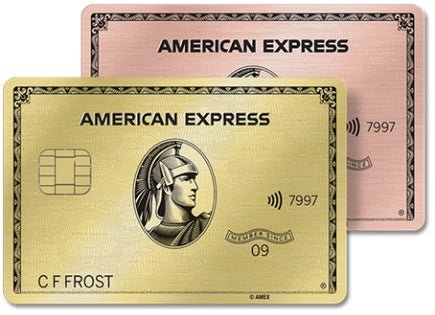
As part of a recent refresh, American Express introduced a "White Gold" card option. This is a purely aesthetic choice. There is no additional cost for choosing the White Gold design over the traditional Gold or Rose Gold options. While the metal card has a premium feel, it does not change the fee structure or the rewards rates. Financial decisions should be based on the numbers rather than the color of the plastic or metal in your wallet.
How to Apply and Check Your Offer
Applying for the Gold Card involves a "soft" credit pull initially. American Express allows applicants to see if they are approved and what their specific welcome offer is before a "hard" pull is performed on their credit report. This is a consumer-friendly feature that prevents unnecessary damage to a credit score for those who are not approved.
How to Apply and Check Your Offer
- 1
Gather your financial information
including annual income and monthly housing costs.
- 2
Find the current offer
Visit the American Express website or use a comparison tool to find the current highest welcome offer.
- 3
Submit the application
to see your approval status and specific terms.
- 4
Review the disclosures
Review the annual fee and interest rate disclosures carefully.
- 5
Accept the offer
only if the math of the credits and rewards aligns with your typical spending.
FAQ
MoneyAtlas Staff
Articles and reviews from the MoneyAtlas editorial team — independent research on credit cards, banking, loans, insurance, and investing.
Related Articles

How to Get the Rose Gold American Express Card
Learn how to get rose gold American Express card designs as a new or existing member. Compare rewards, fees, and follow our easy steps to upgrade today.

Does American Express Gold Card Have Travel Insurance?
Does American Express Gold Card have travel insurance? Discover coverage for trip delays, lost baggage, and car rentals, plus key exclusions to know.

How to Get an American Express Gold Card: Eligibility and Steps
Learn how to get an American Express Gold Card with our guide on credit scores, income requirements, and the Apply with Confidence feature.