Members of the armed forces who are shopping for credit cards have a few exclusive options, thanks to their military status. Navy Federal Credit Union and USAA offer two popular options with different benefits and limitations.
So which is better — Navy Federal or USAA? For most active-duty members and veterans, Navy Federal wins on cash-back simplicity (1.5–2% on every purchase, no annual fee) and lower APRs. USAA wins for travel-heavy members thanks to the Eagle Navigator's 3x travel rewards and broader eligibility for pre-1996 legacy members.
Eligibility — Who Can Apply
Both Navy Federal and USAA are membership-restricted to military-affiliated applicants, but the criteria differ slightly. Navy Federal accepts active-duty service members, veterans, Department of Defense civilian employees, and their family members. USAA accepts the same groups plus pre-1996 legacy members and their descendants — making USAA marginally more inclusive for multi-generational military families.
Eligibility Group
Navy Federal
USAA
Active-duty military
Yes
Yes
Veterans
Yes
Yes
DoD civilian employees
Yes
Yes
Immediate family of members
Yes
Yes
Pre-1996 legacy members & descendants
No
Yes
Military-Specific Perks: SCRA, Deployment Caps, and Rate Protections
Both issuers go beyond the federal Servicemembers Civil Relief Act (SCRA), which caps interest at 6% on pre-service debts during active duty. Navy Federal extends a 4% APR cap on most credit card balances during deployment, and USAA offers a similar deployment-rate program for active-duty members. Both waive late fees and reduce APRs further on a case-by-case basis when a service member provides deployment orders.
Both Navy Federal and USAA are federally insured by the National Credit Union Administration (NCUA) up to $250,000 per depositor — the credit-union equivalent of FDIC insurance for banks.
Overview of Navy Federal Credit Card Benefits
Navy Federal Credit Union, the largest credit union in the nation, caters to military members and their families with special credit cards.
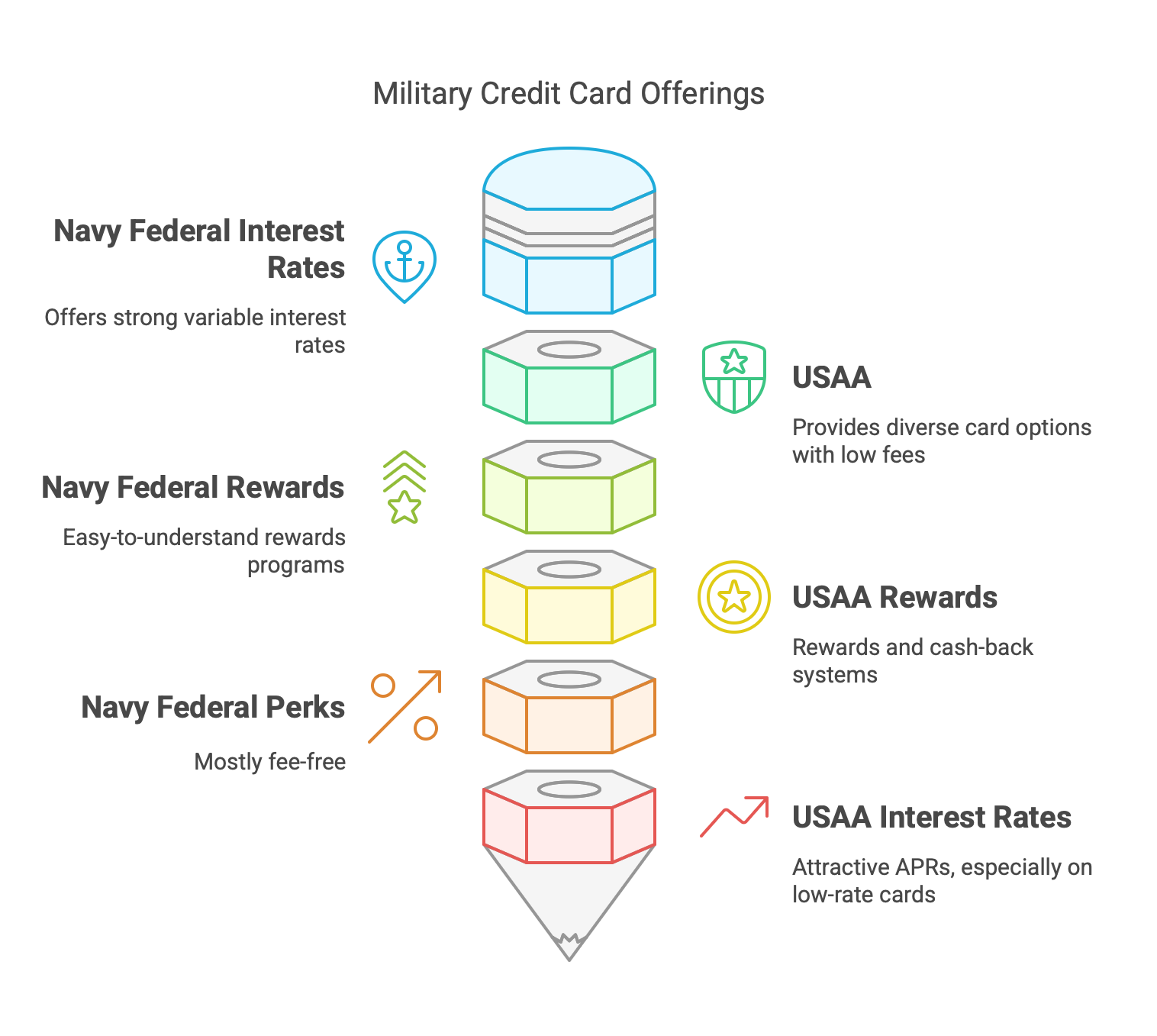
Most of its credit cards offer strong variable interest rates and easy-to-understand rewards programs without additional fees for foreign transactions. Most are fee-free, but some may charge an annual fee.
Overview of USAA Credit Card Benefits
USAA is also dedicated to serving military members and their families. Its credit card options include rewards cards, cash-back cards, low-rate credit cards, and secured credit cards to help build credit. All but one of its credit cards have no annual fees, and most come with easy-to-understand rewards and cash-back systems. They all have attractive APRs, particularly the low-rate credit cards.
Credit Card Options Available
Navy Federal and USAA each offer options to suit their membership base’s varied spending habits. Below, we'll explore some specific options from each institution.
Navy Federal Credit Card Offerings
Navy Federal’s credit card accounts include the following:
Navy Federal cash Rewards: Available as the standard card or cashRewards, this card offers 1.5% cash back on all purchases with a standard account and 2% with a Plus account.
Navy Federal More Rewards American Express®: This card offers one point for every dollar spent and three points for every dollar spent at supermarkets, gas stations, and restaurants. It also offers 3x points for every dollar spent on transit.
Visa Signature® Flagship Rewards: This card offers 3x points on every dollar spent toward travel and 2x points on all other purchases.
Navy Federal Cash GO REWARDS: Another straightforward, annual-fee-free rewards credit card, this one offers three points per dollar at restaurants, two points per dollar at gas stations, and one point for each dollar on all other purchases.
Navy Federal Platinum Card: This card is not attached to one processing company and offers no rewards, but it’s the lowest-interest credit card that Navy Federal offers. Its lower interest makes it a good option for those planning to carry a balance from month to month.
nRewards Secured: This is a relatively low-interest secured credit card for those looking to build credit. It requires a small security deposit and offers one reward point for every dollar spent.
USAA Credit Card Offerings
USAA also offers a wide selection of credit card options, including:
USAA Eagle Navigator Visa Signature Credit Card: This travel-friendly card has a $95 annual fee, but it also has a range of great rewards and perks, including three points per dollar spent on travel and transit and two points per dollar spent on everything else.
USAA Rewards American Express® Credit Card: This no-annual-fee credit card allows you to earn three points per dollar on dining, two points per dollar on groceries and at gas stations, and one point per dollar on all other purchases.
USAA Rewards Visa Signature Credit Card: Another no-annual-fee credit card with great rewards, such as two points per dollar on dining and gas stations and one point per dollar on all other purchases.
Cashback Rewards Plus American Express® Credit Card: This cash-back credit card offers no annual fee, 5% cash back on your first $3,000 in gas stations and military bases yearly, 2% cash back on the first $3,000 in grocery purchases annually, and unlimited 1% cash back on all other purchases.
USAA Rate Advantage Visa Platinum Credit Card: This no-annual-fee credit card has rewards or cash back but offers the lowest APR of all USAA credit cards, making it a good option for those planning to carry a balance from month to month.
USAA Secured Visa® Platinum Credit Card: This secured credit-building credit card for those who don’t meet the credit requirements for a traditional credit card requires an interest-earning security deposit. This card does not offer any reward points or cash back.
USAA Secured American Express® Credit Card: This has all the same offers as the USAA Secured Visa® Platinum Credit Card, but American Express® is the credit card issuer.
Comparison of Rewards Programs
Rewards are what generally make using a credit card worthwhile. Let’s review each bank’s rewards setup.
Navy Federal Rewards Structure
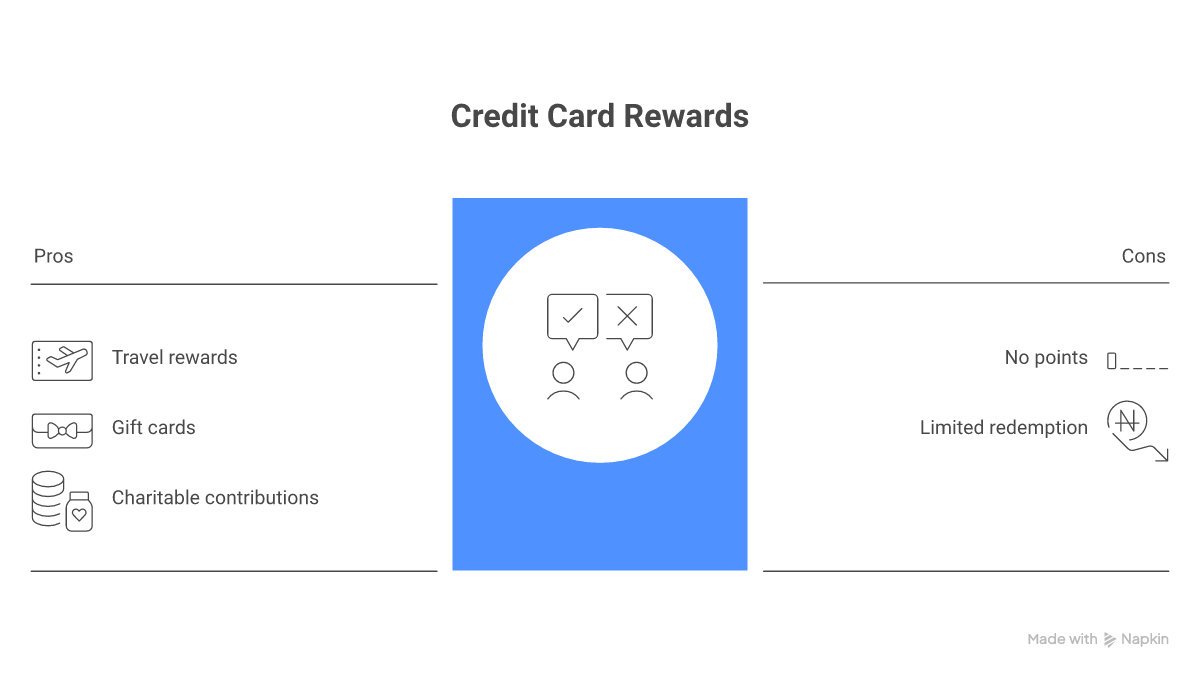
Navy Federal’s rewards system is designed to offer flexibility and simplicity. You can redeem the points in several ways:
Have the cash back or cash equivalent of your points deposited into your credit card account
Book travel arrangements and experiences
Purchase gift cards or merchandise for various retailers
USAA Rewards Structure
USAA’s rewards structures differ slightly from Navy Federal’s, as it doesn’t offer rewards points, only cash back. You can redeem your cash back for:
Statement credits or cash deposited in your USAA account
Travel and accommodation
Navy Federal vs. USAA Rewards Redemption
Gift cards at popular retailer
Charitable contributions
Interest Rates and Fees
All credit cards from both Navy Federal and USAA credit cards have variable interest rates that change based on the U.S. Prime Rate and your credit history. While USAA and Navy Federal cards tend to waive many fees, such as for foreign transactions, they do charge small annual fees for some of their rewards cards.
Navy Federal Credit Union offers members competitive APRs on its credit cards. The highest rates are on its secured credit card and its rewards cards. The Platinum card is your best bet if you’re willing to forgo rewards for a lower APR.
USAA also offers strong APRs, but they’re generally slightly higher than Navy Federal’s, especially on secured credit cards.
For more information on this and other financial products, check out MoneyAtlas, your platform for expert comparisons of banking, loans, credit cards, and investments.
Which Should You Pick? Quick Decision Framework
Pick by your spending pattern and credit goals:
Active-duty member who travels overseas: USAA Eagle Navigator (3x travel, no foreign transaction fees) edges Navy Federal Flagship for international spend.
Veteran focused on cash back on everyday spending: Navy Federal cashRewards Plus (2% on every purchase, no annual fee, no foreign transaction fee).
Military family member building credit from scratch: Navy Federal nRewards Secured — lower APR than USAA's secured card and earns rewards while you build credit.
Carrying a balance month to month: Navy Federal Platinum has consistently lower APRs than the USAA Rate Advantage Visa Platinum.
Pre-1996 legacy USAA family member: USAA is your only option — Navy Federal doesn't extend membership through legacy USAA descendants.
FAQ
Ready to pick a card?
Compare the cards our editors rate highest right now, side by side, with the fees and rewards that matter.
Should I get an American Express Gold card? Explore the 4X rewards on dining and groceries vs. the $325 fee to see if this premium card fits your budget.
Learn how to get the American Express Gold Card with our guide on credit score requirements, income, and the 'Apply with Confidence' tool. Apply today!