Is the American Express Gold Card Worth It? Evaluating the $325 Fee


Introduction
Deciding whether the American Express Gold Card belongs in your wallet usually comes down to a single calculation: can your spending habits and lifestyle choices outweigh the $325 annual fee? This card sits in a unique middle ground between entry level rewards cards and high end luxury travel cards. It offers a heavy emphasis on food, earning high rewards at restaurants and supermarkets, while providing a suite of monthly credits.
MoneyAtlas tracks the shifting landscape of premium credit cards to help you determine if a specific product fits your budget. In this guide, we break down the earning potential, the mechanics of the statement credits, and the hidden costs of the American Express Gold Card. We also look at how to value the points you earn and who is most likely to come out ahead after paying the yearly fee. For the right person, this card can be a high value tool, but for others, it may simply be an expensive piece of metal.
The Cost of Entry: Breaking Down the $325 Annual Fee
The first hurdle for any potential cardmember is the $325 annual fee. While this is lower than the $695 fee often seen on luxury travel cards, it is still a significant recurring expense. To determine if the fee is justified, you must look at the card as a bundle of services and rewards rather than just a payment method.
Most cardholders find that the fee is only sustainable if they utilize the monthly statement credits. If you do not already use services like Uber or Grubhub, the fee might feel like a penalty. However, for someone who already spends money on these services, the fee is essentially a prepayment for those costs. Our guide to evaluating credit card annual fees, interest rates, and rewards explains how to compare these trade-offs across the market.
The annual fee is charged once a year, typically on your first statement and then annually on your anniversary month. It is important to note that the fee is not waived for the first year. This means you need to be confident in your ability to extract value from day one.
Earning Power: The 4% Food Strategy
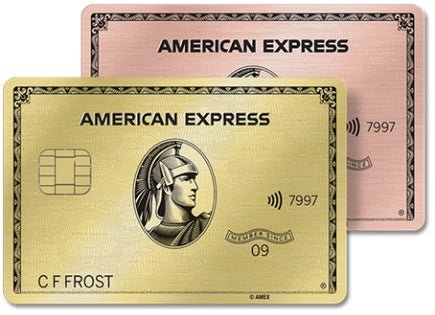
The primary reason to carry the American Express Gold Card is its earning structure. It is widely considered one of the best cards for food related spending. The card earns American Express Membership Rewards points, which are a flexible currency that can be used for travel, gift cards, or statement credits.
Restaurants Worldwide
The card earns 4 points per dollar spent at restaurants worldwide. This 4% earn rate applies to the first $50,000 in purchases per calendar year. After you hit that limit, the earn rate drops to 1 point per dollar. This category includes everything from fine dining to fast food and even some delivery services. For a household that spends $1,000 a month on dining out, this category alone generates 48,000 points per year.
U.S. Supermarkets
For many families, the supermarket spend is the largest monthly variable expense. The American Express Gold Card earns 4 points per dollar at U.S. supermarkets on up to $25,000 in purchases per calendar year. Once you cross that threshold, you earn 1 point per dollar. It is important to note that this 4% rate only applies to U.S. supermarkets. Superstores like Target or Walmart and warehouse clubs like Costco generally do not count as supermarkets under these terms.
Travel and Flights
While the card is food focused, it does offer rewards for travelers. You earn 3 points per dollar on flights booked directly with airlines or through the American Express travel portal. Additionally, prepaid hotels booked through the portal earn 2 points per dollar, and a recent update allows for 5 points per dollar on certain prepaid hotel bookings. This makes it a viable secondary travel card for those who do not want to pay for a more expensive travel specific card. You can compare travel credit card options to see how these rewards structures differ.
Understanding the Statement Credits
American Express uses a "coupon book" style approach to its premium cards. Instead of a single large credit, the Gold Card offers several smaller, monthly, or biannual credits. To get the full $424 in annual value, you must enroll in each benefit and use them before they expire.
Uber Cash
Cardmembers receive $10 in Uber Cash each month, totaling $120 per year. This can be used for Uber rides or Uber Eats orders in the U.S. This credit is a "use it or lose it" benefit; it does not roll over to the next month. To activate this, you must add your Gold Card as a payment method in the Uber app.
Monthly Dining Credit
The card provides an additional $10 monthly dining credit for use at specific merchants. These currently include:
- Grubhub, including Seamless
- The Cheesecake Factory
- Five Guys
- Buffalo Wild Wings
- Wonder
Like the Uber credit, this totals $120 annually and expires at the end of each month. Enrollment is required through the American Express website or mobile app before you make your first purchase.
Resy Statement Credit
A newer addition to the card is the Resy credit. You can receive up to $100 in statement credits per calendar year for purchases at U.S. Resy restaurants. This is split into two $50 credits: one for the first half of the year, January to June, and one for the second half, July to December. Resy is a restaurant reservation platform, and you must use your card to pay at a restaurant that is part of the Resy network.
Dunkin' Credit
For those who need a morning caffeine fix, the card offers up to $7 in monthly statement credits at U.S. Dunkin' locations. This adds up to $84 per year. While $7 may seem small, it effectively covers two coffees or a breakfast sandwich each month.
Welcome Offers and Point Valuation
The welcome offer is often the catalyst for applying. While offers change frequently, recent data suggests that new cardmembers can often find offers ranging from 60,000 to 100,000 Membership Rewards points after meeting a minimum spending requirement. Usually, this requirement is around $6,000 to $8,000 in purchases within the first six months.
The value of these points depends entirely on how you redeem them. If you want to understand how rewards, fees, and interest affect a card's overall value, review MoneyAtlas's credit card evaluation guide.
- Travel Transfers: The highest value is usually found by transferring points to airline partners like Delta, British Airways, or Singapore Airlines. In these cases, points can be worth 2 cents or more each.
- Travel Portal: Booking directly through the American Express travel portal usually yields a value of 1 cent per point.
- Statement Credits: This is generally the lowest value option, often providing only 0.6 cents per point.
For someone who finds a 100,000 point welcome offer and transfers those points to an airline for a high value flight, that bonus alone could be worth $2,000. This covers the annual fee for several years.
Comparing the Gold Card to Alternatives
When deciding if the Gold Card is worth it, it helps to look at other options in the market. Compare current credit card options side by side when weighing annual fees, rewards rates, and travel benefits.
Amex Gold vs. Chase Sapphire Preferred:
The Chase Sapphire Preferred has a much lower annual fee, typically around $95. It offers 3% back on dining and online groceries. While the earn rate is lower than the Gold Card's 4%, the lower fee makes it a lower risk option for those who do not want to manage monthly credits.
Amex Gold vs. Amex Platinum:
The Platinum card is a travel powerhouse with a $695 annual fee. It offers 5% on flights and high end lounge access. Most people find that the Gold Card is better for everyday spending, while the Platinum is better for the actual act of traveling. Some frequent travelers carry both, a strategy often called the "Amex Trifecta," to maximize points on every single purchase.
Procedural Steps: How to Maximize the Card
If you decide the card fits your lifestyle, following a specific setup routine ensures you don't leave money on the table. For a closer look at the card's current benefits and costs, see the full American Express Gold Card review.
How to Maximize the Card
- 1
Enroll in benefits immediately
Once you receive your card, log in to the American Express portal. You must manually click "enroll" for the Dining Credit, the Resy Credit, and the Dunkin' Credit because they are not active by default.
- 2
Link your card to Uber
Add the Gold Card to your Uber wallet. Even if you prefer to pay with a different card, the $10 Uber Cash will be deposited into your account every month as long as the Gold Card is linked.
- 3
Set a monthly reminder
Because the Uber, Dining, and Dunkin' credits expire monthly, many cardholders set a calendar alert for the 20th of each month to check if they have used their balances.
- 4
Track your spending categories
Monitor your supermarket spend. If you are a high spender who hits the $25,000 cap early in the year, you may want to switch to a different card for the remaining months to continue earning more than 1 point per dollar.
Important Caveats and Fees
While the rewards are high, credit cards carry risks if not managed correctly. The American Express Gold Card is a card with "No Preset Spending Limit," which does not mean unlimited spending. It means your limit adjusts based on your usage, payment history, and credit record.
Annual Percentage Rate (APR)
If you do not pay your balance in full each month, the interest charges will quickly negate any rewards you earn. The APR on these cards is often high, typically ranging from 21% to 29% based on your creditworthiness. MoneyAtlas encourages users to treat these as "pay in full" cards to avoid debt traps. You can also read about American Express credit card interest rates before applying.
Foreign Transaction Fees
One major benefit for travelers is that the Gold Card has no foreign transaction fees. Many other cards charge a 3% fee on every purchase made outside the U.S. If you spend $5,000 on an international vacation, the Gold Card saves you $150 in fees alone.
Acceptance
While American Express is widely accepted in the U.S., it still lags behind Visa and Mastercard in some international locations and at very small "mom and pop" businesses. It is always wise to carry a backup card from a different network.
Is it Worth it for the Average Consumer?
The "worth" of this card is highly subjective. To help you decide, consider these three profiles:
The "Power Foodie":
You spend $800 a month on groceries and $400 a month dining out. You already use Uber once a month and enjoy Grubhub.
- Result: You earn roughly 57,600 points per year. At a 2 cent valuation, that is $1,152 in travel value. You also use all $424 in credits.
- Verdict: Highly worth it.
The "Simple Spender":
You spend $300 a month on groceries and rarely dine out. You live in a rural area where Uber and Dunkin' are not available.
- Result: You earn about 14,400 points, or $288 in value. You use $0 in credits.
- Verdict: Not worth it. After the $325 fee, you are actually losing money.
The "Traveler":
You spend moderately on food but value the ability to transfer points to airlines for international business class seats. You are willing to go out of your way to use the credits to "break even" on the fee.
- Result: The welcome bonus and the transferability of the points provide enough utility to justify the card.
- Verdict: Worth it with effort.
Final Decision Factors
Before you apply, take a moment to look at your last three months of bank statements. Total up your spending at supermarkets and restaurants. If that number is consistently high, the Gold Card is likely a strong contender.
However, if you feel that tracking monthly credits sounds like a chore, you might prefer a card with a simpler rewards structure. MoneyAtlas provides side by side comparisons of these options so you can see exactly how the Gold Card’s math compares to a flat 2% cash back card or a lower fee travel card. Consider browsing cash back card rankings for simpler alternatives.
The American Express Gold Card is a tool for those who want to turn their largest everyday expenses into meaningful travel experiences. It requires a bit of management, but the rewards for doing so are among the highest in the industry.
FAQ
MoneyAtlas Staff
Articles and reviews from the MoneyAtlas editorial team — independent research on credit cards, banking, loans, insurance, and investing.
Related Articles

How Much Is the American Express Gold Card Limit?
Wondering how much American Express Gold Card limit you can get? Learn how its no preset spending limit works and how to grow your purchasing power.

How Good Is the American Express Gold Card?
Wondering how good is the American Express Gold Card? Learn how the 4x food rewards and $424 in credits can outweigh the $325 fee in our expert review.

How to Get the Gold American Express Card: Requirements and Steps
Learn how to get the Gold American Express Card with our guide on credit scores, income requirements, and how to apply without hurting your credit.