Is American Express Gold Worth It? Evaluating the $325 Fee


Introduction
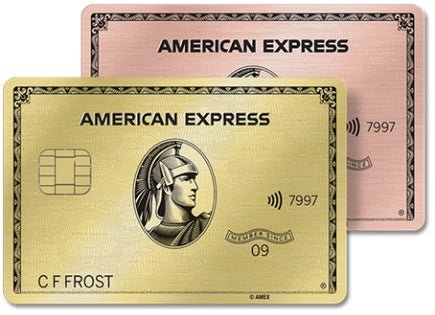
Deciding whether the American Express Gold Card is worth its $325 annual fee requires looking past the premium metal finish and into the specific math of your monthly budget. This card occupies a unique middle ground between entry-level rewards cards and ultra-premium travel cards. It targets a specific type of spender: those who spend heavily on groceries and dining out but may not need the high-end airport lounge access provided by more expensive alternatives. MoneyAtlas tracks the evolving landscape of premium rewards to help you determine if a card's benefits align with your lifestyle. This analysis covers the card’s earning structure, the complexity of its monthly credits, and the break-even points that determine if the fee is a sound investment or an unnecessary expense.
For a closer look at the card's rewards, fees, and benefits, read the American Express Gold Card review.
The Cost of Entry: Understanding the $325 Annual Fee
The annual fee for the American Express Gold Card is $325. This is a significant jump from many mid-tier cards that typically charge around $95. To determine if this cost is justifiable, you must evaluate the card as two separate components: a rewards-earning engine and a collection of monthly statement credits.
The fee is paid upfront and appears on your first billing statement. Unlike some cards that waive the fee for the first year, the Gold Card requires an immediate commitment. This means the value you derive in the first 12 months must either come from the welcome offer or the combination of points earned on spending and the utilization of included credits.
Before comparing annual fees, rewards, and benefits, review how to evaluate credit card annual fees and rewards.
The Math of Statement Credits
Many cardholders view the Gold Card as a "coupon book" because its value is heavily weighted toward monthly statement credits. If you already use these services, the credits effectively lower the "net" annual fee. If you do not use them, you are essentially prepaying for services you might not need.
Uber Cash
Cardholders receive $10 in Uber Cash each month, totaling $120 per year. This can be used for Uber rides in the U.S. or Uber Eats orders. The credit does not roll over; if you do not use it by the end of the month, it expires. For someone who already orders delivery or uses ride-sharing at least once a month, this is nearly as good as cash.
Dining Credit
The card offers an additional $10 monthly dining credit, totaling $120 annually. This credit is specific to certain partners, including Grubhub, The Cheesecake Factory, Five Guys, Buffalo Wild Wings, and the food delivery service Wonder. Like the Uber credit, this is a use-it-or-lose-it benefit that requires enrollment.
Resy Credit
A more recent addition to the card is the $100 Resy credit. This is distributed as two $50 statement credits: one available from January through June, and the other from July through December. It applies to purchases made at U.S. restaurants that are part of the Resy platform. Enrollment is required, but you do not necessarily need to book a reservation through Resy to trigger the credit as long as the restaurant is a partner.
Dunkin' Credit
The card provides up to $7 per month in statement credits for purchases at U.S. Dunkin' locations. This adds up to $84 per year. For a regular coffee drinker, this is a straightforward way to recoup a portion of the fee.
Calculating the Net Fee
If you maximize every credit mentioned above, you receive $424 in total annual value. In this scenario, you are actually "getting paid" $99 to hold the card ($424 in credits minus the $325 fee). However, the reality for most people is that using every single credit every single month requires significant effort.
Earning Potential: The 4x Powerhouse
The primary reason people choose the Gold Card is its industry-leading rewards rate on food. The card earns American Express Membership Rewards points, which are generally more valuable than cash back when transferred to travel partners.
- 4x at Restaurants Worldwide: This applies to up to $50,000 in purchases per year. After that, the rate drops to 1x.
- 4x at U.S. Supermarkets: This is capped at $25,000 in purchases per year, then 1x.
- 3x on Flights: This applies to tickets booked directly with airlines or through the American Express travel portal.
- 2x on Prepaid Travel: This includes car rentals and cruises booked through the brand's travel portal.
- 1x on Other Purchases: All other spending earns 1 point per dollar.
For a household that spends $1,000 a month on groceries and $500 a month on dining out, the card would generate 72,000 points per year. Depending on how those points are redeemed, that could represent $720 to $1,400 in value, far exceeding the annual fee even before considering the credits.
Who the Card Suits Best
The American Express Gold Card is not a general-purpose card. It is a specialized tool for specific spending habits.
The Dedicated Foodie
If your largest monthly expense after housing is food, this card is hard to beat. The 4x multiplier on both groceries and dining is a rare combination. Most cards force you to choose one or the other for their highest reward tier.
The Points Maximizer
Membership Rewards points are highly flexible. You can transfer them to over a dozen airline and hotel partners, such as Delta, British Airways, and Hilton. For someone who knows how to book award travel, these points can often be worth 2 cents each or more. MoneyAtlas provides resources to help compare how different points programs stack up against one another.
For broader alternatives, compare the best credit cards across rewards, fees, and premium benefits.
The Urban Dweller
The credits are significantly easier to use in cities. If you live in an area with a high density of Uber drivers, Dunkin' shops, and Resy-partnered restaurants, you will likely use the credits without thinking about it. In rural areas, the Dunkin' or Resy credits might be entirely useless.
Potential Drawbacks and Considerations
While the rewards are high, the card has limitations that might make other options more attractive.
The Effort Factor
To get the full value of the $325 fee, you have to manage multiple monthly credits. This requires enrolling for benefits in the mobile app and remembering to use specific apps or restaurants before the month ends. For some, the mental energy required to track these "coupons" is a deterrent.
Limited Travel Perks
Unlike the American Express Platinum Card, the Gold Card does not offer widespread airport lounge access. While it does provide a $100 credit for The Hotel Collection bookings (minimum two-night stay) and Hertz Five Star status, it is not a "luxury travel" card in the traditional sense. If you want airport lounges and Global Entry credits, you may find a higher-fee card more valuable.
Acceptance Issues
While American Express is widely accepted in the U.S., it still lags behind Visa and Mastercard internationally. If you travel to smaller towns abroad, you may find restaurants that only accept cash or other card networks. It is usually necessary to carry a backup Visa or Mastercard with no foreign transaction fees when traveling outside the U.S.
Comparing the Gold Card to Alternatives
Before committing to the $325 fee, it is worth comparing the Gold Card to other popular options in the market.
The Chase Sapphire Preferred is a common alternative for those who want a lower fee and simpler rewards. However, its grocery rewards are limited to online orders, which makes the Gold Card superior for traditional supermarket shoppers. The Amex Platinum is a travel-first card; it is a poor choice for daily food spending but excellent for frequent flyers.
Readers seeking simpler rewards can browse cash back credit card comparisons.
Is the Welcome Offer the Deciding Factor?
The welcome offer can often provide enough value to cover the annual fee for several years. Historically, these offers have ranged from 60,000 to 100,000 points after meeting a minimum spending requirement in the first few months.
If you receive a 60,000-point bonus, those points are worth at least $600 when redeemed for travel through the American Express portal. If you transfer them to a high-value airline partner, they could be worth $1,200 or more. This initial "boost" makes the card an easy choice for the first year, but the long-term value must come from the ongoing spending multipliers and credits.
How to Decide: A Step-by-Step Evaluation
If you are still on the fence, follow these steps to see if the card fits your wallet:
How to Decide: A Step-by-Step Evaluation
- 1
Check your grocery and dining spending
Look at your bank statements from the last three months. If you spend less than $500 a month combined in these categories, the 4x multiplier may not generate enough points to beat a no-fee card.
- 2
Audit the credits
Do you already use Uber or Uber Eats? Do you live near a Dunkin'? Are there Resy restaurants in your city? Calculate how many of these credits you would use naturally without changing your behavior.
- 3
Evaluate your redemption goals
Do you want simple cash back, or are you looking to book international flights? If you want cash back, a card like the Blue Cash Preferred may be a better fit.
- 4
Consider the "net" fee
Subtract the value of the credits you will definitely use from the $325 fee. If the remaining number is low, the card is likely worth it.
For another framework focused on fees, rewards, and break-even math, read how to evaluate credit card annual fees and rewards.
Financial Mechanics: Points vs. Cash Back
It is important to understand that 4x points is not the same as 4% cash back. The value of a point depends on how you use it. If you redeem Membership Rewards points for a statement credit, you generally get 0.6 cents per point. This would mean 4x points is only worth 2.4% in cash value.
To get the full 4% value or more, you typically need to use the points for travel. This is why the Gold Card is best suited for people who enjoy planning trips and navigating loyalty programs. For those who want the simplest experience possible, a cash-back card with no annual fee might be a more efficient choice.
If minimizing fees is the priority, compare no-annual-fee credit cards.
The Role of Hertz Five Star Status
The card recently added Hertz Five Star status as a benefit for cardholders who enroll. This mid-tier elite status offers several perks that can save time and money for frequent renters:
- Upgrades on car classes when available.
- A 25% bonus on Hertz Gold Plus Rewards points.
- The ability to skip the counter at many locations.
- An additional driver at no extra cost.
While this isn't a primary reason to get the card, it adds a layer of travel convenience that helps bridge the gap between a "foodie" card and a "travel" card.
Final Thoughts on the American Express Gold Card
The American Express Gold Card remains one of the strongest options for high-volume spenders in the grocery and dining categories. Its $325 fee is steep, but it is effectively subsidized by $424 in credits for those who are willing to manage them.
For the average American family spending $10,000 to $15,000 a year on food, the rewards potential is significantly higher than almost any other card on the market. However, the card requires an active management style. You must be comfortable with the "coupon book" nature of the credits and have a plan for using the Membership Rewards points for travel to get the most value.
Before applying, use MoneyAtlas's credit card reviews index to see how the Gold Card stacks up against other high-yield rewards cards. Comparing your specific spending levels against the fee will help you decide if this card belongs in your permanent rotation or if a simpler, lower-cost alternative is a better fit.
FAQ
MoneyAtlas Staff
Articles and reviews from the MoneyAtlas editorial team — independent research on credit cards, banking, loans, insurance, and investing.
Related Articles

How to Cancel Your American Express Gold Card
Learn how to cancel American Express Gold card accounts without losing points. Step-by-step guide on chat cancellation, fee refunds, and credit score impact.

Which Is Better American Express Gold or Platinum?
Which is better American Express Gold or Platinum? Compare rewards, fees, and travel perks to find the right card for your lifestyle and spending.

What Is the Limit for American Express Gold Card?
Wondering what is the limit for American Express Gold card? Learn how the No Preset Spending Limit works and how to check your dynamic spending power.