Is American Express Gold Card a Charge Card?


Introduction
The American Express Gold Card occupies a unique space in the financial world, leading many to ask if it is a charge card or a credit card. Historically, the Gold Card was a traditional charge card, requiring the balance to be paid in full every month. However, recent features have blurred these lines, making it a hybrid that offers both charge and credit-like capabilities. MoneyAtlas tracks these shifts to help you understand how different card structures impact your monthly budget and credit profile. This article explains the technical definition of the Gold Card, the mechanics of its spending limits, and how it compares to standard credit cards. Understanding these distinctions is the first step in deciding if this specific account structure aligns with your spending habits and financial goals.
The Technical Definition: Charge Card vs. Credit Card
To understand the American Express Gold Card, you must first distinguish between a charge card and a credit card. A traditional credit card is a revolving credit account. The issuer gives you a specific credit limit, such as $5,000. You can spend up to that amount, and at the end of the month, you can choose to pay the full balance or a minimum amount. If you carry a balance, the issuer charges interest, often expressed as an Annual Percentage Rate (APR).
A charge card operates differently. In its purest form, a charge card has no preset spending limit and requires the cardholder to pay the entire statement balance in full every single month. Because the balance is paid off, there is typically no interest charge. The American Express Gold Card started as this type of product, but it has evolved.
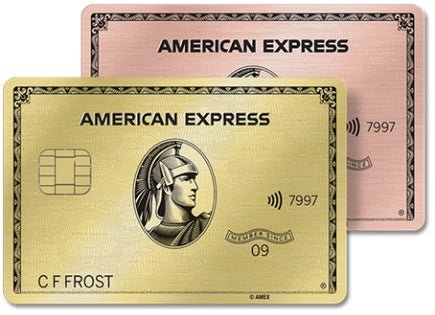
Today, American Express refers to the Gold Card as a "Card" rather than a "Credit Card" or "Charge Card" in much of its marketing. This is because it includes the Pay Over Time feature. This feature allows cardholders to carry a balance with interest on eligible purchases over a certain amount. While the card still functions as a charge card by default, the inclusion of revolving credit features means it acts as a hybrid. For a closer look at the product's current terms and features, read our American Express Gold Card review.
How the Pay Over Time Feature Works
The Pay Over Time feature is the primary reason why the Gold Card is no longer a "pure" charge card. When you open a Gold Card account, you are typically enrolled in this feature automatically. It essentially adds a revolving credit line to your charge card.
When you make a purchase, American Express decides if that purchase is eligible for Pay Over Time. Most purchases over a specific threshold, often $100, are eligible. You can then choose to pay that portion of your balance over time with interest. The interest rate for Pay Over Time is similar to what you would find on a standard credit card.
If you do not use Pay Over Time, you must pay the full balance by the due date. If you do use it, you can pay a minimum amount, just like a credit card. This provides a safety net for larger, unexpected expenses while maintaining the discipline of a charge card for everyday spending. For more information about when interest applies, see this guide to credit card interest charges.
Plan It and Other Payment Options
In addition to Pay Over Time, the Gold Card offers a feature called Plan It. This allows you to select specific purchases of $100 or more and move them into a structured payment plan. Instead of a variable interest rate, you pay a fixed monthly fee. This is another way the Gold Card mimics the flexibility of a traditional credit card while maintaining its heritage as a charge card.
Understanding No Preset Spending Limit
One of the most common myths about charge cards like the Gold Card is that "no preset spending limit" means "unlimited spending." This is not the case. Your spending power on the Gold Card is dynamic rather than fixed.
With a traditional credit card, your limit is a hard ceiling. If your limit is $10,000, you cannot spend $10,001. With the Gold Card, your "limit" adjusts based on several factors:
- Your payment history with American Express.
- Your overall credit record and credit score.
- Your current income and financial assets.
- Your past spending patterns.
If you typically spend $2,000 a month and suddenly try to buy a $50,000 car, the transaction might be declined. However, if you have a long history of high spending and on-time payments, your spending power will likely grow. American Express provides a "Check Spending Power" tool in its mobile app and online portal. This allows you to enter a specific dollar amount to see if a large purchase will be approved before you reach the checkout.
How the Gold Card Impacts Your Credit Score
Because the Gold Card is technically a charge card, it affects your credit score differently than a standard credit card. The most significant difference lies in how it impacts your credit utilization ratio.
The Credit Utilization Factor
Credit utilization is the percentage of your available credit that you are currently using. If you have a $10,000 limit and a $2,000 balance, your utilization is 20%. This ratio is a major component of your credit score, with lower ratios generally leading to higher scores.
For a traditional credit card, the lender reports your credit limit and your balance to the credit bureaus. For a charge card like the Gold Card, there is no preset credit limit to report. Therefore, the balance on a charge card is usually excluded from the utilization calculation in many credit scoring models, such as FICO. For additional product-level comparisons, browse the MoneyAtlas credit card reviews.
Payment History and Inquiries
While utilization is treated differently, other factors remain the same. American Express reports your payment history to the major credit bureaus. A single late payment can significantly damage your credit score, just as it would with any other card.
The application process also involves a hard credit inquiry, which can temporarily lower your score by a few points. However, American Express has introduced a feature for many applicants that allows them to see if they are approved with no impact on their credit score. A hard inquiry only occurs if you are approved and choose to accept the card.
Comparing the Gold Card to a Traditional Credit Card
For someone deciding between a charge card and a credit card, comparing the mechanics side by side is useful. You can also compare highly rated credit cards across rewards, fees, rates, and other features.
Fees and Costs of the Gold Card
The American Express Gold Card is a premium financial product, and it comes with a corresponding cost. As of recent data, the card carries a $325 annual fee. This fee is not waived in the first year and is charged on your first billing statement.
When comparing cards, it is important to look at the "real" cost. The Gold Card offers several credits that can offset the annual fee if you are already a customer of specific merchants. These include:
- Dining Credits: Up to $120 annually ($10 monthly) for use at select partners like Grubhub, The Cheesecake Factory, and Five Guys.
- Uber Cash: Up to $120 annually ($10 monthly) for Uber rides or Uber Eats in the U.S.
- Resy Credit: Up to $100 annually in statement credits for eligible purchases at Resy restaurants.
- Dunkin' Credit: Up to $84 annually ($7 monthly) at U.S. Dunkin' locations.
If you use all these credits, the effective cost of the card is significantly lower. However, if you do not already spend money at these businesses, you may find yourself spending more just to "save" money. Enrollment is required for many of these benefits, and terms apply. Rates and fees are subject to change, so verify the current terms before applying. For a framework to evaluate these trade-offs, read how to compare credit card annual fees, interest rates, and rewards.
Rewards and Earning Potential
The reason many people are willing to navigate the complexities of a charge card is the reward structure. The Gold Card is widely considered one of the strongest cards for food-related spending. You can compare rewards credit cards to see how different earning structures stack up.
Current earning rates include:
- 4X points at restaurants worldwide (up to $50,000 in purchases per year).
- 4X points at U.S. supermarkets (up to $25,000 in purchases per year).
- 3X points on flights booked directly with airlines or on the Amex Travel website.
- 2X points on prepaid car rentals and other select travel.
- 1X points on other eligible purchases.
These points are part of the American Express Membership Rewards program. They are most valuable when transferred to airline or hotel partners rather than being redeemed for cash back or gift cards. For a consumer who spends $1,000 a month on groceries and dining, the 4X earning rate can accumulate points rapidly.
Who Should Compare the American Express Gold Card?
Because of its unique charge card structure and high annual fee, the Gold Card is not a universal fit. It is worth comparing for individuals who fall into specific categories.
The Disciplined Spender
If you prefer the discipline of paying your bill in full every month to avoid debt, a charge card is a helpful tool. The "default" setting of the Gold Card encourages this behavior, unlike a credit card which makes it easy to slide into carrying a balance.
The High-Volume Food Spender
For families or individuals with large grocery bills and frequent dining out, the 4X points category is difficult to beat. If your annual food spending is significant, the rewards can easily outweigh the $325 annual fee.
The Frequent Traveler
The ability to transfer points to partners like Delta, British Airways, or Hilton makes this card a favorite for those who want to maximize travel value. If you prefer simple cash back, a different card with no annual fee may be a better option to compare. Browse cash back credit card comparisons for alternatives.
Steps to Decide if This Card Fits Your Wallet
How to Decide if This Card Fits Your Wallet
- 1
Review your spending
Look at your last three months of bank statements. Categorize your spending into groceries, dining, and travel. If these are not your top categories, the Gold Card's reward structure may not work for you.
- 2
Evaluate the credits
Be honest about whether you use Uber, Grubhub, or Dunkin'. If you have to change your habits to use the credits, they are not true savings.
- 3
Check your credit profile
The Gold Card generally requires good to excellent credit, typically a score of 670 or higher. Use the MoneyAtlas comparison tools to see which cards you are likely to qualify for based on your current score.
- 4
Consider the payment structure
Ask yourself if you are comfortable with a card that expects full payment every month. If you frequently need to carry a balance, a traditional credit card with a lower APR might be more practical to compare. Readers focused on avoiding an annual fee can also review no annual fee credit cards.
Conclusion
The American Express Gold Card remains one of the few charge cards available to the general public, even as it adds more credit-like features. It offers a unique combination of flexible spending power, high rewards for dining and groceries, and a suite of monthly credits. However, the requirement to generally pay in full and the substantial annual fee mean it requires a specific spending profile to be effective. We suggest using the side-by-side credit card comparison tools on MoneyAtlas to evaluate the Gold Card against other high-reward credit cards. By looking at the real costs and reward potential, you can determine if a charge card structure is the right choice for your financial management style.
FAQ
MoneyAtlas Staff
Articles and reviews from the MoneyAtlas editorial team — independent research on credit cards, banking, loans, insurance, and investing.
Related Articles

How to Cancel Your American Express Gold Card
Learn how to cancel American Express Gold card accounts without losing points. Step-by-step guide on chat cancellation, fee refunds, and credit score impact.

Which Is Better American Express Gold or Platinum?
Which is better American Express Gold or Platinum? Compare rewards, fees, and travel perks to find the right card for your lifestyle and spending.

What Is the Limit for American Express Gold Card?
Wondering what is the limit for American Express Gold card? Learn how the No Preset Spending Limit works and how to check your dynamic spending power.